Every Year After ending explained analyses are currently dominating online discussions, and for a good reason. Prime Video’s ambitious adaptation of Carley Fortune’s bestselling novel Every Summer After has completely reshaped the landscape of modern television romance. By taking the deeply emotional framework of a beloved literary property and expanding its universe for the screen, developer Leila Gerstein and showrunner Amy B. Harris have crafted a sweeping, eight-episode, dual-timeline narrative.
This is not simply a story about a teenage summer romance; it is a profound psychological exploration of how the unsaid words and buried sins of our youth inevitably demand payment in adulthood. The narrative navigates the turbulent waters of Barry’s Bay, a picturesque lakeside town where teenage innocence violently collides with adult regret. When twenty-eight-year-old Percy Fraser returns to attend the funeral of Sue Florek—the matriarch of the family and the mother of the two boys who entirely defined her youth—she is forced to confront a decade of unresolved trauma, panic attacks, and a devastating secret that shattered her world.
Why Did Percy Leave in Every Year After?
Why did Percy actually leave Barry’s Bay? It wasn’t just standard teenage rebellion. She left because she was completely suffocated by the crushing guilt of her secret betrayal. Feeling utterly unworthy of Sam’s unconditional love, Percy ran away to punish herself. She effectively destroyed their relationship rather than facing the brutal consequences of her own actions.

The Core Mysteries: Betrayals and Inheritances
Before dissecting the dual timelines and the explosive finale, we must address the foundational mysteries that drive the entire narrative.
What Did Percy Do to Sam & Why Did She Leave?
To truly understand the emotional weight of the ending, we have to address the elephant in the room. Driven by insecurity, fear of the future, and a moment of foolish vulnerability right before college, Percy made the ultimate mistake: she slept with Sam’s older brother, Charlie.
This devastating betrayal is exactly what she did to Sam. It wasn’t just a breakup; it was a total destruction of trust. The overwhelming, suffocating guilt from this single event is the real reason why Percy left Barry’s Bay. She didn’t leave because she stopped loving Sam; she ran away because she couldn’t face the boy she broke or the brother she used.
Does Charlie Die in the Story?
With all the grief surrounding the present-day timeline, a massive misconception has taken hold online. Let’s clear it up directly: No, Charlie does not die. He is alive and well in the present timeline, though his relationship with Sam is forever scarred by what happened in the past. The tragic death that actually forces Percy to finally return to town and face her past isn’t Charlie’s—it’s the heartbreaking passing of Sam and Charlie’s mother, Sue, from lymphoma. Her death becomes the catalyst for all the buried secrets to finally surface.
Why Did Sue Leave the Tavern to Percy?
Beyond the messy romantic drama, one of the most poignant mysteries is the inheritance. Why did Sue leave the tavern to Percy instead of handing it down to her own sons? The answer is rooted in deep, unspoken maternal forgiveness. Sue always knew about the devastating rift between Percy, Sam, and Charlie. By leaving the tavern to Percy, Sue wasn’t just handing over a business; she was throwing Percy a lifeline. It was a dying mother’s ultimate gesture to force Percy to stop running, return to Barry’s Bay, and finally forgive herself for the mistakes of her youth.
Who Does Delilah End Up With?
While Percy’s complicated love triangle takes center stage, Delilah’s conclusion is surprisingly grounded and refreshing. After navigating the devastating collapse of her marriage to a wealthy, controlling man named Wit, Delilah chooses herself. She walks away from the messy local romances and ends up prioritizing her own independence, moving to the city to fiercely focus on her career and refusing to let her identity be tied to a man.

The Prime Video Cast and Psychological Profiles
The success of Every Year After relies entirely on the nuanced, highly emotional performances of its ensemble cast. Unlike the novel, which remains strictly focused on Percy’s internal monologue, the series expands the scope of the narrative, elevating secondary characters into fully realized individuals with their own complex emotional arcs. The casting choices reflect a meticulous effort to capture the carefree nostalgia of youth while portraying the hardened, cynical realities of adulthood.
To fully grasp the tragedy of the series, one must first understand the psychological architecture of the characters.
| Actor (Adult / Young) | Character | Narrative Role & Psychological Profile |
| Sadie Soverall / Juliette Hawk | Persephone “Percy” Fraser | A 28-year-old obituary writer paralyzed by guilt over a catastrophic youth mistake. Her career symbolizes her obsession with the past and inability to write her own future. She suffers from severe panic attacks triggered by her return. |
| Matt Cornett / Blue Clarke | Sam Florek | Percy’s childhood best friend and first love. Now a hyper-focused cardiologist, a career path born as a trauma response to his father’s sudden death from a heart attack. He is loyal but builds intense emotional walls when hurt. |
| Michael Bradway / Carson MacCormac | Charlie Florek | Sam’s older brother, a successful corporate hedge fund manager. He utilizes a playboy persona to mask immense grief and familial responsibility, harboring deep regret for destroying Sam and Percy’s relationship. |
| Elisha Cuthbert | Sue Florek | The matriarch of the Florek family and tavern owner. She serves as a crucial surrogate mother to Percy. Her death from lymphoma is the narrative catalyst that forces the estranged group back together. |
| Abigail Cowen | Delilah | Percy’s childhood frenemy. The series significantly expands her character, revealing her struggles outside her broken marriage and introducing a deeply emotional teenage pregnancy and abortion arc. |
| Aurora Perrineau | Chantal | Percy’s pragmatic attorney best friend from Seattle. Traveling to support Percy, she begins questioning her own life and engagement as she develops an authentic connection with a local. |
| Joseph Chiu | Jordie | Sam’s best friend and motel manager. Acting as the emotional anchor, he harbors unrequited past feelings for Delilah while gently pursuing a vulnerable new dynamic with Chantal, proving to be the most emotionally mature character. |
The Narrative Architecture: A Comprehensive Timeline Breakdown
The brilliance of Every Year After lies in its meticulous structural pacing. The narrative operates simultaneously on two distinct timelines: the present day, where a fractured group of adults attempts to navigate the emotional landmines of a funeral, and the past (spanning 2011 to 2016), which details the slow, agonizing build-up to a monumental betrayal.
The Catalyst: Seattle and the Return to Barry’s Bay
The story commences a full decade after Percy Fraser fled Barry’s Bay. Living in Seattle, she is entirely emotionally stagnant, casually dating a man named Jake merely as a physical distraction. The fragile equilibrium of her adult life shatters when she receives an unexpected phone call from Charlie Florek—the first time she has heard his voice in ten years.
Charlie delivers the devastating news that his mother, Sue, has died, and asks Percy to attend the memorial service. The psychological weight of this news triggers a severe panic attack, illustrating the visceral hold the past still has over her. Upon arriving in Barry’s Bay, the atmosphere is suffocatingly tense. Jordie deliberately pretends not to recognize her at the motel, and Percy physically hides when she accidentally spots Sam near the Dorman Point Trail.
The Summers of Innocence (2011–2013)
To understand the present tension, the narrative flashes back to the origins of the tragedy. In 2011, a young Percy arrives at her family’s lakeside cottage and immediately bonds with the Florek brothers. The foundation of Percy and Sam’s relationship is built on quiet intimacy; they bond over vintage horror movies, and Percy becomes a safe harbor for Sam to discuss the sudden death of his father. Percy gives Sam a woven friendship bracelet, which he solemnly promises never to remove.
By 2013, the dynamic slowly shifts to simmering romantic tension. However, external pressures warp their sanctuary. Delilah pushes Percy to pursue Sam, while Charlie urges Sam to make a definitive move. Both stubbornly resist, paralyzed by a profound fear of ruining their friendship. A vulnerable moment during a power outage—where Percy sleeps in Sam’s bed—is weaponized the next morning when Charlie teases them. Embarrassed, Sam aggressively denies any romantic feelings, creating the first micro-fracture of emotional distance.
The Shift: Grief, Inheritance, and Commercialization
In the present timeline, the emotional stakes escalate with a shocking legal revelation. At the official reading of Sue’s will, the lawyer announces that while the estate is divided between the brothers, Sue has left the local tavern entirely to Percy.
This is a massive narrative departure from the original novel, engineered specifically for the television adaptation to physically bind Percy to the town. Charlie reacts with explosive anger, viewing it as a posthumous betrayal by their mother. Percy’s reluctance to keep the tavern is compounded by Delilah, who reveals her own aggressive plans to purchase it and turn it into a sterilized, commercialized venture. After realizing that keeping the tavern is Sue’s final attempt to force her to stop running away, Percy decides to stand her ground.
The Fracturing and Miscommunications (2014–2015)
Returning to the past, the summer of 2014 marks the official beginning of Percy and Sam’s romantic relationship following a triumphant endurance swim across the lake. However, terrified of the impending realities of long-distance college dynamics, Sam preemptively pulls away, suggesting Percy should see other people when the summer ends.
This emotional cowardice sparks a multi-year chain reaction. By New Year’s Eve 2015, they are officially broken up, leading to a toxic display of jealousy from Sam when Percy flaunts a new boyfriend. The summer of 2015 becomes a chaotic web of miscommunication until Sam finally realizes his mistake, breaking up with his coworker Lake and admitting his feelings for Percy never died.
In the background, the series introduces a crucial show-only subplot: Delilah discovers she is pregnant. The narrative handles this with immense sensitivity, culminating in an abortion storyline that highlights how Percy’s tunnel vision regarding Sam occasionally blinded her to the silent struggles of her friends.
The Ultimate Betrayal (Summer 2016)
The defining tragedy occurs in the summer of 2016. Sam blindsides Percy by revealing he has been accepted into a prestigious summer intensive medical training program and will be absent for most of the season. Percy feels deeply betrayed, perceiving this as Sam choosing ambition over their intimacy.
With Sam gone and increasingly distant, Percy is left isolated. She begins spending extensive time with Charlie, who masks his own feelings of inadequacy compared to his high-achieving brother. The breaking point arrives when Sam officially ends their relationship via a cold email. Heartbroken, unmoored, and heavily intoxicated, Percy turns to Charlie. In a moment of mutual vulnerability and shared grief over losing Sam, Percy and Charlie cross an unforgivable line and sleep together.
The shame is absolute. Percy quits her job, spirals into depression (eventually attempting an overdose), and flees Barry’s Bay entirely. When Sam returns weeks later wanting to reconnect, Percy ends things permanently without a genuine explanation, choosing to step away rather than continue lying.
The Confession and Explosive Fallout (Present Day)
The masterstroke of the television adaptation is how it handles the revelation of this secret. In the novel, Sam learns the truth mere months after it happens. In the series, Sam has spent ten grueling years completely ignorant of the truth.
In the present, as they tentatively rebuild their connection, Sam finally breaks off his engagement to his girlfriend, Taylor, and asks Percy for a second chance. Cornered by his honesty, Percy realizes she can no longer build a foundation on a ten-year-old lie. She finally confesses the devastating truth.
The impact is nuclear. Sam is utterly broken, remarking that while he expected reckless behavior from Charlie, Percy was his absolute safe space. The revelation shatters the brothers’ fragile relationship. Sam tracks down Charlie, resulting in a violent physical altercation. Sam severs all ties, declaring he feels like a true orphan because he has lost not only his mother but the brother who was supposed to be permanent.

Every Year After Ending Explained: A Beautiful, Unresolved Mess
The final episode of Every Year After acts as an emotional pressure cooker, resolving several supporting character arcs while deliberately leaving the central romances and familial dynamics fractured and bleeding.
The Memorial and The Forgiveness
Despite the catastrophic fallout of her confession, Percy refuses to run away again. She decides to honor Sue’s memory by single-handedly preparing the tavern for the memorial service. In a beautifully poignant scene, Sam arrives to find Percy wearing Sue’s ridiculous pink tutu, cooking breakfast foods. Percy reveals a secret that Sam never knew: Sue actually hated perogies and vastly preferred breakfast meals. This quiet moment forces Sam to realize that Percy understood a deeply human facet of his mother that he never did, slowly softening his hardened exterior.
Following Sam’s emotional eulogy, tensions among the supporting cast finally resolve. Chantal officially ends her engagement and openly embraces her romantic feelings for Jordie, stepping into the future as an official couple. Delilah, facing the grim reality of a brutal prenuptial agreement enforced by her ex-husband, finds a new sense of fierce independence.
Percy and Sam: The Reality of Healing
Later that night, the magnetic pull between Percy and Sam becomes undeniable. They cross the line and share an incredibly passionate, intimate night together. However, the show brilliantly subverts the traditional, clean romance trope. The morning after, Sam delivers a heartbreaking reality check. He admits that while his love for her remains absolute, the wound of the betrayal is simply too fresh, and he cannot step back into a committed relationship right now. Percy accepts this with devastating grace.
Showrunner Amy B. Harris noted this decision was highly intentional. Because the series changed the timeline of the confession, having them walk off into the sunset immediately would have felt emotionally dishonest. The series leaves them standing apart to emphasize that their journey toward true healing has only just begun.
However, hope is not lost. The series concludes with a flash-forward sequence. Percy, returning to Seattle, publishes a short story that deeply affects Sam. In a silent gesture of profound trust, Sam mails Percy the keys to the tavern. Aided by Delilah, Percy physically returns to Barry’s Bay, restores the tavern, and anchors herself in the town that broke her, ready to do the hard work of rebuilding her life.
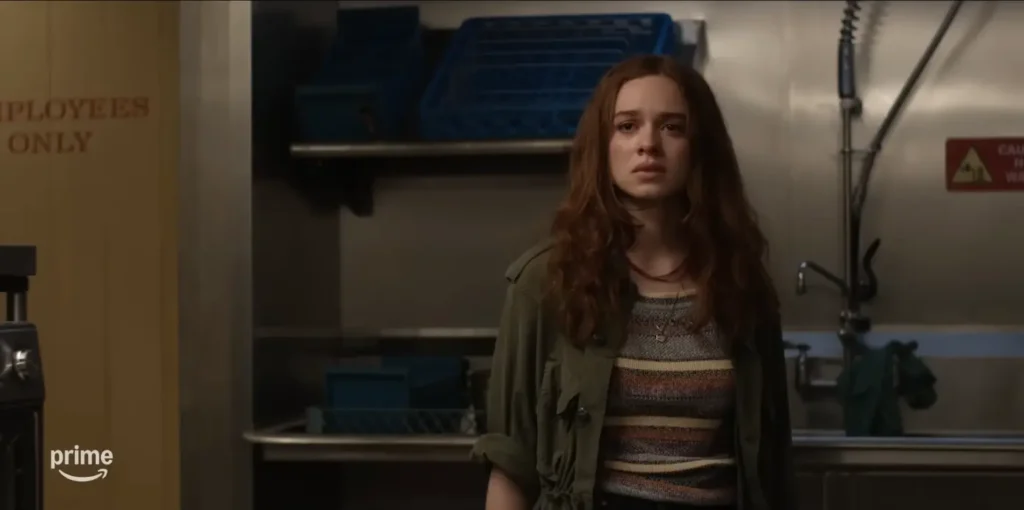
The Shocking Charlie Cliffhanger
While Sam and Percy move toward a hopeful resolution, the narrative shifts its focus entirely to Charlie Florek, delivering one of the most shocking cliffhangers in recent television history.
A full year after the blowout fight with his brother, Charlie has fully immersed himself in his high-stress corporate hedge-fund career, completely isolated from his family. While working late, Charlie notices a framed photograph in his boss Greg’s office. The photo depicts a bright yellow speedboat racing across a lake, capturing a younger Charlie, Sam, and Percy during one of their golden summers. His boss explains his wife purchased it from an art gallery in British Columbia without knowing who the subjects were.
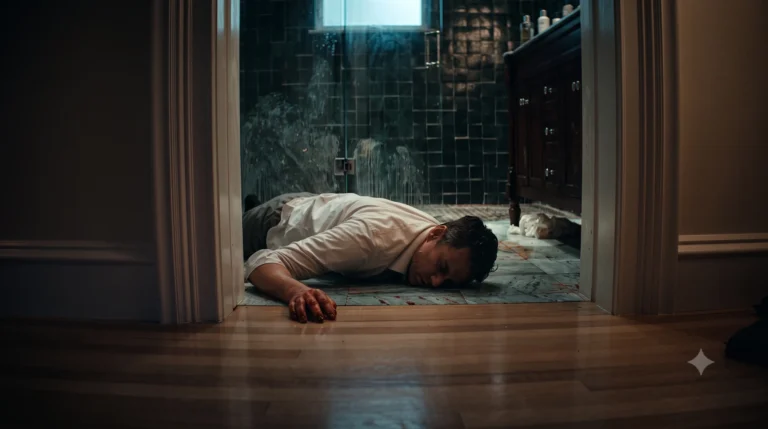
When the office empties, Charlie sneaks back in to stare at the photograph. The overwhelming visual reminder of the family he destroyed triggers a severe physical reaction. Charlie’s vision blurs drastically; he clutches his left arm in agony, grasps his chest, and collapses violently to the floor as the screen cuts to black.
For viewers unfamiliar with the source material, this might appear to be a severe panic attack mirroring Percy’s mental health struggles. However, actor Michael Bradway and showrunner Amy B. Harris have explicitly confirmed the terrifying truth: Charlie suffered a massive, life-threatening heart attack.
This medical emergency is not random; it is a direct thematic parallel to the sudden cardiac death of his father. Charlie’s lifelong attempt to mask his profound emotional guilt with a corporate facade ultimately manifested in a literal, physical breaking of his heart, serving as the ultimate narrative hook for a potential Season 2.
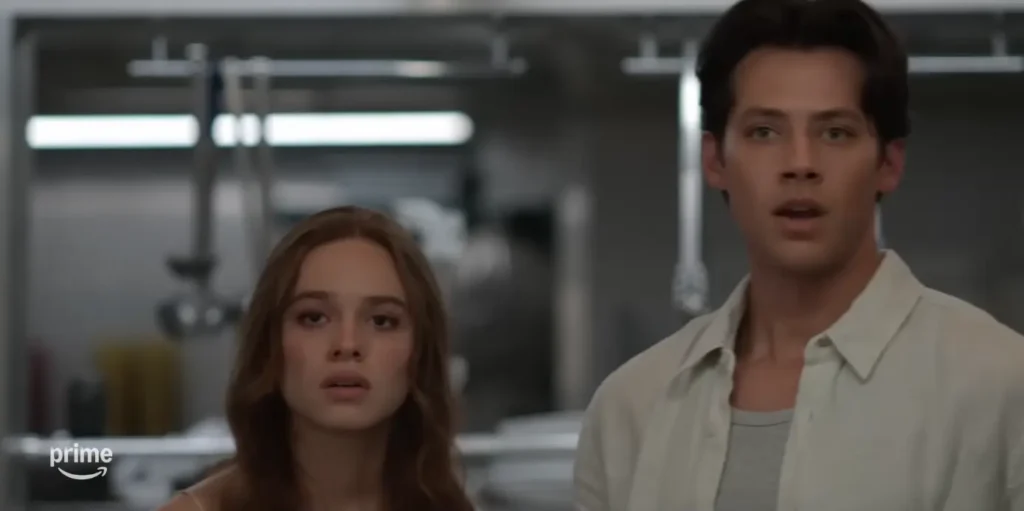
The Biggest Book vs. TV Show Differences
Adapting a beloved BookTok sensation requires delicate narrative surgery. The writers retained the emotional skeleton of Carley Fortune’s novel but made several massive structural changes to sustain a multi-season television format.
1. The Title Change
Author Carley Fortune explained that Every Summer After felt too chronologically confining. Changing the title to Every Year After implies a broader narrative scope, allowing the show to chart the long-term, year-round consequences of the characters’ actions across multiple planned seasons.
2. The Timing of the Confession
This is the most seismic narrative shift between the page and the screen. In the book, Sam learns about the hookup from Charlie shortly after it happens in 2016. In the series, Sam is completely blind to the betrayal for ten grueling years. This change transforms a quiet, internal novelistic conflict into explosive television drama, allowing the audience to viscerally witness Sam’s real-time heartbreak.
3. Sam’s Career Shift
In the novel, adult Sam is a successful veterinarian. In the series, he is a dedicated cardiologist. This is deeply thematic; it aligns with the trauma of losing his father to a heart attack, driving his psychological need to “fix” failing hearts. It also perfectly sets up the tragic irony of the finale, where his estranged brother suffers a fatalistic cardiac event.
4. The Tavern Inheritance
In the book, Sue’s tavern is simply a nostalgic backdrop. The series weaponizes the property by having Sue legally leave it to Percy. This brilliant plotting device actively forces Percy to remain in Barry’s Bay, acting as a structural anchor that keeps the ensemble cast physically bound to one another.
5. Expanded Roles and Mature Themes
The series breathes vital life into characters who were merely peripheral in the novel. Delilah transforms into a complex woman navigating a brutal divorce and a teenage abortion storyline. The romance between Chantal and Jordie provides a heartwarming counter-balance to the heavy trauma of the central love triangle.
Hidden Secrets, Easter Eggs, & Season 2 Theories
The thrilling conclusion is not just a cliffhanger; it is a meticulously crafted bridge to Carley Fortune’s sequel novel, One Golden Summer. The evidence overwhelmingly suggests that a second season will heavily pivot to focus on Charlie Florek’s redemption arc.
Theory 1: The Identity of the Photographer (Alice Everly)
The photograph that triggers Charlie’s heart attack is the most crucial Easter egg in the entire series. In the literary universe, that specific photograph of the yellow speedboat was taken by a woman named Alice Everly. One Golden Summer centers entirely on Alice, a gifted photographer who becomes Charlie’s primary love interest. Showrunner Amy B. Harris explicitly confirmed this photograph was an intentional plant. If Season 2 moves forward, Alice will likely arrive in Barry’s Bay to become the catalyst for Charlie’s emotional and physical healing.
Theory 2: Charlie’s Medical Crisis
Will Charlie survive? The source material provides a definitive answer: Yes. However, his life will be drastically altered. In the literary universe, Charlie suffers from a severe genetic heart condition requiring high-risk open-heart surgery. Theories suggest Season 2 will open with Sam—the brilliant cardiologist who swore he never wanted to see his brother again—being forced to intervene in Charlie’s medical care. This crisis will serve as the ultimate crucible for the brothers to forge a painful path toward forgiveness.
Theory 3: Percy’s New Role in Barry’s Bay
With Percy now the official owner of the tavern, her role will shift from the grieving protagonist to a stabilizing force for the Florek family. She will likely serve as a mediator between Sam and a recovering Charlie, while managing the business alongside an empowered Delilah, cementing her place as a pillar of the community.
Comprehensive FAQ: Unlocking the Final Details
To ensure this exhaustive analysis captures the full scope of audience inquiries surrounding the series, here are definitive answers to the web’s most highly searched questions.
Q: Do Sam and Percy end up together in Every Year After?
A: The finale leaves their relationship ambiguous but highly hopeful. Unlike the book, where they immediately reunite, the show concludes with Sam needing time to heal. However, the flash-forward sequence—where Sam mails Percy the keys and she returns to restore the tavern—indicates they are ready to put in the hard emotional work to eventually be together.
Q: What happened to Charlie at the end of the show?
A: In the final moments, Charlie suffers a massive, life-threatening heart attack. The overwhelming emotional toll of his isolation and grief causes his body to fail, directly paralleling his father’s death and leaving his fate as the primary cliffhanger for Season 2.
Q: Who is Alice Everly, and what does the photograph mean?
A: The photograph Charlie sees is a massive Easter egg pointing to the sequel novel, One Golden Summer. Alice Everly is the acclaimed photographer who captured that image. She becomes Charlie’s primary love interest in the sequel, confirming she exists in the television universe.
Q: Where was Every Year After filmed?
A: While set in the fictional town of Barry’s Bay, the series was filmed on location in Vancouver and on Bowen Island, Canada. Key real-world locations like the Snug Cove marina, Doc Morgan’s, and the Dorman Point Trail were utilized to capture the idyllic lakeside aesthetic.
Q: Is Every Year After based on a true story?
A: No, it is a fictional narrative adapted from Carley Fortune’s 2022 novel Every Summer After. However, the themes and setting are heavily inspired by the author’s own experiences spending her teenage summers in the real-life town of Barry’s Bay, Ontario.
Every Year After transcends the standard boundaries of the young adult romance genre, delivering a profound, visually stunning meditation on grief, loyalty, and forgiveness. The journey in Barry’s Bay is far from over; it has merely evolved from a nostalgic story about losing first love into a highly complex saga about the agonizing, beautiful mechanics of earning it back.
read also : The Boroughs Ending Explained: Shocking Netflix Cast & Hidden Facts