Supergirl Ending Explained & Spoilers
Honestly, I went back to the theater to see Supergirl a second time, not to blindly hate on it, but to take it apart like a tinkerer and figure out exactly why this heavily hyped movie felt so incredibly broken on screen. It is not a horrific movie… actually, maybe it isn’t the worst thing ever made, because some individual parts do work, but the pieces just completely fail to come together.
You can literally feel the sheer panic of the post-production team bleeding through the screen. We are talking about a massive superhero film where every second costs money, yet reports suggest they chopped 15 to 25 minutes right out of the final cut. And the music? Absolute chaos. They originally hired Ramin Djawadi in December, dumped him for Tom Holkenborg (Junkie XL) in February, and then brought in Claudia Sarne to replace him in March.
Three composers in four months.
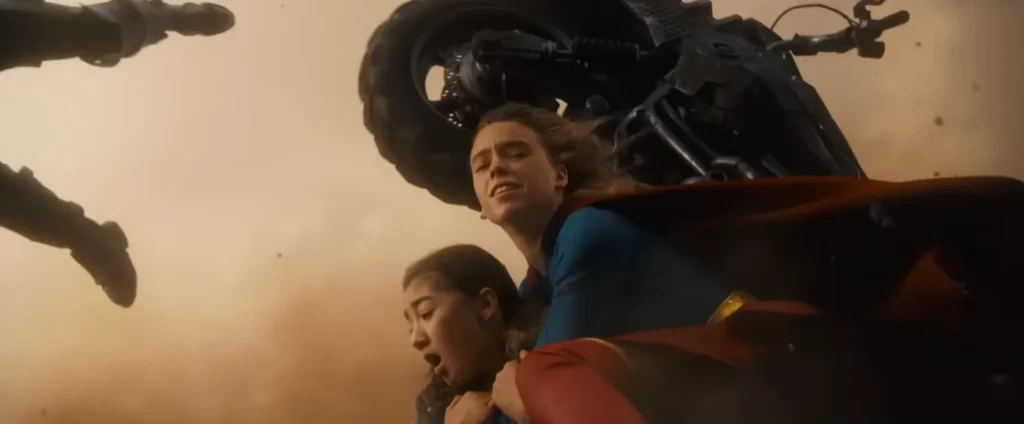
That massive struggle to find the right tone explains why the movie leans so aggressively on random needle drops, literally starting the film with one. Most of them felt like harmless Guardians of the Galaxy knock-offs, but using a cover of “The Middle” for the actual climax of the movie absolutely did not work for me. To make matters worse, they combined that song with a lazy camera pan slowly circling Ruthie as she watches people fight. It was a direct, copy-paste rip-off of the exact same beat they did with Mr. Terrific in last year’s Superman. It didn’t feel like stylistic consistency; it just felt like a beat they repeated because they ran out of ideas.
Then, right after that, we meet Kara recovering from a hangover on her ship, and I spent the entire time wondering where the hell this spaceship even came from. It doesn’t look like her ship, and it doesn’t match a single piece of DCU technology we’ve seen in any other movie. We are starting right in the middle of a story, which is fine if the emotional beats land later, but the foundation here is entirely built on an underdeveloped sidekick and a shockingly bad villain.
Let’s talk about Ruthie, played by Eve Ridley. I have absolutely no qualms with her performance, but the script completely fails her. She is painfully underwritten. For a character with this much screen time, she is entirely one-note, basically reduced to walking around saying, “I want to kill Creme,” while Kara just replies, “No, you shouldn’t do that”.
And speaking of Creme… what an absolute joke of a villain.
By the end of the movie, what can you actually say about him? He is really mean, and that is literally it. He reminded me of the most forgettable, bottom-tier comic book villains we’ve ever been forced to endure—like Malekith from Thor: The Dark World or Steppenwolf from the theatrical cut of Justice League. If you want to prop up a hero in their first solo movie, you give them a great villain, but Creme gives Supergirl absolutely no opportunities to shine. Instead, the script relies on awkward, exposition-heavy dialogue to introduce characters. Creme shows up and someone literally says, “Oh, it’s the brigands, it’s Creme, he’s here to take my life’s work”. Then Jason Momoa’s Lobo pops up, and Kara just announces, “Oh, that’s Lobo, he’s a real wild card… he killed his entire planet”.
Show, don’t tell!
Momoa is great in the role, but he is completely jammed into the movie to hunt some random brigand we never even get to know. Honestly, if the writers had just made Lobo hunt Creme to collect a bounty, you would instantly have massive tension—Ruthie wants him dead, Lobo needs him alive. With some minimal rewriting, that dynamic could have saved the script. Instead, they force the plot forward by having Creme poison Krypto. Taking the breakout star of last year’s Superman and basically writing him out of the follow-up film is a bizarre choice. The stakes are hilariously cheap.
Not a single soul in the theater actually believed the dog was going to die. Kara’s motivation to go after Creme has absolutely zero suspense behind it because people would literally burn the theaters down if Krypto died.
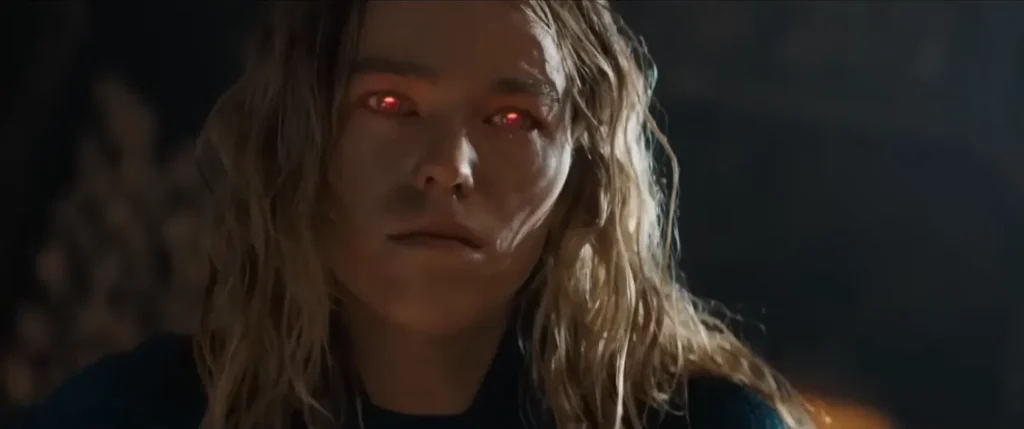
Then there is the exhausting trope of constantly depowering the hero. We get the red sun at the bar, the bus sequence, the green sun planet, and then she literally gets shot with Kryptonite arrows by Creme. It is just way too much. The green sun was actually a brilliant concept, but the arrows just added completely false stakes because we all know Supergirl isn’t going to die. It feels like James Gunn’s DCU simply does not know how to tell a story with powerful characters without beating them bloody and stripping their powers every twenty minutes… actually, even the old Christopher Reeve movies did this, but it grew stale decades ago.
The flashbacks to Argo City feel like a cheap TV recap rather than an emotional anchor. Her dad tells her to protect the weak, and her mom tells her to be good—not nice, but good. Oh, and the movie fully confirms that Jor-El absolutely sent Superman to Earth to conquer it as a god. Everyone swore that was a misdirect last summer, but nope, it is canon and they are sticking to it with zero plans for a retcon.
The third act is a complete thematic disaster.
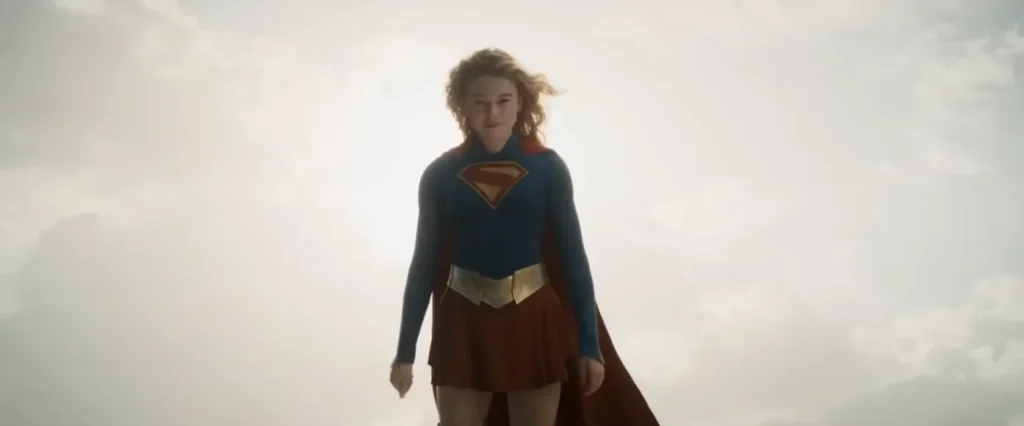
Kara spends the whole movie acting like Bruce Wayne in Batman Forever, warning Ruthie that vengeance won’t cure her pain. Batman said that because he actually killed the Joker and felt the emptiness himself. Kara hasn’t even done the vengeance thing yet, so it feels like the story completely skipped a beat where she experienced the emptiness of revenge. Then, Ruthie brings Kara her suit, which is supposed to symbolize her choosing to embody “good” by her own choice. Putting on that suit should be a massive character shift… well, actually, it changes absolutely nothing. Kara fights the exact same way, and then she just straight-up murders Creme with a knife without a single ounce of hesitation or guilt.
You cannot mix and match these endings.
You can make a movie where Kara kills Creme, embraces her dark trauma, and accepts she is a lone wolf outrunning her grief. Or, you can make a movie where she spares him, heals, and goes home. You cannot have her violently stab a guy twice and then immediately cut to her returning to Earth to settle down and be happy with Superman. It causes massive thematic whiplash. What baffles me the most is James Gunn publicly hyping this screnplay as one of the best he has ever read. Did nobody flag these obvious storytelling holes, or did a committee just completely butcher the editing process? Millie Alcock did a fantastic job playing a flawed, haunted hero with the material she was given, but when a superhero film pulls a B- CinemaScore and scores lower than Shazam: Fury of the Gods on Rotten Tomatoes, DC Studios has a massive problem on its hands.
How long can the DCU survive if they keep ignoring why their audiences are so disconnected?
Answering the Biggest Audience Questions
Here are the definitive answers to the most pressing questions and lore implications fans are searching for after walking out of the theater:
Does Krypto the Superdog die in the movie?
No, Krypto survives the events of the film. Despite being shot with a poison-tipped arrow by Krem in the first act, Kara successfully retrieves the antidote and cures him during the film’s climax. The film averts the predictable “kill the dog” trope, using the injury solely as an emotional narrative engine to propel Kara out of her depressive stupor and into action.
Is there a post-credits scene to set up the next DCU film?
There are no post-credits or mid-credits scenes. The narrative concludes with the final apartment scene between Kara and Clark Kent. Audiences waiting through the credits will not be rewarded with any additional footage, character cameos, or teasers for upcoming projects like Lanterns or The Authority.
Why is Lobo in the movie, and does he fit the story?
Jason Momoa’s casting as Lobo was highly anticipated, given his long-standing vocal desire to play the character and his uncanny physical resemblance to the comic book anti-hero. In the context of the film’s plot, Lobo is hunting elements of the Brigands for a bounty, inadvertently crossing paths with Kara and Ruthye. While his inclusion injects recognizable star power and physical humor into a largely melancholic narrative, some critics felt his chaotic presence occasionally distracted from Kara’s emotional arc.
What is the controversy surrounding Kara’s sexuality?
During the film’s press tour, lead actress Milly Alcock generated significant online discourse regarding her interpretation of Kara Zor-El’s sexuality. In an interview, when asked about the character’s romantic inclinations, Alcock stated: “What makes this film beautiful is that it’s not centred around a man, it’s not centred around love at all… She probably goes both ways”. Alcock further noted that Kara “doesn’t live inside the binary of what we think a woman should be,” leading to widespread fan speculation and celebration of the character as a potential queer icon within the DCU, despite the film itself containing no overt romantic subplots.
Why is Supergirl’s power level so inconsistent?
Throughout the film, Kara is frequently depicted as depowered or struggling in hand-to-hand combat against ordinary alien mercenaries. This “nerfing” of her abilities is narratively justified by the environments she chooses to inhabit. The film heavily relies on the established lore that Kryptonians only derive their powers from yellow sun radiation. Because Kara spends the majority of the film tracking Krem across planets orbiting red or green suns, her cells are drained of solar energy, rendering her highly vulnerable. It is only in the final moments of the climax that she is exposed to a yellow sun and fully unleashes her terrifying capabilities.
How does this movie connect to the upcoming Clayface and Man of Tomorrow films?
While Kara’s final conversation with Clark clearly sets up her involvement in the upcoming Superman: Man of Tomorrow (2027), the timeline regarding Clayface (releasing October 2026) is more complex. DC Studios co-CEO James Gunn has confirmed that Clayface is the first DCU film set out of chronological order, meaning the events of the horror-centric Clayface take place entirely before the events of Superman (2025) and Supergirl (2026). Therefore, Supergirl does not directly set up Clayface, but rather pushes the modern-day continuity forward toward the next major ensemble event.
Craving more cinematic secrets? Return to the [Memoria Front Page] for our newest ending explanations and exclusive theories.