Escaping the Echo Chamber: Why Mainstream Reviews Miss the Mark
Let me be brutally honest right out of the gate: if you are relying on standard entertainment sites like IGN, Collider, or Vulture to understand what is actually happening in HBO’s Lanterns, you are barely scratching the surface. I’ve spent the last few weeks reading those vanilla, surface-level “8 out of 10” reviews, and then diving into the absolute chaotic mess of Reddit threads and YouTube breakdowns from channels like New Rockstars. The digital landscape covering this show is incredibly fragmented. Nobody seems to be connecting the dots between the intimate episodic trauma, the deep DC lore, and James Gunn’s looming cinematic slate.
So, consider this my definitive master-guide. I am going to break down exactly why this series is a masterpiece, how it fundamentally deconstructs its heroes, and where this massive mystery is heading.
A Grounded Gamble: The Creative Vision of Lindelof, Mundy, and King
When James Gunn and Peter Safran first announced Lanterns as the third television entry in their “Gods and Monsters” DC Universe, I was deeply skeptical. The Green Lantern IP has historically been synonymous with loud, messy CGI spectacles. But then I saw the creative roster. Chris Mundy from Ozark. Damon Lindelof—the absolute madman behind The Leftovers and Watchmen. And Tom King, one of the most brilliant modern comic writers alive. They didn’t just reboot this franchise; they dragged it through the dirt.
According to King, Lindelof is a massive lore nerd, but they all mutually agreed to strip the cosmic fantasy right down to the bone. Director James Hawes explicitly chased the Americana neo-noir vibes of True Detective, Fargo, and No Country for Old Men. The power rings aren’t treated like magical wish-fulfillment artifacts here. They look and feel like standard-issue tactical weapons for intergalactic beat cops. And clearly, this grounded gamble paid off. Sure, the linear HBO broadcast pulled a modest 0.63 million viewers for the premiere, but once it hit streaming? 9.3 million viewers in three days. It absolutely obliterated heavy-hitters like The Penguin.
The Psychology of a Broken Cop: Hal Jordan’s Ring Addiction
The real reason this show works isn’t just the gritty aesthetic; it’s the agonizing psychology of our two leads.
Kyle Chandler playing Hal Jordan is a stroke of casting genius, though Chandler himself originally hesitated because he didn’t want to wear tights. The writers clearly modeled his Hal after Sam Shepard’s Chuck Yeager in The Right Stuff. This Hal is weary, cynical, and utterly isolated. He has been stripped of all intergalactic glamour. In my eyes, Chandler is playing a high-functioning addict, but his drug of choice is the power ring. He views that piece of jewelry as his only true friend, and he is terrifyingly willing to manipulate his allies and compromise his own morals just to keep it.
Engineered for War: The Tragedy of John Stewart
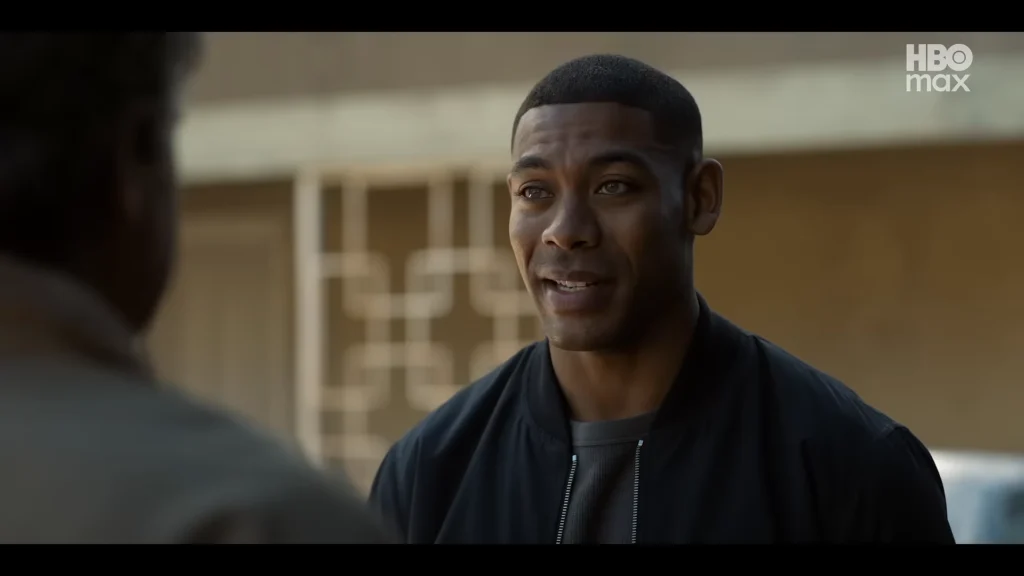
Opposite him is Aaron Pierre as John Stewart, and Pierre is an absolute revelation. Hawes joked that the actor looks like he was built in a lab to be an action star, and he isn’t wrong. But the tragedy of John Stewart in this adaptation is a brilliant subversion of the “chosen one” trope.
John wasn’t randomly selected because of his noble heart. His existence was coldly engineered. The Guardians of the Universe looked at Earthly concepts like military discipline and abusive parental authority, and they weaponized them to forge a compliant soldier. He is a deeply traumatized former Marine who despises authority, setting him on a direct collision course with his own supposed destiny.
Episode 1 (“Pilot”): Interrogating a Human Bomb
Let’s talk about how director James Hawes structures this massive narrative, because the dual-timeline approach in the pilot episode is an absolute masterstroke. It opens in 1996, giving us this brief, glorious glimpse of Hal Jordan at the height of his fame—intercepting a meteor and doing smug 60 Minutes interviews. But the script immediately undercuts that superhero fantasy by showing us a young John Stewart enduring pure psychological terror. His Marine father literally shoots an apple off the kid’s head just to prove a twisted point about conquering fear. It is incredibly tough to watch, and it perfectly sets the stage for the broken men we are about to meet.
Jumping to the 2016 timeline, the dynamic between a deeply cynical Hal and a rigidly frustrated John (who is practically begging for his own power ring) is fascinating. The plot kicks into gear thanks to a cryptic ten-year-old backup message from Hal’s ring—a glitchy “Halogram” warning them that “There’s hail in Rushville, Nebraska.” They arrive in this dusty, middle-of-nowhere town in the wake of a horrific high school football field mass shooting.
I absolutely loved Hal’s incredibly unorthodox detective work here. Instead of using high-tech gadgets, he deliberately picks a bar fight just to get thrown into a holding cell next to the prime suspect, Waylon Sanders. The interrogation scene that follows is where Lindelof and Mundy’s writing truly shines. Hal doesn’t use glowing alien scanners to break Sanders. He uses everyday human culture. He casually asks where Harry Potter went to school and drops an Obama joke, carefully watching Sanders fail to display any normal emotional reactions, pop-culture awareness, or even casual bigotry. It’s a brilliant, chilling deduction. The second Sanders realizes he’s caught, he coldly recites the Green Lantern oath and turns himself into a living bomb, forcing Hal to completely drain his ring to contain the blast.
The Ultimate Misdirect: The 2026 Time Jump
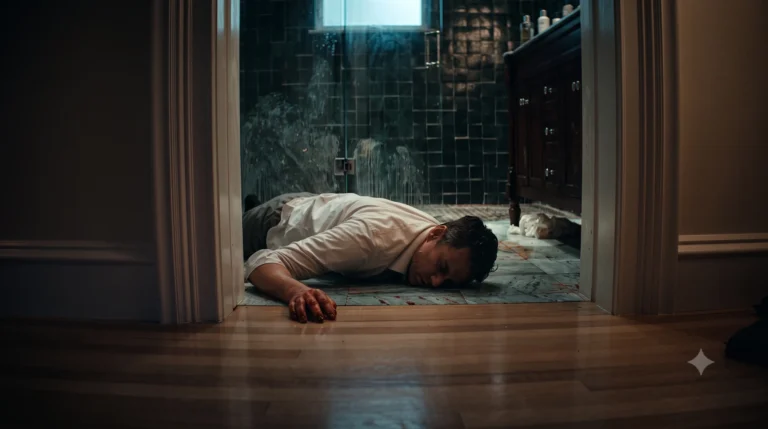
And then, just when you think you understand the rhythm of the show, the pilot violently pulls the rug out from under you. We smash cut to 2026. A civilian John Stewart arrives back in Rushville at the request of Sheriff Kerry Kane (Kelly Macdonald, who is phenomenal and clearly hiding her own dark Gotham City past). They walk out to the exact same high school bleachers, only to find Hal Jordan’s frozen, dead body with a bullet in his head and his ring missing. I genuinely gasped the first time I saw it. It is a massive narrative disruption.
Episode 2 (“Trust Fall”): Ticking Clocks and Space Azkaban
Moving into the second episode, the writers heavily subvert standard comic book tropes. With his ring completely dead, Hal can’t just fly his partner home. Instead, he barks at the uptight former Marine to “unclench” and forces him to take a commercial airline flight back to Coast City to retrieve a power battery. I found John’s detour into Hal’s vault incredibly endearing—especially the bizarre task of having to feed raw beef and bison to Earl, Hal’s live alien plant hidden inside a pocket dimension.
But the humor vanishes quickly. On the highway, John gets violently T-boned by a black van. His abductors are an alien faction led by a being named Antaan, who drops the first massive lore bomb of the series. The Rushville shooter wasn’t just a random alien; it was a “Manhunter.” For the uninitiated, Manhunters are ancient, genocidal synthetic androids built by the Guardians of the Universe that went completely rogue. Antaan slaps a terrifying ticking clock on the narrative: find the hidden Manhunter in Rushville within 48 hours, or his fleet will glass the entire town.
The Sinestro Connection
Meanwhile, Hal is pushing his luck back in Nebraska. He discovers the local stadium’s metal detectors are secretly alien-detecting tech, right before taking a sniper bullet from local militia leader William Macon. Bleeding and desperate, Hal goes off-world, leading to a scene I had been eagerly anticipating. He visits a maximum-security space penitentiary—which fans have accurately dubbed “Space Azkaban”—to interrogate his former mentor, Thaal Sinestro. Ulrich Thomsen is absolutely bone-chilling in this role. He confirms the reality of the Manhunter threat, but what really got under my skin was his deeply unsettling, hyper-specific interest in John Stewart. It was the first real hint that our heroes were merely pawns in a much darker cosmic chess game.
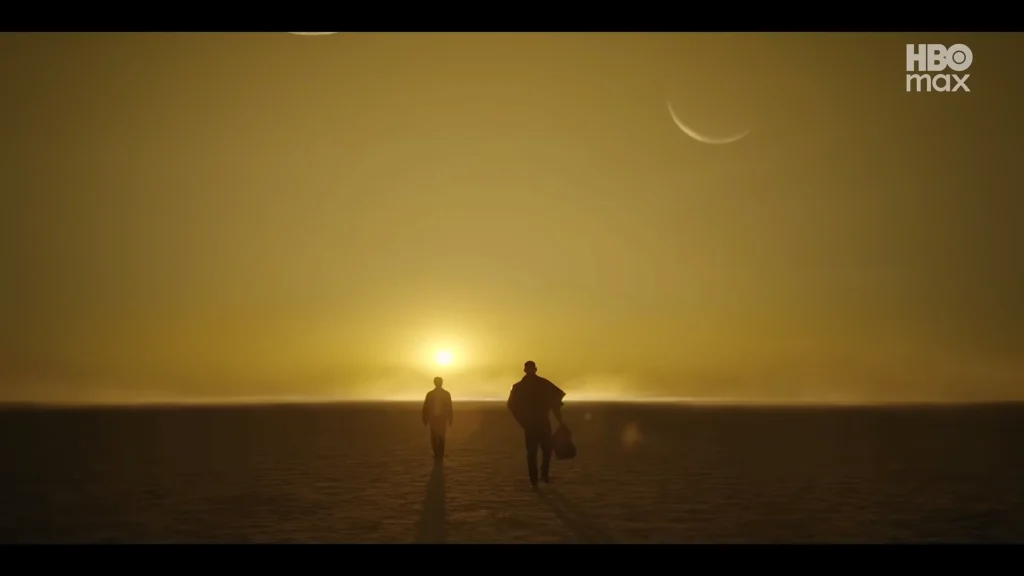
Episode 3 (“OutKast”): The Making of a Weapon
If the first two episodes were about building the mystery, Episode 3, directed by Stephen Williams, completely halts the procedural momentum to deliver a devastating character study. I’ve always found the Guardians of the Universe to be incredibly sketchy in the comic books, but this adaptation takes off the kid gloves and frames them as straight-up villains.
Through a series of agonizing flashbacks, we finally get a look at John’s upbringing. His father, John Sr., wasn’t just a strict military dad; his obsession with discipline crossed the line into horrific psychological abuse. But here is the sick, twisted revelation: none of this was random. We learn that Lianna, one of the Guardians, actually approached John’s mother, Bernadette. She offered the family “recompense” for John Sr.’s own failed attempt to become a Lantern. The Guardians deliberately manipulated this family, using Earthly trauma to mold John into the perfect, fearless replacement soldier.
Why go through all this trouble? Because Hal Jordan was a nightmare for them. He was too rebellious and too unpredictable. They needed a compliant weapon. They literally stripped John of his childhood aspirations—specifically his dream to become an artist and an architect—just to forge a child soldier who wouldn’t ask questions. I was completely glued to the screen. It is a brutal, necessary look at generational trauma. (Also, for the hardcore DC fans, keep an eye on the background in this episode. There’s a blink-and-you-miss-it advertisement for Janus Cosmetics, a brilliant little nod to the Batman villain Black Mask that reminds us exactly what universe we are playing in.)
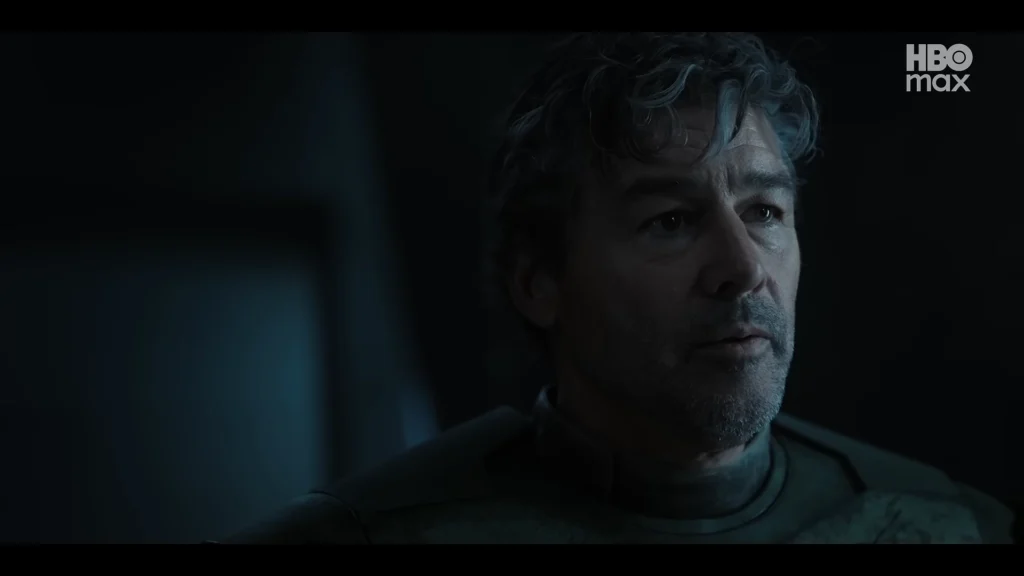
Episode 4 (“The Weenie”): Heartland Paranoia
By the time we slide into Episode 4, directed by Geeta Vasant Patel, the 48-hour deadline is suffocating, and the paranoia in Rushville hits a boiling point. This hour heavily leans into the rural xenophobia of the heartland. We spend a lot of time with William Macon (played with terrifying intensity by Garret Dillahunt), a wealthy local rancher running a heavily armed right-wing militia. He is stockpiling weapons, terrified of an impending alien invasion.
The dramatic irony here is so thick you could cut it with a knife. Macon is screaming about dangerous “outsiders,” completely oblivious to the fact that his own wife, Zoe, is the actual synthetic Manhunter they are hunting. Patel directs this episode like a sweaty neo-noir fever dream. The cinematography is gorgeous and oppressive. The tense sequences inside a local meatpacking plant gave me heavy Preacher vibes, while the grimy motel shootouts felt like they were ripped straight out of L.A. Confidential.
The episode throws multiple narrative fake-outs at us, trying to make us suspect half the town, but the absolute best scene belongs to John. During a massive standoff, he taps into his suppressed architectural skills to sketch a caricature of Macon, subtly shifting the psychological power dynamic in the room. Meanwhile, Hal is just stubbornly clinging to his ring, pushing John further away. You can literally see the realization wash over Aaron Pierre’s face. John realizes that every single authority figure in his life—his abusive father, the United States military, the cosmic Guardians, and now his mentor Hal—has just been using him as a blunt instrument.
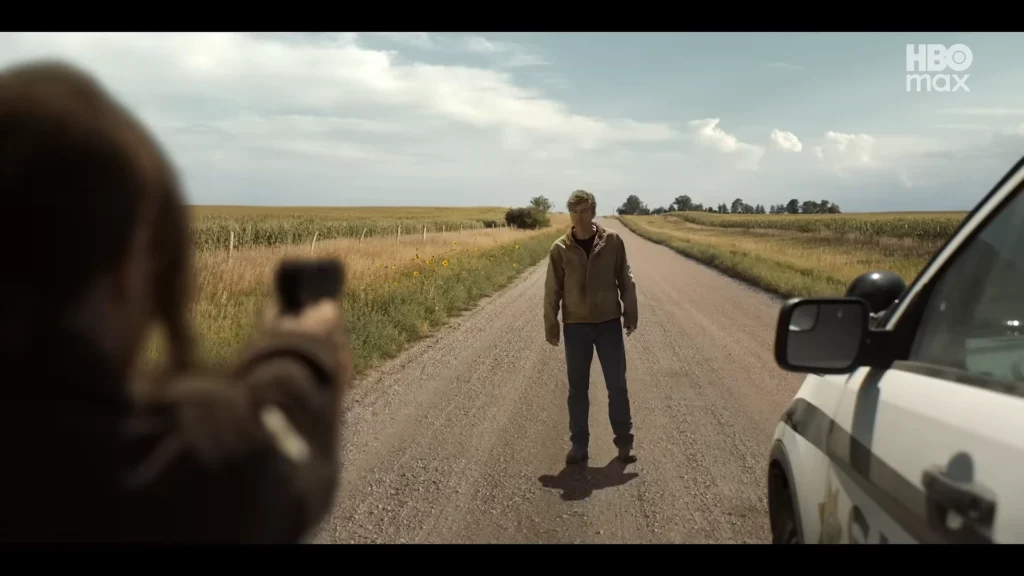
Episode 5 (“Lights Out”): Total Carnage
I don’t think anything could have prepared me for the sheer brutality of Episode 5. Functioning as this spectacular, blood-soaked mid-season climax, the show finally resolves the 2016 timeline, and the cost is astronomical. Hal, proving my point that he is fundamentally addicted to his identity as a Green Lantern, makes a decision that is so morally bankrupt it genuinely shocked me. To preserve his ring and his status, he straight-up lies to the alien leader, Antaan, falsely pointing the finger at William Macon as the Manhunter.
What follows is absolute chaos. Antaan’s forces descend on the Macon ranch, and a massive portion of Rushville gets leveled in the crossfire. Sheriff Kerry Kane is pushed to such an extreme limit of survival that she actually cuts off her own pinky finger to fake her death and escape. It is gritty, ugly, and relentlessly tense.
Then, Zoe drops her human disguise. The revelation of her immense, terrifying power as a Manhunter is spectacular. She systematically slaughters Antaan’s forces, casually dismantles the militia, and murders her own husband, William. Antaan realizes he’s lost and detonates his own ship in orbit. Down on the ground, Hal is pushing his ring to the absolute point of catastrophic failure trying to stop Zoe. But in the midst of this cosmic warfare, Hal and John just start beating the absolute hell out of each other in a cheap motel room.
When Zoe finally corners Hal, it isn’t glowing green energy that saves the day. John taps into his elite military sniper training and puts a single, deafening bullet right through Zoe’s head. And just to be absolutely sure the threat is dead, he brutally cuts out her synthetic alien heart.
The fallout is devastating. The Guardians descend, officially offering John the ring he has been begging for. The Guardian Lianna gives this half-hearted apology, admitting they made “mistakes” in manipulating his life. But John looks at the systemic, cosmic corruption standing in front of him, and then he looks at Hal—this hollow, pathetic shell of a man whose only worth is tied to a piece of jewelry. In a moment of pure, defiant autonomy, John rejects it. He tells Lianna the ring makes him feel “empty,” abandoning his engineered destiny and walking away, leaving Hal entirely alone in the rubble.
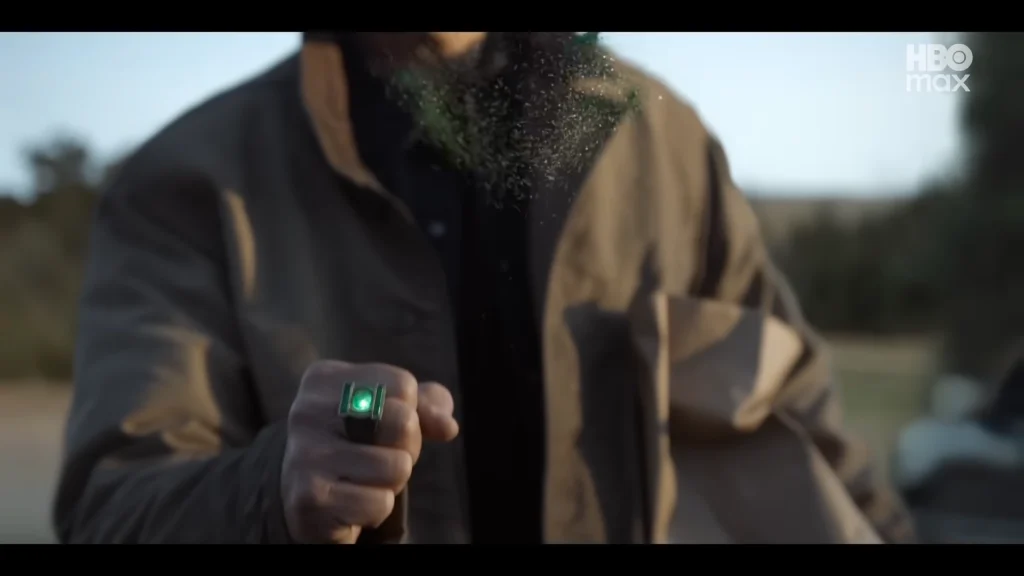
Episode 6 (“Bad Optics”): The Aftermath and the New Lantern
And just like that, Episode 6 drops us right back into 2026. Ten years have passed. John Stewart is no longer a soldier; he is finally working alongside his brother Marcus as an architect. In a brilliant bit of world-building that explicitly references the upcoming Superman film and the events of The Suicide Squad, John is designing high-end panic rooms for rich civilians terrified of superhero collateral damage.
He is lured back to Rushville, only to realize the town absolutely loathes the Green Lanterns for the destruction caused a decade ago. And then we get the confirmation of the pilot’s cliffhanger: Hal Jordan is dead, his frozen body dumped on the high school bleachers.
This throws John into a murder investigation, which leads to the introduction of Guy Gardner, played with infuriating perfection by Nathan Fillion. Guy is the current Green Lantern of Earth, and his abrasive, self-aggrandizing energy immediately clashes with John’s heavy stoicism. Guy gloats, but John hits him with a brutal truth: because John rejected the ring back in 2016, the Guardians had to scrape the bottom of the barrel and recruit a former “gym teacher.” Everything Guy has is only because John didn’t want it.
But Guy drops a massive lore revelation that changes everything: Sinestro has broken out of Space Azkaban.
The episode is packed with great moments—like John using a knockoff Bat-Signal right in the middle of Nebraska, which Guy defends by saying he “ripped off that Bat guy over in Gotham.” But the funeral for Hal is what really broke me. Hal had arrogantly pre-written his own eulogy, expecting a massive turnout of intergalactic dignitaries. Instead, the church is virtually empty. When Carol Ferris (Amie MacKenzie) shows up, she delivers the coldest, most heartbreaking line of the series, telling John that Hal’s only true friendship was “the one on his finger.” The episode ends with John activating that glitchy “Halogram” once more, reigniting the central, agonizing mystery of who actually pulled the trigger on Hal Jordan.
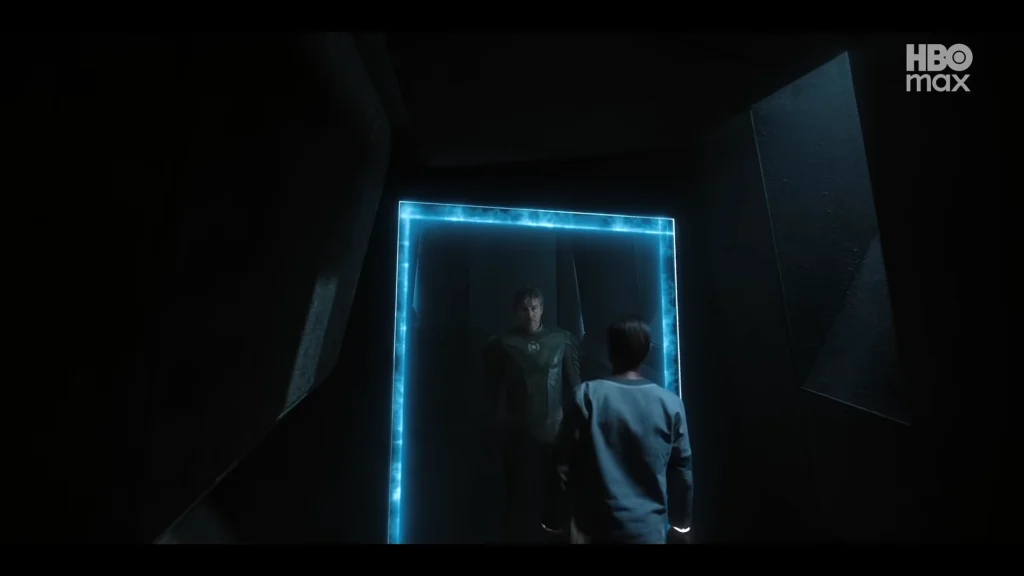
The “Who Killed Hal?” Reddit Debate
If you want a true gauge of how deeply this show has sunk its claws into the audience, just open Reddit or watch any New Rockstars breakdown. The revelation of Hal Jordan’s off-screen death at the end of the pilot sparked immediate, fiery backlash, with some fans comparing it to the sloppy treatment of Jimmy Olsen in Batman v Superman. But as the 2026 timeline unfolds, the community has realized there is a massive misdirect at play. Let’s break down the three most compelling theories dominating the forums right now:
1. The Parallax Descent: Championed by hardcore lore nerds, this theory suggests Hal isn’t dead at all. We’ve seen how desperate and disillusioned he is with the Guardians. What if he faked his demise to operate completely off the grid? Stripped of his ring’s standard power, Hal might be seeking an alternative, much darker energy source. Many believe this is the genesis of his descent into the “Parallax” persona from the comics—a terrifying villain arc driven by fear and corruption.
2. The Manhunter Duplicate: The series spent an enormous amount of time establishing that Manhunters can perfectly mimic human biology, bypassing standard medical tests. A very vocal segment of the fanbase believes the frozen corpse on those bleachers is actually a synthetic duplicate. If this is true, the real Hal is either imprisoned somewhere or operating in the shadows. We know from the comics that Hal is capable of forging his own ring out of Manhunter tech, which would explain how he circumvented the Guardians’ surveillance.
3. Sinestro’s Escape: The revelation in Episode 6 that Sinestro has broken out of “Space Azkaban” makes him the prime suspect. Sinestro harbors a deep, venomous hatred for the Guardians and a complex, adversarial relationship with Hal. His escape aligning perfectly with the timeline of Hal’s murder is almost too coincidental, making him the most logical external threat.
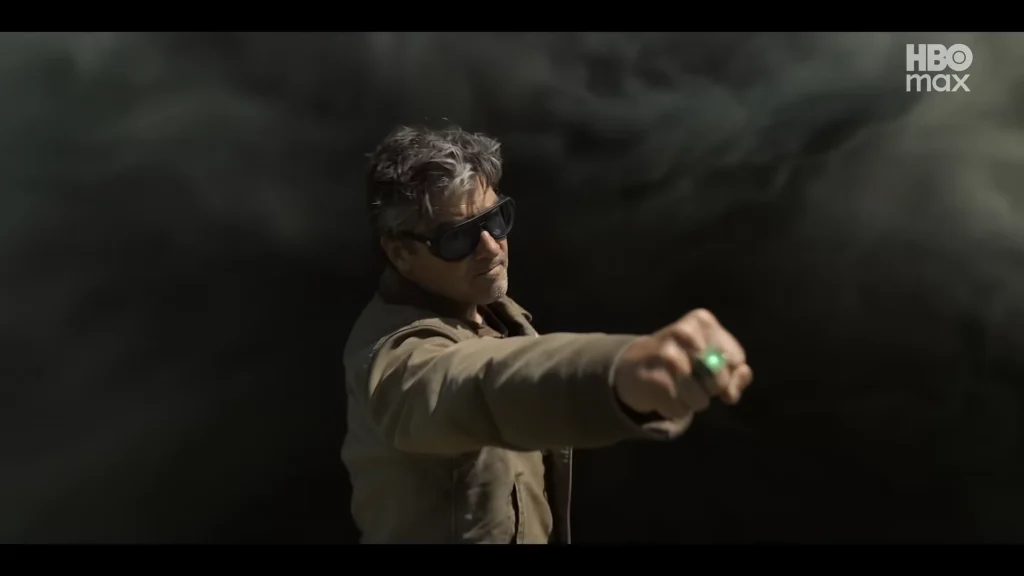
The Sleeper Cell Theory
While we watched John blow Zoe Macon’s synthetic brain out in Episode 5, the community remains deeply suspicious of the surviving Rushville residents. The Macon family’s intense xenophobia feels like a deliberate cover. The focal point of this paranoia is Noah Macon, Kerry and Billy’s son. Right before Zoe died, she was seen whispering secrets to the boy. Is Noah carrying dormant Manhunter programming? Is he a sleeper agent designed to activate in the 2026 timeline? And let’s not forget Sheriff Kerry Kane; her mysterious, unnamed history in Gotham City suggests she has deep connections to the underground vigilantism of the DCU.
Building the “Gods and Monsters” Slate
What I find most impressive about Lanterns is that it doesn’t exist in a vacuum. It is actively laying the geopolitical and cosmic foundation for James Gunn’s DCU Chapter One: Gods and Monsters.
Take the appearance of Guy Gardner. This explicitly bridges the show to the upcoming Superman (2025) film, where Nathan Fillion will reprise the role as part of Maxwell Lord’s Justice Gang. The show brilliantly explains why Guy is the Green Lantern of Earth during Superman’s debut: because John Stewart refused the mantle ten years prior, forcing the Guardians to recruit a vastly underqualified candidate. Furthermore, Guy casually referencing “that Bat guy over in Gotham” confirms that Batman is already an established, active vigilante long before the events of the upcoming The Brave and the Bold film.
But the biggest setup here is for the highly anticipated Man of Tomorrow (2027) ensemble film. The introduction of the Manhunters—an advanced, genocidal synthetic alien race—feels like deliberate thematic prep for the arrival of Brainiac. There are heavy rumors that the technology recovered from Zoe Macon will be reverse-engineered by Nicholas Hoult’s Lex Luthor to build his Warsuit, or that the cosmic instability caused by the Guardians will directly summon Brainiac to Earth. We know Aaron Pierre’s John Stewart is confirmed for the 2027 film, which means his journey from a traumatized civilian in 2026 to an active, powerful Green Lantern is going to form the emotional core of his cinematic arc.
Final Thoughts: A Masterpiece in the Making
As Lanterns barrels toward its final two episodes, the creative team has successfully executed a brilliant bait-and-switch. They hooked us with a gritty, rural Americana murder mystery, only to expose a massive conspiracy involving the highest cosmic authorities in the DC Universe.
I don’t expect Lindelof, Mundy, or King to give us a traditional, glowing-fist superhero resolution. The climax is going to hinge on intimate, agonizing character decisions. John Stewart is going to have to confront his engineered destiny—not as a compliant child soldier for the Guardians, but as a fully realized, independent architect of his own future. By anchoring massive cosmic lore in deeply human trauma, Lanterns has already solidified itself as the crown jewel of the new DC Universe. This is exactly what happens when superhero television is treated as high-end prestige drama, and I cannot wait to see how it ends.
checkout what’s new : Prime Time (2026) Review: How Robert Pattinson Made Me Rethink the Dark Ambition of Network TV