If you are hunting for a definitive, exhaustive breakdown of Raising Kanan Season 5 Ending Explained, you have just stepped into the most intricately woven psychological trap in modern crime television. The Power universe is renowned for its ruthless betrayals and operatic family tragedies, but creator Sascha Penn has completely shaken the foundation of the flagship prequel with this devastating return.
Here at memoria.film, we are obsessed with unraveling complex character psychologies and narrative mysteries. By taking the terrifying framework of the Thomas family’s slow-motion collapse and injecting it with the long-awaited arrival of legendary kingpin Breeze, the showrunners have crafted an eight-episode limited final season that is overflowing with ambient dread and cold-blooded finality.
The success of this ambient dread relies entirely on moving away from mere physical street violence and leaning heavily into modern psychological horrors: the weaponization of maternal love, the catastrophic consequences of buried secrets, and the sociopathic detachment required to survive in the 1990s Queens drug trade.
In this massive, comprehensive breakdown, we have divided our analysis into seven exhaustive parts to cover every single detail you need to know. We will dissect the elite cast and their shifting dynamics, provide an exhaustive recap of the devastating premiere, explain the shocking twists of the ending, unearth the darkest hidden secrets and Easter eggs, forecast explosive theories for the remainder of the season, and provide a dedicated global streaming guide to answer the internet’s burning questions.
PART 1: The Setup and The Shocking Season 5 Cast
To fully grasp the nightmare unfolding in South Jamaica, Queens, we first have to look at the deeply flawed human beings at the center of the story. This is not a simple tale of ambitious hustlers rising to the top; the Thomas family is riddled with deep-seated trauma, moral ambiguity, and inescapable guilt. The characters are no longer the naive players introduced in 1991; they are battle-scarred veterans of a domestic war.
The absolute success of this series relies on a powerhouse ensemble cast that elevates standard crime tropes into Shakespearean tragedy.
| Actor | Character | Narrative Role & Psychological Profile |
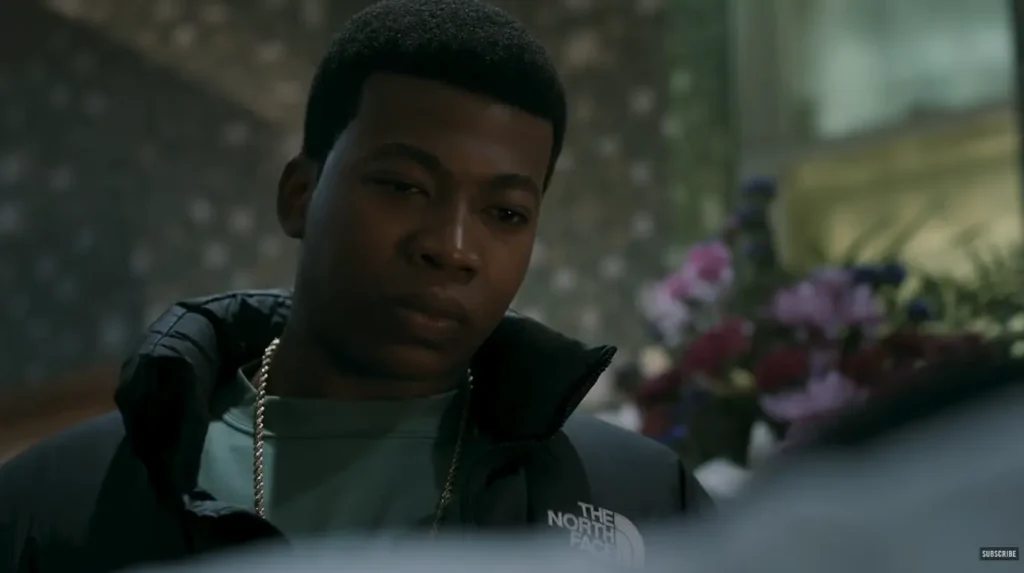
| Mekai Curtis | Kanan Stark | A highly troubled young man completing his tragic metamorphosis into a monster. Stripped of his youthful innocence, Kanan now operates with a chilling, dead-eyed pragmatism. He exhibits textbook signs of acquired psychopathy, processing horrific trauma not with grief, but with total emotional detachment. |
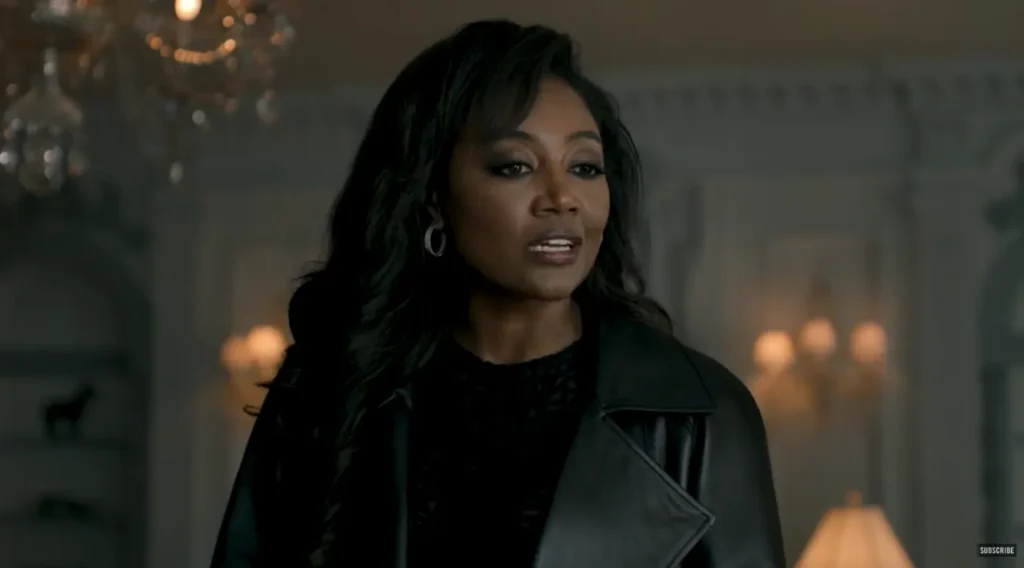
| Patina Miller | Raquel “Raq” Thomas | The brilliant but terrifying matriarch whose fierce, protective instincts have paradoxically doomed her family. Raq is trapped in a prison of her own making, forced to compartmentalize unspeakable horrors to shield her son from the consequences of his actions. |
| Malcolm Mays | Louis “Lou-Lou” Thomas | The tragic artist of the family. Lou-Lou spent four seasons battling addiction, depression, and a desperate desire to escape the drug trade. His narrative is one of cruel irony, finding inner peace only moments before meeting a violent, tragic end. |
| London Brown | Marvin Thomas | The enforcer desperately seeking redemption. Marvin’s arc has been defined by his attempts to become a better father. The premiere plunges him back into a state of uncontrollable rage and unadulterated grief, threatening to undo his hard-fought personal growth. |
| Shameik Moore | Branford “Breeze” Frady | The long-awaited Southside legend. Charismatic, unpredictable, and entirely unhinged, Breeze represents the purest distillation of the street element—a mentor figure who will finalize Kanan’s indoctrination into total ruthlessness. |
| Joey Bada$$ | Kadeem “Unique” Mathis | A former kingpin struggling to navigate a changed ecosystem. Unique survived a brutal attack but now finds himself a man out of time, grappling with the loss of his family, his territory, and his pride in the face of younger predators. |
| Hailey Kilgore | LaVerne “Jukebox” Thomas | Kanan’s cousin and the emotional casualty of the Thomas family’s sins. Highly observant and deeply traumatized, Jukebox is slowly piecing together the true nature of her family’s internal rot, setting the stage for her own eventual corruption. |
These performers, guided by the precise direction of Dylan C. Brown and the sharp writing of showrunner Sascha Penn, elevate the premiere, “By Blood,” into a masterclass of modern television.
PART 2: Exhaustive Breakdown and Recap of “By Blood”
The sheer terror of the Season 5 premiere is how meticulously it dismantles the illusion of family loyalty. Operating strictly within the confines of consequence, the episode utilizes immense patience before delivering its fatal blows. Let’s exhaustively break down the most critical events that set up the ultimate endgame for the Thomas family.
The Catalyst: The Kitchen Confrontation and Lou-Lou’s Demise
The narrative detonates immediately within the first five minutes. Picking up precisely where the Season 4 finale left off, the episode opens with Kanan Stark holding a firearm leveled directly at his mother, Raq. The tension in the kitchen is suffocating. Kanan’s rash decision to confront Raq with lethal intent is driven by a web of lies he has believed, pushing his constant reactionary state to its absolute limit.
As Kanan hesitates, wrestling with the psychological barrier of matricide, the situation rapidly deteriorates. Raq’s loyal bodyguard, Ruben, silently enters the room from behind. Assessing the immediate threat to his boss, Ruben cocks his weapon, preparing to neutralize Kanan.
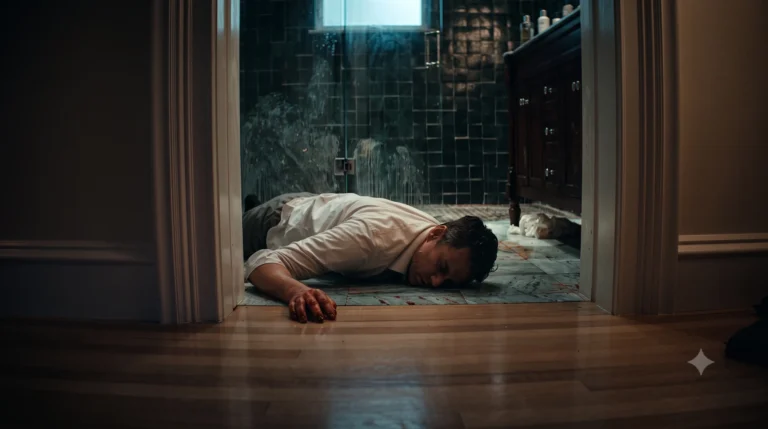
What happens next is a devastating sequence of split-second reactions. Kanan’s uncle, Lou-Lou, recognizing that Ruben is about to execute his nephew, physically intervenes. In a profound act of familial sacrifice, Lou-Lou shoves Ruben out of the way. The physical struggle causes Ruben’s firearm to discharge accidentally, sending a bullet safely into the wall. However, the sudden acoustic shock and the perceived threat behind him trigger a pure, street-conditioned panic in Kanan. Operating entirely on adrenaline, Kanan spins around and blindly pulls his own trigger twice. The bullets strike Lou-Lou directly in the chest.
The immediate aftermath is a masterclass in silent, operatic horror. Lou-Lou, bleeding profusely from the heart, is pinned against the wall, his eyes wide with shock as he looks at the nephew who just delivered his death blow. He slides to the floor, coughing blood, while Kanan stands frozen, an expression of sheer disbelief plastered across his face. He has just committed avunculicide—the murder of his own uncle.
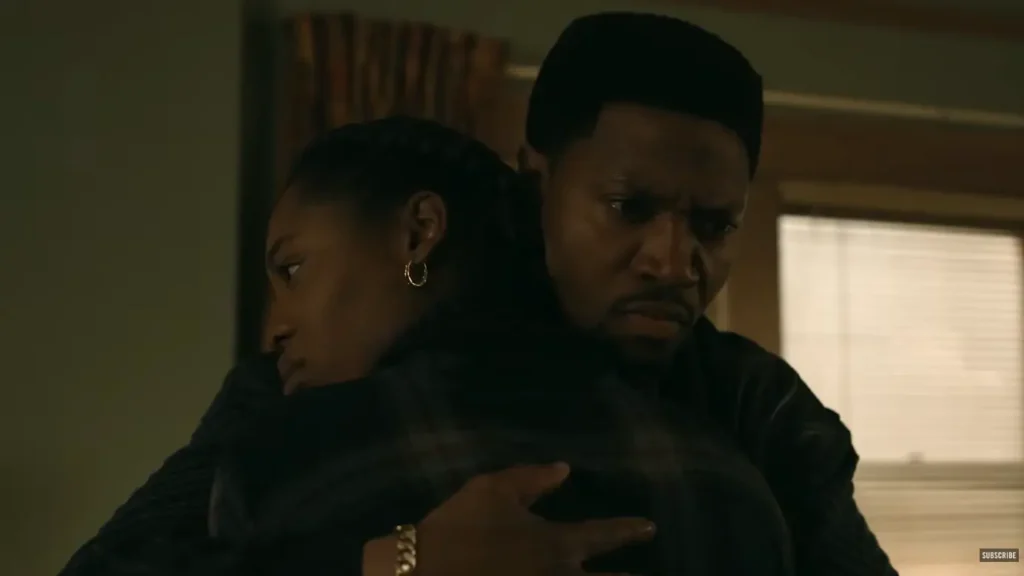
Raq rushes to her brother’s side, screaming in absolute horror, “What the fuck did you do?”. Ruben, operating on protocol, immediately suggests calling for an ambulance. However, Raq’s maternal preservation instincts ruthlessly override her sibling grief. She stops Ruben, coldly calculating the reality of the situation: if the authorities arrive, Kanan will be arrested for murder and spend the rest of his life in prison.
Consequently, Raq makes the agonizing, calculated decision to let her youngest brother bleed to death on the floor. She holds Lou-Lou, crying and professing her love, as he slowly expires. It is a scene of immense emotional brutality, definitively crossing the point of no return for the entire series.
The Illusion of Protection: Deleting Ruben
The physical death of Lou-Lou is immediately followed by the moral death of Raq’s humanity. With Lou-Lou dead, Raq understands that Ruben is now a massive liability. Despite Ruben being a loyal employee who was merely trying to protect her, he is a witness to a murder committed by her son. Ruben apologizes and promises absolute silence, fully aware of the precarious situation.
However, Raq’s philosophy has always been absolute control. She cannot entrust her son’s freedom to the silence of a hired gun. In a sequence devoid of any emotional warmth, Raq and Ruben transport Lou-Lou’s body out of the house to dispose of it. Once the task is complete, Raq turns her weapon on Ruben. Citing the necessity of “no loose ends,” she executes the bodyguard in cold blood.
The imagery of Raq returning to her pristine home alone, getting down on her hands and knees to scrub her brother’s blood out of the floorboards and off the walls, serves as a profound visual metaphor for her entire existence. She is constantly cleaning up the catastrophic messes created by the men in her life, burying her trauma under the floorboards. She fabricates a lie to feed to the rest of the family—specifically Marvin and Jukebox—claiming Lou-Lou simply never arrived at the house that night. This lie is the foundation upon which the final season will crumble.
The Law Enforcement Noose Tightens
While the Thomas family fractures internally, the external pressure from law enforcement reaches a boiling point. The precinct is reeling from the revelations of the previous season. Captain Louis Baptiste announces his impending retirement, signaling an end to the old guard and the shifting of power structures within the NYPD.
This transition empowers Detective Garcia, who sheds his “good cop” persona to become a relentless predator. The captain tasks Garcia directly with uncovering the truth behind the death of Detective Howard. Garcia’s investigation immediately zeroes in on the Thomas family’s periphery. He aggressively stalks Aisha, hoping to leverage her relationship with Jukebox to extract intelligence.
More alarmingly, law enforcement applies massive psychological pressure on Amber. The authorities are investigating the brutal killings of her abusive stepparents—murders committed by Marvin Thomas to protect her. Amber sits in an interrogation room, sticking to the alibi Marvin provided: she claims the killer was a white man covered in tattoos. However, the detectives inform her that neighbors witnessed a Black man fleeing the scene. The detectives threaten Amber, suggesting that if she continues to lie, they will remove her from her new, loving foster family. The clock is ticking on Amber’s loyalty, presenting a massive existential threat to Marvin’s freedom.
The Mafia War and Distribution Crisis
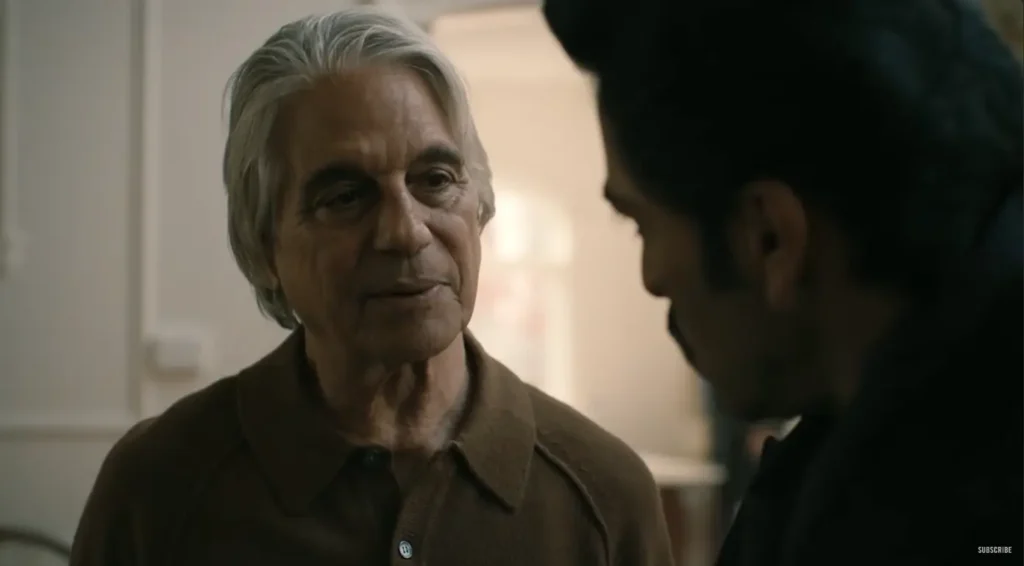
Raising Kanan Season 5 Episode 1 does not neglect the sprawling criminal ecosystem surrounding the family. The Italian mafia subplot erupts into a full-scale crisis. Stefano Marchetti (Tony Danza) is recovering in a hospital bed, surrounded by his loyal crew. Despite his injuries, Stefano is entirely focused on vengeance. He dismisses concerns about his health, declaring a total, all-out war against his rival, Phil Russo.
This mafia civil war creates an immediate logistical nightmare for Raq. Stefano’s men are actively putting out hits on anyone moving product in contested territories. As a result, Raq’s distribution network grinds to a halt. This leads to a tense confrontation with Hi-Fi, her supplier. Hi-Fi visits Raq, expressing deep dissatisfaction with her inability to move the weight she promised. He ominously reminds her that in his home country, betraying a business promise is a fate worse than death. Raq, currently drowning in the grief of murdering her brother, is forced to navigate the very real threat of international cartel violence.
Ghosts of Queens: Unique’s Tragic Attrition
Unique’s storyline provides a fascinating, tragic counter-narrative to Kanan’s ascent. Having miraculously survived a brutal attack by his brother Ronnie in the previous season, Unique is attempting to reclaim his former glory and exact revenge.
Unique and his associate, Akbar, aggressively track down B-Rilla’s baby mama, utilizing intimidation to extract his location. The hunt culminates in a tense standoff where B-Rilla has Perissa and Jerome pinned down. Unique arrives just in time, getting the drop on B-Rilla and executing him, officially “smoking that B-Rilla pack” and securing a measure of violent closure.
However, this victory costs Unique everything that matters. Perissa, having been traumatized and nearly killed alongside her young son, experiences a moment of absolute clarity. She realizes that the street life Unique clings to is an inescapable death sentence. In a heartbreaking scene, Perissa packs her bags, explicitly telling Unique that she refuses to let her son become collateral damage in his gangland wars. Unique attempts to say a tender goodbye to his son, Jay, but the boy looks at his father with cold rejection, recognizing that Unique is the source of their danger.
Left with no family and a severely diminished empire, Unique is a king without a kingdom. He is forced to seek an audience with the new rising power in South Jamaica: Breeze.
The Arrival of Breeze and Doghouse Rules
The episode officially introduces Branford “Breeze” Frady, a character whose name has carried mythological weight since the first season of the original Power series. Portrayed with a mesmerizing, quiet menace by Shameik Moore, Breeze does not operate like a traditional kingpin. He is a predator who understands the primal, Darwinian nature of the streets.
Breeze is introduced overseeing an underground gladiator fight ring. These are not sporting events; they operate on “doghouse rules”—battles to the death where the victor is mandated to execute the loser, or face execution themselves by Breeze’s hand. Kanan witnesses this brutal operation firsthand. The atmosphere is intense, dangerous, and surreal. It serves as a twisted psychological crucible for Kanan, teaching him that survival in this new era requires the total elimination of empathy.
Breeze’s ambition is limitless. He has secured the backing of the wealthy neighborhood benefactors, Snaps and Pops, who gift him a pawn shop to serve as a legitimate front for his burgeoning narcotics empire. Breeze recognizes the power vacuum created by Raq’s operational struggles and views Kanan as the ultimate asset. He courts Kanan, noting that with Raq out of the primary picture, they have zero competition.
However, this alliance breeds immediate internal resentment. Breeze’s right-hand man, Taz, views Kanan with intense jealousy, angry that Breeze is freely offering prime corners to an outsider. Breeze coldly dismisses Taz’s concerns, a fatal mistake that foreshadows severe internal conflict within their crew.
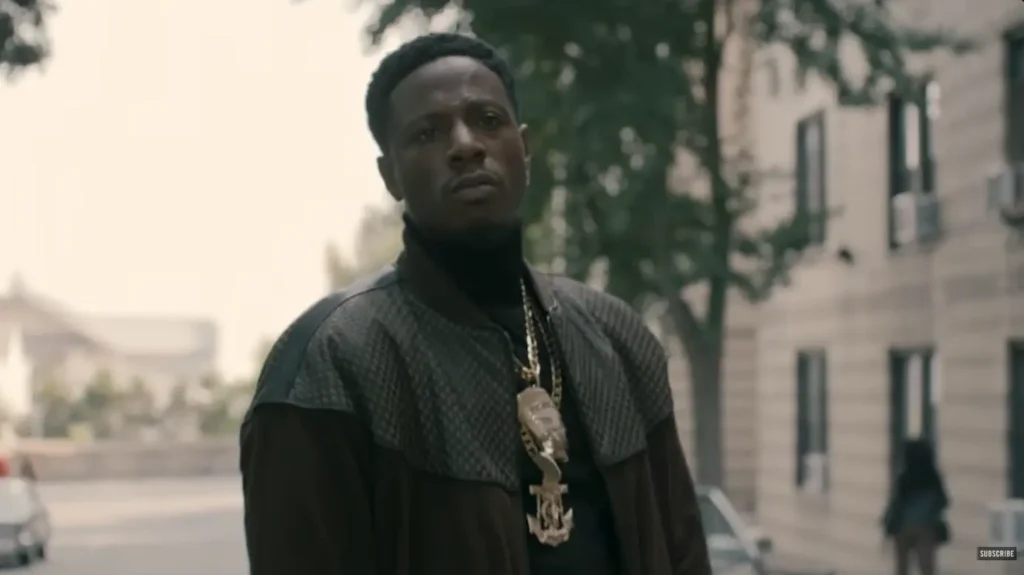
Simultaneously, Unique attempts to negotiate with Breeze. Their confrontation is a masterfully written clash of eras—and a meta-textual delight for fans, marking the first time Joey Bada$$ and Shameik Moore have shared the screen since Wu-Tang: An American Saga. Unique attempts to assert dominance, claiming he originated the style that Breeze is currently utilizing. Breeze dismissively counters, making it clear that Unique is no longer the apex predator. Breeze offers a partnership, but the subtext is clear: Unique will be subordinate.
The Climax: A Monster is Baptized
The episode’s true climax occurs not during a shootout, but at Lou-Lou’s funeral. The surviving family members gather to mourn, but the underlying tensions threaten to tear the church apart. Marvin, completely unaware of Kanan’s guilt, delivers a tearful, rage-fueled promise. He vows to exact absolute vengeance upon whoever murdered his brother, operating under the assumption that Unique or an unknown rival faction ordered the hit.
Jukebox watches the proceedings with deep, analytical suspicion. Her sharp instincts suggest that Raq and Kanan are hiding a massive truth, setting the stage for her to eventually uncover the horrific reality of the family cover-up.
However, it is Kanan’s reaction that anchors the episode’s horror. Following the service, Raq confronts Kanan in private. She delivers an emotional speech about Lou-Lou, lamenting what he could have been—a successful music producer, the next Quincy Jones—had the streets not claimed him. Raq is desperate for her son to show a single shred of remorse or understanding for the sheer magnitude of what he has done. She explicitly tells him she is done protecting him.
Kanan stares at his mother with a stone-cold, dead-eyed expression. He has completely emotionally amputated himself from the trauma. When Raq presses him, Kanan chillingly responds, “You expecting me to say I give a fuck? I don’t”. He then coldly reminds her that she has been the enemy his entire life. This moment marks the absolute death of the conflicted teenager and the permanent birth of the sociopathic kingpin.
PART 3: Raising Kanan Season 5 Episode 1 Ending Explained
Why is Kanan so incredibly cold regarding the death of his own uncle? To provide a definitive Raising Kanan Season 5 Episode 1 ending explained, we must examine the deep psychological conditioning at play.
The human brain, when subjected to overwhelming, incomprehensible trauma, often triggers a dissociative state to protect the psyche. Kanan murdering the uncle who literally stepped in front of a bullet to save him is an act so horrific that Kanan’s mind simply refuses to process it. Instead of breaking down, his mind builds an impenetrable wall of apathy.
Showrunner Sascha Penn has explicitly stated that this specific event is the “point of no return” for the character. This trauma response hardens into a permanent personality disorder. It explains the foundational psychology of the adult Kanan Stark seen in the original Power series. If Kanan can rationalize the killing of Lou-Lou and feel absolutely nothing, the psychological barrier against murdering family members is permanently destroyed. This is the exact mechanism that eventually allows him to murder his own son, Shawn, and his beloved cousin, Jukebox, decades later without a second thought.
Furthermore, the ending sequence brilliantly executes the season’s tagline: “Killers aren’t born, they’re raised”. Raq manufactured this monster. By teaching Kanan that violence is the ultimate currency, by lying to him repeatedly, and by covering up the murder of her own brother to keep Kanan on the streets, she has raised a predator that she can no longer control. The monster outside her door was invited in by the secrets she buried under the floorboards.
PART 4: The Darkest Hidden Secrets, Easter Eggs & Cinematic Parallels
Raising Kanan operates as a puzzle box for dedicated fans of the Power universe. By piecing together throwaway lines of dialogue, background visual cues, and specific cinematography choices, several massive hidden secrets emerge.
The Skunk and The Panther Parallels
In premium television thrillers, such as the critically acclaimed Cape Fear adaptation on Apple TV, visual metaphors like dead skunks and stalking panthers are used to signify an encroaching, patient predator. In Raising Kanan, Breeze serves this exact symbolic function. He is the panther in the garden. He does not immediately attack the Thomas family; rather, he patiently stalks the perimeter, utilizing his underground fight club to groom Kanan, waiting for Raq’s empire to collapse under its own weight before he strikes.
The Season 3 Wardrobe Clue
Eagle-eyed viewers noted a tragic Easter egg during Marvin’s grieving process. When Marvin visits Lou-Lou’s old apartment to reminisce, the show cuts to a brief flashback. In this flashback, Lou-Lou is wearing a highly specific outfit from Season 3. In the visual language of the show’s cinematography, flashing back to a character’s era of deepest despair (Season 3 was the height of Lou-Lou’s alcoholism and depression) right after their death signifies that the character never truly escaped their demons. The streets always hovered over him like a shroud.
The Doghouse Rules as a Macrocosm
Breeze’s gladiator ring is a direct historical Easter egg to the brutal reality of the crack epidemic in the early 1990s in New York City. The “doghouse rules” explicitly mirror the philosophy Kanan later imparts to Tariq St. Patrick in Power: “You ain’t a real killer until you kill someone that you love”. Breeze is fundamentally programming Kanan with the sociopathic software required to run an empire devoid of emotional attachments.
PART 5: Explosive Theories for the Final Season
With only seven episodes remaining in this highly accelerated final season, the narrative velocity is guaranteed to produce massive casualties. Based on the intricate plotting of the premiere, several major theories emerge regarding the ultimate endgame.
Theory 1: The Fratricidal War (Marvin’s Devastating Discovery)
Marvin’s vow of vengeance at the funeral is the ticking time bomb of the season. He is currently operating under the false assumption that Unique or the Italians ordered the hit on Lou-Lou. However, secrets in this universe always surface. The primary theory suggests that Marvin will discover physical evidence—perhaps blood residue in Raq’s house, or a confession from Amber under police pressure that unravels Raq’s timeline—proving Kanan pulled the trigger.
When Marvin discovers that his nephew murdered his brother, and his sister covered it up, his hard-won redemption arc will shatter instantly. Driven by a primal need for blood, Marvin will likely hunt Kanan. This sets up a horrific climax where Kanan must kill his last remaining uncle in self-defense, completely fulfilling his transition into a family-killing monster.
Theory 2: The Downfall of Unique by Breeze’s Hand
Unique’s refusal to assimilate into Breeze’s new world order positions him as a primary target. Unique is operating entirely on pride, attempting to assert dominance in a landscape that has already moved past him. The theory suggests that Breeze, recognizing Unique as a stubborn obstacle to total control of South Jamaica, will orchestrate his demise.
Alternatively, to solidify their new partnership, Breeze may order Kanan to execute Unique as a final test of loyalty. Unique’s heartbreaking decision to stay behind in Queens while Perissa and his son fled effectively sealed his death warrant; he has nothing left to live for but his ego, which will invariably get him killed.
Theory 3: The Catalyst for Officer Jukebox
Hailey Kilgore’s Jukebox has been quietly, analytically observing the decay of her family. Possessing the natural instincts of an investigator, the theory suggests that Jukebox will be the one to uncover the logical inconsistencies in Raq’s story regarding Lou-Lou’s disappearance.
When Jukebox realizes that Kanan is a murderer who feels no remorse for killing their uncle, the betrayal will be absolute. This profound trauma will serve as the exact psychological catalyst that drives her permanently away from the criminal underworld and into the police academy. However, recognizing the inherent corruption within her own bloodline, she will eventually become the deeply corrupt, cynical police officer seen in the original series, viewing the law not as a moral absolute, but as a tool for extortion.
Theory 4: Raq’s Ultimate Sacrifice
Raq’s maternal instinct, however twisted, is her defining characteristic. She has consistently demonstrated a willingness to absorb endless suffering to protect Kanan. As the walls close in—with the Italian mafia demanding product, Detective Garcia investigating Howard’s murder, and the internal family civil war brewing—Raq will run out of strategic options.
The most compelling theory dictates that Raq will not be killed by Kanan. Instead, she will intentionally absorb the legal fallout for the entire Thomas family empire. By taking the fall for the accumulated murders, racketeering, and narcotics distribution, she ensures Kanan remains free to build his own legacy with Breeze. A life sentence in federal prison serves as a poetic, tragic end for a woman who sought to control the world but ultimately surrendered her freedom for a son who despises her.
PART 6: Comprehensive Global Streaming Guide
To witness the devastating final chapter of the Thomas family, viewers must navigate specific regional streaming platforms. Below is the exhaustive guide on where and how to watch the final season globally.
| Region | Primary Platform | Broadcast/Release Schedule | Alternative Streaming Options |
| United States | STARZ | Fridays at 8:00 PM ET (Linear) / Midnight ET (App) | Hulu Add-on, Amazon Prime Video Channel, Roku Premium, Apple TV Channel, FuboTV, Sling TV. |
| United Kingdom | MGM+ | Saturdays (One day delay from US premiere) | Amazon Prime Video Add-on (£5.99/month). |
| Australia | Stan | Saturdays (One day delay from US premiere) | Subscriptions starting at AU$12/month. |
| Global/Other | VPN Access | Varies by connection | Users recommend NordVPN to connect to US servers and stream directly via the Starz web portal. |
PART 7: Raising Kanan Season 5 Episode 1 FAQ
To synthesize the vast amount of information generated by the season premiere, and to ensure you have the absolute facts, the following section provides definitive answers to the internet’s most pressing inquiries.
Who dies in Raising Kanan Season 5 Episode 1? The premiere features the shocking deaths of three established characters. The most devastating is the demise of Louis “Lou-Lou” Thomas, Kanan’s uncle, who is accidentally shot twice in the chest by Kanan during a chaotic confrontation in Raq’s kitchen. Secondly, Raq’s bodyguard, Ruben, is subsequently executed by Raq herself to eliminate him as a witness to Lou-Lou’s death. Finally, the character B-Rilla is tracked down and murdered by Unique in a revenge hit.
Why did Kanan shoot Lou-Lou? The shooting was entirely accidental, driven by trauma-induced reflex rather than premeditation. Kanan originally entered the house to murder his mother, Raq. When bodyguard Ruben intervened from behind to shoot Kanan, Lou-Lou physically shoved Ruben out of the way. The sudden movement and the accidental discharge of Ruben’s weapon caused a highly agitated Kanan to spin around and pull the trigger blindly, striking Lou-Lou who had just stepped into the line of fire to save his nephew’s life.
Who plays Breeze in Raising Kanan? The legendary, long-unseen character Branford “Breeze” Frady is portrayed by actor and musician Shameik Moore. Moore brings a quiet, coiled menace to the role of the Southside kingpin who runs an underground fight club and serves as the ultimate corrupting mentor to Kanan Stark. Fans of 1990s hip-hop culture will recognize Moore from his stellar work in Wu-Tang: An American Saga and The Get Down.
How many episodes are in the final season? Showrunner Sascha Penn designed the fifth and final season to be a tightly wound, compact narrative consisting of exactly eight episodes. This shorter episode count is intended to eliminate filler and accelerate the pacing toward the inevitable, violent conclusion of the Thomas family empire.
Will Kanan kill Marvin? While the premiere does not feature Kanan killing Marvin, it heavily foreshadows a fatal confrontation. Marvin has sworn a blood oath of vengeance against whoever killed Lou-Lou. Once Marvin discovers that Kanan pulled the trigger and Raq orchestrated the cover-up, it is highly probable that Marvin will attempt to kill his nephew. Given Kanan’s established lore as the sole male survivor of his family in the original Power series, the narrative strongly suggests Kanan will eventually be forced to eliminate Marvin.
What is the significance of Kanan’s reaction at the funeral? Kanan’s complete lack of emotion and his chilling statement, “I don’t give a fuck,” when confronted by his weeping mother, serves as the definitive turning point of his psychological profile. It illustrates that he has completely dissociated from his trauma, effectively shedding the last remnants of his humanity. This emotional amputation is the exact psychological mechanism that allows him to become the remorseless killer seen in the original flagship series, capable of murdering his own flesh and blood.
The Season 5 premiere of this sprawling crime saga does not merely set the table for a final chapter; it flips the table entirely. By immediately executing a core cast member and fracturing the fundamental trust of the central family, the narrative removes any possibility of a peaceful resolution. As the influence of Breeze expands, the grip of law enforcement tightens around Amber and Marvin, and the internal lies regarding Lou-Lou’s death fester, the characters are sprinting toward a horrifying inevitability.
The tragedy of Kanan Stark is no longer about how he enters the darkness; it is about how he drags everyone who ever loved him into the abyss alongside him. The streets of South Jamaica, Queens have officially frozen over, and survival is no longer an option for the Thomas family—only attrition.
read also : Every Year After Ending Explained: Shocking Prime Video Cast, Hidden Secrets & Theories