Is Christopher Nolan’s live-action Homer adaptation worth your $25 IMAX ticket? Look. I just walked out of a true 70mm screening for my The Odyssey Out of Theater REACTION, and I am genuinely torn. It is a stunning, practical-effects triumph. But it is also a frustratingly bloated cinematic experiment.
Let’s dissect exactly what works and what completely derails this three-hour epic.
The Roof-Shattering IMAX Experience and Practical Horror
Let’s talk about the sheer physical experience of watching this movie. During my screening, the sound design was so deafeningly aggressive that a literal ceiling panel fell from the roof of the theater.
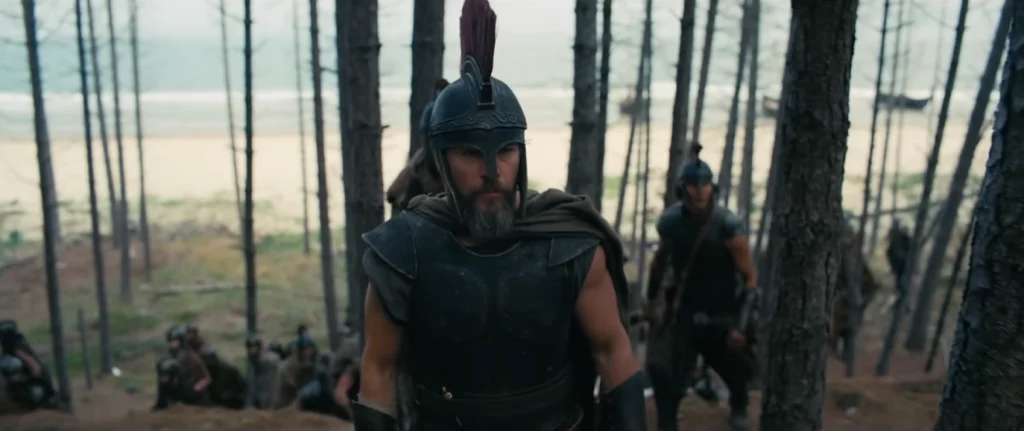
Nolan shot this entirely on brand-new, state-of-the-art IMAX cameras. Because he heavily relied on natural light, the film possesses a gritty, lived-in soul that instantly evokes the golden era of 1950s and 60s Hollywood epics. You truly feel every single frame.
The absolute standout here is how Nolan tackles the mythological creatures. Instead of numbing the audience with over-the-top green screens, he leans heavily into grounded, Del Toro-esque practical horror. Sitting there in the dark, watching a jaw-dropping animatronic Cyclops—complete with a grotesque, visceral slit for an eyeball—gave me genuine, old-school Jurassic Park chills. The fall of Troy and the deeply unsettling Circe sequence prove that Nolan is secretly a brilliant horror director.
Pacing Problems and The Audio Mix
So, it’s a flawless masterpiece, right? Well, wait. We need to talk about the pacing and the audio.
If you survive the first hour of this movie, you deserve a medal. The first half drags so painfully that multiple critics in my theater admitted they were bored out of their minds. Furthermore, because those massive IMAX cameras are notoriously noisy, the film requires a massive amount of ADR (dubbing). As a result, the sound mix is atrocious early on; you literally cannot understand the dialogue.
And the worst part? Once your ears finally adjust and you start to comprehend the script, you realize how incredibly pretentious the dialogue actually is. Nolan demands your absolute patience for the first 90 minutes. It feels like Alejandro Jodorowsky’s El Topo colliding with a modern epic—weird, slow, and deeply alienating.
The Great Casting Disaster (And the Modern Accent Absurdity)
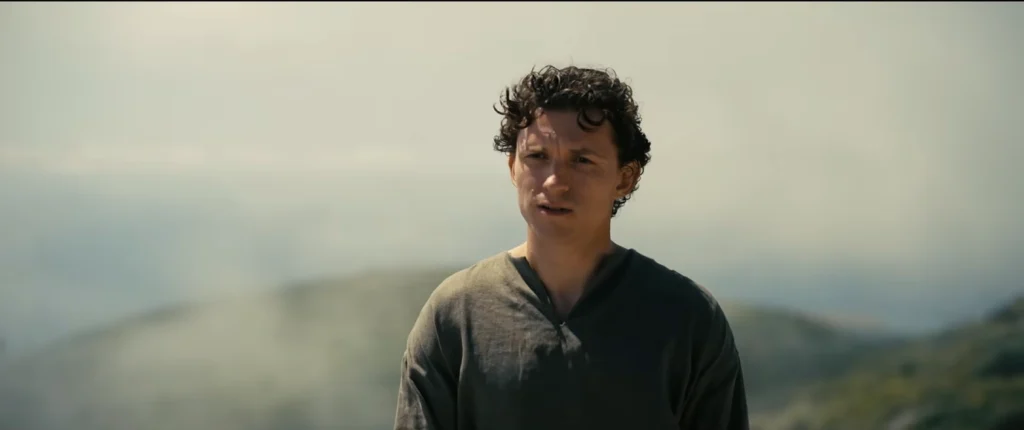
Nolan made a bizarre choice to let his A-list cast essentially play themselves. Matt Damon and Tom Holland (as Telemachus) make zero effort to actually embody their classical characters. They just wander around ancient Greece looking completely lost.
While no one expects historically accurate Mycenaean Greek, nobody bothered to adopt even a theatrical or period-appropriate cadence. Everyone speaks with weird, flat, modern American accents. It is incredibly jarring—you have to endure an adjustment period akin to hearing Tom Hardy’s muffled Bane voice for the first time. Imagine surviving a brutal Homeric shipwreck only to hear a soldier sound like he is ordering a matcha latte in West Hollywood.
Then there is the highly publicized casting of Elliot Page as a Greek warrior, with the script literally declaring him “the greatest soldier I’ve ever known.” It feels less like natural dialogue and more like a moment designed for Hollywood executives to pat themselves on the back.
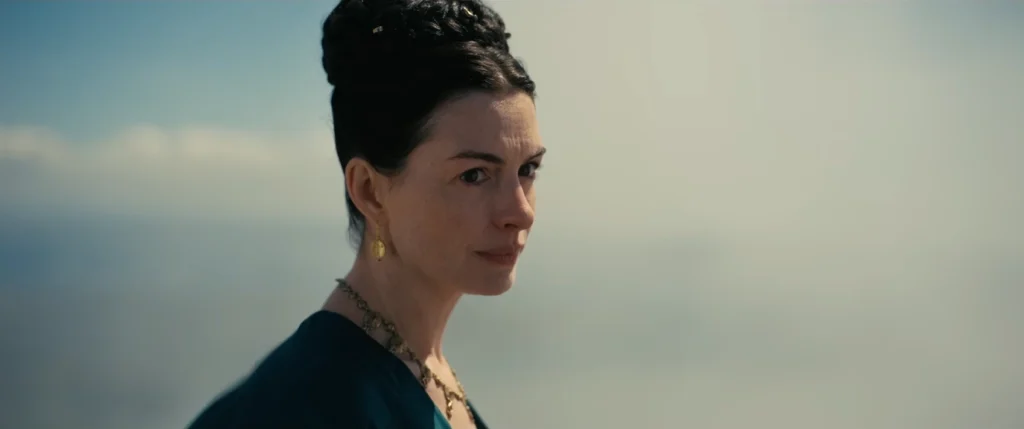
However, the supporting cast saves the day. Robert Pattinson completely steals his scenes as a cowardly, chicken-heel villain, and John Leguizamo is an absolute standout. They know exactly what kind of chaotic movie they are trapped in. Lupita Nyong’o shines briefly as Helen of Troy, while Zendaya and Charlize Theron wander in the background. But the absolute scene-stealer? Anne Hathaway. Her turn as Penelope is being hailed by early viewers as the best performance in the entire film.
Narrative Whiplash and The Gladiator Complex
If you are wondering how Nolan handles an 8th-century BC poem, he does exactly what you fear: he fractures the timeline.
He aggressively cuts back and forth between subplots, forcing you to linger in one storyline so long that you completely forget the others exist until he snaps you back. It is pure narrative whiplash. My personal introduction to Homer was the Coen Brothers’ brilliant O Brother, Where Art Thou?, and this adaptation is lightyears away from that charm.
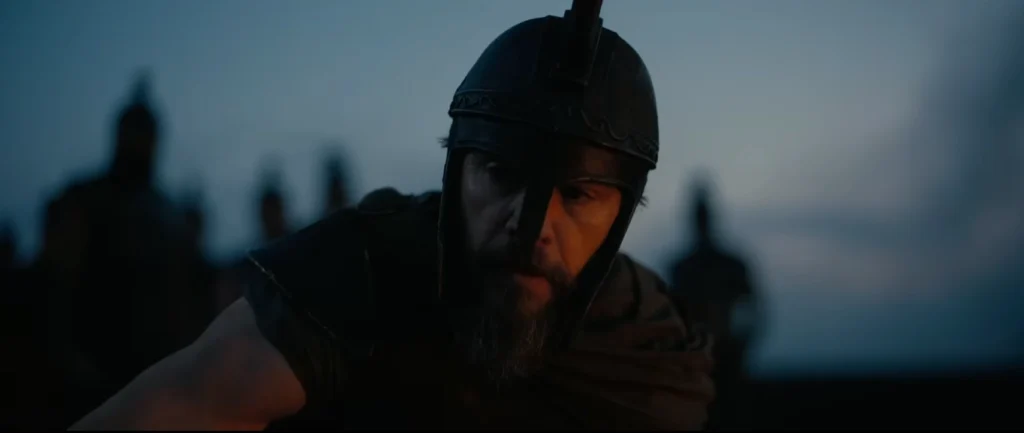
Some early viewers are practically foaming at the mouth, comparing the swords-and-sandals character depth to Ridley Scott’s Gladiator, with one attendee confidently claiming this is a better film than Oppenheimer. The action is indeed relentless once the middle act kicks in. The violence isn’t gratuitous; instead, it is unexpectedly creepy, dark, and deeply psychological.
Muted Colors, A Travis Scott Needle Drop, and The Box Office
Usually, a Nolan film relies heavily on a booming, transcendent score to mask any script deficiencies. Not this time. The music is just an endless, repetitive barrage of drumming. The visuals are strangely muted as well; where you expect a vibrant Mediterranean epic, everything looks completely washed out.
Then the credits roll, and a Travis Scott rap song blasts through the speakers. I stared at the theater screen in pure disbelief. Nothing screams “Homeric epic” quite like a modern hip-hop track.
This brings us to the harsh reality of the 2026 box office. Die-hard Nolan fans are already dropping absurd amounts of money—reportedly up to a thousand dollars a ticket—to secure opening night seats in “fake IMAX” theaters. It will undoubtedly have a massive opening weekend. The Academy will also definitely shower this with technical and casting Oscars, as they eat up this kind of bloated spectacle.
But word of mouth travels fast. The second week is going to be a bloodbath. Brand New Day is hitting theaters immediately after, projecting a massive $250 to $300 million opening. We are looking at a very real scenario where Tom Holland’s superhero movie completely obliterates Tom Holland’s Greek epic.
Is it the greatest modern-day adventure movie ever made? Absolutely not. Skip the fake IMAX screens, save your money, and just reread the original epic poem.
Read Also : Disney’s Moana Live Action: A $250 Million Soulless Disaster