Sitting on my couch this Thursday night, staring at the Netflix menu in the wasteland of 2026 streaming drops, I realized we are suffocating in post-pandemic isolation thrillers. But if you are looking for The Last House 2026 Ending Explained, let us get one brutal reality out of the way immediately: director Louis Leterrier built a phenomenal, analog survival simulator, and then completely sabotaged it with a rubbery CGI monster mash.
It was brilliant. Or rather, it had the bones of something brilliant before it surrendered to generic streaming tropes.
The Arthur C. Clarke Warning and The Invisible Prison
The film opens with a quote from science fiction writer Arthur C. Clarke: “How inappropriate to call this planet Earth when it is clearly ocean”. That single line is not just a pretentious opener—it is the entire thematic blueprint for the environmental punishment about to be unleashed on the Delgado family.
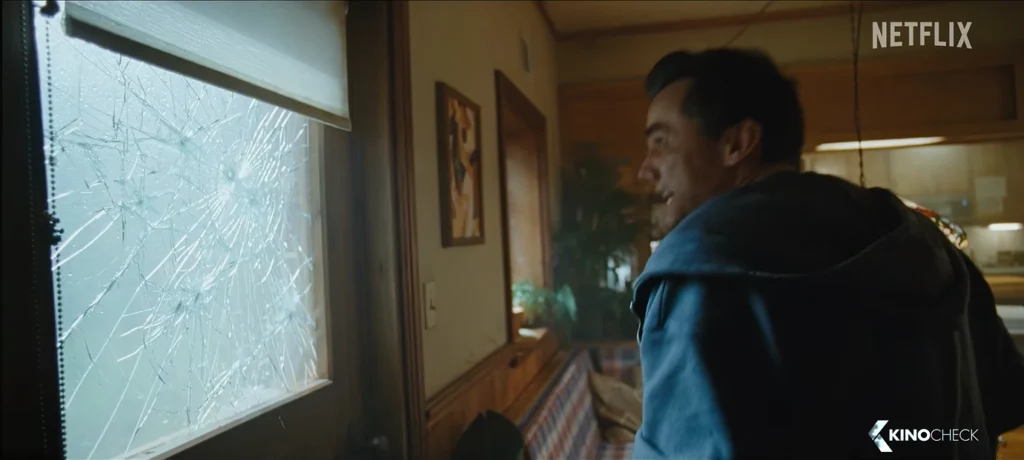
Jason (Wagner Moura), an unemployed structural engineer and former deep-water fisherman, brings his family donuts before a storm rolls in. Within hours, the Pacific Northwest neighborhood is entirely sealed. Every door and window of their house is locked by an invisible, impenetrable barrier created by an endless, unnatural rain.
No internet. No cell service.
I actually loved the analog dread of the first act. The family is forced to communicate with their neighbors—like Greg, his wife Susan, and Max the retired dentist—by holding up handwritten signs through the unbreakable glass. It highlights a sad, distinctly modern flavor of isolation; Jason has lived on this street for years and barely knew the people across the road until the apocalypse forced him to look up from his distractions.
But here is the thing. The movie asks us to suspend our disbelief, and then it asks us to completely shatter it.
The Survival Mechanics That Insulted My Intelligence
Look, I can accept that a supernatural rain barrier traps people inside their homes to starve them out. What I cannot accept is the absolute logistical absurdity of the Delgado family’s survival timeline.
The neighborhood quickly runs out of food, and we watch the neighbors across the street literally collapse from starvation. Yet, we are supposed to believe Jason, Anne (Greta Lee), their kids Graham and Ruth, plus a golden retriever named Cassidy, survived for three full months on the groceries they already had in their kitchen.
Who has three months of fresh produce and lettuce just sitting in their fridge without it rotting?
It is completely nonsensical. And the logical plot holes just keep compounding. While they are trapped for over five years, the film completely ignores where the family’s garbage goes, how the plumbing doesn’t overflow, and why they seemingly never run out of gas or electricity for years.
They do, however, adapt in fascinatingly grim ways. Anne rips up the floorboards, exposing the mud beneath the house to plant a garden using dried tomato seeds. Jason uses his engineering background to rig the loose chimney cap, creating an elaborate pulley trap to drag wild animals—skunks, foxes, and squirrels—straight into the living room for dinner.
And then, there is the dog.
I have seen a lot of dark survival movies, but the fate of Cassidy the golden retriever is a mental scar I did not need. When the dog’s heart medication runs out and she gets sick, Jason uses a secretly purchased handgun to put her down.
Tragic? Yes. But what Jason suggests next is pure nightmare fuel.
He tells Anne they shouldn’t burn the remains in the fireplace. Instead, he chops the family dog up, wraps the meat in foil, and stores it in the freezer in case they start starving.
Disgusting. Unnecessary.
The Sewer Crawl and the Magic Antibiotics (Plot Armor at its Finest)
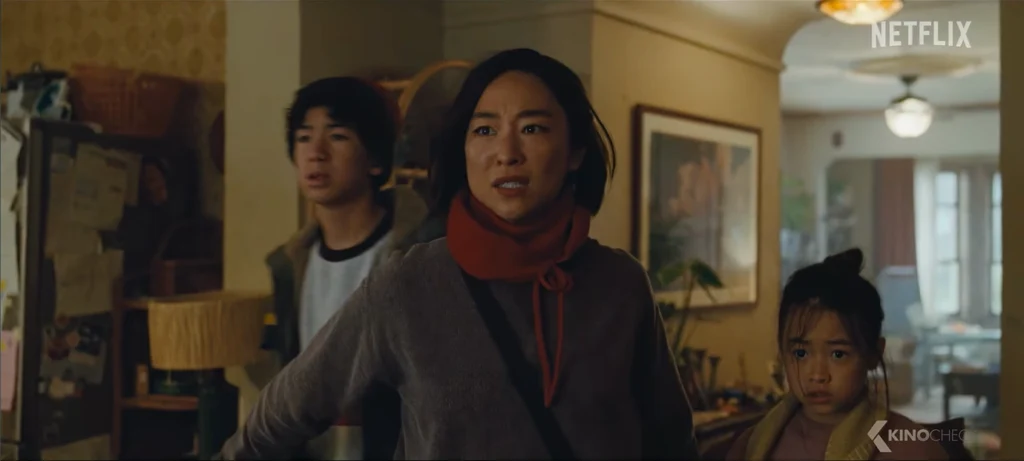
Fast forward five brutal years inside this suburban prison. The kids have grown into young adults, the house is slowly sinking into the muddy ground, and the psychological weight of the confinement is supposed to be peaking.
Then, the script decides to completely abandon reality.
One of Jason’s automated chimney traps pulls a terrified ferret into the living room. Ruth tries to free it, but the animal snaps and bites her hand. The wound immediately gets infected, sending her into a severe, life-threatening fever.
Jason loses his mind. He repeatedly rams their repaired car into the garage door trying to bust out, only ending up badly injuring himself.
And this is where the movie hands the family the most ridiculous plot armor I have seen all year.
Jason follows cracks in the foundation, digs into the ground, and casually uncovers an underground sewer pipe connecting directly to the Richardson house across the street. You know, Max Richardson—the neighbor who was conveniently established as a retired dentist back in the first act.
Because the pipe is too narrow for Jason, Anne volunteers for the claustrophobic nightmare. She crawls through the dark tube, finds Mrs. Richardson’s decomposed body, and grabs the antibiotics. On her way back, a creature spots her. She fires her pistol, and Jason literally uses his daughter’s aerial silk fabric to yank Anne back to safety before smashing rocks into the open toilet hole to seal the breach.
I actually rolled my eyes so hard during this sequence that I nearly missed the next scene.
The antibiotics work like absolute magic, curing a fatal infection almost instantly.
No complications. Just cheap screenwriter convenience.
The Rubbery CGI Monster Mash
What exactly is enforcing this global lockdown?
For the first half of the movie, the threat is an unseen, terrifying force. We get a glimpse of it early on when Susan—the neighbor who went for a jog before the barriers went up—finally returns weeks later. She runs up to the window terrified, gripping a knife. Suddenly, an invisible force grabs her and violently drags her into the darkness accompanied by a bright flash of light.
But when the creatures finally breach the Delgado home, the movie trades its claustrophobic, analog tension for a chaotic monster mash.
They drip with seawater. They are bipedal, tentacled beasts that make unnerving clicking noises and low growls—essentially looking like Cthulhu knock-offs or Lovecraftian nightmares. Ruth theorizes that since 80% of the ocean floor is unexplored, these aren’t aliens at all; they are ancient Leviathans or Krakens rising from the deep to take their planet back.
When they enter the house, their bodies emit a freezing cold that instantly kills the indoor garden Anne spent years cultivating.
But here is the problem.
The visual effects in the third act completely sink the movie. The CGI looks terrible. Director Louis Leterrier built a real, rotting house on a soundstage to give us practical, gripping isolation, and then ruined it with rubbery, unconvincing chase scenes.
Absolutely ridiculous.
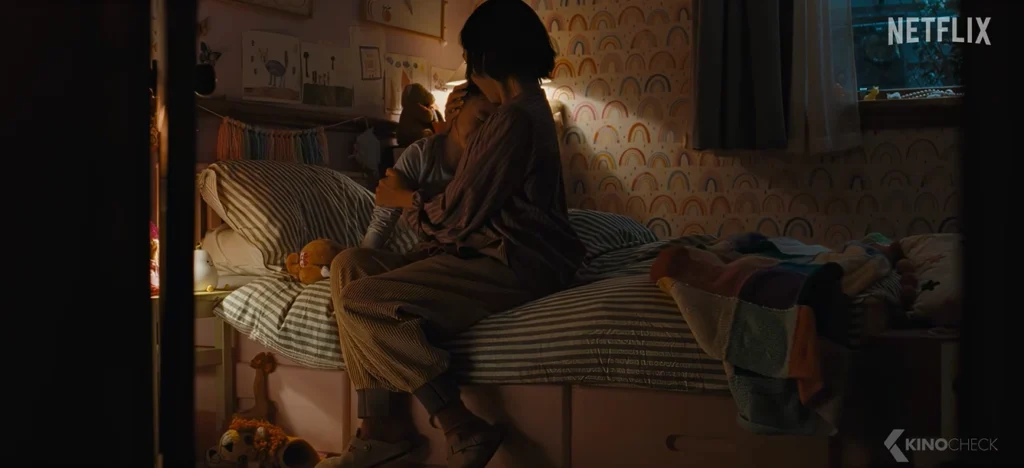
The Flooded Living Room and The Wet Molotov Cocktail
The family finally decides they are done hiding. Graham argues that if the creatures can get inside, the family can definitely get outside. Instead of waiting to die, they build a makeshift trap using a harpoon and high-tension cable to catch one of the beasts and force it to unlock the door.
But here is where the script entirely abandons the laws of physics.
The creature realizes what they are doing and violently floods the entire home. Hundreds of thousands of gallons of water pour down the chimney. And what does Anne do while the house is submerged? She throws a Molotov cocktail at the beast.
Yes, a fire bomb. Or rather, she throws a fire bomb while the house is completely flooded, and both the lighter and the cocktail are soaking wet.
Make it make sense. You can’t.
Jason attacks the creature with a mist harpoon. He completely misses his first throw but hits the second, pinning the Leviathan against a central support beam. The immense force creates structural cracks in the house, miraculously allowing the water to drain away.
The Truth About The Creatures (And That Jurassic Park Rip-off)
Q: Why did the sea creatures actually trap humanity inside their homes in The Last House? A: The creatures are ancient, deep-sea organisms displaced by ocean warming and industrial pollution. They sealed human homes as an act of cosmic environmental isolation, essentially forcing humanity to experience the exact habitat displacement and restrictive movement we inflict on the natural world.
With the beast pinned, Jason stands over it holding a knife, aggressively threatening it to unlock the front door. It refuses.
Ruth steps in and reminds her father that the creature actually means them no harm. Jason suddenly experiences a psychological breakthrough. He realizes his hyper-pragmatic, dominant instinct to “fix, fight, or kill” is the exact toxic mindset that got humanity imprisoned in the first place.
Because the creatures only mirror human aggression. Remember Susan, the neighbor who was killed in the first act? She was holding a knife and acting threateningly when the unseen force dragged her away.
Jason lowers his weapon and cuts the creature’s restraints in a deliberate act of mercy.
The creature acknowledges this, lets out a low-frequency acoustic call, and opens the front door. The Delgado family steps outside and is immediately surrounded by a pack of other Leviathans—a visual setup ripped entirely from Jurassic Park 3 when the raptors surround the humans. The freed creature signals its friends to stand down, and they let the family walk.
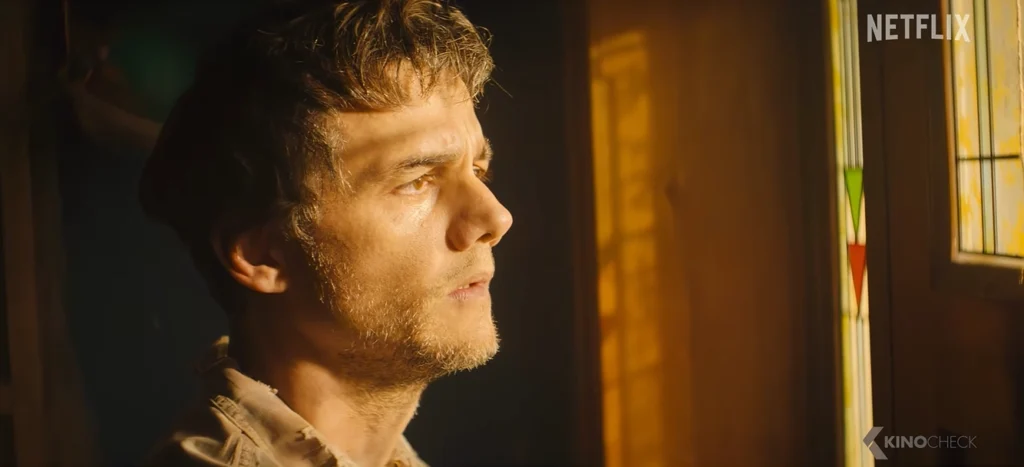
The “Day One” Radio Tease
Right behind them, the rotten, dismantled house finally collapses completely into a muddy sinkhole.
The family boards a dead neighbor’s abandoned fishing vessel. In a grotesque attempt at sentimentality, they rename the boat “Cassidy” after the dog Jason chopped up and stuffed in the freezer. The on-screen counter, which had been tracking their 1,825 days of confinement, resets back to “Day One”.
They adjust a shortwave radio frequency and broadcast a message into the dark. Through the static, a faint, distorted human voice responds, “Hello,” before the screen abruptly cuts to black. Director Louis Leterrier teased that this mystery voice belongs to a “very very very iconic person”.
Do not hold your breath for a sequel. The Last House wants to be a profound statement about environmental empathy and the devastating cost of human entitlement. Instead, it is a clumsy, CGI-bloated lecture. Save your Thursday night.
The “Fish Tank” Metaphor & Why The Dialogue Felt Robotic
We need to address the heavy-handed metaphors. The movie aggressively pushes the idea that the Delgado family essentially became the fish in Graham’s room tank. By locking them in their own home, they got to feel exactly what it was like to be an animal trapped in a glass box, helplessly watching the outside world.
Because outside the glass? Wildlife was flourishing. The night sky and its stars were completely visible without a trace of light pollution or airplanes.
Cool concept. Terrible execution.
Netflix loves a doomsday disaster movie. We saw them try this exact same formula with White Noise and Leave the World Behind. But this film falls incredibly short of those comparisons because the character writing is shockingly poor.
Anne (Greta Lee) was poorly written and delivered. The conversations between the family members were rigid in structure, lacking any natural fluidity.
They did not feel like a real family.
And the dialogue? I cringed out of my skin when Susan saw the coyote outside her window and literally muttered, “It’s your world now”.
Way too direct. Zero subtlety.
The Last House 2026: Burning Questions Answered (Featured Snippets)
Q: Will Netflix make The Last House 2?
A: As of August 2026, Netflix has not officially announced a sequel to The Last House. The ending leaves the narrative completely open as the Delgado family sets sail in search of other survivors, but no production date or official sequel project has been confirmed.
Q: How did the Delgado family survive for 5 years inside the house?
A: The Delgado family survived by creating a closed, self-sustaining ecosystem. Jason used his engineering skills to build traps through the broken chimney, catching wild animals like squirrels and foxes for meat. Meanwhile, Anne removed sections of the flooring to plant a vegetable garden in the dirt beneath the house.
Q: What do the monsters in The Last House represent?
A: The creatures are ancient, bipedal marine beings that represent nature’s retaliation against human entitlement. They emerged from the unexplored depths of the ocean to reclaim the planet after centuries of humanity polluting the environment and destroying their aquatic habitats.
read more : Top Horror Movies of 2026 So Far: The Masterpieces and The Total Garbage