If you walked out of the theater in 2026 searching for the whisper man ending explained, you probably missed the actual horror staring you right in the face. This isn’t a serial killer movie. It is a tragic, suffocating autopsy of terrible fathers.
Sitting in a half-empty cinema on a rainy Thursday night, checking my watch during the first act, I assumed James Ashcroft’s adaptation of Alex North’s novel was just another generic David Fincher knockoff. I expected a recycled Silence of the Lambs dynamic.
Wow, I was wrong.
The Rot of Garitton, New Jersey
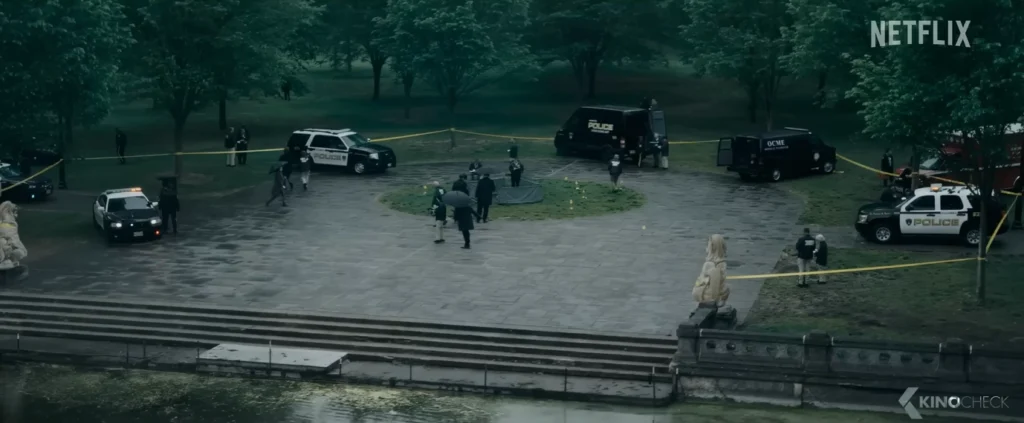
The film immediately drops us into the dirt. A search party is combing the woods of Garitton for a missing boy named Neil Spencer. Detective Amanda Beck (Michelle Monaghan) finds a body upside down, its face suffocated and covered by a t-shirt. But the decomposition is wrong. It isn’t Neil. It is Stevie Grant, a boy who went missing months prior.
Right away, the movie establishes a suffocating sense of failure. The police are always one step behind.
Enter Tom Kennedy (Adam Scott) and his eight-year-old son, Jake. They are fleeing the agonizing grief of losing Rebecca, Tom’s wife. They move into a massive, creaky house in Garitton—the very town Tom grew up in.
Tom is trying to be a good father, but he is completely emotionally bankrupt. He unpacks boxes, ignores his own trauma, and immediately discovers a massive water leak dripping from the attic. He climbs up, nearly loses his footing on a dangerously rotted wooden floorboard, and tosses a bucket under the drip.
Remember that rotting floorboard. It is the most important piece of wood in the entire film.
Why Jake’s Imaginary Friends Aren’t a Gimmick
Jake hasn’t been the same since he physically found his mother dead at the bottom of their staircase. He retreats inward, clutching a satchel of her belongings, refusing to engage with the bullies at his new school.
Instead, he talks to the walls.
Jake casually mentions his imaginary friend: the girl in the blue sweater. Tom rolls his eyes, urging his son to “grow up” and make real friends. Tom is exhausted. He dismisses Jake’s coping mechanism entirely.
But Jake isn’t just talking to a girl. He tells Tom that the girl is terrified of the boy who lives in the floor.
This is where the script aggressively hooks you. It sounds like a cheap ghost story. It isn’t. The boy in the floor is real, and he has been rotting under Tom’s feet since the day they moved in.
The Hand Through the Mail Slot
The pacing accelerates when the psychological dread bleeds into physical danger.
Late at night, Tom catches Jake kneeling by the front door, having a quiet conversation with someone outside. Tom approaches, and a gloved hand violently shoves its way through the mail slot.
It is a brilliant, terrifying jump-scare because it violates the only safe space they have left. Tom bolts outside into the rain, but the street is dead empty. He rationalizes it away because he was drinking. He installs a nanny cam in Jake’s room and tries to move on.
He shouldn’t have. Because across town, Neil Spencer is sitting in a dark room with a tape recorder, being manipulated by a man whispering poison into his ear. The killer asks Neil if his sick grandmother is mean to him, feeding the boy’s resentment.
The Whisper Man doesn’t drag kids out of their beds kicking and screaming. He convinces them to walk out the front door entirely on their own.
Jake is gone. Tom wakes up with a massive hangover, the front door swinging wide open in the rain, and his son missing. It is a parent’s absolute worst nightmare, made exponentially worse by the fact that Tom was completely passed out while it happened.
De Niro’s Broken Detective and the Mr. Knight Illusion
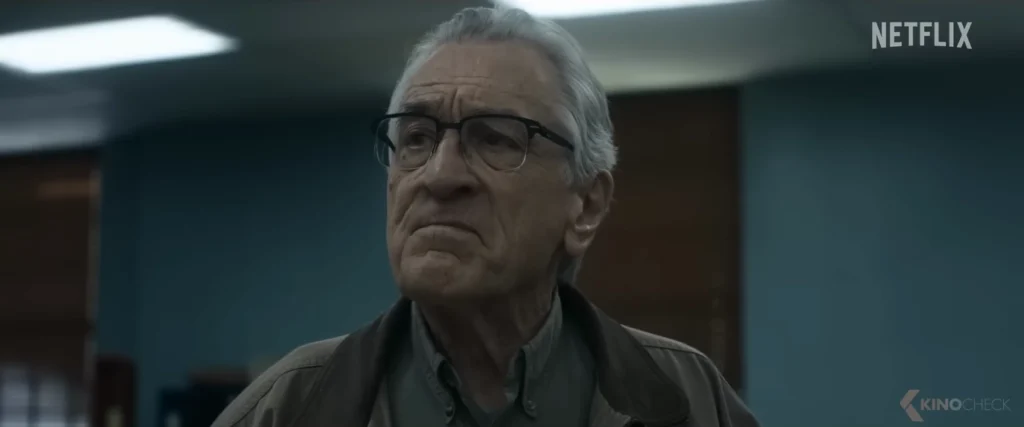
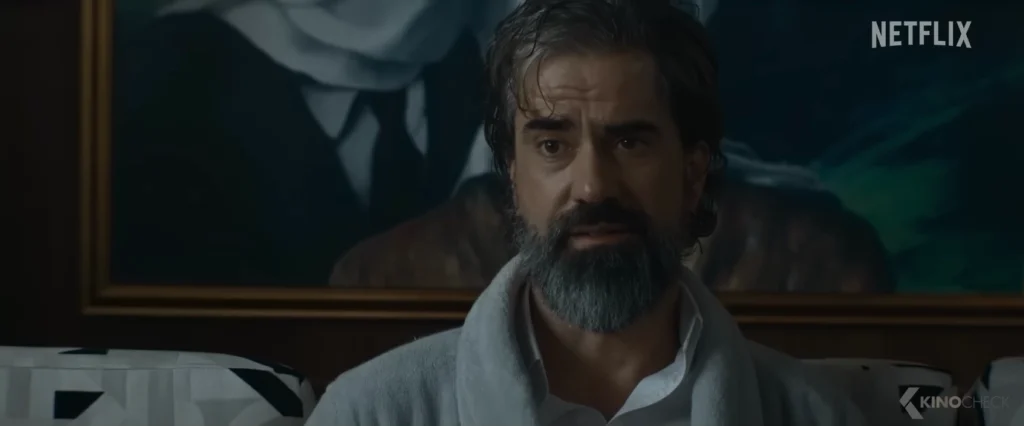
Enter Pete Willis. Robert De Niro plays him not as a heroic, guns-blazing savior, but as a hollowed-out shell of a man. Pete is the cop who caught the original Whisper Man, Frank Carter, decades ago. But the victory cost him everything. He spent the next 25 years drinking and obsessively pinning locations on a map, desperately hunting for the unfound body of Tony Smith, Frank’s fifth victim.
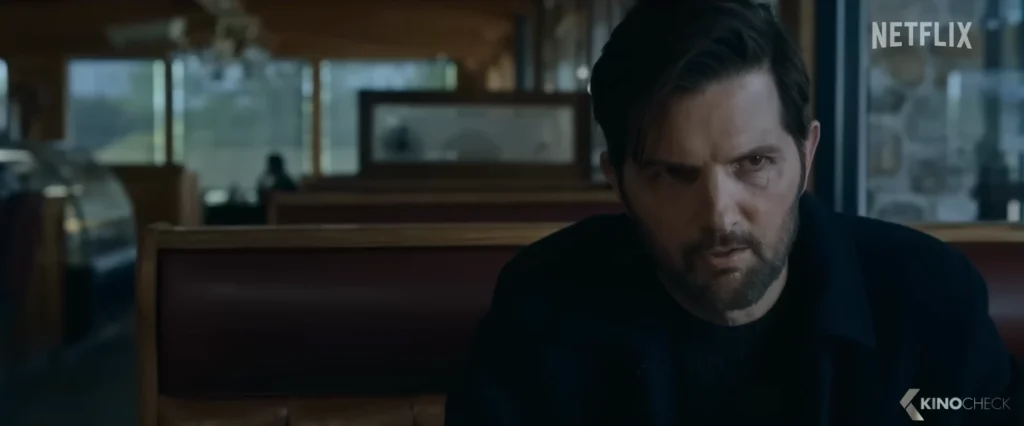
Tom is reluctantly forced to ask his estranged father for help. Their reunion in a diner is brutal. Tom spits pure venom, calling Pete a terrible father who abandoned his family for a bottle and a serial killer.
You think you know exactly where this cliché father-son drama is going.
Then the movie completely flips the script.
Later, Tom brings up a comforting childhood memory. He used to have an imaginary friend named Mr. Knight. A guardian figure who would visit his bedroom, read him stories, kiss his forehead, and vanish by morning.
Pete drops a quiet, devastating reality check. Tom’s mother wouldn’t let Pete near the boy when he was drinking. So Pete would sneak in late at night just to read to his son. Mr. Knight wasn’t a ghost. He wasn’t a hallucination. He was just a deeply flawed father trying to love his kid the only way he was allowed. It completely shatters Tom’s lifelong narrative of abandonment. His father didn’t leave him. He was just broken.
Michael Keaton Chews the Scenery (And Your Nerves)
If you are digging around for the whisper man ending explained, you have to pay extremely close attention to the prison interrogation scenes. Michael Keaton plays Frank Carter with a smug, terrifying arrogance. He doesn’t yell. He doesn’t threaten. He just sits there in chains and gets straight into your head.
Amanda Beck and Pete visit him looking for answers about the copycat killer. Frank just laughs at them. He mocks Pete’s loneliness, pointing out how the case destroyed his entire life. Frank casually jokes about a “sixth victim” to Amanda. She is confused, but Pete knows exactly what he means. The sixth victim wasn’t a child. The sixth victim was Pete himself.
Frank makes a sickening proposition. He will give them the name of the copycat killer. But only if they bring his wife and son—who are currently hiding under new identities in witness protection in Phoenix—right to his cell.
He specifically asks for his son. Not for a heartwarming family reunion.
Frank’s own father sexually abused him as a boy. That trauma twisted Frank into a monster who actually harbored a dark, violent urge to murder his own child. He kidnapped those other boys—cutting their fingernails and covering their faces with their shirts—so he could pretend he was strangling his own son, Francis.
It makes your skin crawl. He doesn’t want to see his family to apologize. He wants to finish the job he started thirty years ago.
You think you have the mystery completely figured out by the middle of the second act. A creepy, socially awkward guy hoarding murder weapons? That is practically a neon sign pointing to the killer.
Wow, what a massive misdirection.
The True-Crime Tourist
If you are putting together the whisper man ending explained in your head, Norman Collins is the ultimate bait-and-switch. He collects serial killer memorabilia like sick trophies. When Detective Amanda Beck visits his house, he proudly hands her a screwdriver, bragging that a woman used it to stab her husband 46 times over a game of bridge.
He looks incredibly guilty. He has been visiting Victor Tyler, a convicted pedophile, in the same prison where Frank Carter is held.
But Norman isn’t a mastermind. He is a pathetic tourist.
The movie delivers a sharp, biting critique of modern true-crime obsession. Norman didn’t kidnap Jake. He just wanted to feel close to the infamy. He paid Frank Carter for exclusive access to the hidden remains of Tony Smith—Frank’s fifth victim. Frank pointed Norman to his old friend, Dominic Barnett, who owned the house Tom and Jake currently rent.
When Norman went to the basement to gawk at the skeleton, Dominic mocked him. He made Norman feel small, calling him a “peeping tom” who could watch but never actually do anything.
So Norman grabbed a hammer and caved Dominic’s skull in.
The Boy in the Floor
This brings us to the most chilling architectural reveal in recent horror.
Jake kept telling his dad about the “boy in the floor”. It sounded like standard creepy kid nonsense. It wasn’t.
Tom and Pete tear down a loose brick wall in the basement crawlspace. Inside, they find a small skeleton. It is Tony Smith. Pete finally finds the white whale that destroyed his marriage and drove him to the bottle thirty years ago.
Moments later, the cops break open another section of the wall and find Dominic Barnett’s rotting corpse. Tom moved his grieving son into a house literally built on top of a mass grave.
The Copycat Hiding in Plain Sight
Norman is arrested, but the interrogation ends in an absolute bloodbath.
Amanda and Pete back him into a corner. They demand to know how Norman paid Frank Carter for access to the basement. Frank doesn’t need money in prison. Norman admits he paid Frank by connecting him to someone on the outside.
Before they can extract a name, Norman grabs that same bridge-game screwdriver and violently stabs himself in the throat. He bleeds out right there in the interrogation room.
They are at a total dead end. Until Pete remembers Frank’s smug taunt from the prison cell. Frank had joked that Tom was writing detective books because, when denied a father’s love, a son mythologizes him.
Pete pulls up an old interview tape of Frank’s wife entering witness protection. Standing right next to her is a young boy. Frank’s son, Francis.
The copycat isn’t an obsessive fan. It is Frank’s own flesh and blood. Francis Jr. has been hiding in plain sight the entire movie. He goes by the name George, and he is the teaching assistant at Jake’s elementary school. He knew exactly which kids were vulnerable because he was watching them every single day in class.
I honestly thought the final act was going to devolve into standard Hollywood action garbage. Usually, thrillers in 2026 lose their nerve in the last twenty minutes, opting for loud shootouts instead of psychological dread.
Wow, was I wrong.
The Attic Trap (And the Death of a Detective)
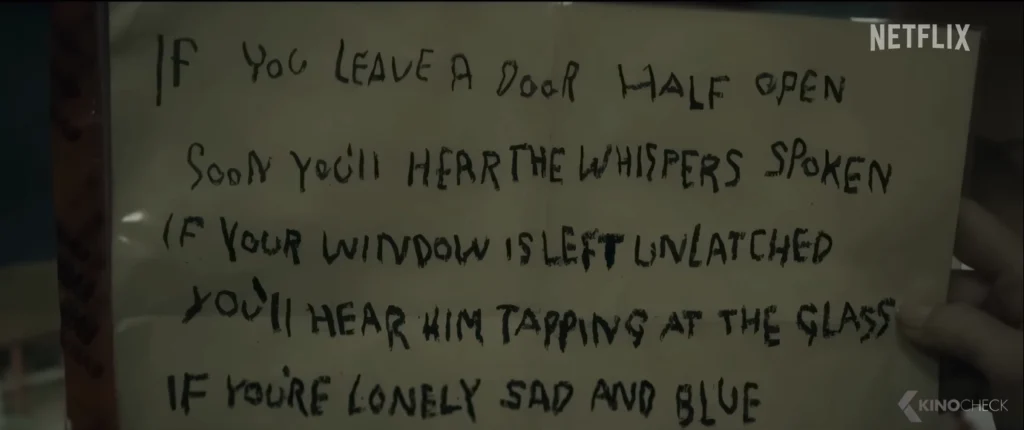
Amanda Beck finally tracks Francis down to the home of his late childhood psychologist. He is still playing the sweet, harmless teaching assistant, “George.” But Beck is sharp. She notices the dead houseplants. She softly murmurs the old nursery rhyme.
If your window is left unlatched…
Francis instinctively finishes the line. The absolute idiot outed himself immediately. He snaps, stabs Beck, throws her over the staircase railing, and flees with Jake to Tom’s house.
Meanwhile, Pete makes the ultimate devil’s bargain. He visits Frank Carter in prison one last time. Pete knows exactly what Frank has been fantasizing about his entire life. So he offers a trade. Give up the location, and Pete will legally arrange for Francis to be transferred to Frank’s prison. Pete weaponizes a father’s urge to murder his own son.
Tom and Pete storm the basement of the rental house. The brawl is ugly and desperate. Pete takes a fatal knife wound to the gut. After thirty years of chasing ghosts and ruining his own life, Pete dies doing the one thing that actually matters. He saves his grandson. He bleeds out on the floor, using his final breath to tell Tom he loves him.
Jake runs for his life up to the attic. Tom follows, getting beaten to an absolute pulp by Francis.
But remember that leaky roof from the first act? The water-damaged floorboard?
Tom doesn’t need to overpower Francis. He just tells Jake to stay perfectly still and close his eyes. Francis steps aggressively toward the boy.
Crack.
Francis falls straight through the rotted wood, plummeting to the floor below and knocking himself out. Gravity did what the Garitton police department couldn’t do for an entire movie.
The Sickest Family Reunion of 2026
If you are reading the whisper man ending explained hoping for a neat, comfortable resolution, you are in the wrong genre.
Francis survives the fall. He is transferred to the exact same prison as his father. The guards conveniently look the other way. Francis stares at Frank with these wide, pathetic eyes, just desperate for a tiny shred of paternal affection.
Frank asks for a “skin-to-skin” hug.
Francis obediently opens his shirt.
Frank instantly wraps the fabric around his own son’s throat and strangles the life out of him. He doesn’t cover Francis’s face this time. He wants to look into his eyes and watch him die. Frank finally got to indulge the sick, violent urge he had been fighting since the day the boy was born. Pete promised to deliver his son. Frank collected the debt.
A few days later, a recovering Amanda Beck opens a letter in the hospital.
Thank you for everything you and Pete have done for me.
A complete slap in the face.
The Ghost in the Blue Sweater
Tom and Jake move into Pete’s old house. The nightmare is over. Jake actually wants to go outside and play with real kids.
Before he runs out the door, Jake casually mentions that his mom saved him.
Tom is sorting through a box of old keepsakes. He pulls out a stack of childhood photos of his late wife, Rebecca.
He stops.
Staring back at him is a young Rebecca. Wearing a blue sweater.
Jake’s imaginary friend wasn’t a trauma response. She wasn’t a coping mechanism. She was his dead mother, guiding him through the dark. Protect your kids, because the monsters absolutely will not.
read more : The Dog Stars Ending Explained: The Heartbreaking Reality Hidden in Ridley Scott’s Wasteland