When the credits rolled on Ridley Scott’s The Dog Stars, I found myself staring at the screen, completely overwhelmed by the quiet devastation of it all. To get straight to the point and get this ending explained, you have to look past the superficial post-apocalyptic marketing. This isn’t just another action-packed survival movie filled with mindless marauders. It’s a deeply personal, gut-wrenching look at grief and what it actually means to keep breathing when the world has already died.
A Prison of Our Own Making
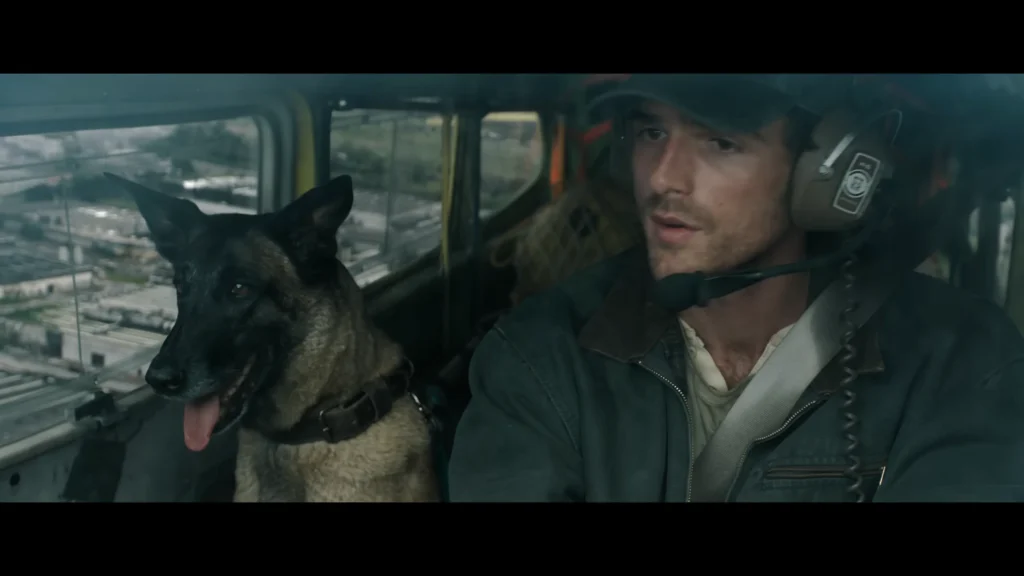
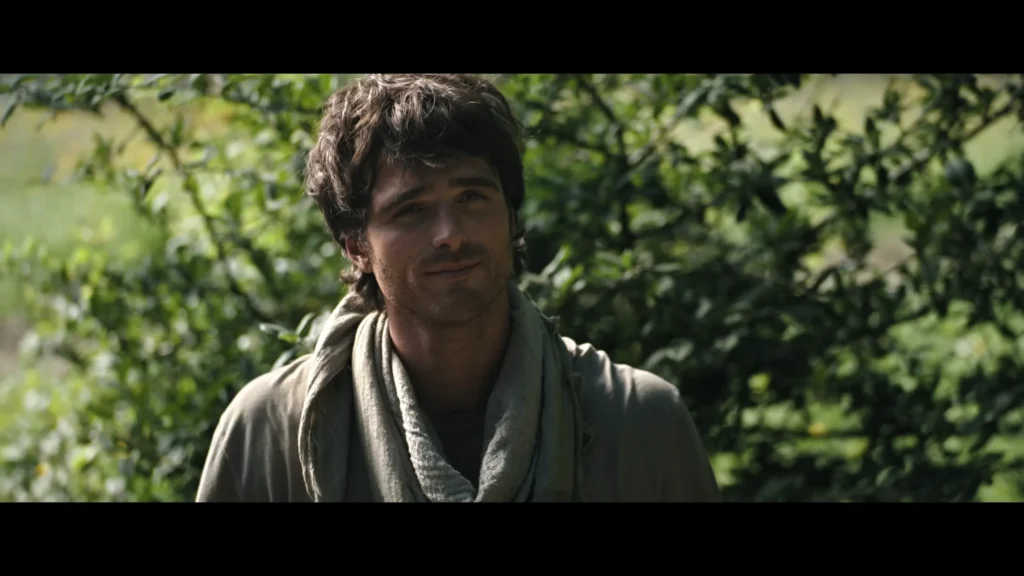
The opening act immediately establishes the grim reality of our protagonist, Hig, played with incredible physical weight by Jacob Elordi. He lives at an abandoned Colorado airport alongside his loyal Belgian Malinois, Jasper, and a heavily armed survivalist named Bangley. While Bangley, played brilliantly by Josh Brolin, seems to absolutely thrive in this violent hellscape, Hig is slowly drowning in the memories of his dead wife.
Every single day, Hig gets into his little Cessna plane to do supply runs. He scouts the gorgeous, empty vistas of the American West, but it’s clear to me that he isn’t just looking for food or fuel. He is desperately searching for a reason to justify his own ongoing survival.
The airport is heavily fortified and safe, but I immediately noticed that it functions less like a sanctuary and more like a tomb. Hig is trapped in a routine of mere existence, listening to mysterious radio signals from Grand Junction but too paralyzed by grief to chase them. He chooses the safety of his isolation over the terrifying possibility of hope, settling for a life that is entirely defined by what he has lost.
The Devastating Catalyst: Jasper’s Demise
Casual viewers might view Jasper as just a cute post-apocalyptic pet, but I realized early on that the dog represents the very last anchor to Hig’s pre-pandemic life. As one reviewer pointed out, Hig is deeply suicidal, constantly staring at a specific mountain with the urge to crash his plane and end his suffering. Jasper’s silent companionship is the only thing tethering him to his sanity.
When a violent group of marauders attacks and Jasper is killed defending his owner, it completely shatters the safety of the airport. This isn’t just a sad animal death used for cheap emotional manipulation; it is a brilliant psychological push. Without his dog, Hig finally realizes his heavily fortified compound has become a prison.
This specific tragedy forces him to chase that mysterious radio signal toward Grand Junction. He understands that stockpiling supplies is completely meaningless if you are isolated from genuine emotional connection.
The Seductive Trap of Grand Junction
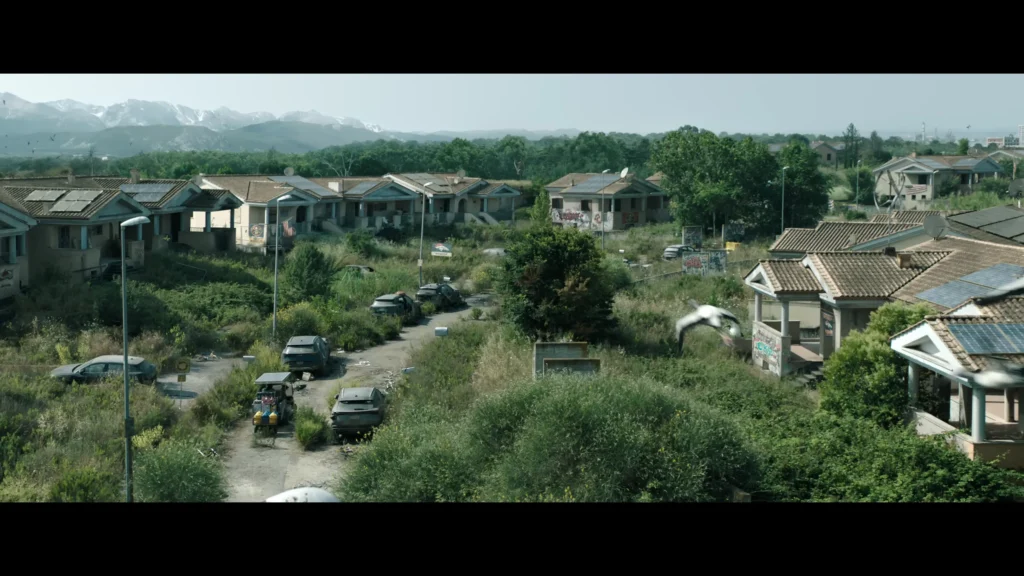
When Hig leaves his safe zone and eventually meets Sema (Margaret Qualley) and her father Pops (Guy Pearce), the film shifts aggressively. They follow the radio signal and discover a bizarre settlement that feels ripped straight out of a Fallout video game. Controlled by a woman named Darlene, played by Allison Janney, this strange community is obsessed with recreating the past.
I found this entire sequence to be a massive tonal shift that borders on the surreal and Lynchian. Darlene’s society is built entirely on weaponized nostalgia, forcing everyone to wear old-fashioned clothes and cling to outdated ideals as a strict form of control. It serves as a dark mirror to Hig’s own grief, showing exactly what happens when a society refuses to accept that the old world is dead.
While some critics saw this cult-like detour as a glaring plot hole or a jarring distraction, I think it perfectly highlights Ridley Scott’s cynical view of false utopias. It proves that desperately trying to resurrect a dead civilization is just another way of burying yourself alive.
Bangley’s Paradox: The Cost of Absolute Isolation
The most fascinating psychological tension in the film exists between Hig and Bangley. Bangley is a former military sniper who absolutely relishes the apocalypse, stockpiling weapons and treating every single outsider as a threat to be gunned down. He represents the pure, brutal instinct of physical self-preservation.
But I noticed a subtle visual storytelling choice here that speaks volumes about his character. Bangley is heavily associated with the claustrophobic confines of his compound and armory, which stands in stark contrast to Hig flying freely in the open sky. Bangley genuinely believes he is thriving, but his hostility has completely stripped him of his humanity.
The True Meaning of the Final Flight
When Hig returns to the ruined Erie airport with Sema and Pops, the movie finally lays its cards on the table. They find the heavily fortified base destroyed and Bangley severely wounded, forcing the old soldier to rely on Sema’s medical help. It becomes crystal clear to me that hoarding weapons and building walls is a completely failed strategy for long-term survival.
The visual cues in these final moments are stunning and deeply emotional. Hig spots mysterious aircraft flying in the distance, a massive departure from the empty skies he scouted for years. Ridley Scott deliberately leaves their identity ambiguous, but it honestly does not matter who is flying those planes. The simple fact that they exist gives Hig concrete proof that civilization is slowly crawling back from the ashes.
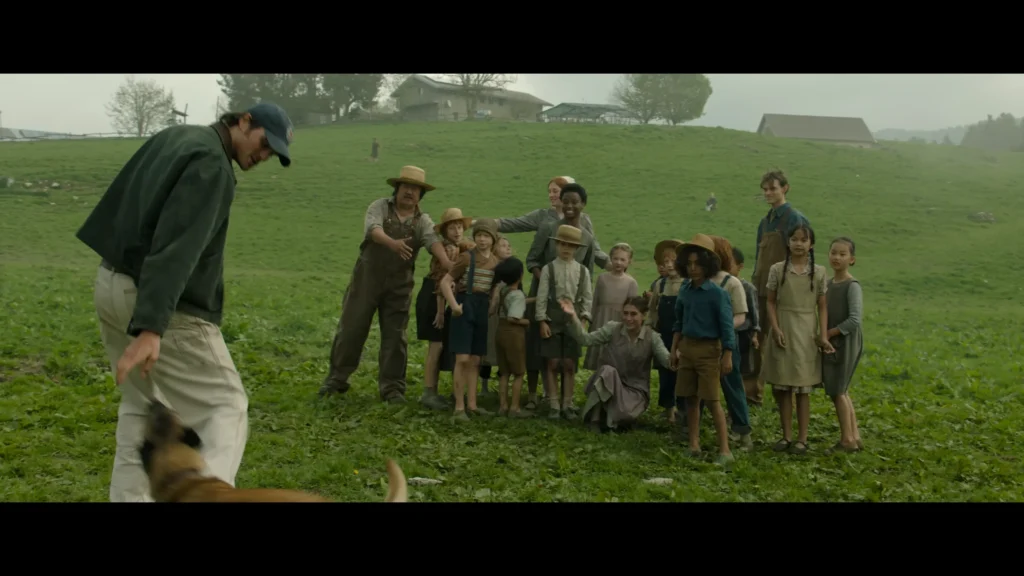
However, the most powerful narrative clue doesn’t involve an airplane at all. We see the group gather with a peaceful community of Mennonites, choosing to share their lives rather than isolate in fear. Seeing the perpetually hostile Bangley put down his rifle and strum a guitar with the local band gave me genuine chills. It proves that overcoming the apocalypse requires us to surrender our paranoia and actively choose human connection over mere survival.
🎬 The Final Verdict
- My Rating: 7 / 10 ⭐️
- Best Scene: The quiet, chillingly beautiful moment when the paranoid sniper Bangley joins the Mennonite band and plays the guitar.
- The Biggest Flaw: The jarring, Fallout-style detour into Darlene’s cult at Grand Junction, which completely shatters the film’s otherwise meditative and grounded tone.
- Your Turn: What did you think of this ending? Did you catch any details I missed? Let me know your theories in the comments below!
read more : The End of Oak Street Ending Explained: Did Greg Actually Die?