
If you walked out of the theater feeling deeply unsettled and questioning reality, you are not alone; this comprehensive Backrooms movie ending explained guide is here to untangle the terrifying psychological and narrative mysteries of 2026’s breakout horror hit.
The landscape of modern cinematic horror experienced a seismic shift with the theatrical release of A24’s Backrooms (2026). Helmed by 20-year-old visionary director Kane Parsons and penned by Will Soodik, this psychological liminal horror film transcends its origins as a viral internet creepypasta to deliver one of the most oppressive, cerebral, and financially successful theatrical experiences of the decade. Grossing an astonishing $81.5 million domestically in its opening weekend, the film broke A24’s all-time box office records and secured Parsons’ place as the youngest director to lead the domestic box office.
Yet, beyond the financial milestones and the dizzying fluorescent-lit cinematography, finding a legitimate Backrooms movie ending explained has become the top priority for fans dissecting Kane Parsons’ cinematic universe. The film refuses to spoon-feed its audience, trading cheap jump scares for a suffocating atmosphere of existential dread and psychological reflection. The labyrinthine yellow hallways serve not just as a physical trap, but as a mirror reflecting the deepest traumas, failures, and repressed memories of the characters who dare to wander inside.
This exhaustive guide is engineered to decode every facet of the Backrooms film. By dissecting the dense plot, profiling the psychologically complex cast, explaining the polarizing ending, analyzing the terrifying “Still Life” entities, and unearthing the hidden Easter eggs, this guide provides the ultimate resource for this horror masterpiece.
The Genesis of a Nightmare: From 4chan to Hollywood
To fully grasp the magnitude of the film, one must understand its highly unconventional journey from a decentralized internet myth to a mainstream Hollywood blockbuster. The film represents the absolute pinnacle of the internet-to-film pipeline, a phenomenon that has recently birthed massive hits like Curry Barker’s Obsession and Markiplier’s Iron Lung.
The 2019 Creepypasta Origins
The core concept of the Backrooms was spontaneously generated on May 12, 2019, on the anonymous imageboard 4chan. A user posted a photograph of a generic, windowless room featuring damp, yellow-patterned wallpaper, stained carpets, and glaring fluorescent lights. The image was accompanied by a chilling caption warning that if a person “noclips” (glitches) out of reality in the wrong area, they will become trapped in the Backrooms. The post described the environment as “600 million square miles of randomly segmented empty rooms” filled with the maddening “maximum hum” of fluorescent lights. Internet sleuths eventually tracked the original photograph to a renovated furniture and hobby store in Oshkosh, Wisconsin—a detail that Parsons brilliantly honors in the film’s narrative.
Kane Pixels and the Viral Web Series
While the concept simmered on platforms like Reddit and the SCP Foundation wiki, it was Kane Parsons—operating under the YouTube handle Kane Pixels—who codified the lore. In early 2022, Parsons utilized the 3D rendering software Blender to create a short film titled The Backrooms (Found Footage). The video simulated a VHS recording of a young filmmaker falling through the ground and into the yellow labyrinth. The short exploded in popularity, amassing over 72 million views and spawning a massive, multi-part episodic web series. Parsons introduced corporate espionage into the lore via the “Async Research Institute,” a shadowy organization attempting to map and exploit the dimension.
A24 Enters the Labyrinth
The unprecedented viral success caught the attention of major Hollywood studios. A24 secured the rights, pairing the young Parsons with heavy-hitting producers, including James Wan (Atomic Monster), Shawn Levy (21 Laps), and Osgood Perkins (director of Longlegs), to guide the transition from YouTube to the silver screen. While Roberto Patino was initially tapped to write the screenplay, Will Soodik ultimately took over, crafting a script that balanced the experiential terror of the YouTube series with character-driven psychological drama.
| Production Data | Details |
|---|---|
| Director | Kane Parsons |
| Screenwriter | Will Soodik |
| Cinematographer | Jeremy Cox |
| Producers | James Wan, Shawn Levy, Osgood Perkins, Dan Cohen, Peter Chernin |
| Distributor | A24 |
| Release Date | May 29, 2026 |
| Budget | ~$10 Million |
| Global Box Office | $135 Million+ |
Comprehensive Plot Breakdown: A Descent into the Subconscious
Backrooms is meticulously structured, utilizing a slow-burn pacing that transitions from gritty urban drama into an unrelenting, surrealist nightmare.
Act I: The Ottoman Empire and the Null Zone
The film opens with a visceral homage to Parsons’ origins: a pure, found-footage VHS sequence. An Async researcher, clad in a bright yellow hazmat suit, sprints through the iconic yellow hallways, hyperventilating as an unseen entity stalks him. The claustrophobic sequence immediately establishes the lethal stakes of the dimension before cutting to the bleak reality of 1990.
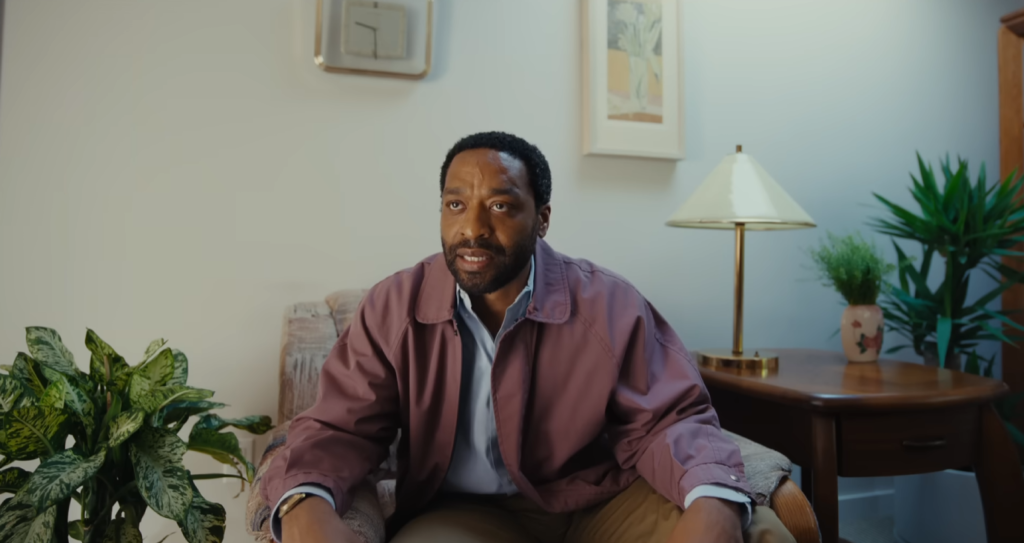
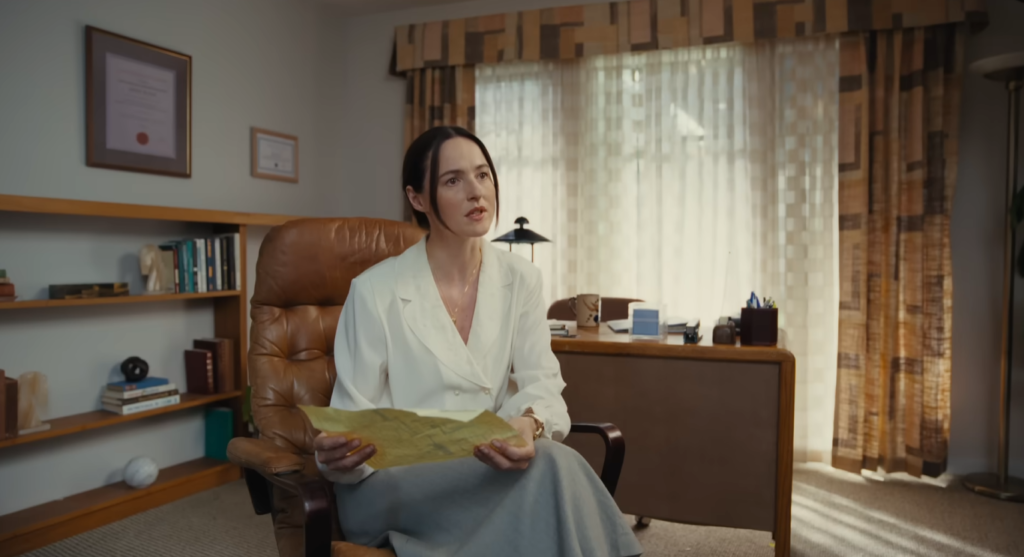
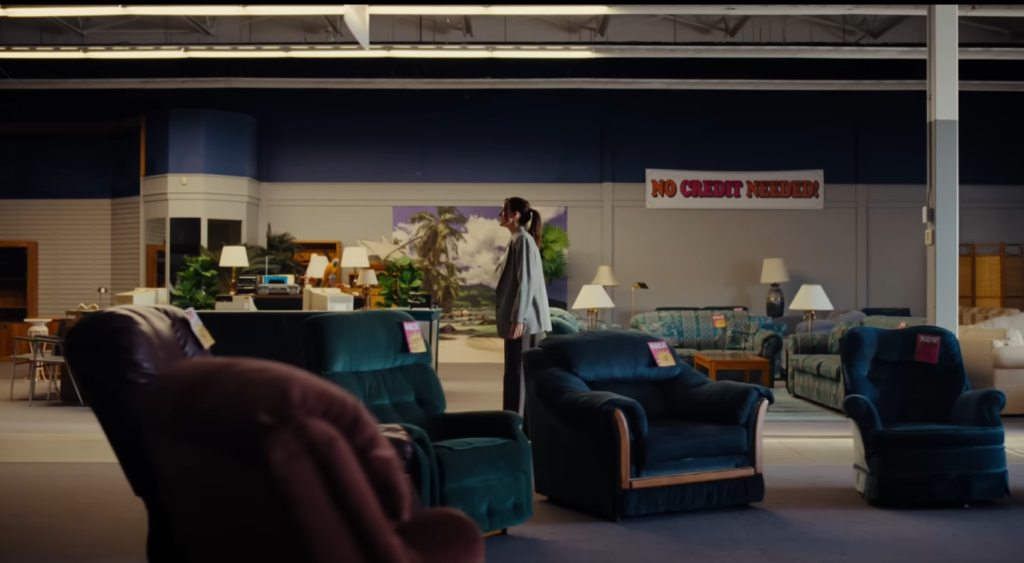
We are introduced to Clark (Chiwetel Ejiofor), the bitter, alcoholic owner of “The Ottoman Empire,” a failing, low-budget furniture store. Clark’s life is in a state of rapid decay. He is estranged from his wife, drowning in unpaid bills, and reduced to sleeping on a display mattress in the middle of his empty showroom floor. We learn the depths of his narcissism and anger issues during a tense session with his therapist, Dr. Mary Kline (Renate Reinsve). Through a role-play exercise where Mary acts as his ex-wife Barbara, Clark’s volatile temper and refusal to accept responsibility for his failed life bubble to the surface.
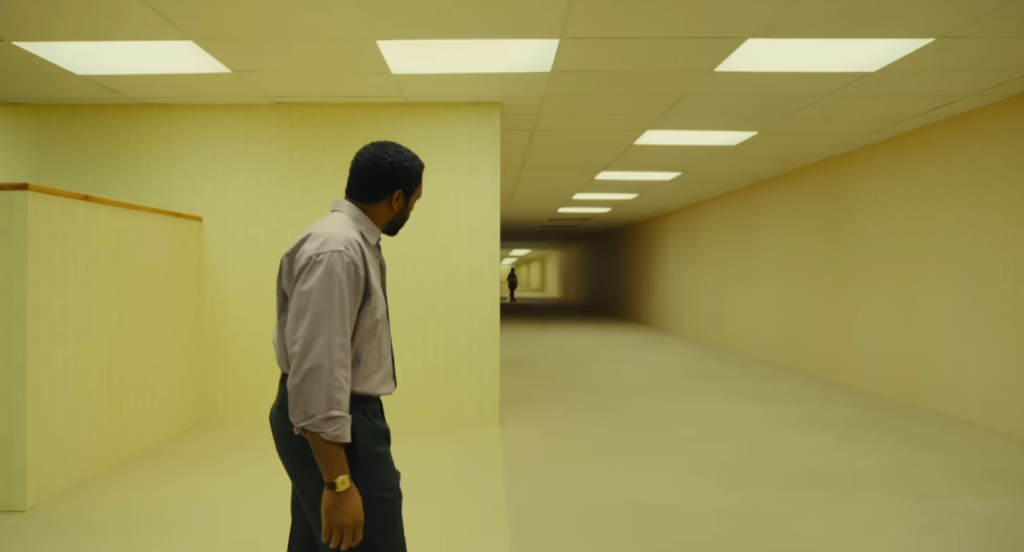
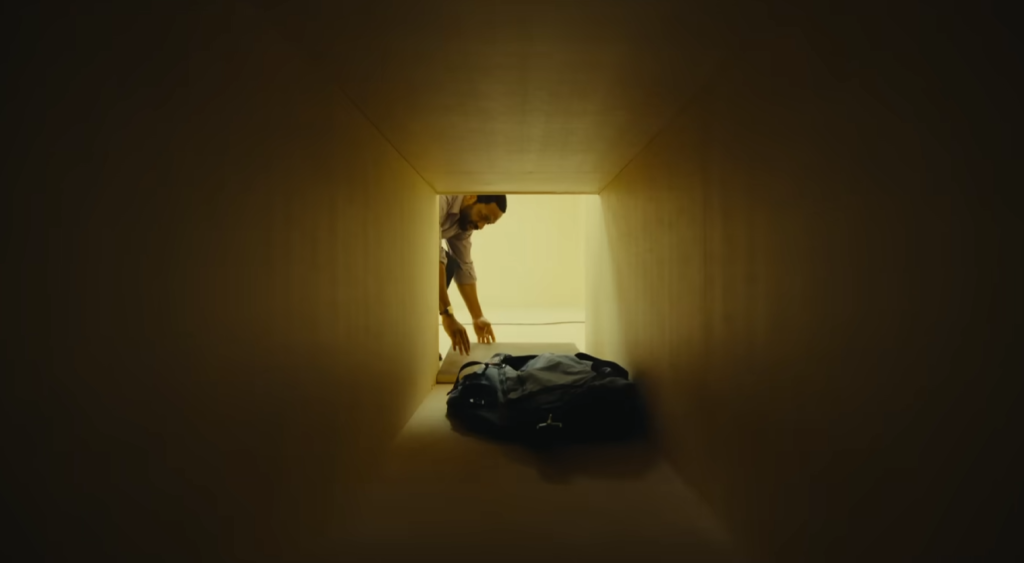
Back at the store, Clark experiences severe electrical anomalies. While investigating the basement, he discovers a “null zone”—a literal tear in the fabric of reality glowing faintly behind a wall. Noclipping through the barrier, he finds himself in the Backrooms. Rather than reacting with pure terror, Clark, a failed architect, is mesmerized. The impossible, non-Euclidean geometry fascinates him. He begins to map the area, marking the entrance with blue painter’s tape—a direct nod to the web series.
Act II: The Exploration and the Still Lifes
Driven by a mix of obsession and a desperate desire to prove he has discovered something groundbreaking, Clark recruits his young employees, Bobby (Finn Bennett) and Cat (Lukita Maxwell), to document the space using a camcorder.
The film shifts seamlessly into an extended found-footage sequence. The trio navigates the labyrinth, venturing through narrow corridors, impossible ramps, and liminal spaces that resemble abandoned, mid-century indoor pools (the “Poolrooms”). The exploration turns fatal when they encounter the dimension’s inhabitants: humanoid entities known as “Still Lifes”. These creatures, which appear as physically distorted, glitching human beings, ambush the group. Bobby is dragged screaming into a laundry chute, and Cat is killed shortly after, leaving Clark trapped and alone in the darkness.
Act III: The Rescue Mission and the Dinner Party
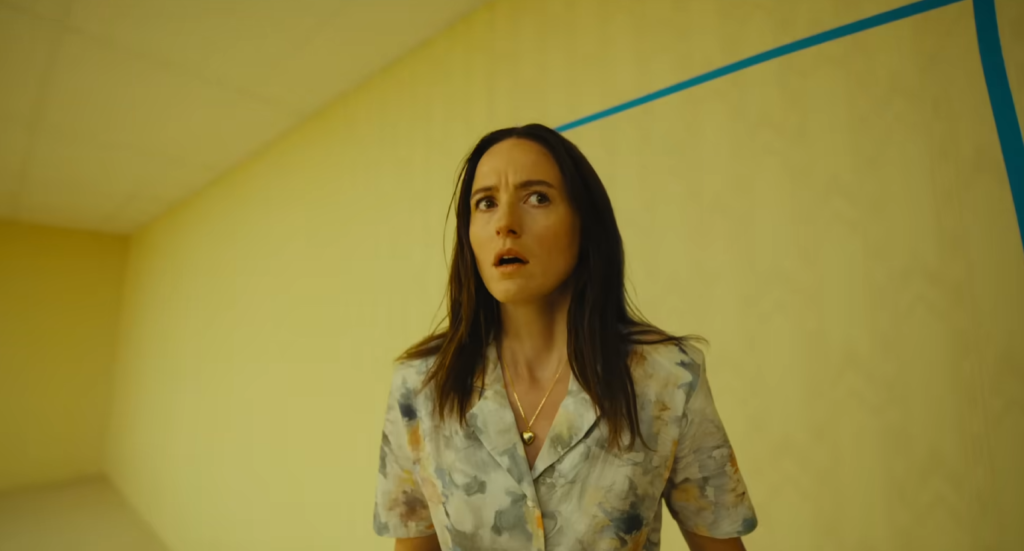
When Clark fails to attend his therapy sessions, Mary visits the Ottoman Empire. Finding the store abandoned and noticing the anomalous doorway in the basement, she steps inside to rescue her patient. Mary’s journey through the Backrooms is a masterclass in psychological horror. She discovers bizarre, cryptic messages scrawled on the walls by Clark, including warnings that “the floor plan changed again,” “roof is wrong,” and the ominous phrase, “here and now is a two-way street”.
Mary eventually locates Clark in a dimly lit, makeshift kitchen area. However, Clark is irrevocably changed. In a shocking twist, Clark violently attacks Mary, choking her until she loses consciousness. She awakens bound to a chair at a dining table. Surrounding her are several Still Lifes—mannequin-like entities with mangled features. Clark, fully assimilated into the madness of the environment, forces Mary to re-enact the therapy role-play regarding his ex-wife. He admits he feels safer in the Backrooms because the space demands no accountability; he does not have to change or grow.
During this perverse dinner party, a towering, grotesque monster breaches the room. This entity, “Captain Clark,” is a mutated version of the pirate mascot Clark uses for his store commercials. The other Still Lifes scatter in terror, but Captain Clark zeroes in on the real Clark, violently biting into his neck and killing him.
The Climax: Escape and the Async Interrogation
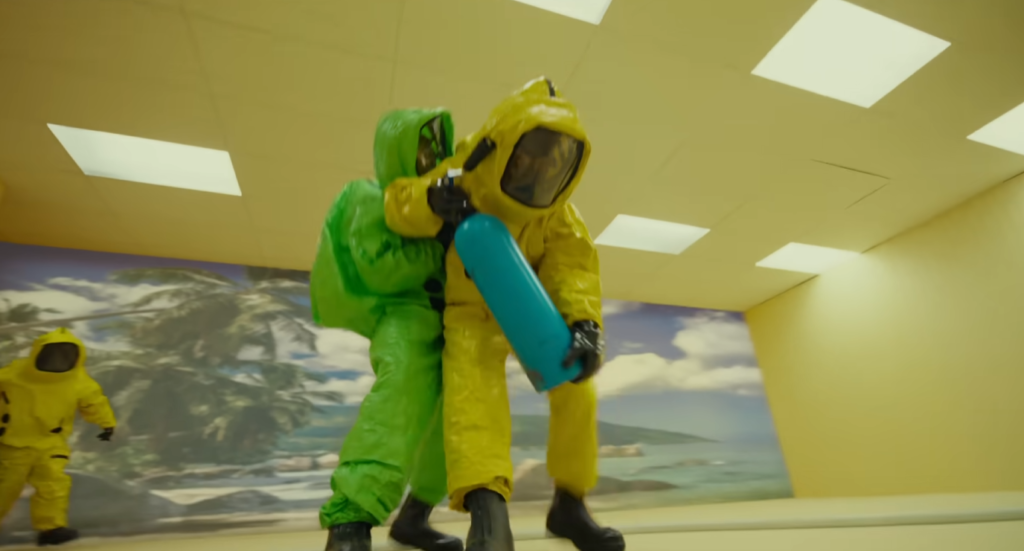
Mary breaks free and flees, triggering an intense pursuit sequence through environments that suddenly begin to resemble her own childhood suburban neighborhood. Cornered by Captain Clark in a room resembling the furniture store, she utilizes a piece of dried cement containing her childhood handprint to bludgeon the entity’s face. Just as she is about to be overpowered, an Async capture team in hazmat suits bursts into the room. They deploy traps to subdue the monster and extract Mary.
In the denouement, Mary is held in a sterile interrogation room at the Async Research Institute. Phil (Mark Duplass), a senior researcher, questions her about her survival. He reveals that null zones are opening globally, swallowing infrastructure and people, and Async is desperately attempting to map the phenomenon. When Mary asks if she will be allowed to leave, Phil chillingly replies, “That’s not up to me”.
The film concludes with a slow, haunting pan across the Backrooms. The environment has shifted, generating rooms that perfectly mimic Mary’s demolished childhood home. Finally, the camera rests on a chair inside the maze, where a faceless, twitching Still Life version of Mary sits alone in the dark.
Cast and Deep Psychological Character Profiles
The terror of Backrooms does not stem from jump scares or supernatural demons, but from the deeply flawed psychology of its human characters. Will Soodik’s screenplay treats the Backrooms as a psychological mirror, magnifying the internal rot of everyone who enters.
- Clark (Chiwetel Ejiofor): Chiwetel Ejiofor anchors the film with a layered, intensely disturbing performance. Clark is a man consumed by regret and toxic masculinity. As a trained architect who abandoned his dreams, he harbors a deep resentment that metastasized into alcoholism and abuse. Clark’s reaction to the Backrooms is highly unorthodox: he likes it. Ultimately, Clark’s fatal flaw is his refusal to take accountability, admitting to Mary that he prefers the Backrooms because it allows him to remain stagnant. Clark does not simply become a victim; he willingly merges with it.
- Dr. Mary Kline (Renate Reinsve): Renate Reinsve delivers a powerhouse performance as a woman desperately trying to outrun her past. Mary’s professional facade as a pragmatic therapist masks a harrowing childhood. Flashbacks reveal she was raised by a mentally ill mother who boarded up their windows with newspaper and refused to leave their home, even as it was slated for demolition. The sole physical remnant of her childhood is a piece of driveway cement bearing her handprint. Mary’s journey into the Backrooms is a tragic irony; in her attempt to save Clark, she is forced to confront the literal, physical manifestation of her own interior trauma.
- Phil (Mark Duplass): Mark Duplass brings a chilling, bureaucratic pragmatism to the role of Phil, the Async researcher. Phil represents the cold, scientific curiosity surrounding the phenomenon. He is not overtly evil, but his detachment is terrifying. He views the Backrooms—and the people trapped inside it—as raw data points. His casual admission that Mary’s fate is “not up to me” highlights the sinister corporate machinery operating behind the scenes, effectively setting up Async as a corporate antagonist.
The Backrooms Movie Ending Explained: Deciphering the Final Act
The third act of Backrooms is intentionally disorienting, culminating in a bleak, existential climax that has sparked fierce debate among audiences. To truly dive into the Backrooms movie ending explained, we must examine the mechanics of the dimension itself, the true nature of the Still Life entities, and the ominous implications of Async’s involvement.
The Mechanics of the Dimension: The MRI Metaphor
The most critical piece of exposition is delivered by Phil during the final interrogation. He mentions that before discovering the Backrooms, the Async Research Institute was a company that manufactured MRI (Magnetic Resonance Imaging) machines. An MRI machine maps internal biological structures by using magnets to manipulate water molecules, layering images to create a complete, three-dimensional picture of the human body.
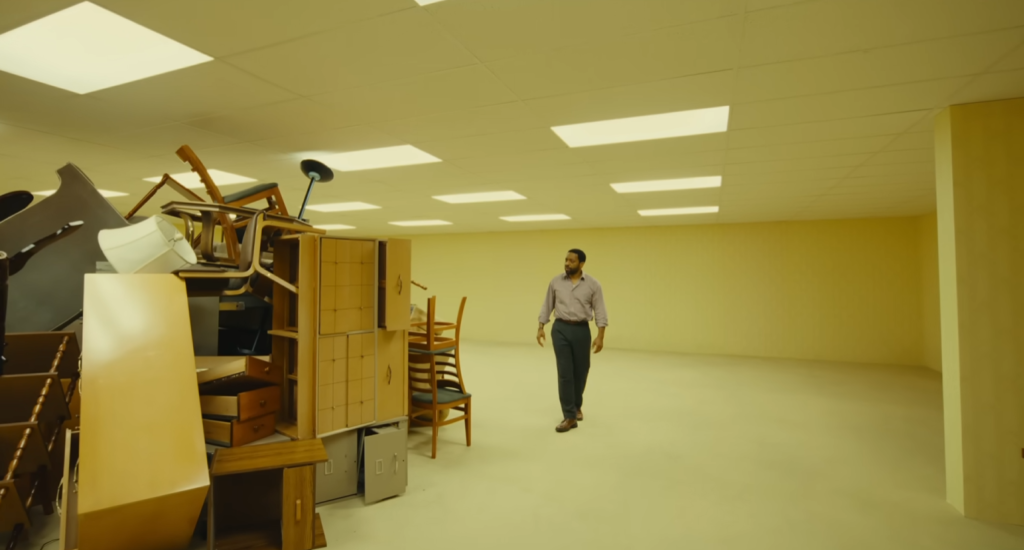
The Backrooms function identically, but on a cosmic, psychological scale. When a human steps through a null zone, the dimension scans their consciousness, their trauma, and their memories. It uses this psychological data to physically construct the endless rooms. The Backrooms does not build the labyrinth from scratch; it remembers the environments from the subconscious minds of its victims.
Because human memory is inherently flawed and fragmented, the spaces generated by the Backrooms are slightly incorrect. The architecture is non-Euclidean—stairs lead to nowhere, pillars obstruct doorways, and familiar wallpaper is repeated ad nauseam because the “machine” is attempting to fill infinite space with limited memory data. This explains why Clark’s entry point eventually generated environments mimicking his furniture store, and why Mary’s entry caused the dimension to immediately generate a twisted replica of her childhood suburban home.
The Autonomy of the “Still Lifes”
The creatures roaming the Backrooms, designated as “Still Lifes,” are not extraterrestrials or demons. They are flawed, physical copies of the people stored within the memories of those who enter the dimension.
During the horrific dinner table scene, Mary is surrounded by these entities. It is heavily implied that the red-headed Still Life is a distorted memory-clone of Clark’s ex-wife, Barbara. This clone exhibits pure terror and cowers in the corner when the Captain Clark monster enters the room, perfectly mirroring the real Barbara’s fear of Clark’s drunken, abusive rages. Clark’s cruelty is further highlighted when he casually scalps this entity to place its hair on Mary, proving he views the people in his life as mere objects to be manipulated.
The Meaning of “Captain Clark”
The towering monster that hunts Mary is “Captain Clark”. Because the Backrooms draws directly from Clark’s psyche, the clone of Clark himself is the most powerful and autonomous entity in his sector of the maze.
Clark initially views this monster as a deity, a representation of his uninhibited rage and power. However, when Clark finally admits to Mary that he refuses to change and embraces his toxicity, the monster consumes him. The entity—born of his own self-loathing and violence—literally devours its creator. It is a stark visual metaphor: Clark is eaten alive by his own demons.
Why Did Mary Leave a Clone Behind?
The final shot of the film is its most chilling: Mary is safe in the real world, yet a Still Life copy of her remains trapped inside the Backrooms, rocking silently in a chair.
This image solidifies the film’s core thesis. You can physically escape the Backrooms, but because the dimension scanned her mind, a piece of her identity is permanently archived in the maze. The Backrooms absorbed her trauma regarding her mother’s institutionalization, physically generated her childhood home, and birthed a clone that will wander the yellow hallways for eternity. It is a bleak realization: surviving trauma does not mean erasing it. The memory persists, autonomous and suffering, in the dark.
Deep Thematic Analysis: Beyond the Yellow Walls
Kane Parsons and Will Soodik’s screenplay elevates Backrooms beyond the trappings of typical internet creepypasta, injecting it with profound psychological and cultural commentary that resonates deeply with contemporary anxieties.
The AI Generation Metaphor
In an era dominated by artificial intelligence, the film serves as a brilliant allegory for algorithmic generation. The dimension functions exactly like generative AI processing a prompt. When a user inputs a prompt into an AI image generator, the machine pulls from millions of reference points, often resulting in uncanny, dreamlike imagery where fingers blur together, text is unreadable, and architecture makes no logical sense.
In the film, the human mind is the “prompt.” The Backrooms attempts to render human memories but fails to understand biological anatomy or physics, resulting in the non-Euclidean hallways and the mangled, stitched-together anatomy of the Still Lifes. The entities are the cosmic equivalent of an AI failing to render a human face correctly—they are glitches in the universal software.
Dementia, Alzheimer’s, and “The Caretaker”
The auditory landscape of the film provides the most heart-wrenching thematic clue. The film’s score deliberately incorporates the track “B1 – All That Follows Is True” from the critically acclaimed ambient music project Everywhere at the End of Time by The Caretaker (Leyland Kirby).
The Caretaker’s six-hour album is designed to simulate the cognitive experience of dementia and Alzheimer’s disease. As the album progresses, beautiful, nostalgic 1920s ballroom music slowly degrades into terrifying, fragmented static and confusion. The inclusion of this music is the key to understanding the Backrooms. The film is a spatial representation of dementia. The rooms copy themselves endlessly, degrading in quality with each iteration—just as a deteriorating mind attempts to hold onto a memory, only for it to become warped, terrifying, and ultimately lost. The tragedy of the Still Lifes is that they are fading memories, wandering aimlessly through a mind that is actively dying.
Cinematography and Sound Design: Engineering Dread
The visual and auditory execution of Backrooms actively subverts traditional horror tropes, relying on atmosphere rather than jump scares to terrify the audience.
The Rejection of Darkness
Cinematographer Jeremy Cox achieves the seemingly impossible: making a brightly lit space absolutely terrifying. Unlike typical horror films that hide their monsters in the shadows, Backrooms is illuminated by the harsh, oppressive glare of fluorescent office lighting.
This lighting choice leaves the characters completely exposed. There are no dark corners to hide in. The bright lighting amplifies the uncanny valley effect, allowing the audience to see every architectural flaw and bizarre anatomical deformity of the Still Lifes with agonizing clarity. It mimics the sterile, lifeless environment of corporate liminal spaces—environments built for utility, devoid of human warmth.
The Sound of Silence
The sound design, overseen by veteran engineers (including Andrew D. Cris DeFaro), utilizes the absence of sound as a weapon. The constant, maddening hum of the fluorescent lights acts as auditory water torture, steadily eroding the sanity of the characters. Edo Van Breemen’s drone-heavy score maintaining a low, vibrating frequency of sustained anxiety, perfectly mirroring the endless nature of the labyrinth itself.
Hidden Secrets and Easter Eggs for Hardcore Fans
Kane Parsons meticulously seeded the film with Easter eggs that reward long-time followers of his YouTube lore, while seamlessly integrating them into the cinematic narrative.
1. The Oshkosh, Wisconsin Layout The original 2019 4chan image was eventually tracked down by internet sleuths to a renovated hobby and furniture store in Oshkosh, Wisconsin. Parsons pays homage to this real-world origin by making Clark the owner of a furniture store. Furthermore, during the camcorder exploration sequence, the camera briefly pans past an architectural layout that matches the exact arches and windows seen in the legendary original photograph.
2. The Missing Persons Flyers During the final montage, the camera lingers on a room containing a spiraling pillar plastered with missing persons posters. These flyers feature the faces of Bobby and Cat, the employees who perished earlier in the film. This shot is a direct visual recreation of the opening moments from Parsons’ YouTube video Backrooms – Missing Persons, effectively bridging the cinematic universe with the web series.
3. The Blue Tape Protocol Throughout the film, Clark uses blue painter’s tape to mark the entrance (the null zone) to the Backrooms. This is a recurring motif from the web series, where characters frequently use blue tape on floors and walls to identify tears in reality before they accidentally fall through.
4. The Async Hazmat Hierarchy The bright yellow hazmat suits worn by the Async researchers who rescue Mary are identical to the iconic suits featured in the Found Footage YouTube videos. However, the film introduces different colored suits for various members of the team, implying a strict corporate hierarchy within the Async Research Institute.
5. The Letterboxd “Inbred Still Life” Glitch In a bizarre piece of meta-trivia, the film’s Letterboxd cast list mistakenly credited Gen Z influencer and actress Ivy Wolk (known for Anora) as playing a character named “Inbred Still Life”. Wolk had to take to Instagram to clarify she was not in the film, an error caused by crowdsourced data pulling from The Movie Database.
Box Office Triumph and Critical Reception
The commercial performance of Backrooms is nothing short of historic. Against a modest budget of approximately $10 million, the film shattered expectations, grossing $81.5 million domestically in its opening weekend.
Breaking Records
The opening weekend marked the highest-grossing debut in A24’s history, outpacing highly anticipated blockbusters like Star Wars: The Mandalorian and Grogu. The film’s success firmly establishes Kane Parsons, at just 20 years old, as a major Hollywood player. The film ultimately surpassed $135 million globally in its initial theatrical run, proving the viability of internet-originated IP.
| Reception Metrics | Score/Data |
|---|---|
| Rotten Tomatoes (Critics) | 88% |
| Metacritic | 76 |
| Opening Weekend (Domestic) | $81.5 Million |
| Audience Reaction | Polarized (Praise for atmosphere, criticism for slow pacing) |
The Critical Divide
While critics overwhelmingly praised the film—Rotten Tomatoes sits at a “Certified Fresh” 88%—audience reactions were markedly polarized. Fans of psychological horror and liminal spaces lauded the film’s refusal to offer easy answers, comparing it to the surrealist works of David Lynch and the spatial dread of Stanley Kubrick’s The Shining.
However, general audiences expecting a fast-paced, monster-chase horror film were left frustrated by the slow burn and the ambiguous, cerebral third act. Some viewers found the deliberate pacing and the conceptual heavy lifting regarding memory and trauma to be boring, desiring more concrete explanations for the phenomena. This divide highlights the film’s uncompromising artistic vision; it is a movie that demands active engagement and post-viewing analysis.
The Future: Backrooms 2 and Television Expansion
Given the unprecedented financial success of the film, A24 has fast-tracked the development of Backrooms 2. The ending of the first film deliberately leaves multiple narrative threads unresolved, effectively serving as an origin story for a broader cinematic universe.
The Search for a New Writer
While the visual direction under Kane Parsons is universally praised, Parsons himself is actively seeking a new screenwriting collaborator to pen the sequel. Will Soodik, who wrote the first film, is currently involved in other projects and is not expected to return for the sequel. This suggests a potential shift in narrative style for the next installment, possibly focusing more heavily on traditional narrative structure to appease audience critiques.
Expanding the Universe: Television Potential
Kane Parsons has expressed a desire to move beyond the confines of a two-hour theatrical feature. In interviews, he stated that the ultimate goal for the franchise is a television series. The episodic format would allow for a deeper, more methodical exploration of the Async Research Institute, the mechanics of the null zones, and the geopolitical implications of parallel dimensions opening up worldwide.
What Will the Sequel Be About?
The sequel is expected to pivot away from Clark’s story and focus heavily on the Async Research Institute and Dr. Mary Kline’s captivity. The introduction of Mark Duplass’s character, Phil, establishes a corporate antagonist trying to harness the power of the Backrooms.
Future installments will likely explore what Async plans to do with survivors, how they intend to monetize or weaponize the dimension, and the catastrophic consequences of the null zones swallowing objects in the real world. There is also massive potential for anthological storytelling, exploring how the Backrooms manifests the traumas of entirely different protagonists—such as a serial killer—expanding the limits of the MRI memory metaphor.
Comprehensive SEO FAQ: Answering Every Audience Query
To ensure total comprehension of the film’s dense lore, we have compiled the definitive answers to the internet’s most frequently asked questions regarding the film.
What is the true meaning of the Backrooms movie?
The Backrooms movie is a psychological allegory for generational trauma, Alzheimer’s disease, and the refusal to accept personal accountability. Through the metaphor of an alternate dimension that physically replicates human memories, the film explores how our unaddressed grief and anger can mutate into literal monsters that consume us.
Is the Backrooms movie just a dream?
No. Director Kane Parsons has explicitly confirmed that the events of the movie are not a dream, a hallucination, or a purgatory metaphor. The Backrooms is a literal, physical alternate dimension that absorbs human memories and generates tangible physical spaces based on that data.
Who is the monster in the Backrooms?
The primary monster in the film is known as “Captain Clark,” played by 7-foot-7 actor Robert Bobroczkyi. The monster is a “Still Life”—a physical clone generated by the Backrooms that manifests all of Clark’s repressed rage, abusiveness, and self-loathing.
What are the “Still Lifes”?
Still Lifes are imperfect, physical copies of people that the Backrooms generates by scanning the memories of whoever enters the dimension. Because human memory is flawed, these clones are physically distorted, possessing incorrect anatomy and behaving like corrupted computer files.
What does the final shot of Mary’s clone mean?
The final shot of the film shows a Still Life version of Mary trapped inside the Backrooms. This signifies that while Mary physically escaped, the dimension scanned her mind and retained a permanent copy of her consciousness and trauma. It suggests that the trauma of the experience will never truly leave her.
The Backrooms represents a monumental shift in the horror landscape. By transforming a decentralized internet myth into a profound cinematic exploration of trauma, memory degradation, and spatial dread, Kane Parsons has cemented his status as a visionary filmmaker. As audiences eagerly await the sequel, the yellow, fluorescent-lit hallways of the Complex will continue to haunt the collective imagination, proving that sometimes, the most terrifying monsters are simply the distorted reflections of ourselves.
If you’re still reeling from that mind-bending finale, you won’t believe the hidden clues you missed. Uncover the full truth in our exclusive breakdown: [Widow’s Bay Ending Explained: Shocking Apple TV Cast, Hidden Secrets & Theories]
You can explore the brilliant comedic audiobooks and original stories that inspire today’s biggest stand-up comedians. Start listening to thousands of hilarious, premium audiobooks for FREE today with an Audible Premium Plus trial.
Start your FREE Audible Trial and listen to the funniest stories right here.
(Disclosure: As an Amazon Associate, memoria.film may earn a commission from qualifying purchases or free trial sign-ups through this link, at no additional cost to you. This helps support our cinematic archive.)