If you are looking for a definitive Widow’s Bay ending explained, you must first understand the anatomy of this modern horror-comedy masterpiece. The contemporary television landscape is frequently saturated with genre-blending experiments, yet few achieve the delicate, razor-thin equilibrium required to sustain both genuine, atmospheric terror and character-driven, deadpan comedy. Apple TV’s Widow’s Bay, created and showrun by Katie Dippold, has emerged as a definitive, masterclass triumph in this highly specialized narrative niche. Premiering on April 29, 2026, the ten-episode series has rapidly ascended the ranks of streaming supremacy, earning universal critical acclaim and high praise from cinematic horror auteurs, including Guillermo del Toro, who heralded it as the best streaming series in recent memory.
By merging the bureaucratic, municipal dysfunction characteristic of shows like Parks and Recreation (Dippold’s former writing ground) with the isolated, faith-tested horror of Mike Flanagan’s Midnight Mass and the aquatic paranoia of Steven Spielberg’s Jaws, Widow’s Bay presents a narrative architecture that is as hilarious as it is deeply harrowing.[4, 4] The series operates on a foundational premise of extreme geographical and supernatural entrapment: a fictional, fog-drenched New England island town located forty miles off the coast, completely isolated by spotty cellular reception, non-existent Wi-Fi, and a centuries-old curse that dictates any native-born resident who attempts to leave for the mainland will inevitably suffer a gruesome death.
At the absolute center of this municipal nightmare is Mayor Tom Loftis, an outsider and relentless skeptic who is desperately attempting to modernize the island, repair its aging infrastructure, and transform it into a lucrative summer tourist destination. The dramatic irony of the entire series hinges precisely on Loftis’s bureaucratic success; his aggressive tourism campaign actually works, bringing an influx of outsiders and journalists to the island. However, this influx acts as a devastating catalyst, awakening a dormant, ancient evil that feeds on the desperation, fear, and blood of the island’s inhabitants.
This exhaustive, 5000-word analytical report provides a comprehensive Widow’s Bay ending explained by deconstructing the dense lore, the complex character arcs, and the hidden mythological underpinnings of the series. By synthesizing every narrative clue, historical flashback, and psychological subtext from the first eight episodes, this analysis provides definitive explanations for the show’s most ambiguous twists. Furthermore, it explores the intricate mechanics of the Warren bloodline curse, the nature of the island’s parasitic entity, and forecasts the catastrophic events poised to unfold in the final two episodes of the season: “Emergency Shelter” and “We Hope You Enjoyed Your Time!”.

The Creative Architecture: Showrunners, Tone, and Directorial Vision
To fully appreciate the nuanced storytelling of Widow’s Bay, one must first examine the creative forces steering the production. The series represents a bold departure and a striking evolution for creator Katie Dippold, whose previous credits include The Heat and extensive comedic work. Dippold’s genius in Widow’s Bay lies in her refusal to let the comedy undermine the horror, or vice versa. The humor is derived not from slapstick or parody, but from the deeply human, exasperated reactions of characters who are forced to process apocalyptic, supernatural events while still navigating the mundane bureaucracy of small-town governance.
This tonal high-wire act is meticulously executed by a roster of elite television directors, led by Emmy Award winner Hiro Murai, who executive produces and directs five episodes of the season. Murai, renowned for his surreal, atmospheric work on Atlanta and The Bear, infuses the island with an inescapable sense of dread. He establishes a visual language where the island itself feels like a sentient, breathing antagonist. Murai’s foundational episodes are brilliantly complemented by the directorial contributions of acclaimed horror filmmaker Ti West (X, Pearl), who helms the pivotal, historically focused sixth episode, bringing a distinct, period-accurate folk-horror aesthetic to the series.[4, 4]
The show’s brilliance is further amplified by its refusal to rely solely on gratuitous gore. Instead, Widow’s Bay builds its terror through immaculate blocking, suffocating atmosphere, and the psychological unraveling of its characters.[4, 4] The horror is cerebral, treating each scare as a carefully constructed punchline that leaves the audience unsettled rather than merely startled.
Comprehensive Cast and Character Dynamics
The success of Widow’s Bay is inextricably linked to its phenomenal ensemble cast. The series demands a highly specific tonal calibration from its actors, requiring them to oscillate seamlessly between deadpan comedic timing and primal, abject terror. The following table details the primary cast, their respective characters, and their profound narrative functions within the overarching mythology.
| Actor | Character | Narrative Function and Psychological Profile |
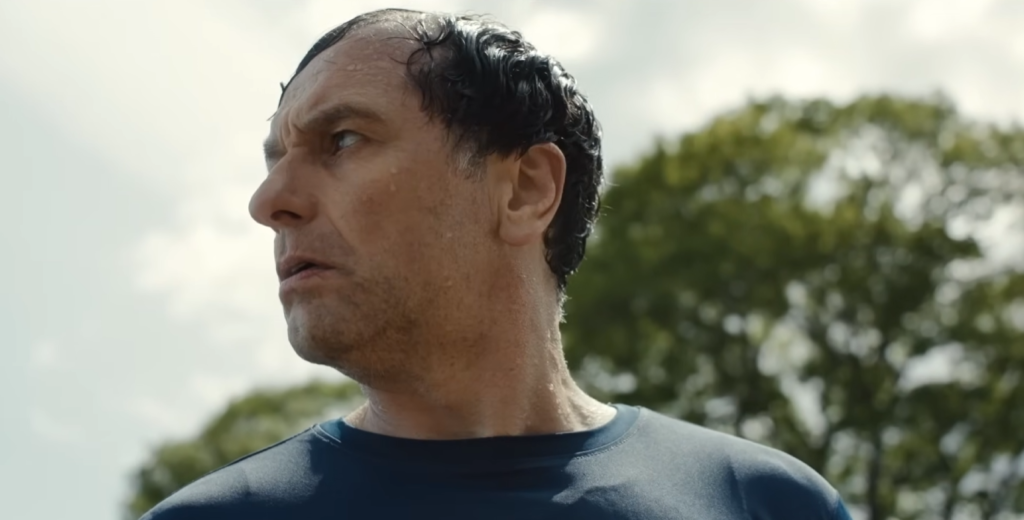
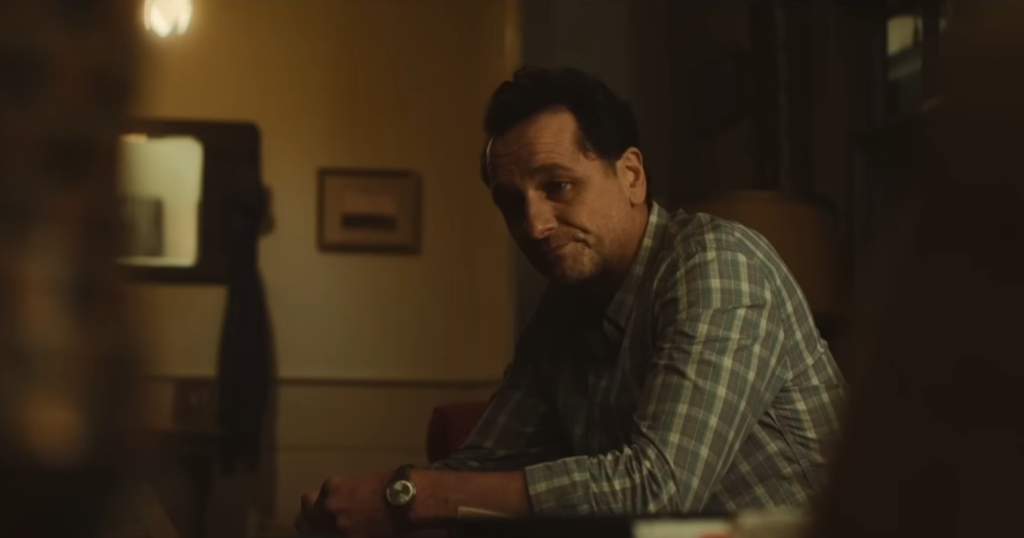
| Matthew Rhys | Mayor Tom Loftis | The municipal leader and persistent skeptic. Rhys masterfully calibrates a performance rooted in exasperation and deep denial. Loftis is driven by a subconscious, desperate need to build an island paradise so his son, Evan, will never want to leave—a psychological defense mechanism against the curse that traps them there. |
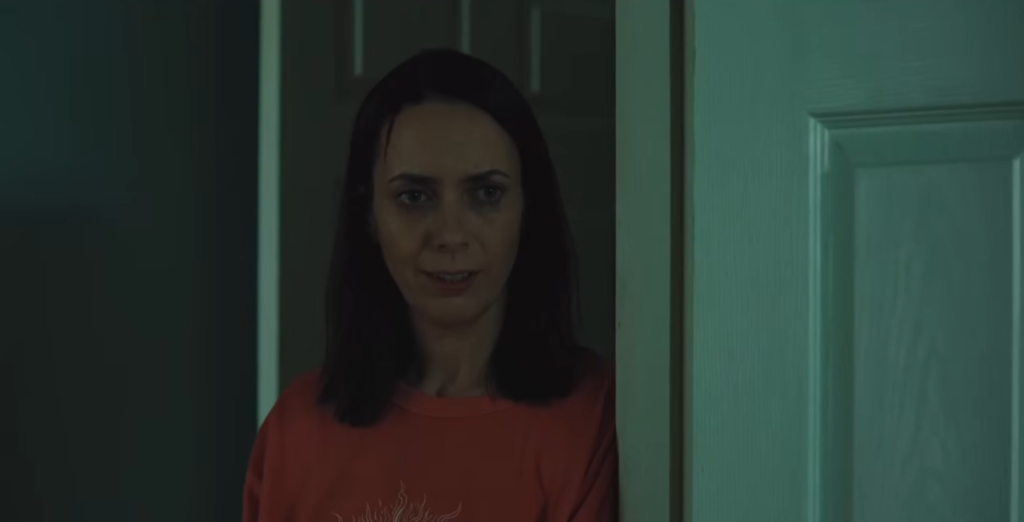
| Kate O’Flynn | Patricia | Tom’s eccentric, socially ostracized assistant. A survivor of the Boogeyman’s original massacre, her arc transforms her from a traumatized, bullied pariah into the ultimate horror “final girl,” culminating in a spectacular, empowering confrontation in Episode 8. |
| Stephen Root | Wyck | The island’s resident Cassandra and harbinger of doom. Often dismissed as an alcoholic town crank, Wyck possesses a deep, almost encyclopedic knowledge of the island’s supernatural rules. He operates as the essential narrative bridge between the modern townsfolk and the ancient evil. |
| Hamish Linklater | Richard Warren | The founder of Widow’s Bay (1681) and its first Mayor (Reeve Prime). Linklater delivers a chilling performance as a man whose desperation for survival twists into a demonic pact. He secures immortality by feeding the island’s entity through ritualistic blood sacrifices. |
| Betty Gilpin | Sarah Westcott | Richard’s second wife, arriving in 1702. She acts as the historical protagonist, uncovering her husband’s monstrous pact and attempting to sever his bloodline by fleeing with his children, a tragic endeavor that sets the modern curse in motion. |
| Kingston Rumi Southwick | Evan Loftis | Tom’s rebellious teenage son. Evan’s physical appearance and mysterious biological paternity make him a central figure in the bloodline theories. His burning desire to leave the island creates the central emotional and physical conflict for Mayor Loftis. |
| Kevin Carroll | Sheriff Bechir Clemmons | The local law enforcement officer who gradually realizes his jurisdiction is powerless against supernatural forces. His secret—that his wife is pregnant—places him in a desperate race against time to escape the island’s curse before his child is bound to it. |
| Dale Dickey | Rosemary | An employee in the mayor’s office. She possesses acute knowledge of the island’s folklore, specifically the mechanics of the “sea hag,” and serves as a vital, albeit cynical, source of exposition. |
| Chris Fleming | Todd O’Connor | Known locally as “The Shaman.” He is a drug dealer who provides crucial exposition regarding the island’s hallucinogenic black mushrooms, which grant “true sight” into the island’s supernatural infrastructure. |
Mayor Tom Loftis: The Tragedy of Hubris and Denial
Matthew Rhys’s portrayal of Mayor Tom Loftis is a masterclass in reactionary comedy, projecting a veneer of control over a community spiraling into madness. The humor of the character is generated not through broad slapstick, but through his profound exasperation with a constituency that refuses to adhere to his logical, mainland sensibilities. However, the deep analytical subtext of the series reveals that Tom’s skepticism is not rooted in rationality, but rather in a profound, blinding trauma response. He is not originally from Widow’s Bay, but his late wife, Lauren (Meredith Casey), was inextricably bound to it.
When Tom attempted to take his pregnant wife off the island years ago, the curse violently rejected her departure. The boundary of the island operates as a supernatural quarantine zone. As Tom and Lauren’s ferry crossed this threshold, Lauren suffered a preeclampsia-induced stroke and severe physiological breakdowns, screaming that she had lost her vision. The ferry was forced to turn back, and Lauren was rendered permanently altered, locked in a catatonic state. She was eventually institutionalized in the island’s mental asylum, grimly referred to as “the Home,” where she died years later from a brain aneurysm.
Tom has spent Evan’s entire life lying about this horrific reality, claiming Lauren died peacefully in childbirth. By aggressively pushing for tourism and infrastructure, Tom is actively attempting to build a gilded cage. He wants to construct a world where Evan will never want to leave the island, because Tom knows with absolute certainty that leaving means death. His comedic bumbling and municipal obsession is a facade masking a father’s desperate, impossible mission to out-maneuver a supernatural hostage situation.

Patricia: The Evolution of the Final Girl
Kate O’Flynn’s Patricia provides the narrative with its most compelling and satisfying character evolution. Introduced as a socially awkward, highly sensitive, and widely disliked assistant, she is dismissed by her peers—specifically the antagonistic local woman named Chris—as a pathological liar.[4, 4] Patricia claims she survived the infamous serial killer known as the Boogeyman when she was in high school, an event that left her profoundly traumatized, yet the town ostracized her, accusing her of fabricating the story for attention.
The psychological toll of this ostracization is profound. In Episode 4, “Beach Reads,” her desperate attempt to manufacture friendships via a library self-help book (“Your Turn: Out with the old and in with the U”) takes a horrific turn when the book reveals itself to be an ancient grimoire. The party she throws descends into madness: the room fills with slaughtered crows, and her entranced guests attempt a mass suicide by marching into the ocean. Patricia is forced to burn the book to break the spell, realizing the island’s magic is parasitic and highly dangerous.
Her arc reaches its zenith in Episode 8, “Your Baggage.” When the Boogeyman actually returns, awakened by the island to finish his massacre, Patricia stops running. She weaponizes her trauma, utilizing a taser to incapacitate Chris (a cathartic moment of revenge against her bully), then uses gasoline at a local station, and ultimately seizes Sheriff Bechir’s shotgun to terminate her abuser. She physically remains with the Boogeyman’s corpse until it is completely incinerated in the hospital crematory, refusing to leave anything to chance. This meticulous destruction subverts traditional slasher tropes, cementing Patricia as a proactive tactician rather than a passive victim, and solidifying her status as an iconic horror heroine.
Wyck: The Burden of Knowledge and Guilt
Played with weary intensity by Stephen Root, Wyck is the quintessential Cassandra figure of Widow’s Bay. He knows the rules of the curse, understands the signs of the island’s awakening, and is universally ignored. However, Wyck is not merely an expositional device; he carries a profound psychological burden. In his youth, he and his best friend, Mark Doyle (brother of museum curator Jerry), sneaked out on a boat into the island’s waters. They were attacked by a massive, tentacled sea monster. In a moment of pure, selfish terror, Wyck kicked Mark off his leg, effectively sacrificing his friend to the creature so he could escape. This hidden guilt drives Wyck’s alcoholism and his obsessive need to protect the town, attempting to balance a cosmic ledger he knows he can never clear.
The Historical Foundation: 1702 and the Warren Pact
To comprehend the modern horrors of Widow’s Bay, a rigorous analysis of its historical foundation is absolutely required. The series executes a brilliant narrative pivot in Episodes 6 and 7 (“Our History” and “Seasickness”), directed by Ti West, transporting the viewer back to 1702 to witness the genesis of the curse.
The Arrival of Sarah Westcott and the Plagued Island
The island was settled in 1681 by Richard Warren, a man driven to the brink of starvation alongside his colonists. In a desperate bid for survival, when they could not even find vermin to eat, Richard consumed black mushrooms native to the island. This flora granted him “true sight” and facilitated communication with the island’s dark, unnamed entity. The entity demanded a continuous cycle of blood sacrifice—explicitly, a life for a life—in exchange for the colony’s survival and Richard’s personal immortality.
When Sarah Westcott (Betty Gilpin) arrives in 1702 to become Richard’s second wife, she steps into a community gripped by an induced mania. The island’s curse manifests as a supernatural plague, driving infected citizens to madness and murder. Sarah, acting as the historical protagonist, uncovers her husband’s monstrous pact. Beneath the floorboards of the Warren dining room, she discovers a hidden subterranean chamber containing a bloody sacrificial chair, restraints, and a network of tunnels—the physical infrastructure of his dark covenant.[4, 4]
The Blood Ritual and the Cylinder Pendant
The entity’s power is concentrated in a cylindrical pendant that Richard wears as a mock-religious artifact. Analysis of the flashback sequences reveals a highly specific, repeatable ritual: Richard extracts black, powdered mushroom dust from the pendant and rubs it aggressively into a self-inflicted laceration on the palm of his hand. This mingling of the necrotic flora with human blood acts as a conduit, renewing the pact and feeding the entity.
When Sarah conspires with Pastor Collins (David Dean Bottrell) to assassinate Richard, the attempt fails spectacularly due to Richard’s supernatural durability. Despite sustaining dozens of stab wounds from an assassin, Richard remains animated and practically unkillable. Eventually, it is Richard’s eldest son who bludgeons him, allowing the conspirators to bind Richard and bury him alive in a coffin.
Simultaneously, Sarah attempts to flee across the maritime boundary with Richard’s five children on a small boat, seeking to end the bloodline and starve the entity. Inside his coffin, Richard screams in terror, knowing that the island will not allow his native-born children to cross the boundary, dooming them to death. For over three centuries, Richard remains entombed, fully conscious, breathing dirt, and unable to die.
This historical revelation poses a critical analytical question: if Richard was incapacitated since 1702, who has been maintaining the blood ritual and feeding the entity in his absence? The evidence suggests a systemic cycle of inherited servitude, pointing toward a modern-day descendant secretly continuing the sacrifices in the present timeline.

Modern Manifestations of the Curse: Episodes 1-5
In the present day (2026), the arrival of Arthur Lloyd (Bashir Salahuddin), a New York Times journalist, triggers a chain reaction. The influx of outside attention, coupled with Mayor Loftis’s desperation for modernization, seemingly acts as a beacon, rousing the dormant entity to defend its territory and feed.
Deconstructing the Narrative Arcs of Terror
The series systematically introduces a pantheon of mythological threats, treating each episode as an escalation of the island’s defense mechanisms.
- The Poisoned Fog and Revenants (Episode 1): The series opens with a dense, unnatural fog rolling into the harbor. This fog triggers rapid cellular necrosis and reanimation. Shep Clark (Tom Kemp), a local fisherman, succumbs to the fog, his eyes turning entirely white. He collapses in a local bar, seemingly dead, only to momentarily reanimate with superhuman strength, grabbing Tom by the throat before finally perishing. This establishes the baseline threat: the environment itself is hostile.
- Spatial and Temporal Distortion (Episode 2): To prove the town is safe for tourists, Tom is dared by the locals to spend the night in the Breakwater Inn’s haunted captain’s suite. The environment inside the inn defies the laws of physics. It is revealed that thirty seconds outside the room equates to vastly different, agonizing temporal measurements inside. Furthermore, Tom’s terrifying encounter with a ghost named William (Tim Baltz), who morphs into a rotting clown corpse in the basement crawl space, highlights the island’s ability to weaponize specific, localized fears to generate maximum terror.
- The Sea Hag’s Mark (Episode 3): The threat evolves from environmental to targeted folklore tracking mechanisms. Tom encounters a decrepit old woman on the road who violently scratches his hand. Rosemary explains that this is a “sea hag,” a creature that tracks its victims through the blood and skin left in the scratch. The creature’s ability to later infiltrate Tom’s home, masquerading as his deceased wife, Lauren, before shedding its skin to reveal its true, monstrous form, exposes the entity’s strategy of utilizing deep psychological vulnerability to paralyze its prey. Tom only survives due to the timely intervention of Wyck, who shoots the hag, causing it to dissolve into sea foam.
The Shaman and the True Sight (Episode 5)
The mid-season narrative pivot occurs in Episode 5 (“What to Expect on Your Trip”), centering on the shocking death of Reverend Bryce (Toby Huss). Bryce is found hanging in his trashed office, having committed suicide after peering into an old well in the forest. Patricia and Wyck discover that Bryce had been calling Todd O’Connor, a drug dealer known as “The Shaman”.
Todd provides crucial exposition regarding the island’s black mushrooms. They do not induce standard chemical hallucinations; they act as a biological key, granting “true sight.” They unlock the consumer’s perception to the astral or dimensional reality of the island’s curse. When Tom accidentally ingests the mushroom tea, he loses all grip on reality for 24 hours. During this trip, he experiences the violent temporal flashbacks regarding his wife’s failed escape attempt, confirming to the audience the absolute, terrifying permanence of the maritime boundary quarantine zone.
The False Victory and the Boogeyman’s Return: Episodes 6-8
The narrative reaches a blistering, emotionally exhausting climax across Episodes 7 and 8, fundamentally altering the trajectory of the series and establishing a false sense of security that the show subsequently shatters with profound cruelty.
The Exhumation and the Voyage to the Dead Zone
Believing the curse is localized entirely to the physical existence of the Warren bloodline, Wyck exhumes Richard’s grave at the end of Episode 6, discovering the founder as a desiccated but highly articulate immortal. Richard, weary from centuries of entombment and mourning his lost children, agrees to cross the “Dead Zone”—the maritime boundary beyond the reach of the fishermen, which nullifies the curse’s protection.
Tom and Wyck transport the coffin via boat. As they approach the threshold, the island fights back with extreme prejudice, violently manipulating the ocean waves and broadcasting psychological distress signals over the boat’s radio. Richard panics, changing his mind and begging to live, but Tom and Wyck force the boat across the boundary. Upon crossing, Richard’s supernatural vitality vanishes; he rapidly ages and turns to dust and bone within his coffin. Tom and Wyck return to the island, elated, convinced they have terminated the pact and liberated the town.

The Illusion of Safety
Episode 8, “Your Baggage,” begins in the immediate aftermath of this perceived victory, basking in a warm, domestic comfort that is highly uncharacteristic for the series. Tom, believing the curse is broken, prints Boston Red Sox tickets for Evan, intending to take his son off the island for the first time in his life. He returns home and finally tells Evan the truth about his mother’s institutionalization, bringing a moment of profound, tearful healing to their fractured relationship.
The Painting and the Survival of the Bloodline
However, subtle visual cues indicate the catastrophic failure of their mission. In Episode 7, the camera deliberately lingers on a painting inside the Breakwater Inn depicting a historical maritime disaster: a small boat capsizing in rough seas, with a child in the water desperately reaching for a paddle held by an unknown savior on a larger vessel.
Analytical deduction confirms this painting depicts Sarah Westcott’s 1702 escape attempt. The imagery heavily implies that at least one of Richard’s children—likely the youngest daughter, Francis—did not drown in the storm but was rescued and eventually returned to the island. Because the bloodline survived, Richard’s death past the boundary was completely meaningless; the covenant remains intact, tethered to a modern-day descendant hiding in plain sight.
The Resurrection of the Boogeyman
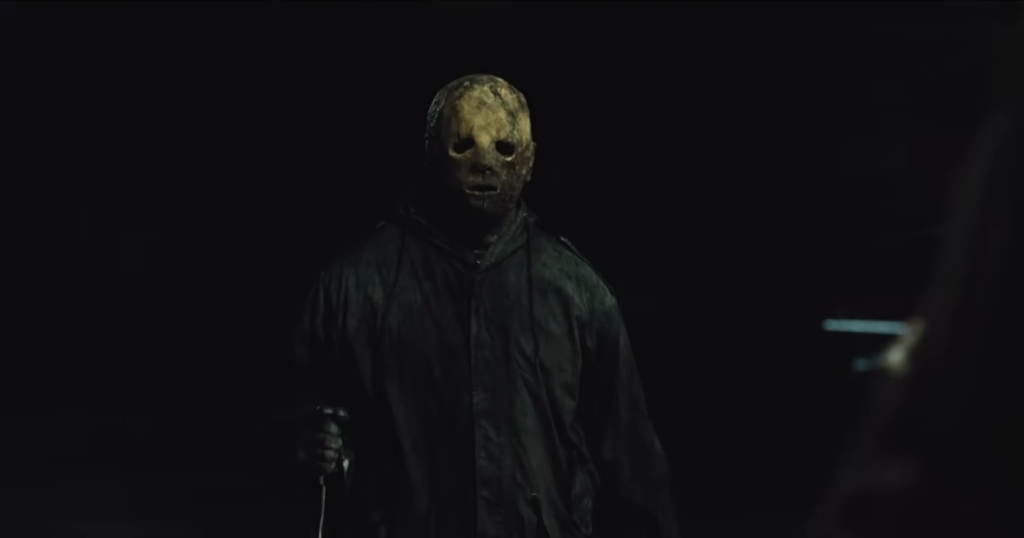
The island, agitated by the assassination of its founder, retaliates aggressively in Episode 8. It resurrects the Boogeyman (played by stuntman Airon Armstrong), the masked serial killer who previously massacred teenagers on the island. The entity directs the killer explicitly toward Patricia, the one victim who escaped him decades prior, knowing that feeding on her terror will generate immense power.
The resulting chase sequence is a masterclass in tension, paying overt homage to John Carpenter’s Halloween. Patricia’s home environment is slowly, sadistically manipulated—car alarms sounding, lights turning off sequentially, doors opening autonomously, accompanied by heavy, unseen breathing. The confrontation spills into the streets, culminating at the local gas station. Patricia sprays the floor with gasoline, igniting it with her taser.
The Boogeyman, however, exhibits the same supernatural durability as Richard Warren. He survives being thrown from a second-story window, being run over by an ambulance, and being completely engulfed in flames. He easily dispatches the EMTs and slashes Sheriff Bechir in the stomach. Patricia only manages to stop him by seizing the Sheriff’s shotgun and delivering a point-blank blast to the Boogeyman’s face. Her subsequent supervision of his cremation ensures he can never be reanimated by the island’s necrotic fog.
The episode concludes with a chilling revelation: Wyck arrives at Tom’s doorstep, shattering the mayor’s hopes of the Boston trip. Wyck confirms the truth—the mask was stolen, the Boogeyman returned, and the curse is not broken. The storm of the century is approaching, and the island is actively hunting them.
Deep Analysis: Widow’s Bay Ending Explained & Theoretical Frameworks
The intricate, puzzle-box plotting of Widow’s Bay leaves several critical mysteries unresolved as it approaches its two-part finale. A proper Widow’s Bay ending explained requires synthesizing historical flashbacks, background set design, and seemingly throwaway character dialogue. By doing so, several highly plausible, expertly deduced theories emerge regarding the true nature of the curse.
Theory 1: The Identity of the Warren Descendant
If Richard Warren’s bloodline continues, identifying the modern descendant is paramount to breaking the curse. Two primary candidates dominate the analytical landscape:
Candidate A: Evan Loftis The narrative has deliberately cast doubt on Evan’s biological paternity. In an early episode, Tom explicitly states to Evan, “Four months later, we were married. And yes, it’s no secret she was already pregnant with you”. Evan’s physical characteristics—specifically his curly hair and darker complexion—contrast starkly with both Tom and the photographs of his mother, Lauren.
If Lauren’s unknown former partner was a Warren descendant, it would perfectly explain why the island reacted with such unprecedented violence when she attempted to flee while pregnant. The island was not rejecting Lauren; it was acting as a biological containment field for the unborn Warren heir. If Evan is the heir, the tragic narrative implication is staggering: Tom may have to sacrifice the very son he has fought his entire life to protect in order to break the pact and save the town.
Candidate B: Ruth (The Office Administrator) A more subtle, yet heavily supported theory points to Ruth, the elderly office worker often utilized for comedic relief. In Episode 5, Ruth is seen standing directly in front of a portrait of a woman in the historical society. Astute visual analysis of this portrait reveals two critical details: the woman in the painting is missing her left ring finger, and she is wearing a distinct blue and white brooch.
In the 1702 flashback, Sarah Westcott explicitly gifts that exact blue and white brooch to young Francis Warren. Furthermore, when the undead Richard inspects his children’s preserved belongings in the present day, the brooch is noticeably absent from the collection. If the woman in the painting is the adult Francis Warren, who lost a finger during the boat accident, and the cinematography purposefully aligns Ruth with this portrait, it strongly foreshadows that Ruth is either the direct descendant or the current matriarch of the hidden bloodline.
Theory 2: Wyck’s Infection and the Transfer of Power
In Episode 7, prior to Tom’s arrival at the museum, Wyck attempts to pry open Richard Warren’s cylinder pendant and severely lacerates the palm of his left hand. This injury is not incidental. The wound is located in the exact same anatomical position where Richard repeatedly sliced his own hand to mix his blood with the black mushrooms to feed the entity.
In occult and folk-horror storytelling, blood transfer serves as a binding mechanism. It is highly probable that the entity, sensing Richard’s impending demise, utilized the pendant to infect Wyck, forcibly transferring the role of “Lord Island Protector” to him. This theory is chillingly reinforced by the ending of Episode 7, where Wyck and Richard are heard ominously singing the exact same sailor’s shanty about being the “last man”. Wyck, despite his good intentions, may already be under the entity’s psychological subjugation, acting as a sleeper agent against Tom.
Theory 3: The Subterranean Caretaker
Richard Warren was buried alive for over 300 years. Yet, the entity remained fed, and the subterranean sacrificial chamber beneath the historical society (formerly the Warren estate) has clearly been modified and maintained over the centuries. The bloody chair seen in the modern timeline matches the restraints from 1702, but the surrounding architecture has been updated, and the blood has been cleaned.
This implies an active, multi-generational cult or a solitary caretaker operating in the shadows. Suspicion falls heavily on Jerry, the museum curator. Jerry’s gleeful fascination with the town’s macabre history, her direct access to the Warren estate’s basement, and her role in transcribing Sarah’s diary position her as the perfect candidate for the entity’s modern caretaker.[4, 4] Furthermore, Wyck’s deep guilt over sacrificing Jerry’s brother, Mark Doyle, to the sea monster years ago suggests Jerry’s family has a long, tragic, and intimate entanglement with the island’s aquatic anomalies.[4, 4]
Theory 4: The Boogeyman’s Lesser Immortality
The Boogeyman exhibits the exact same supernatural durability as Richard Warren. In Episode 8, he survives a multi-story fall, blunt force vehicular trauma from an ambulance, and being completely engulfed in a gasoline inferno.
This extreme invulnerability suggests the man behind the mask may have also struck a secondary pact with the island, consuming the black mushrooms to achieve a lesser form of immortality. The island utilizes him as a blunt instrument of terror, waking him from his cemented basement tomb specifically to generate the ambient fear required to sustain the entity. Patricia’s ultimate victory is achieved not just through physical force, but through her psychological conquering of fear; by refusing to be terrified, she starved the Boogeyman of his supernatural fuel, rendering him mortal enough to be killed by the shotgun.
Widow’s Bay Ending Explained FAQ: Answering the Internet’s Biggest Questions
To address the highest volume of search inquiries and to make this Widow’s Bay ending explained complete, the following section synthesizes the show’s established mythology to answer the most pressing questions from the audience.
Why can’t people leave Widow’s Bay?
The inability to leave the island is tied directly to the demonic pact made by the town’s founder, Richard Warren, in 1681. The island’s entity acts as a geographical parasite. If a native-born resident (or a non-native pregnant with a native bloodline) crosses the maritime boundary known as the “Dead Zone,” the curse initiates a rapid, violent physiological breakdown.[4, 4] Victims suffer instant neurological trauma, blindness, massive strokes, or rapid cellular death.[4, 4] The island effectively keeps the population as a captive food source, harvesting their fear and utilizing them for the required blood sacrifices.
Did Tom’s wife really die in childbirth?
No. Mayor Tom Loftis has been actively lying to his son, Evan, for his entire life. When Lauren was pregnant with Evan, she and Tom attempted to escape the island via the local ferry. As they crossed the maritime boundary, the curse attacked her, causing severe preeclampsia and a massive stroke that permanently altered her cognitive functions, rendering her violently unstable and a danger to her child. Tom was forced to institutionalize her in the island’s psychiatric facility, “the Home,” where she died years later from a brain aneurysm. Tom lied to protect Evan from the horrifying reality that they are perpetual prisoners of the island.
Who is the Boogeyman in Widow’s Bay?
The Boogeyman is a masked serial killer who massacred several teenage girls in Widow’s Bay decades prior to the events of the series. His true, unmasked identity remains unrevealed, which serves the thematic purpose of making him a force of nature rather than a specific human antagonist. He was subdued and cemented into his own basement by the townsfolk years ago, but the island’s entity resurrected him in Episode 8 specifically to hunt Patricia, the sole survivor of his original rampage, in retaliation for Richard Warren’s death.
Is Widow’s Bay a supernatural show or sci-fi?
The series brilliantly straddles the line between both genres, leaning heavily into supernatural folk-horror tropes, utilizing demonic pacts, ghosts, and witchcraft (such as the spellbook in Episode 4).[4, 4] However, there are underlying elements of biological science fiction. The black mushrooms act as a psychoactive agent that alters human DNA and perception, slowing the aging process and connecting users to a larger, localized consciousness or neural network. It operates in the terrifying liminal space between ancient magic and biological anomaly.
How many episodes are in Widow’s Bay Season 1, and what is the release schedule?
The first season of Widow’s Bay consists of 10 episodes. The series debuted with a two-episode premiere on April 29, 2026. Episodes 6 and 7 were released simultaneously as a two-part event on May 27, 2026. The final two episodes, Episode 9 (“Emergency Shelter”) and Episode 10 (“We Hope You Enjoyed Your Time!”), are scheduled to stream globally on Apple TV on June 10 and June 17, 2026, respectively.
Strategic Outlook: Preparing for the Storm
As we provide this Widow’s Bay ending explained, it becomes clear that the narrative pieces are meticulously aligned for a catastrophic confrontation in the two-part season finale. The revelation that Richard Warren’s bloodline survived the 1702 shipwreck guarantees that the curse remains fully active. Mayor Tom Loftis, having finally exhausted the limits of his denial, must now confront the horrifying reality that his bureaucratic maneuvering and infrastructure projects cannot save his son from a supernatural quarantine.
The impending “Storm of the Century” referenced in the climax of Episode 8 is not merely a meteorological event. It mirrors the devastating storm of 1786, an event embedded deep in the town’s lore, which forced the islanders into the church where they eventually resorted to cannibalism out of sheer desperation. The island’s entity, enraged by the assassination of its primary founder, Richard, and the incineration of its enforcer, the Boogeyman, is initiating a mass-casualty event to feed itself en masse.
To survive the finale, Tom, Wyck, and Patricia must identify the true Warren descendant hidden among the townsfolk—whether it be Evan, Ruth, or another unsuspecting resident. However, locating the heir presents a horrific, perhaps insurmountable moral dilemma: if a life must be traded for a life to fulfill the pact, breaking the curse permanently may require the ritualistic execution of the descendant.
In summarizing this Widow’s Bay ending explained, it is evident that Katie Dippold, Hiro Murai, and the entire creative team have engineered a masterwork of localized dread. Widow’s Bay proves that the most terrifying monsters are not just those lurking in the dense New England fog, but the generational secrets we carry, the historical baggage we refuse to unpack, and the impossible, dark lengths we will go to protect the ones we love from the undeniable truth.
Just as Widow’s Bay leaves us questioning everything, other series have delivered equally stunning twists; explore our full breakdown of the [Masters of the Universe Ending Explained: Shocking Cast & Hidden Facts] for more hidden details
Don’t wander lost in the liminal space. Find out what actually happened at the end of this A24 horror phenomenon right here: [The Backrooms Movie Ending Explained: Shocking A24 Cast, Hidden Secrets, and Deep Analysis]
You can explore the brilliant comedic audiobooks and original stories that inspire today’s biggest stand-up comedians. Start listening to thousands of hilarious, premium audiobooks for FREE today with an Audible Premium Plus trial.
Start your FREE Audible Trial and listen to the funniest stories right here.
(Disclosure: As an Amazon Associate, memoria.film may earn a commission from qualifying purchases or free trial sign-ups through this link, at no additional cost to you. This helps support our cinematic archive.)