Lucky Ending Explained: Why Apple TV’s New Heist Thriller Will Ruin Your Sleep

Lucky Ending Explained & Spoilers alert !

I sacrificed my Thursday night sleep schedule on my living room couch expecting the Lucky Apple TV series premiere to be just another generic, paint-by-numbers mob chase. I was completely wrong. Anya Taylor-Joy plays a seasoned con artist who wakes up drugged, robbed of $10 million in cash by her own husband, and immediately hunted by a federal task force. Hooking the viewer and the algorithm in the exact same breath.

Lucky Ending Explained

Episode 1: The Ultimate Betrayal and a Screwdriver

Does Cary actually betray Lucky in the series premiere? Yes. He drugs her rooftop champagne, abandons her in their Las Vegas hotel room, and vanishes with $10 million in stolen mob cash.

The setup here is relentlessly fast. Lucky and Cary were supposed to board a cargo ship and disappear under new identities after moving money from a massive biodiesel tax fraud scheme. Instead, Lucky wakes up to her own face plastered across the morning news.

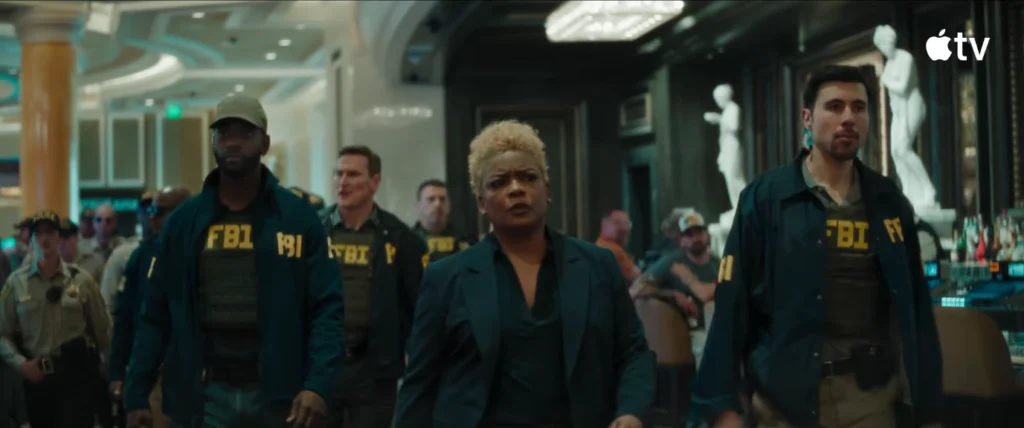
Agent Billie Rand storms the hotel with an FBI task force, but the feds are honestly the least of Lucky’s problems. Lucky tries to slip out through the casino floor but stops dead in her tracks when she spots Dutch—a terrifying mob enforcer—guarding the exit. She immediately turns back inside, proving that whatever the mob wants to do to her is vastly worse than federal prison.

Lucky fakes a black eye, feeds a truck driver a sob story about an abusive boyfriend, and escapes the hotel loading dock right under the FBI’s noses. She chops off her red hair, bleaches it blonde, and sneaks onto a bus headed for the Grand Canyon.

But here is the thing. Dutch is tracking her the entire time.

When the bus stops at a gas station, an FBI agent finally corners Lucky with his weapon drawn. Out of absolutely nowhere, Dutch rams his car into the federal agent, tosses Lucky into the back seat, and drives off.

Sitting next to her in the car is Priscilla, a powerful crime boss who just got out of prison. I thought Priscilla was just a random mobster… wait, no, the script drops a massive bomb. Priscilla is Cary’s mother.

Priscilla demands to know where her son and the $10 million are, refusing to believe that Cary double-crossed his own wife. She orders Dutch to take Lucky to a safe house for interrogation.

What happens next in the back of that moving car is pure, unadulterated survival horror.

Lucky uses her imprisoned father’s lighter to melt her zip-ties. She sparks an emergency flare, causing the driver to violently crash the car into the Nevada desert. When one of the gunmen drags himself from the burning wreckage to kill her, she grabs a screwdriver from the trunk and stabs him to death. She loots cash from his bloody shirt, sets the entire vehicle on fire to destroy the evidence, and walks alone into the scorching wasteland.

Savage.

Lucky Ending Explained

Episode 2: Weaponized Empathy and The Desert Grift

Episode 2 drastically shifts the tone from a high-speed chase to a deeply uncomfortable psychological thriller.

Lucky wanders the desert and stumbles upon an isolated farmhouse. To get inside, she literally crushes a rattlesnake that was threatening two young girls. The girls’ grandmother, Sylvia, comes out holding a shotgun, completely distrusting this battered stranger.

This is where Anya Taylor-Joy proves why she was cast. Lucky doesn’t just ask for help; she manipulates Sylvia’s deepest trauma.

A flashback reveals John (Timothy Olyphant)—Lucky’s father—teaching her a sickening con-artist lesson: everyone has a rhythm, and you just have to figure out how to make them dance. Lucky deduces that Sylvia lost a daughter to domestic violence. So, Lucky invents a lie about escaping an abusive cop ex-boyfriend. Sylvia completely falls for it, taking Lucky in, cleaning her wounds, and feeding her.

It feels incredibly gross to watch.

Meanwhile, Priscilla is tearing the city apart looking for her son. She tracks Cary’s rental car to an Echo Park shopping center, finds a guy named Noah, and casually shoots him in the leg when he claims ignorance.

But the real twist? Priscilla is not the boss.

Priscilla reports to Wayne Whittaker (William Victor). John originally stole this $10 million from Wayne’s dirty laundering pool years ago. When Priscilla shows up empty-handed, Wayne violently grabs her by the throat and beats her. He promises to kill both Cary and Lucky once the cash is recovered.

Back at the farmhouse, the FBI finally catches up. Agent Rand knocks on Sylvia’s door. Sylvia lies to protect Lucky, but Rand is sharp. She asks for a glass of water, scans the kitchen, and notices four freshly washed plates drying on the counter—for a family of three.

Lucky knows her cover is blown. She abandons Sylvia, steals her pickup truck, and flees.

The episode ends with a sequence of pure adrenaline. The stolen truck runs out of gas near a lonely station right as police sirens wail in the distance. Dutch is at the exact same gas station, casually walking out with a scratcher lottery ticket.

With nowhere left to run, Lucky makes the most insane, suicidal decision of the entire series. She climbs into the bed of Dutch’s pickup truck. She actively chooses to hitch a ride with the exact hitman hired to murder her.

Lucky Ending Explained

Episode 3 Breakdown: The Fake ID Plot Hole and Cary’s Encrypted Laptop

Does anyone actually buy the sheer volume of coincidences in this show? Watching the Lucky Season 1 Episode 3 breakdown unfold on a Thursday night left me staring at my screen in pure disbelief. She isn’t just lucky; the writers are literally handing her the plot on a silver platter.

Why Agent Rand Needs Therapy (Not a Badge)

We get yet another flashback. Because apparently, modern television refuses to let us understand basic character motivations without being spoon-fed.

John—Lucky’s father—is playing the middleman, aggressively skimming money off the top of Priscilla’s deals. Why? Because her criminal enterprise is generating way too much cash to launder quickly. He thinks she won’t notice. Spoiler alert: they always notice.

And hiding in the bushes taking photos with a long-lens camera? Agent Rand.

Lucky, sitting in the passenger seat of the car, literally warns her dad, “This isn’t going to end well.” No kidding. The show is beating us over the head with the fact that Rand’s obsession with taking down Priscilla isn’t just a professional investigation. It is a deeply, stubbornly personal vendetta. Rand blames Priscilla for the death of a fellow agent years ago. Her boss, Gates, explicitly tells her to stop making Priscilla her “white whale.”

She completely ignores him. Rand is entirely driven by emotion, making her one of the most reckless agents on television right now.

The Del Taco Tragedy and Pliers

Jump to the present day. Lucky is still hiding in the flatbed of Dutch’s truck, arriving at Priscilla’s farm. She sneaks into a nearby barn just in time to watch a horrifying, brutal interrogation.

Remember Noah? The guy who just wanted his Del Taco delivery in the last episode?

Dutch ties him up and goes to work with a pair of pliers. He actually cuts off the poor guy’s finger trying to squeeze out intel on Cary’s fake ID. But Noah literally knows nothing. He cries. He panics. He begs for his life. Dutch doesn’t care. He executes Noah on the spot with a silencer just so the gunshot doesn’t startle the horses.

It is a harsh, violently mean reminder of how ruthless Priscilla’s network actually is. Anyone who becomes even a slight liability is instantly expendable.

And what does our morally ambiguous “hero” do?

Lucky waits for the killers to leave, sneaks over to the bleeding corpse, and casually steals Noah’s ID. She doesn’t panic. She exploits the dead. Her survival instincts are entirely stripped of basic human empathy.

The Most Absurd Heist in Television History

This is where the show absolutely loses me with its convenience.

Lucky needs clean clothes, money, and a getaway car. She casually strolls down the street, checks a random mailbox, and walks right into a massive, wealthy mansion hosting a kid’s birthday party. She lies to the mother, claiming she is the newly hired nanny.

The mother just accepts this. A filthy, strange woman covered in dirt and gas station soot walks into her house, grabs her kid’s hand, and the mother doesn’t even blink. Absolutely ridiculous.

But the show tries to justify this absurdity with another flashback. We see John teaching a young Lucky the fine art of social engineering. He tells her that a kid is the most “invisible” thing at a birthday party. He teaches her to steal cash from unattached greeting cards and to raid the guests’ purses while the adults are distracted.

She uses these childhood lessons to ransack the party. She steals cash, hides in a bathroom, and actively befriends a woman crying on the toilet over a divorce. She changes into an elegant outfit, grabs a stolen valet ticket, and simply drives off in a stolen car. The valet doesn’t question why this woman looks entirely different from the owner.

Act like you belong, and apparently, the entire world will just hand you their car keys.

Agent Rand’s Glitchy Gas Station Epiphany

Rand is supposedly a highly trained federal investigator. So what is she doing? Smacking an ancient, glitchy gas station TV monitor like it’s a broken vending machine.

She actually manages to find the exact CCTV footage of Lucky climbing into the flatbed of Dutch’s truck. Instead of calling for massive tactical backup, Rand just drives straight to Priscilla’s farm. She walks into the barn, completely alone, and immediately smells the overwhelming stench of bleach.

Priscilla happens to be standing right there.

You expect a massive shootout or a dramatic arrest.

Nope.

Rand just throws out some pathetic threats about the charges actually sticking this time, explicitly stating she knows Dutch is a criminal and Priscilla is working with him. Priscilla doesn’t even flinch. She just coldly reminds Rand that Cary is a grown adult capable of making his own awful choices. This isn’t law enforcement. It is an annoying playground argument.

The Misprint Stupidity

Meanwhile, Lucky uses the dead taco guy’s ID to track down his address. She discovers a hidden duplex tucked away on the property. Noah wasn’t the actual forger; it was his completely unsuspecting neighbor.

Lucky walks in and immediately spins a sob story about escaping a messy divorce. The forger, eager to prove her digital skills, pulls out a binder of “misprints” to show off her previous work.

And wouldn’t you know it?

Cary’s exact fake ID—under the painfully generic alias “Colson Smith”—is just sitting right there in the binder. Not only does it have his new face, but it also features his actual, permanent forwarding address. The sheer convenience of this plot armor is enough to make any viewer in 2026 want to cancel their streaming subscription entirely.

Lucky’s dad actually calls her from a prison burner phone right after this. He warns her not to act emotionally because she is getting too close.

She hangs up on him. She is completely done listening to reason.

Anya Taylor-Joy’s Masterclass in Blackmail

I almost rolled my eyes into the back of my skull watching the bar setup. Lucky needs physical access to Cary’s new beachfront rental. So she hits a local bar, acts completely wasted, and makes googly eyes at the property manager.

The guy is a total creep. He instantly tries to liquor her up and take advantage of her vulnerable state by bringing her back to his office for a “nap”.

Then, the trap snaps shut.

Her phone is supposedly dead. She borrows his, quickly digs through his contacts to find his wife’s personal number, and forwards it to herself. The moment his phone pings with the sent message, the drunk act completely drops. She leverages the immediate threat of exposing his disgusting behavior to extort the alarm passcodes and physical keys for Cary’s house.

Anya Taylor-Joy actually delivers a phenomenal performance here. It feels less like a cheap television trope and more like watching a venomous snake unhinge its jaw. She proves she is entirely in control of the room.

The 12-Word Cryptic Joke

Look. If you are actively on the run from a ruthless criminal syndicate and a highly-obsessed FBI agent, maybe do not rent a highly visible beachfront property to just chill and go swimming.

But Cary is an idiot.

While he is casually swimming laps in the ocean, completely oblivious to the world, Lucky uses the extorted alarm code to walk right through his front door. She aggressively tears the place apart looking for the missing duffel bags of cash.

She finds something completely different.

Hidden away is a bag containing a gun and a laptop. But this isn’t just any laptop. It is locked down with a 12-word recovery phrase.

This completely flips the script on the entire season. The physical cash might be entirely gone—or rather, it was never the actual prize to begin with. That encrypted computer likely holds the real fortune. It could contain offshore financial records, digital currency, or absolute damning evidence capable of exposing and burying Priscilla’s entire organization. Cary has been guarding data, not paper.

The Awkward Reunion and Wayne’s Mole

Before Lucky can attempt to hack the machine or make a run for it, Cary walks through the door.

They freeze. They finally lock eyes after multiple episodes of this exhausting, chaotic cat-and-mouse chase. The tension is immediately suffocating. Lucky is fully convinced that Cary betrayed her and left her to take the fall. Cary has absolutely no idea how much she actually knows or how she found him. The episode just leaves them staring at each other in miserable silence.

But they are not alone.

Because out of nowhere, Wayne calls Priscilla to casually announce that he also knows exactly where Cary is hiding.

Wait.

How on earth did Wayne independently get that beachfront location? The series heavily implies there is a mole planted inside law enforcement, secretly feeding Wayne’s syndicate live updates. Wayne doesn’t care about family loyalty. He does not care about Priscilla’s maternal instinct to protect her son. He has a zero-tolerance policy for theft, and he wants his money back immediately.

So now, everyone is converging on this single, exposed house.

Lucky is already inside. Wayne’s hit squad is en route. Priscilla knows the exact location. Agent Rand is actively closing in. The entire cast is about to collide in a massive, messy bloodbath.

Do not expect a happy reconciliation between husband and wife. Cary is entirely out of options. If you think the writers are going to let him just apologize and walk away into the sunset, you haven’t been paying attention to modern television.

He is a dead man walking.

The Fiona Apple Vibe and The La Jolla Mistake

We completely glossed over the actual aesthetic and geography of this show.

The opening theme song is actually performed by Fiona Apple. It is a fantastic, gritty needle drop that perfectly sets the chaotic, morally ambiguous tone of the entire series. But the show immediately undercuts its own cool factor with Cary’s geographic stupidity.

Where exactly is this massive beachfront hideout? La Jolla, California.

La Jolla is a highly populated, affluent, and incredibly visible beach town in the San Diego area. If you have stolen millions of dollars from a violent criminal syndicate, you do not rent a luxury property in La Jolla and go for leisurely afternoon swims in the ocean. You disappear. Cary is practically begging to be caught.

Dutch’s Reality Check and Rand’s Waiting Game

There is a brilliant, blink-and-you-miss-it conversation between Priscilla and Dutch that completely recontextualizes the chase.

Priscilla is still desperately clinging to the pathetic hope that her son is a good boy. She actually questions whether Lucky intentionally manipulated Cary and turned him against his own mother.

Dutch immediately shuts this delusion down.

He bluntly points out the obvious logic: if Lucky had successfully brainwashed Cary and orchestrated this massive betrayal, she wouldn’t be wandering around the blistering desert entirely by herself. Lucky was completely abandoned. Cary chose himself and betrayed both his wife and his mother entirely on his own.

And Agent Rand knows exactly how to play this dynamic.

Instead of slapping cuffs on Dutch when she corners Priscilla at the barn, Rand explicitly states she is going to let him dig the hole a little bit deeper. It is heavy, obvious foreshadowing. Dutch’s reckless, violent behavior—like executing a fast-food delivery guy—is going to be the exact legal thread that unravels Priscilla’s entire criminal empire.

The Split-Screen Mirror Trick

Finally, someone in the editing room actually deserves some credit.

The climax of the episode doesn’t just rely on Lucky breaking into the house. It uses a highly effective parallel editing trick. The director actively mirrors two massive phone calls simultaneously.

On one side, FBI Agents Rand and Gates are putting the pieces together regarding the rental car. On the exact same beat, criminal boss Wayne is threatening Priscilla over the phone, asserting his zero-tolerance policy for theft and explicitly stating he already knows where Cary is.

For a brief, thrilling second, the editing is so tight you almost suspect a massive double-cross. It perfectly illustrates how both the law and the criminal underworld are tightening the noose around Cary’s neck at the exact same speed.

He has absolutely nowhere left to run. Let him drown in La Jolla.

Episode 4: Why “Too Close to See It” Just Destroyed Its Dumbest Character (And Saved The Season)

Let’s get one thing straight about Lucky episode 4: if you still thought Cary was going to survive his own staggering tactical incompetence in 2026’s most chaotic Apple TV thriller, you haven’t been paying attention. “Too Close to See It” officially brings us to the midpoint of this seven-episode limited series, and it drops the hammer with a brutal, bloody reality check that trades formulaic heist tropes for genuine generational tragedy.

And honestly? It’s about damn time.

The Hottest Couple on Apple TV Just Went Up in Flames—Literally

We spent three entire weeks screaming at our screens because Cary looked like a greedy, cowardly traitor who drugged his wife and bolted to California with ten million dollars. But here’s the thing. Episode 4 pulls a classic bait-and-switch—except instead of revealing him as a criminal mastermind, it exposes him as a manipulated, desperate kid who made the worst survival decisions in television history.

When Lucky finally corners him inside that rented La Jolla beach house (which, as anyone who has ever stepped foot in San Diego knows, looks absolutely nothing like actual La Jolla Village Drive), she isn’t looking for a tearful reunion. She has a gun, Cary’s laptop, and zero patience.

When she hits him during the confrontation and hurts her hand, he actually tries to offer her ice. She rejects it immediately.

“You don’t know what I’ve been through.”

Buddy. Wrong person to say that to. She just spent three episodes shoved in a trunk, trekking through the desert, and setting Dutch on fire. Shut up.

But Cary’s confession changes the entire moral geometry of the show. He didn’t steal the $10 million for a luxury beach house or a shiny new Bronco. He took it because his mother, Priscilla, ordered him to recover the cash John stole—and explicitly threatened to kill Lucky if he failed.

Even worse? Cary discovered that Lucky secretly helped FBI Agent Rand arrest his mother two years ago without ever telling him. Both of them were lying. Both of them thought they were protecting their family. Both of them turned into their controlling, criminal parents without realizing it.

The Worst Money-Laundering Scheme of 2026 (Who Dumps $10M Into a Bitcoin ATM?!)

Let’s pause the melodrama for a second to dissect the sheer absurdity of Cary’s grand financial strategy.

He originally arranged a meeting to hand the duffel bags over to Priscilla and Dutch at a diner to buy Lucky’s freedom. But while standing outside in the parking lot, he saw his mother laughing through the window alongside her enforcer. That was the exact moment he realized she would never let him go. She would control every single second of his life until the day he died.

So what does this genius do? He drives away and converts ten million dollars of physical cash into cryptocurrency using public Bitcoin ATM machines.

Look. Let’s be real about how Bitcoin machines work in the real world:

  • The Capacity Problem: Have you ever seen a crypto ATM at a gas station? You cannot just dump millions of dollars into five hubs. They hold maybe ten to twenty grand at a time.
  • The Time Sink: Feeding thousands of banded bills into a machine one by one without anyone noticing a guy hauling duffel bags back and forth to his car is comic-book silliness.
  • The Fatal Flaw: He didn’t write down the 12-word recovery seed phrase. He memorized it in his head.

He looked Lucky in the eye and bragged that she needed him alive because he was the only walking vault that knew the passphrase.

That is what we call fatal foreshadowing.

The California Gas Scam Explained: Why John Went to Prison

While Cary is spilling his guts, the episode repeatedly cuts back to flashbacks that finally explain the root of this entire nightmare: Priscilla’s California energy scheme.

We finally see how Priscilla made her fortune. She was buying wholesale gas, evading state taxes, and reselling it through shell companies at full retail price. But Wayne Whitaker—the man sitting safely in the background pulling the strings—was the actual money behind the operation.

John (Lucky’s father) was brought in to handle the cash, but he got greedy and started skimming off the top.

Here is where the betrayal cuts deepest:

  • The Secret Deal: Young Lucky—rocking long red hair in a silent, audio-cut flashback—made a secret deal with FBI Agent Rand. She served up Priscilla on a silver platter to guarantee blanket immunity for herself, Cary, and John.
  • The Broken Promise: When the FBI raided the operation, Rand uncuffed Lucky but let federal agents drag John away in chains.
  • The Excuse: Rand claimed John was “in too deep” and that her hands were tied.

That broken immunity deal is exactly why Lucky felt zero guilt taking the $10 million when John called her from prison and told her to grab it.

Why The FBI in “LUCKY” is The Most Incompetent Police Force in Television History

You’d think an FBI task force equipped with aerial support, tactical vehicles, and Agent Rand leading the charge could secure a single suburban house.

Not in this universe.

When the feds surround the La Jolla house, Cary hands Lucky the car keys. They blast straight out of the garage in his blue Bronco, kicking off a visceral, beautifully choreographed pursuit through narrow alleys and oncoming traffic.

And then Lucky pulls off the most hilarious evasion trope in broadcast history:

  1. She parks the Bronco directly under a freeway overpass.
  2. The FBI helicopter pilot spots a completely different blue Bronco with a different front grille driving down the highway and just casually follows that one instead.
  3. Lucky and Cary ditch the vehicle, try to blend into a crowded public area, and steal a Dodge Charger to keep running.

They even share a gripping, quiet moment at a red light right next to a marked police cruiser. No eye contact. Just pure, suffocating tension. For a brief second, when Lucky says “I don’t regret us,” you actually buy into the illusion that these two damaged kids might rebuild their lives.

Then Cary opens his mouth, grabs his gun, and ruins everything.

Leaning Out of a Moving Dodge Charger With a Handgun: A Masterclass in How to Die

When the police cruisers and Priscilla’s tail finally close the distance, Cary decides to play martyr.

Instead of keeping his head down and letting Lucky drive, he leans out of the Charger’s window with a standard handgun to shoot out the tires of the pursuing police SUVs. He actually manages to blow out a tire and cause a multi-car crash behind them.

But you do not engage in a high-speed firefight against federal agents armed with assault rifles when you are holding a pistol.

  • The Reality: The feds return fire immediately—not to disable, but to kill.
  • The Hit: Cary catches an assault rifle round straight through the abdomen and liver.
  • The Rollover: Their Charger’s rear tire blows out at high speed, sending the vehicle into a terrifying, realistically staged rollover. Cary smacks his face off the dashboard so hard it makes your jaw ache just watching it.

Drew Starkey doesn’t get a poetic, Oscar-bait monologue as he bleeds out in the passenger seat. It’s quiet. It’s exhausted. He just closes his eyes and dies right there on the asphalt, taking the 12-word crypto seed phrase—and any access to the $10 million—straight to the grave.

Gone.

Annette Bening Just Won the Emmy (And Dutch Needs His Own Spinoff)

While Lucky pulls another miraculous survival stunt—grabbing the backpack with Cary’s laptop and melting away before Rand can put cuffs on her—the real acting showcase of episode 4 belongs to Annette Bening.

Priscilla has spent four episodes playing an ice-cold, stylish mob boss wearing killer green button-down shirts. But when she arrives at the crash site and sees paramedics pulling a white sheet over Cary’s body, the gangster vanishes. What replaces it is a mother’s raw, guttural grief.

Dutch physically restraining her from running toward her dead son’s body is the single most haunting image this show has produced.

She genuinely loved him. But her version of love demanded total obedience—and it killed him.

And can we talk about Dutch for a second? The man is the most competent, loyal fixer on Apple TV. If Apple doesn’t greenlight a spinoff series just called Dutch where he travels around Vegas solving problems for mobsters, they are leaving money on the table.

The Midpoint Reckoning: Where Does “LUCKY” Go Now?

We are standing at the exact midpoint of a seven-episode limited series, and the board has been completely wiped clean.

Cary is dead. The $10 million is trapped inside a digital wallet with a dead man’s passphrase. Priscilla is about to go scorched-earth on everyone breathing. And Lucky is completely alone for the first time in her life—no father to give her orders, no husband to rescue.

If Anya Taylor-Joy doesn’t find a way to con Wayne Whitaker directly or pull off a miracle with that locked laptop next week, she won’t just be out of luck. She’ll be dead.

Episode 5: Why “Are We Bad People?” Finally Stopped Playing Nice and Let Anya Taylor-Joy Bleed

Lucky Season 1 Episode 5—titled “Are We Bad People?”—is easily the most exhausting, psychologically bruising hour Apple TV+ has dropped in 2026. Forget slick heist mechanics. This episode calmly throws its heroine into the asphalt wreckage of her own sociopathy, delivering a masterclass in grief, moral bankruptcy, and survival.

And honestly? It is about damn time this show let its protagonist face some real consequences.

That Ambulance Gaslight: How to Flee a Fatal Crash in 40 Seconds

We pick up literally seconds after the mangled car wreck that killed Cary. The only human being on Earth who genuinely understood Lucky is a corpse in a totaled vehicle, and the show refuses to give us a slow-motion crying montage.

Lucky has no time to mourn. She is bleeding, dizzy, and staring down incoming police sirens.

So she pulls off the dirtiest, most instinctive con of her entire life:

  • She spots another smashed car from the pileup where an elderly woman is slumped over injured.
  • She reaches in, swipes the woman’s wallet, and memorizes her name—Ruth.
  • When the paramedics rush the scene, Lucky sprints up to them screaming like a hysterical granddaughter, demanding they ignore her own bloody injuries and let her ride in the ambulance with her grandma.

Most Hollywood thrillers would make that escape feel like cheap screenwriter armor. But here, it is pure muscle memory. Her con-man father, John, raised her from childhood to scan a chaotic room, find the softest emotional target, and exploit it to survive.

The paramedics don’t see a federal fugitive. They see a battered, terrified kid clinging to her family.

It works. And it makes you feel sick to your stomach.

The Hospital Collapse & A Trauma Nurse’s Questions

By the time the ambulance doors open at the hospital, the adrenaline wears off and Lucky’s body simply shuts down. She collapses on the floor from the sheer physical and mental strain and gets admitted to a hospital bed.

When she groggily regains consciousness, her survival instincts start screaming immediately.

A medical professional—and if you check the official name badge, she is explicitly a trauma nurse, not a doctor—walks into the room asking routine questions about “Ruth’s” medication history and medical condition. Lucky instantly snaps at her, aggressively claiming she was just visiting from out of town and doesn’t know anything.

Why the hostility? Because Lucky knows that lingering in a hospital bed means getting fingerprinted or recognized.

She grabs her backpack—which is crucial because she uses it to physically cover the massive bloodstain on her white dress—and slips out of the room into the corridors.

The Restroom Confessional: Gaslighting Agent Rand’s Daughter

While trying to wash Cary’s blood off her skin in the hospital restroom, Lucky stumbles into the show’s sharpest piece of dramatic irony.

She finds a teenage girl crying over a sink. The kid is overwhelmed with guilt because she got into a screaming match with her mother right before a horrible accident, admitting that the last thing she ever told her mom was that she hated her.

For the first time all season, Lucky drops her con-artist mask. She offers unfiltered, brutal honesty to comfort the teenager:

Lucky confesses that she used to scream that she hated her own father, John, all the time. But the truth was that she loved him so deeply she despised herself for the radioactive, extreme lengths she was willing to go to protect him.

Here is the twist: that crying teenager is Dana—Agent Rand’s daughter.

While Agent Rand is lying in a bed down the hall recovering from a cranial contusion she suffered in the chase, the fugitive she is hunting is casually giving life advice to her kid in the restroom.

The Parking Garage Escape & The Bathtub Philosophy Lesson

Lucky slips out of the hospital unnoticed, walks into the parking garage, and spots a single valet attendant distracted by another driver. She reaches up to the valet key board, swipes a random fob, jumps into a car, and vanishes before anyone even checks a camera.

She checks into the cheapest available room at a dingy motel. The receptionist stares at her bruised, battered face, but smartly chooses not to ask a single question.

Once inside, Lucky locks the door, fills the bathtub, and sinks her entire body underwater.

As the silence washes over her, the weight of Cary’s death finally crushes her. She breaks down sobbing, wearing Cary’s oversized hoodie just to smell his scent—a pathetic, heartbreaking attempt to keep his ghost in the room. And her mind immediately flashes back to a childhood conversation with her father, John (Timothy Olyphant), that explains why she is so morally broken.

She asked him: “Are we bad people?”

John’s answer is poisonous, textbook relativism:

  • He argues that good and evil are imperfect, man-made concepts.
  • He compares morality to weather, claiming cold doesn’t actually exist—it is just the physical absence of warmth when the Earth tilts away from the sun.
  • He asks her if a lion wastes a single second wondering whether killing an antelope is evil, insisting the lion is just doing what it has to do to survive.
  • When young Lucky protests that humans aren’t animals, John smiles and drops the hammer: “Only because we say we’re not.”

John raised his daughter on sociopathic logic so she would never hesitate to ruin lives for their survival. But sitting alone in that cheap motel room, Lucky is finally realizing that lions end up completely alone.

Let’s pick up right after Lucky’s underwater breakdown—because what she does next at the dingy motel bar is the single most honest, unmasked character beat Anya Taylor-Joy has played in the entire series.

No cons. No fake identities. Just a battered, grieving widow wearing her dead husband’s oversized clothes, trying to figure out if she has a soul left.

The San Diego News Easter Egg & Dropping the Con-Artist Mask

Lucky stumbles down to the motel bar, looking so beaten and bruised that the bartender immediately pours her a drink on the house. She sits next to a stressed-out patron who is staring at a TV screen.

And here is a hilarious geographical Easter egg for eagle-eyed viewers in 2026: even though the show is supposedly set around Los Angeles and La Jolla, the bar television is explicitly broadcasting KFMB Channel 8—the real-world local news station for San Diego. You half-expect Lucky’s mugshot to flash across that Channel 8 news ticker right then and there to blow her cover. It doesn’t.

Instead, the stranger beside her starts venting. His flight just got canceled, meaning he is going to miss his little daughter’s birthday party. He is agonized, terrified that his absence is going to ruin her day and permanently damage their relationship.

Normally? This is where Lucky’s predator instincts would kick in.

She openly confesses to him that on any normal afternoon, she would have spun a sob story about a stolen suitcase, manipulated his paternal guilt, and conned him into paying for her bar tab and her hotel room.

But today, she just cannot bring herself to lie.

She looks this stranger dead in the eye and tells him the blunt, ugly truth: her husband died today in a car crash, and she is terrified that she is fundamentally a bad person.

When she looks at this guy—a father genuinely sick to his stomach over disappointing his kid—she gives him the reassurance her own childhood never allowed. She tells him that the mere fact he is worried about being a bad dad proves he is actually a good one. Growing up as John’s decoy taught her exactly what a cold, self-serving parent looks like.

It is a quiet, stunningly effective scene. She finally stops playing a character.

The Wayne Whitaker Biological-Father Bomb

While Lucky is having an existential crisis over well-drinks, the show cuts across town to drop a narrative bomb that completely recontextualizes the entire $10 million manhunt.

We finally learn why Wayne Whitaker—the ruthless criminal kingpin at the top of this underworld pyramid—is so obsessed with Cary.

He isn’t just Cary’s boss. Wayne Whitaker is Cary’s biological father.

Let that sink in.

Priscilla kept that paternity secret buried for decades. It was never a relationship born out of romance; as Wayne coldly hints later, Priscilla was simply “well compensated” financially to keep her mouth shut and raise the boy while staying on his payroll. Cary grew up in this toxic criminal ecosystem completely unaware that the crime lord pulling his strings was his own flesh and blood.

After Cary dies in the crash, Priscilla throws an elaborate, high-profile memorial wake. Why? Because some delusional, grieving part of her hopes that losing a son might finally stir a single drop of human compassion inside Wayne. She wants him to show up, acknowledge his boy, and bridge the distance between them.

Does Wayne attend?

Not a chance. He doesn’t call. He doesn’t show his face. He doesn’t even send a cheap arrangement of sympathy flowers.

Cold. Absolute ice.

The 4-Day Cremation Miracle & The Waterfront Showdown

Let us take a quick parenthetical timeout to mock the ridiculous logistical timeline of Cary’s funeral—because television writers apparently think cremation works like an Amazon Prime delivery.

Cary dies in a fiery highway pileup, and somehow, within what feels like twenty-four hours, Priscilla is already standing at her waterfront estate holding a fancy urn full of his ashes. Anyone who has ever dealt with a real-world funeral home knows there is a waiting list, autopsies, and endless paperwork. You do not get instant, drive-thru cremation.

Ridiculous timeline aside, Priscilla ditching her own crowded memorial party to walk down to the rocky ocean shoreline alone is genuinely heartbreaking.

She opens the urn and unceremoniously dumps Cary’s ashes into the coastal water. Her right-hand confidant, Dutch, steps up behind her. He is the only guy who listens to her self-loathing without judgment, reminding her that life is just a brutal series of daily choices—some good, some catastrophic.

And then Dutch tells her she has a visitor.

Priscilla turns around expecting to see Wayne Whitaker finally showing some remorse.

It isn’t Wayne. It is Lucky.

“I Don’t Have the Money”: Priscilla’s Ultimatum

Why on earth would a wanted fugitive walk straight into the lion’s den?

Because Lucky is completely out of gas. She stands on that shoreline, looks her dead husband’s mother in the eye, and strips away the last con.

She tells Priscilla that she genuinely loved Cary—reminding us that despite the lies, he was her husband and he died trying to save her. But then Lucky drops the hard truth she has been avoiding all week:

She does not have the $10 million.

She explains that Cary was the only person who knew the cryptographic seed phrase. He hid the funds in a decentralized account before he died, and without his explicit password, that crypto fortune is permanently locked in the digital ether.

Priscilla refuses to buy a word of it.

Grief has turned her into a cornered viper. She looks at Lucky with zero maternal sympathy, warns her that her patience is completely gone, and issues a lethal ultimatum: find the seed phrase and bring her the $10 million immediately, or the next time they cross paths, Priscilla will execute her without a second thought.

Lucky walks away from the water completely trapped. Every lead is dead. Every exit is blocked.

Let’s talk about the exact moment this episode turns from a bleak psychological character study into a full-blown, chaotic chess match—because the back half of “Are We Bad People?” drops three consecutive plot bombs that completely rewire the season’s endgame.

We need to discuss why Cary’s tacky stuffed bear is actually a cold-wallet crypto vault, why Wayne Whitaker is the most terrifyingly indifferent biological father on television, and why Lucky walking away from an escape plane to surrender on a rooftop is either a stroke of tactical genius or absolute suicide.

The Teddy Ruxpin Crypto Miracle (Why We All Kicked Ourselves)

After Priscilla kicks her off the waterfront property with a lethal ultimatum, Lucky retreats to her car. She is cornered, exhausted, and completely out of options.

In a fit of pure, unadulterated frustration, she starts slamming her head against the stuffed bear—that creepy, ordinary toy Cary had gifted her—sitting in the vehicle.

And what happens? The impact physically jars a hidden recording mechanism inside the bear.

Suddenly, Cary’s dead voice starts speaking from the plush speaker.

Look, we can laugh at the Teddy Ruxpin absurdity of it—and yes, anyone who grew up with dying batteries in a talking tape-recorder toy knows how deeply traumatizing a possessed bear can sound in the dark—but the narrative setup here is airtight. Cary knew his wife. He knew Lucky was a sentimental hoarder who would never throw away his stuffed bear.

He had secretly recorded the cryptocurrency seed phrase needed to unlock the missing $10 million and buried the audio inside the toy all along.

[Priscilla's Waterfront Threat] 
               │
               ▼
   [Lucky Slams Head on Stuffed Bear] ──► [Hidden Voice Recorder Triggers]
                                                       │
                                                       ▼
                                         [Cary's 10M Crypto Seed Phrase]

She grabs her laptop, enters the exact sequence of words from the recording, and the decentralized account unlocks immediately.

She goes from sobbing in a car to holding a $10 million digital fortune in sixty seconds.

Pure luck.

Wayne Whitaker’s Office: Why Throwing an Urn Gets a Gun to Your Skull

While Lucky is cashing out her husband’s crypto inheritance, Priscilla decides to confront Wayne Whitaker directly in his office.

And if you ever wondered just how cold this underworld boss really is, this scene is an absolute freezer.

Priscilla walks in carrying Cary’s urn. She demands to know why Wayne couldn’t show a single ounce of human respect to attend his own biological son’s funeral. She reminds him that she never asked for child support or expected him to play daddy, but she hoped—just once—he would acknowledge the boy after his death.

Wayne doesn’t even blink.

  • He coldly tells Priscilla that she was already “well compensated” financially years ago, reducing his own child’s existence to a transactional line item.
  • Furious, Priscilla hurls Cary’s urn directly against the wall behind his desk, screaming that her son deserved better.
  • Wayne bluntly states that Cary signed his own death warrant the exact second he stole the $10 million.
  • He tells her to her face that, if necessary, he would have murdered his own son himself to get his money back.

When Priscilla puffs out her chest and claims she isn’t afraid of him anymore because she has “nothing left to lose,” Wayne calmly stands up, draws his pistol, and jams the barrel directly against her temple.

Priscilla instantly starts hyperventilating.

It is pathetic, terrifying, and brilliant. Wayne proves in two seconds that despite her loud grief, she is still terrified of dying. He orders her to clean up the shattered urn on his floor and go fetch his $10 million.

Detective Rand’s DOJ Bait: Springing John 8 Years Early

Meanwhile, Detective Rand is refusing to stay in her hospital bed. She checks herself out early against medical advice, nursing her cranial contusion at home while digging through the investigation files.

That is when her teenage daughter, Dana, walks by the desk, spots Lucky’s photograph, and recognizes her immediately.

Dana tells her mother that she just met that exact woman in the hospital restroom—and mentions how Lucky spoke about her father with intense, unshakable affection.

That single detail hands Rand the psychological key to the entire manhunt.

Rand realizes that no matter how much abuse John has heaped on his daughter, Lucky’s loyalty to him is indestructible. If Lucky is cornered and grieving, she will inevitably run to her dad.

So Rand calls in a massive favor with the Department of Justice. She pulls the strings to get John released from federal prison eight years before his parole eligibility.

It looks like an act of administrative mercy on paper. In reality? It is a federal bear trap. Rand is using John as live bait to flush Lucky out into the open.

And John? He is sitting in his cell working out when the guard tells him he’s free. He is smart enough to know the federal government doesn’t hand out random pardons. He realizes instantly that someone is using him to hook his daughter.

The Rooftop Surrender: Why Lucky Smiled at the FBI

The minute John steps out of prison, he calls Lucky.

Here is where the episode pulls off its wildest bait-and-switch. Lucky is literally standing at an airfield preparing to board a flight to get out of the country with her newly unlocked $10 million. She has the money. She has the escape route. She could vanish forever.

Instead, she answers John’s call, instantly figures out that Rand arranged his early release as a trap, and immediately cancels her flight.

Why? Because Lucky is done running.

She tells John to meet her at “the high spot”—their familiar rooftop hiding place on a high-rise building. When John arrives, he takes one look at his beaten, scarred daughter and doesn’t offer a single word of apology for the violent life he dragged her into. He remains completely self-centered, assuming she will just keep risking her neck to protect him.

And then the police sirens wail.

Detective Rand and a tactical squad of officers flood the rooftop, surrounding father and daughter with drawn weapons.

Rand expects a panic. She expects a firefight.

Instead, Lucky turns around, looks Rand dead in the eye with a calm smile, and drops a punchline:

“Took long enough.”

Both Lucky and John drop to their knees and willingly surrender without putting up a single ounce of resistance.

No gunfire. No hostage negotiation. Just two smiling con artists walking straight into federal handcuffs, leaving Rand staring at them in absolute, unsettled confusion.

The Mic-Drop Verdict

Let’s be brutally honest about what we just watched in 2026.

If you think Lucky gave up her freedom because she suddenly grew a moral conscience in that hospital restroom, you are playing checkers while Anya Taylor-Joy is playing four-dimensional chess. She didn’t surrender to Detective Rand; she just lured the Federal Bureau of Investigation into a protective custody vault where Wayne Whitaker and Priscilla can’t put a bullet in her skull.

She has the $10 million seed phrase memorized. She has her father out of a federal cell. And she just handed law enforcement the exact bait they think they caught.

Rand didn’t trap Lucky. Lucky just weaponized the DOJ to babysit her.

Roll the credits.

Read More : Silo Season 3 Ending Explained & Plot: Full Recap, Summary, and the Gray Goo Apocalypse!