The Evolution of a Masterpiece
Let’s just get this out of the way immediately: Silo is the best science fiction show on television right now. Period. When Apple TV+ launched the first season, it was this tight, claustrophobic murder mystery buried hundreds of stories underground. It was great, but it felt incredibly contained.
But Season 3? Season 3 just took a sledgehammer to the walls.
Showrunner Graham Yost, tasked with adapting Hugh Howey’s massive literary trilogy, decided he wasn’t going to play it safe. He ripped the narrative wide open, transitioning the show into this sweeping, dual-timeline epic. We are no longer just watching Juliette try to fix a generator; we are watching a terrifying, geopolitical conspiracy unravel across centuries. We finally get to see the “Before Times” that led to the apocalypse, while simultaneously watching the present-day rebellion in Silo 18 try to survive it.
If you spent the summer of 2026 just reading those superficial, bullet-point episode recaps on standard entertainment blogs, you missed the actual genius of what Yost pulled off. This season is a dense, heavy meditation on memory manipulation, the terrifying arrogance of tech billionaires, and the devastating cost of human survival. I’ve spent the last few weeks re-watching episodes, digging through the absolutely chaotic Reddit theories, and analyzing the brutal changes they made from the original books. So, consider this your definitive guide to understanding exactly how Silo just changed the game.
A Frustrating Start: The Amnesia Problem (Episodes 1-3)
I’m going to be brutally honest here. When the premiere, “Who Are You?”, dropped, I was incredibly frustrated.
We ended Season 2 on one of the greatest cliffhangers in modern television history. Juliette survived the airlock fire! We were ready for war! And then Season 3 opens, and… she gets captured by Judicial, thrown back into Silo 18, and loses her memory.
I hated it at first. Making your incredibly proactive, brilliant protagonist suffer from amnesia is such a tired television trope. It felt like the writers were just stalling for time. But as the early episodes unfolded, I realized the genius behind it. This wasn’t just a bump on the head; this was a calculated, chemical control mechanism. Juliette’s amnesia was induced by memory-suppressing drugs hidden in her medical care.
It forces us to look at Robert Sims (played with terrifying, quiet intensity by Common) in a new light. Sims and the rebellious factions actually use her vulnerability, demanding Juliette be instated as Mayor while she is stuck in a hospital bed. They trapped her. They put her in the highest position of visibility, tightly monitored by the establishment, while she was chemically blocked from remembering the explosive truth about the outside world. It is incredibly manipulative, and it sets a dark, paranoid tone for the rest of the season.
Welcome to the Before Times
While Juliette is trapped in a chemical fog, the show brilliantly pivots to the past—roughly 350 years ago.
We meet Congressman Daniel Keene (Ashley Zukerman) and a journalist named Helen Drew (Jessica Henwick) meeting at a bar in Washington D.C. The scene feels incredibly grounded and terrifyingly relevant. A doorman is casually checking radiation levels because a dirty bomb just went off on American soil. It is in this tense environment that Daniel hands Helen a duck Pez dispenser—a small, stupid piece of plastic that we know is going to echo through centuries of silo history.
Together, they start investigating Daniel’s sister, Charlotte, an F-35 Navy pilot who survived a highly classified crash but is suffering from… you guessed it, induced amnesia. The thematic throughline hits you like a truck. Weaponized memory isn’t a new trick in the silos; it was the foundational tool used to build them.
Breaking the Chemical Fog
Let’s talk about the exact moment the season finally kicks into high gear. If the first few episodes felt like a frustrating, slow-burn psychological trap, Episode 4 (“Whatever You Do, Don’t Go Home”) is where the cage breaks open.
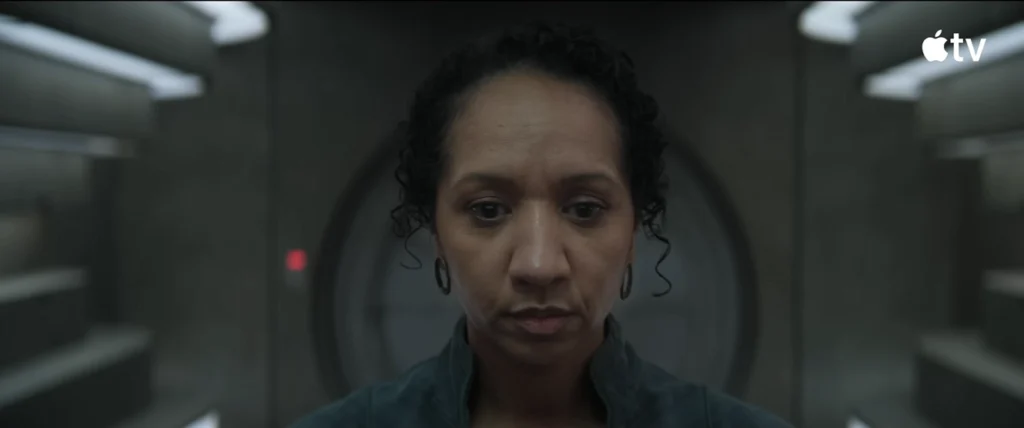
Nurse Amy Hansen essentially becomes the unsung hero of the series here. Nudged by Regina, she secretly swaps out Juliette’s memory-wiping medication for simple sugar pills. I actually let out a sigh of relief when this happened. I was losing my mind waiting for the sharp, defiant Juliette we love to come back. Once her mind starts clearing, she escapes medical confinement and dives straight into the Digger Void. From this point on, the narrative momentum just explodes and never looks back.
The Bernard Shocker
But it’s Episode 5, appropriately titled “Memory,” that drops the absolute nuke. Bernard Holland is alive.
I honestly didn’t see it coming, and I usually spot these fake-out deaths a mile away. Tim Robbins somehow survived that brutal airlock fire because Robert Sims secretly wrapped him in contaminated body-disposal plastic and smuggled him into the deep down. This reveal completely rewired how I viewed the power dynamics in Silo 18. Sims isn’t just Judicial’s loyal attack dog anymore. He is playing this insanely dangerous, high-wire double game against his own wife, Camille, and the looming, invisible threat of “The Algorithm.” Watching Sims and Bernard forced into this toxic, uneasy alliance in the dark was some of the best television of the year.
The Power of the Pez Dispenser
While hiding out, Bernard drops a crucial piece of exposition that bridges the sci-fi elements with pure emotional storytelling. He explains how to beat the amnesia drugs. You can’t just wait them out; you have to shatter the chemical block using “relics.”
The drugs erase facts, but they struggle to erase deep-seated emotional trauma. Objects carrying massive personal weight act like an anchor to the past. Remember that stupid duck Pez dispenser Daniel gave Helen 350 years ago? When Sims and Regina hand that—along with George Wilkins’s watch—back to Juliette, the dam breaks. The memories flood her system. She finally remembers the most critical piece of the puzzle: the survivors in Silo 17 successfully capped their toxic “Safeguard” pipes. The realization washing over Rebecca Ferguson’s face in that scene is spectacular. She isn’t just awake anymore; she has a tactical target.
Privatizing the Apocalypse
While Juliette is planning a rebellion in the present, the “Before Times” timeline introduces us to the actual architects of the apocalypse.
Daniel and Helen’s investigation leads to them getting trapped inside a hijacked autonomous van, which delivers them straight to Senator Rosalind Thurman (played with cold calculation by Laura Innes). But the Senator isn’t the real power here. She is just the political shield for a cabal funded by a tech billionaire named Per Stensen, played with smarmy perfection by Colin Hanks.
I know the “evil tech-bro building a doomsday bunker” is becoming a heavily used trope in modern sci-fi. We see it everywhere in pop culture right now. But Hanks brings such a terrifying, grounded arrogance to the role that you completely buy it. He isn’t funding this massive, world-ending survival initiative to save humanity. He wants to privatize its reboot. Watching Daniel and Helen realize the sheer scale of the nightmare they’ve stumbled into is chilling.
Going on the Offensive
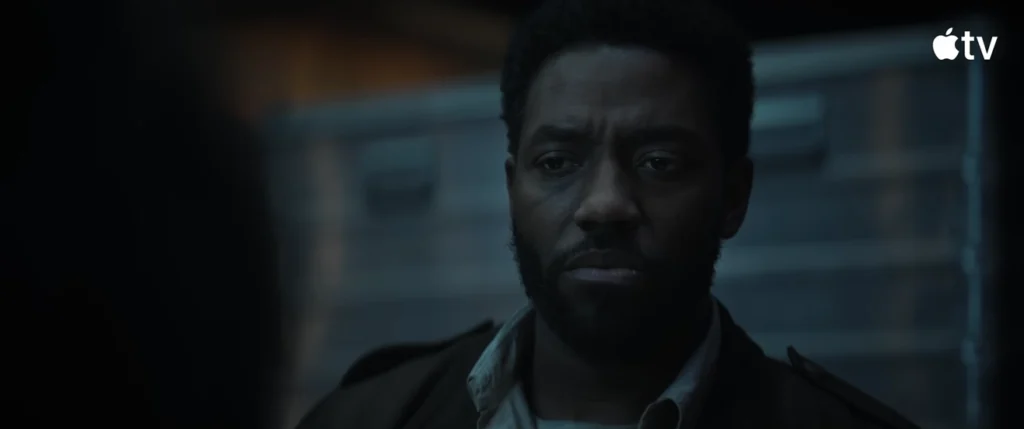
Once Juliette shakes off the chemical fog, the show completely drops its defensive posture. We aren’t just surviving anymore; we are actively plotting an insurgency.
Juliette discovers the horrifying reality of the “Safeguard” protocol. It turns out Judicial and IT have this network of toxic gas pipes rigged throughout Silo 18, explicitly designed to mass-execute the population if a rebellion gets out of hand. It is a terrifying contingency plan. Juliette actually tries to bargain with The Algorithm, offering to take the memory-suppression drugs permanently if they just let her launch a rescue mission to Silo 17. The Algorithm shuts her down instantly.
So, she adapts. In a wildly tense sequence, she covertly sends Lukas Kyle and Patrick Kennedy into the dark, connecting tunnels to reach Silo 17 and figure out exactly which pipe needs to be capped. Naturally, The Algorithm catches on and dispatches a swarm of lethal drones to wipe them out. Camille, acting as the reluctant enforcer, tells Juliette the boys are dead. I genuinely believed it for a minute. The show is ruthless enough to kill them. But then Martha Walker pulls off this brilliant radio frequency hack. Through the static, they intercept a transmission confirming Lukas and Patrick survived the drone strike by burying themselves under corpses. It’s gritty, desperate, and incredibly effective television.
The Atlanta Excavation and the “Gray Goo”
While the present timeline is dealing with drones and gas pipes, the flashbacks finally deliver the massive lore drop we’ve been begging for since Season 1.
Daniel, Helen, and Charlotte are essentially backed into a corner, forced to sign massive non-disclosure agreements just to understand why the world is ending. They are flown to a colossal, highly classified excavation site in Atlanta. Watching these giant drills bore deep into the Earth to construct the silos is a breathtaking visual. It makes the nightmare feel incredibly real and industrial.
And then we get the truth about the apocalypse. It wasn’t nukes. It wasn’t climate change. It was “Gray Goo.”
For the uninitiated, Gray Goo is a classic sci-fi doomsday scenario involving weaponized nanobots that uncontrollably multiply and dismantle biological matter at a molecular level. The silos aren’t traditional fallout shelters at all. They are a 500-year containment vessel. The plan is to lock humanity underground while a different set of benevolent nanobots slowly scrubs the atmosphere clean over centuries. Suddenly, all the weird logistical mysteries in Silo 18 click into place. Remember the stolen lightbulbs in the mines? Gus Knox faked his death two years ago to build a secret horizontal tunneling system for Ed Harwood. It’s just brilliant, interconnected writing that respects the audience’s intelligence.
The Great Separation and Bernard’s Final Bow
Episode 9, “Farewell,” is an absolute heartbreaker. The past and present timelines crash into each other, and nobody walks away unscathed.
In the “Before Times,” Daniel and a heavily pregnant Helen are attending the official civilian opening of the silos. Out of nowhere, a catastrophic explosion rocks the facility. The sheer panic in this scene is palpable. Just as the massive 25-ton blast doors begin to seal, the couple is violently separated, locked on different sides of the impenetrable steel.
But the present-day storyline delivers what I consider the best character exit of the entire series. Bernard realizes the rebellion is out of his hands. He has lost the narrative. In a desperate move to appease The Algorithm and shield Silo 18 from mass execution, he offers himself up as a sacrificial lamb. Camille sentences him to clean.
Tim Robbins absolutely acts his heart out in his final moments. As Bernard steps out of the airlock, the camera lingers on his face as the ultimate, horrifying truth washes over him: the air is completely breathable. The poison that kills the cleaners isn’t in the outside environment. It is injected directly into their suits while they are standing in the airlock. But before Bernard can even react or scream the truth into his comms, Silo 1 dispatches drones and executes him on the spot. It is a brutal, jaw-dropping end for one of television’s most fascinating antagonists.
Pulling Back the Curtain on Silo 1
If Episode 9 broke my heart, Episode 10 completely broke my brain. Titled “Troy,” this finale is sitting at a 9.6 on IMDb for a very good reason. It is a paradigm-shifting hour of television that takes everything you thought you knew about the show’s mythology and flips it on its head.
We finally shift our focus to Silo 1. For three seasons, Silo 1 has been this terrifying, abstract bogeyman. We assumed it was just a heavily fortified bunker run by generations of ruthless bureaucrats. But the truth is infinitely more disturbing.
The founders of the silos—the architects of the 500-year plan—didn’t die three centuries ago. They are still alive.
The reveal that Silo 1 operates using cryogenic sleep is executed perfectly. These founders are kept on ice, thawed out periodically to serve “shifts” overseeing the other 49 silos, and then frozen again. It fundamentally changes the stakes. Juliette isn’t fighting the great-great-grandchildren of the people who ended the world; she is about to fight the exact people who pulled the trigger.
The Tragedy of “Troy”
And this brings us back to Congressman Daniel Keene. We watch a man wake up from one of these cryo-pods, but it isn’t the Daniel we knew from the flashbacks.
His memories have been completely stripped away by the chemical suppression protocols. He has been reprogrammed with a new identity: “Troy.” Stripped of all his humanity, his empathy, and his emotional attachments to Helen, Troy is now just a cold, ruthless operator. He sits at a console and casually commands the drone fleet that slaughters the survivors of Silo 17 to prevent cross-silo contamination.
But the show twists the knife even deeper. His drone pilot, a woman operating under the designation “Susan,” is actually his sister, Charlotte. They are sitting in the same room, executing people together, and neither of them recognizes the other because their minds have been wiped clean. It is one of the darkest, most tragic concepts I have ever seen on television. The people running the apocalypse are just as trapped and abused as the people suffering through it.
The Algorithm is a Lie
Then we get the final, staggering reveal regarding “The Algorithm.”
For years, the residents of Silo 18—and honestly, most of the audience—believed they were subservient to this infallible, hyper-calculating artificial intelligence. It was a terrifying concept: humanity ruled by an unfeeling machine.
But it’s a complete lie. The Algorithm isn’t a machine at all.
It is a human being named Victor, another memory-wiped founder working alongside Troy in Silo 1. He sits in a control room, using a mechanical voice modulator to issue commands and project an illusion of divine technological oversight. It’s a brilliant, cynical metaphor for how real-world totalitarian regimes operate. They project omnipotence to hide the fragile, flawed human bureaucracy sweating behind the curtain.
When Juliette, Lukas, and Patrick finally manage to cap the Safeguard pipe in Silo 18, they sever Victor’s ability to mass-execute the population. The sociological experiment fundamentally breaks. Victor, unable to cope with the reality that his absolute control has shattered, takes his own life.
The season closes on a deeply unsettling note. Troy is staring at a surveillance monitor. The chemical fog suppressing his memories begins to crack, just slightly, and he softly speaks Helen’s name. It’s a microscopic moment of humanity breaking through the programming, perfectly setting the stage for a catastrophic internal rebellion right in the heart of Silo 1.
The Reddit Echo Chamber: Biological Lies and “Junk Food Syndrome”
You really can’t talk about a show this dense without looking at the internet discourse it generated. During the first four weeks of the season, the r/SiloSeries subreddit was a toxic wasteland of complaints. People were furious about the amnesia plotline. They called it “filler” and complained that the show was wasting time on secondary characters in the mines while holding Juliette back.
But as the season hit its stride, the tone completely shifted. Fans started digging into the psychology of the show, resulting in one of my absolute favorite fan theories of the year: the “Biological Lie.”
Viewers realized that Robert Sims and Camille were purposefully keeping their treasonous plans hidden from each other. Why? Because human beings are biologically incapable of masking unconscious micro-expressions. By remaining genuinely ignorant of each other’s specific moves, they ensured they wouldn’t accidentally betray their true motives to the omnipresent cameras of Silo 1. It is a terrifyingly smart survival tactic.
By the time the finale aired, all those early pacing complaints vanished. One Redditor perfectly summed it up by diagnosing the audience with “junk food syndrome.” We are so conditioned by modern streaming to expect instant gratification that we throw tantrums when a show takes its time. Silo demanded patience, and the payoff in “Troy” proved that the slow, methodical table-setting was entirely justified.
Fixing the Books: Why the TV Adaptation Actually Did It Better
I know book purists hate it when showrunners mess with the source material, but I am going to defend Graham Yost here: the changes he made to Hugh Howey’s novels were absolutely necessary to make this work on television.
Season 3 is heavily based on Shift, the second book in Howey’s trilogy. But there is a massive structural problem with Shift—it is entirely a prequel. If the show had strictly followed the text, Rebecca Ferguson wouldn’t have been in this season at all. Can you imagine sidelining your lead actress and the emotional anchor of your show for an entire year? It would have been ratings suicide.
To fix this, Yost hybridized the timelines, weaving the past directly into Juliette’s present-day rebellion. They also made brilliant character adjustments. In the books, Daniel Keene is an architect fully complicit in designing the silos under a fake nuclear waste cover story. The show transformed him into a tragic investigator who stumbles into the conspiracy way too late. It makes his eventual, mind-wiped fate as “Troy” infinitely more devastating because he was an innocent man trying to stop the apocalypse, not the guy who drafted the blueprints for it. They also invented the “Algorithm” voice entirely for the show, giving Silo 18 a direct, terrifying antagonist to fight against instead of just a faceless bureaucracy.
Season 4 Outlook: Prepare for a Bloodbath
So, where the hell do we go from here? We already know Apple TV+ filmed this back-to-back, and the final season is officially slated for July 2027.
In recent post-finale interviews, Graham Yost distilled the premise of Season 4 into three terrifying words: “It is war.”
Juliette might have won a temporary victory by disabling the Safeguard gas in Silo 18, but the nightmare is far from over. Silo 1 still controls a lethal drone fleet, the memory-wiped founders, and the command structure of 48 other active silos. This isn’t just about local survival anymore; it is a full-scale insurgency against the architects of the apocalypse.
And I have so many questions keeping me up at night. What actually happened to Helen Drew? We know Jessica Henwick is returning for Season 4. Did Silo 1 put her in cryo-sleep as leverage to keep Daniel in line? Did she become one of the original “Flamekeepers” who passed down the true history of the world in Silo 18?
More importantly, can Troy be redeemed? That final shot of him whispering Helen’s name proves the memory-suppression drugs are failing. The emotional trauma is finally overpowering the chemical engineering. Season 4 is going to hinge on whether Troy remains the cold enforcer of Silo 1, or if he tears the system down from the inside to help Juliette.
But whatever happens, brace yourselves. Both Yost and the cast have explicitly warned that the final season is going to be steeped in profound tragedy. You don’t dismantle a 350-year-old authoritarian regime without a massive body count. As Yost ominously put it, “People you love will not see the end.”
It’s going to be a brutal, heartbreaking finale, and honestly? I wouldn’t want it any other way.
Read More : Widow’s Bay Ending Explained: Shocking Apple TV Cast, Hidden Secrets & Theories