I’ll be perfectly honest with you: when I first heard that showrunner Nick Antosca was planning to stretch John D. MacDonald’s tightly wound 1957 novel, The Executioners, into a sprawling ten-episode series for Apple TV+, I rolled my eyes. I mean, we already have two cinematic heavyweights. We have J. Lee Thompson’s stark 1962 original, and we have Martin Scorsese’s sweat-soaked 1991 masterpiece. Did we really need a third round? Even with Scorsese and Steven Spielberg attached as executive producers, taking a narrative built for a punchy two-hour cinematic window and dragging it across ten hours felt like a recipe for exhausting filler.
But after surviving the 2026 iteration, I have to admit I was wrong about the filler, even if the show itself left me feeling completely disoriented.
Antosca hasn’t just remade Cape Fear; he has violently mutated it. He completely ditches the straightforward, traditional revenge-thriller blueprint we are all so used to. Instead, he drags us kicking and screaming into an expansive, hallucinatory Southern Gothic nightmare. This isn’t just about a bad guy coming after a good family anymore. It’s a ruthless, acid-tongued exploration of elite moral decay, psychological warfare, and a family that is already rotting from the inside out before the villain even steps foot on their manicured lawn.
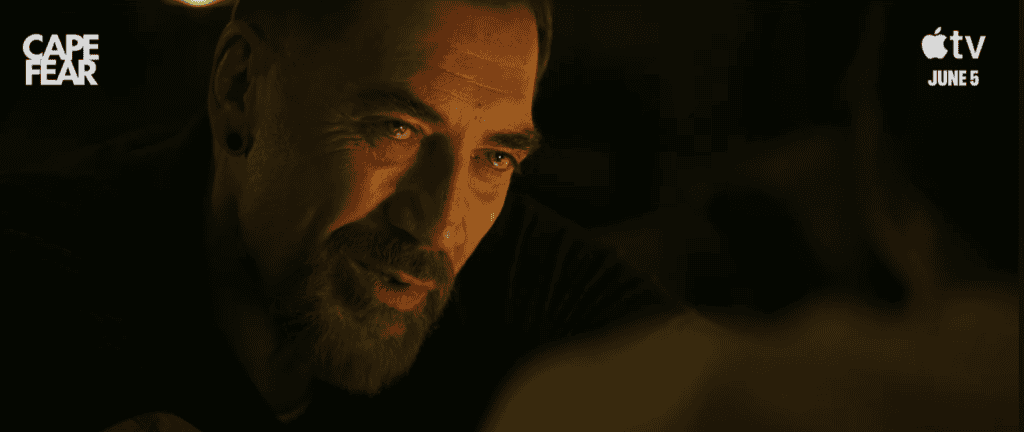
To pull this off, the casting had to be flawless, and for the most part, it is. Javier Bardem steps into the impossibly large shoes of Max Cady, bringing a terrifying, magnetic charisma to the iconic antagonist. Opposite him, we get Amy Adams and Patrick Wilson playing Anna and Tom Bowden—a couple so deeply flawed and relentlessly self-serving that you sometimes wonder who the real villains are.
Unsurprisingly, this creative pivot has thrown the viewing public into a state of absolute chaos. If you look at the discourse online, audiences and critics are violently polarized. Half the viewers are tearing their hair out, condemning the series for what they see as infuriating narrative leaps and character stupidity. The other half? They are bowing down to it as a masterful, hyper-stylized exercise in satirical “camp.”
Having spent days analyzing the episode breakdowns, the visual choices, and the endless heated debates on Reddit, I’ve managed to dissect the architecture of this bizarre masterpiece. Let’s start peeling back the layers of how this story is actually constructed, because the way Antosca weaponizes the episodic format is nothing short of brutal.
Let’s talk about how this beast is actually structured, because the narrative architecture here is wildly different from what we’ve seen before. If you look back at J. Lee Thompson’s or Scorsese’s takes, Mitchum and De Niro were essentially external forces of nature. They were apex predators hunting a relatively innocent—or at least salvageable—family unit. But Antosca looks at that classic setup and says, “Nah, let’s rot them from the inside.”
He absolutely weaponizes the ten-hour runtime to deconstruct the Bowden family piece by agonizing piece. The terrifying thesis of this 2026 series isn’t merely that a monster has come back to town. It’s that the family was already a decaying, hollowed-out shell of moral bankruptcy. Cady doesn’t have to blow the house down; he just exploits the pre-existing foundational cracks with surgical, sadistic precision.
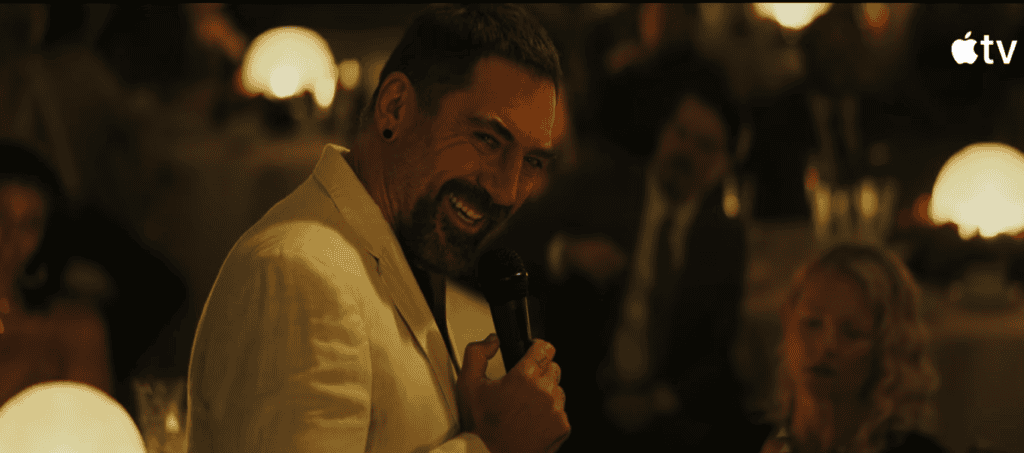
Right out of the gate in the premiere episode, cheekily titled “Fingers & Toes,” the show drowns us in this surreal, suffocating dread. You expect a guy fresh out of a 17-year prison stint to lurk in the shadows, maybe peek through some windows in the rain. Not Bardem’s Max Cady. He brazenly strolls right into a laughably opulent high-society fundraiser hosted by his former defense attorney, Anna, and her prosecutor husband, Tom. Cady casually hijacks the microphone to deliver a speech dripping with so much veiled malice you can practically choke on it. Just like that, the manicured, affluent safety of their Savannah, Georgia bubble is shattered in front of all their wealthy friends. It’s an audacious, theatrical move, and honestly, I loved every uncomfortable second of it.
From there, the early episodes just batter the audience with psychological and physical assaults. Take their son, Zack. The poor kid mysteriously loses a toe. At first, you’re sitting on your couch screaming at the TV, assuming Cady is playing incredibly dirty right away. But then the script brilliantly pulls the rug out. Zack is heavily self-medicating, and his mental state is deteriorating so fast that you genuinely start to question what actually happened. Did Cady do it? Did Zack do it to himself?
Concurrently, we get this uncomfortably intimate look into Anna’s fragile psyche. Amy Adams plays her with this manic, vibrating energy. We are exposed to her past alcoholism and these jagged, traumatic flashbacks. The show doesn’t treat the audience like idiots; it broadcasts pretty early on that she is carrying some massive, radioactive secret about her exact role in getting Cady locked up in the first place.
By the time we hit the middle stretch—specifically Episode 3 (“Phantom Sensations”) and Episode 4 (“Pierced”)—Cady changes his game plan. The overt public threats take a back seat to something much more insidious. He starts infiltrating. And my god, this is where the show really leans into exposing just how staggeringly incompetent and morally compromised the Bowdens are. Tom Bowden is supposed to be a sharp, respected prosecutor. Yet here he is, engaging in a messy extramarital affair, and worse, getting completely blasted on hallucinogens (the internet is still arguing whether it was LSD or some vintage opium tincture) with a colleague right in his own living room. Meanwhile, his traumatized, mutilated son is literally just sleeping upstairs! It’s maddening, pathetic, and utterly fascinating to watch them dig their own graves.
What really amplifies this feeling of impending doom—and what honestly drove a massive chunk of the audience up the wall—is the Bowdens’ sheer, mind-boggling arrogance when it comes to their own safety. I mean, we are talking about a family living in a sprawling, multi-million dollar estate. You’d think they’d hire a private militia the second a guy like Cady showed up, right? Nope. Instead, they repeatedly leave their front gates wide open. They rely on a smart-home security system that barely functions. Even after finding dead skunks and—I kid you not—an actual panther dumped on their property, they practically just shrug it off.
Some viewers called this lazy writing. I strongly disagree. It’s a blistering, deliberate critique of elite complacency. The Bowdens are so insulated by their wealth that their basic survival instincts have completely atrophied. They simply cannot fathom that their money can’t protect them from a primal force of nature.
Because they leave the metaphorical (and literal) door wide open, Cady doesn’t even have to break in. He just sends his accomplices right through the front gate. Enter “Amber”—a mysterious young woman who effortlessly cozies up to the Bowdens’ teenage daughter, Natalie. We find out later she’s actually Nevaeh, Cady’s own daughter, and her infiltration is insidious. She slips right into their lives, gets Natalie hooked on heavy narcotics, talks her into getting a nipple piercing, and casually walks around their mansion with a Wi-Fi jammer in her purse to blind whatever useless cameras the Bowdens actually have turned on.
But for me, the absolute peak of the series happens when they introduce Juliette Lewis. She steps into the mud-soaked boots of Crystal (also known as Tabitha), Max Cady’s deeply deranged sister. For anyone who remembers the Scorsese film, seeing Lewis—who brilliantly played the innocent, manipulated teenager Danielle Bowden in ’91—now playing the twisted, rotting core of the Cady family tree is a massive, delicious meta-textual mind trip. She injects this deeply unsettling layer of incestuous trauma and generational madness into the lore. I genuinely got chills every time she was on screen.
All of this slow-burn psychological torture rockets into pure, unadulterated chaos in the final stretch, culminating in Episode 10. Antosca sets the finale against an apocalyptic hurricane battering the Georgia coast, which serves as the perfect, operatic backdrop for systematically tearing down the last shreds of the Bowdens’ false morality.
And here is where the show drops its nastiest bombshell. We finally get the truth about the murder of Melissa, Cady’s wife—the very crime that locked him in a cage for 17 long years. Are you ready for it? Max Cady was completely innocent. He didn’t kill her. It was Crystal. In a twist straight out of a Grand Guignol horror play, his sister carved Melissa open, stole her unborn child (Luke), and raised the boy as her own. To hide the missing fetus, she tossed Melissa’s gutted remains to the local swamp alligators, tricking the cops into thinking the baby just got eaten along with the mother. It’s grotesque, it’s shocking, and it completely shatters everything we thought we knew about Cady’s motivations.
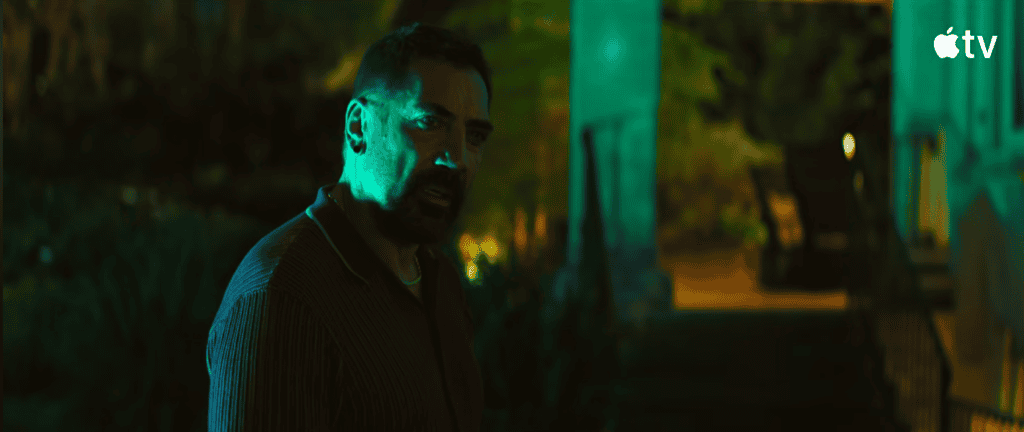
But wait, the nightmare gets infinitely worse, and this time, the rot comes directly from inside the house. Anna Bowden, the brilliant, supposedly righteous defense attorney, finally snaps and drops a confession so vile it left me staring blankly at the screen.
She didn’t accidentally botch Cady’s case. She intentionally, maliciously sabotaged his defense. She knowingly buried the flawed evidence and coerced him into a plea deal. And her motivation? It wasn’t some noble crusade to lock up a dangerous man. It was pure, unadulterated, selfish terror. You see, before the trial, Anna had a brief, sordid sexual encounter with Cady, and she ended up pregnant with Natalie. She railroaded an innocent man into a 17-year prison hellscape solely to ensure he could never claim paternity or blow up her shiny, upper-crust marriage. It’s an act of such profound moral bankruptcy that it immediately strips away any lingering sympathy you might have had for the Bowdens. Anna is the architect of her own demise.
This all crashes into a chaotic, blood-soaked physical climax. In the blinding, howling rain of the hurricane, Cady—completely unaware of Luke’s true identity—ends up brutally murdering his own biological son in the scuffle. The tragedy is almost Shakespearean, but Antosca directs it with the dial turned up to eleven. The episode caps off with a wildly stylized, gravity-defying sequence where Cady literally hurls himself off the mansion’s roof, disappearing into the raging storm like some mythological demon. The Bowdens survive, sure. They are breathing. But psychologically? They are completely, irreparably annihilated.
This brings me to what is easily the most divisive element of the entire series: the visual language. Antosca clearly had zero interest in making a grounded, procedural thriller; he wanted a psychedelic Southern Gothic fever dream. If you hit play expecting the crisp, shadowy, high-contrast noir lighting that Freddie Francis shot for the ’62 version, or the relentless, hard-lit tension of Scorsese’s ’91 adaptation, you are going to get massive whiplash.
The cinematography in this 2026 version is aggressively, unapologetically stylized. I’m talking full-blown hallucinatory visuals. There is a sequence early on where the color grading completely inverts—the Bowdens’ luxurious swimming pool turns a grotesque blood-red, and their skin takes on this sickly, negative bluish-black hue. Toss in the sweeping, ominous shots of Savannah’s moss-draped oaks and a melodramatic, operatic score adapted straight from Bernard Herrmann’s iconic original compositions, and you get a show that operates in a state of heightened, theatrical unreality.
A lot of purists absolutely hated this aesthetic. They called it absurd and cheap. But for my money? It’s intentional, glorious “camp.” It’s an exaggerated, neon-soaked satire designed to mock the sheer absurdity of these ultra-rich elites. The aesthetic perfectly mirrors the thematic core of the show: the deconstruction of privilege. The Bowdens are so insulated by their wealth that their primal survival instincts have completely rotted away. They are sitting ducks, entirely ill-equipped to handle a predator who operates outside the polite bounds of civilized society, and the dizzying, surreal camera work makes us feel exactly how unmoored they are.
Let’s get into the performances, because you simply cannot talk about Cape Fear without stacking the leads against the ghosts of Hollywood legends. Taking on Max Cady is a terrifying prospect for any actor. Robert Mitchum (1962) gave us a cold, calculating, terrifyingly patient stalker. Robert De Niro (1991) gave us an explosive, Bible-quoting force of primal rage.
So, what does Javier Bardem do? He zigs where they zagged. Bardem plays Cady less as a physical brawler and more as a psychological sadist. He weaponizes his natural, intoxicating charisma, using it to completely disarm his victims before he strikes. I actually loved that he didn’t try to mimic De Niro’s thick, cartoonish Southern drawl; he kept his Spanish accent, bringing this specific, outsider menace to the deeply entrenched Southern Gothic setting. Now, I’ll admit, the traditionalists weren’t entirely wrong to groan during that one hospital scene. Having Bardem spread his arms in an overt homage to De Niro’s iconic police station shot felt a little too “on the nose,” bordering on parody. But for the vast majority of the runtime, Bardem carried this show on his broad shoulders with terrifying charm.
As for Amy Adams as Anna, she drew intense fire online, particularly for her shifting Southern accent. But if you watch closely, that wavering accent isn’t bad acting—it’s brilliant character work. Anna comes from a poor, deeply dysfunctional background and is constantly trying to mask her “white trash” heritage to blend into Tom’s elite world. Her accent only slips when she’s drunk, terrified, or breaking down. It’s a deliberate auditory marker of her crumbling facade. The way Adams handles that bloody murder weapon in the finale—barehanded, completely unhinged, ensuring her fingerprints are all over it—cements her descent from a cold, brilliant lawyer to a panicked animal.
This brings us to the great Reddit divide. I haven’t seen a show fracture the internet this violently in years. One camp views it purely through the lens of strict narrative logic, calling it the “stupidest show of the year” because of the Bowdens’ refusal to hire security, Natalie taking drugs from a stranger, and the cops declaring the house “clear” while Cady is literally standing on the roof. I get their frustration; if you want a grounded legal procedural, this show will drive you insane.
But the other camp—the one I find myself firmly standing in—understands what Antosca was doing. They defend the show as a deliberate exercise in B-movie absurdity and dark comedy. It’s the epitome of “so bad it’s good TV,” a refreshing middle finger to the overly serious, self-important prestige dramas that usually clutter Apple TV+. It is supposed to be absurd.
Because the finale moved at lightning speed, I spent hours sifting through forums to piece together the lingering mysteries. Is Natalie actually Max Cady’s biological daughter? The show never gives us a DNA test. It brilliantly leaves it ambiguous, ensuring the Bowden family is haunted by that question forever. Who murdered Nevaeh’s mother, Faith? The show doesn’t explicitly show us, but Anna hiding Zack’s belongings found at the crime scene in the recycling bin heavily implies the boy did it, and Anna covered it up. And yes, for everyone losing their minds over Anna’s smartphone surviving being submerged in the river—modern flagships have IP68 water resistance. That wasn’t a plot hole; it was just technology. Oh, and the cat, Peanut Butter? He survived. Thank god.
Looking ahead, despite the critics generally liking it (sitting at a solid 78% on Rotten Tomatoes, ironically edging out Scorsese’s 77%), I desperately hope Apple leaves this alone. Yes, the ending is somewhat ambiguous. Nevaeh is in jail, simmering with rage, and the Bowdens are paranoid wrecks looking over their shoulders. But a Season 2? What would it even look like? Without Bardem as the primary antagonist, or the massive budget required to keep this A-list cast, it would likely feel like a cheap, unnecessary epilogue.
Antosca pulled off a near-impossible trick. He took a legendary piece of IP, injected it with hallucinogens, and turned it into a deeply cynical, beautifully chaotic nightmare. Let it stand as a 10-episode cult curiosity. The Bowdens have suffered enough, and honestly, so have my nerves.
Check What’s New : Prime Time (2026) Review: How Robert Pattinson Made Me Rethink the Dark Ambition of Network TV