If you have just witnessed the breathtaking midway climax of this new Apple TV+ series, a definitive Star City ending explained is exactly what you need. Welcome to Memoria.film’s ultimate guide to the darkest, most compelling science fiction thriller on television right now.
We are stripping away the propaganda, diving past the Iron Curtain, and analyzing every single frame of this phenomenal show. The alternate-history genre has just been elevated to unprecedented heights by the creators of the critically acclaimed For All Mankind. Instead of looking at the stars with American optimism, this series forces us to look down into the terrifying, paranoid shadows of the Soviet space program. If you want to understand the psychological warfare, the hidden moles, and the tragic deaths, this comprehensive analysis breaks down the narrative architecture, the hidden meanings, and the sprawling online theories that define this monumental television event.
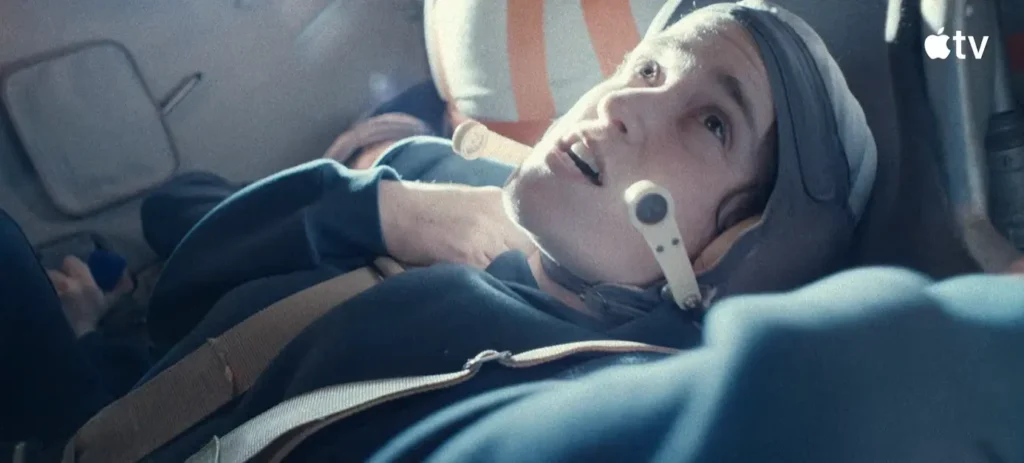
Star City Ending Explained: Summary, Plot, and Review
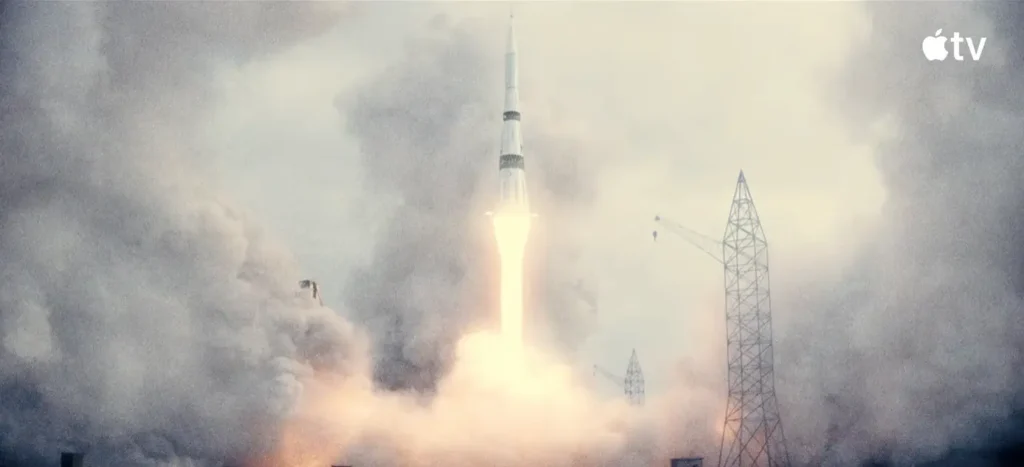
The foundational premise of this magnificent series hinges on a monumental point of historical divergence that changes the world forever: In June 1969, Soviet cosmonaut Alexei Leonov becomes the first human being to set foot on the lunar surface, effectively winning the space race. This singular triumph hands the Soviet Union the ultimate geopolitical victory, shifting the global balance of power entirely.
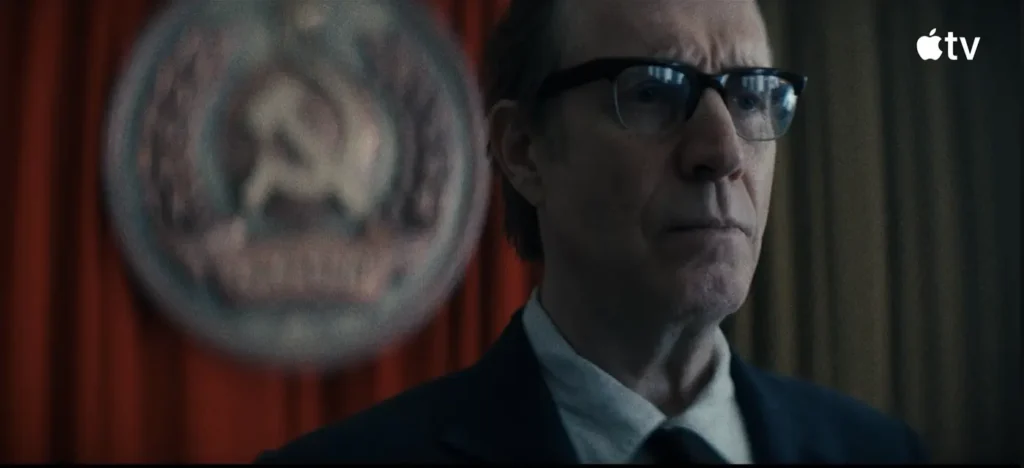
Yet, the showrunners immediately strip away the glamour of this achievement, focusing instead on the immense human cost exacted by the authoritarian state. The narrative revolves around the Yuri Gagarin Cosmonaut Training Center, a highly classified facility operating under extreme military secrecy. Here, brilliant minds like the enigmatic Chief Designer push the boundaries of human endurance to maintain Soviet dominance in the cosmos. Simultaneously, the KGB’s surveillance department, led by the ruthless Lyudmilla Raskova, monitors every whisper, heartbeat, and illicit affair.
The series acts as a psychological pressure cooker, blending the claustrophobia of a spy thriller with the grand scope of interplanetary travel. Critically speaking, the show is a monumental triumph in television writing and atmospheric world-building. Reviewers and audiences alike have praised its refusal to rely on the nostalgic winks often found in standard franchise spin-offs. With a stunning 97% approval rating on Rotten Tomatoes, critics recognize it as a flawless alt-history thriller.
The pacing is deliberate and agonizing, slowly tightening the noose around its characters before delivering devastating, violent payoffs. Performances are universally stellar, capturing the sheer terror of individuals forced to choose between personal morality and basic survival. The production design excels at rendering the brutalist architecture of the USSR, making the facility feel like both a temple of science and a high-tech prison.
In-Depth Analysis of Episodes 1 through 6
The narrative architecture of the first half of the season constructs a devastating portrait of scientific ambition colliding with totalitarian control. We at Memoria.film are breaking down the intricate details, character motivations, and tragic outcomes of these pivotal chapters.
Episode 1: The Eyes
The series premiere immediately establishes a tone of suffocating dread. Opening on the night of Alexei Leonov’s historic moon landing, the framing is devoid of any genuine triumph. Leonov’s wife is dragged from her bed by the KGB in the dead of night, terrified she is being sent to a gulag. Instead, she is taken to mission control to witness her husband’s achievement—a sequence that perfectly encapsulates the absolute secrecy of the Soviet methodology, where even families are kept in the dark to prevent global embarrassment.
- The Execution of Innocence: The primary conflict revolves around selecting the first woman to walk on the moon. Yana Akhmatova is chosen, but KGB intelligence falsely flags her as an American spy due to alleged dissident family ties.
- The State’s Lesson: Young KGB operative Irina Morozova successfully uncovers irrefutable proof of Yana’s innocence. However, when Irina presents this exonerating evidence, Colonel Lyudmilla Raskova leads her to Yana’s holding cell, hands Irina a weapon, and orders her to execute the innocent cosmonaut. Paralyzed by the moral atrocity, Irina freezes, prompting Raskova to calmly murder Yana herself.
- The Aftermath: The psychological lesson imparted to Irina is clear: the KGB never admits mistakes. Bureaucratic incompetence must be buried in blood, paving the way for the highly malleable Anastasia Belikova to take the lunar mission under a heavy shroud of guilt.
Episode 2: A Bear on a Chain
The second chapter shifts focus to the immense psychological burden placed upon the newly minted heroes of the state.
- The Siberian Crash: Anastasia successfully lands on the moon, but a catastrophic targeting error sends her reentry capsule wildly off course into a frozen Siberian forest. Emerging from the capsule, she encounters a literal wild bear, which is eventually shot dead by fellow cosmonaut Valya Mironov. This terrifying encounter serves as a heavy-handed metaphor for the untamable, predatory state waiting to devour her.
- The Propaganda Tool: Back at the training center, Anastasia learns she is entirely replaceable. To project an image of Marxist-Leninist perfection to the Western world, the Communist Party forces her into an arranged marriage with Sasha Polivanov, a reckless cosmonaut already entangled in a dangerous affair.
- Scientific Rebellion: Simultaneously, the Chief Designer reaches his breaking point with the central committee’s restrictive demands. Ordered to rush a highly dangerous lunar base project, he covertly pursues his true passion: interplanetary exploration. He recruits engineer Sergei Nikulov to siphon state resources for a highly illegal, off-the-books Venus mission.
Episode 3: Bad Dancer
A significant time jump propels the narrative into the summer of 1970. The Soviets are rushing the launch of Luna 17, an ambitious mission designed to establish the first permanent human habitat on the moon, crewed by Sasha Polivanov, Arseni Vetrov, and Pavel Fetisov.
- The Luna 17 Disaster: Ground control detects an unauthorized American radio signal emitting from the spacecraft. The Chief Designer warns that disabling the signal requires a full system reboot during a critical separation phase, risking the crew. Colonel Raskova, prioritizing the eradication of espionage over human life, overrides him and orders the reboot.
- The Fatal Spacewalk: The resulting power cycle causes the inflatable habitation module to deploy prematurely. Cosmonaut Arseni Vetrov attempts a spacewalk to manually vent the pressure, but the structure violently ruptures, blowing him out into the vacuum of space to die by asphyxiation.
- The Mole Revealed: Amidst this tragedy, the episode delivers its most shocking twist. Valya Mironov, the highly respected cosmonaut, is revealed to be the active American mole who planted the transmitter. His treason directly caused the death of his comrade, adding an unbearable layer of guilt to his hidden life.
Episode 4: Dark Forest
The brutal aftermath of the Luna 17 disaster ripples through the facility, exposing the fragile loyalties of the core characters. This episode dedicates significant time to unraveling the emotional core of Valya Mironov’s betrayal.
- The Blackmail: Through flashbacks and surveillance analysis, we learn Valya is not an ideological defector. His wife, Tanya, secretly smuggled banned Western music pressed onto medical X-rays. American intelligence discovered this illegal activity and ruthlessly blackmailed Valya. His treason is an act of desperate love to save Tanya from a KGB firing squad.
- The Scapegoat: Facing intense pressure from Moscow regarding the leaked transmitter and the botched Luna 17 mission, Colonel Raskova blindly arrests engineer Sergei Nikulov over minor contraband reading material to save her own life.
- The Discovery: The Chief Designer fast-tracks his illegal Venus probe, targeting grounded cosmonauts Sasha and Pavel. Meanwhile, Irina Morozova utilizes her investigative skills to trace the non-Soviet alloy of the transmitter. The episode concludes with Irina staring at undeniable evidence that the husband of her closest friend is the traitor.
Episode 5: Bite Your Elbow
The mid-season climax shatters the established status quo, forcing characters into irreversible and highly dangerous actions.
- The Treasonous Choice: Torn between her strict loyalty to the KGB and her genuine affection for Tanya, Irina confronts her friend. Exposing her own identity as a KGB operative, Irina reveals Valya’s treason and warns Tanya of impending arrest squads. To protect her, Irina physically erases crucial segments of the surveillance tapes using a stolen piano magnet.
- The Interrogation: Tanya confronts Valya, rejects his pleas to flee together, and escapes the facility alone. Back at KGB headquarters, Irina’s jealous colleague, Vika Yegorova, attempts to expose her. In a brilliant tactical move, Irina flips the script during her interrogation with Raskova, claiming her contact with Tanya was an authorized undercover operation to positively identify Valya. Raskova praises the initiative, solidifying Irina’s ascent within the intelligence apparatus.
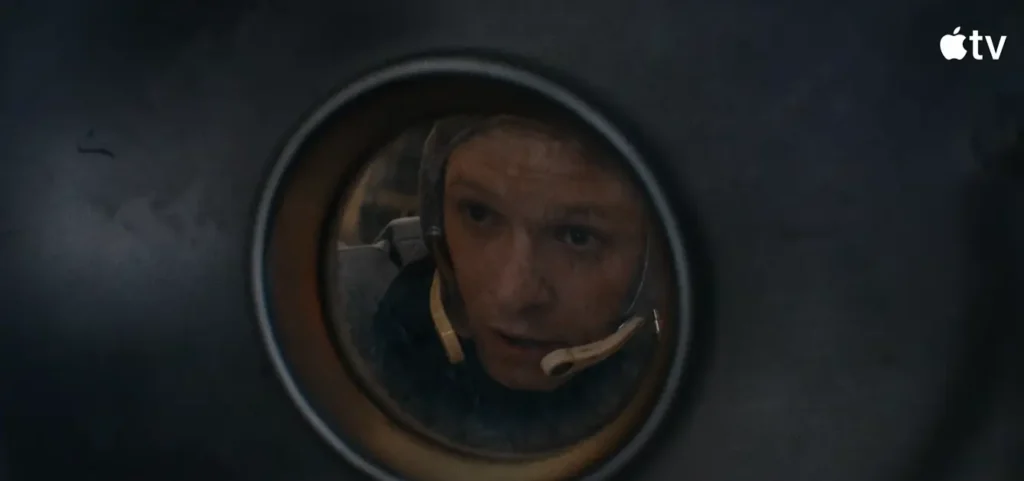
- The Hijacking: Realizing the KGB is closing in and he has no earthly escape route, Valya intercepts the secret Venus mission protocol. He violently subdues Pavel, hijacks the rogue spacecraft, and straps himself in for launch. The episode ends with Valya and Sasha blasting off into deep space, leaving the furious KGB empty-handed on Earth.
Episode 6: Awl in a Sack
The sixth episode, aptly titled after a Russian proverb meaning “the truth will always come to light,” drastically escalates the narrative from a tense spy thriller into a deadly battle for survival, culminating in the season’s most devastating cliffhanger.
- The Ultimate Sacrifice Revealed: On Earth, Irina utilizes her KGB training to track down the American handler, Ekaterina, through Moscow’s concert halls. However, before Irina can intervene, Ekaterina delivers a shattering revelation to a fleeing Tanya: Valya was never the actual target of Western intelligence. The Americans were targeting Tanya due to her illegal music smuggling, and Valya sacrificed his career, freedom, and reputation entirely to protect her from the state.
- The Venera 7 Trap: In space, the unauthorized Venus mission is underway, but Roskova quickly discovers the launch and Valya’s presence onboard. To isolate the alleged traitor, the Chief Designer manipulates cosmonaut Lakshmi (Chada) by having her husband deliver coded instructions in Hindi. This tricks her into flipping a BIOS relay that securely traps Valya inside a localized service module.
- Defiance in Orbit: Operating with ruthless calculus, Roskova orders Valya’s module to be depressurized, intending to execute him if he does not provide a full confession. Demonstrating ultimate loyalty to his teammate, Sasha cuts off communications with Earth. Refusing to let his friend die, Sasha and Lakshmi successfully rescue Valya from the venting module, effectively turning the scientific expedition into an open rebellion.
- The Fiery Cliffhanger: Enraged by the defiance, Roskova holds a gun to a mission control engineer’s head—after Sergey bravely refuses the order—forcing the terrified technician to depressurize the entire spacecraft. The Chief Designer is immediately arrested for attempting to defend his crew. Aboard Venera 7, as oxygen rapidly vents into space, a desperate Sasha tears into a control panel and pulls the wiring to override the valves. This action triggers a massive electrical arc, causing an explosion and a fire that completely engulfs the compartment just as mission control loses all communication.
Episode 7: The Signal That Changed Everything
If you thought the tragedy of Venera 7 was a closed case, Episode 7 of Star City drops a massive, game-changing bombshell that completely flips the premise of the entire show. The Soviet space program built an intricate, airtight cover-up surrounding the deaths of Valia, Sasha, and Lakshmi. The world was told it was a training accident, the engineers were silenced, and the mission was buried.
But in a world built on lies, the truth has a funny way of surviving. Here is the complete breakdown of how one sidelined engineer cracked the biggest cover-up in Soviet history, and what it means for the Venera 7 crew.
The Bureaucracy of Space and Salyut 1
Nine months have passed since the disaster, and the Soviet Union has completely pivoted its space ambitions. The romantic dream of deep space exploration has been quietly shelved. The new focus? Spying.
The state has launched Salyut 1, a new space station dressed up in the language of scientific discovery, but underneath the paint job, it is purely a surveillance platform. Its real mission is photographing American territory and dropping the film back down to Earth in canisters. Running this new era is Radimir Petrovski, a former KGB operative who got the job because he understands obedience and control, not rocket science.
The Despair of Sergey Nicolov
Sergey Nicolov, the brilliant engineer who once worked alongside the Chief Designer to reshape human understanding of the universe, is now slowly being destroyed. He has been pushed into a windowless room, buried under useless paperwork, and constantly watched.
Driven by quiet despair, Sergey does something incredibly dangerous: he asks a colleague to pass along a letter, hoping to land a teaching position at a university far away from Star City. The consequences are immediate and brutal. His colleague vanishes from work, clearly punished. Sergey returns home to find his apartment completely torn apart and his belongings destroyed, with his own letter left sitting in plain view. It isn’t a search; it’s a silent, terrifying message from the state: there is no escape, and they own his life.
The Anomaly and The Algorithm
That absolute despair is exactly what puts Sergey in the position to make the discovery of a lifetime. While reviewing routine data on near-Earth asteroid activity, Sergey notices something that completely defies the pattern.
He manages to talk his way past the guards into the comms room with the help of an engineer named Stephenov. But to confirm what he is seeing, Sergey needs someone actually in orbit to run a test. That someone is Anastasia.
Anastasia is aboard Salyut 1 not as a reward, but as political theater. After losing her husband, Sasha, in the Venera 7 catastrophe, the Soviet leadership is using her fame as camouflage to convince the world that the new station is about science, not spying. When Sergey contacts her and asks her to fiddle with sensitive station equipment, she hesitates. But she remembers that Sergey is the engineer who once saved her life by telling her to puncture her own spacesuit during the Luna 16 mission. That memory of trust is enough; she agrees to run the test.
When Anastasia adjusts the UHF receiver to Sergey’s specific frequency, the signal that comes back is not random static or noise. It is compressed data structured by a custom-built image compression algorithm. This algorithm was specifically designed to shrink high-resolution photos for the Venera spacecraft. Functionally, it is Sergey’s own algorithm.
Sergey doesn’t just detect a mysterious transmission; he recognizes his own digital fingerprint. There is only one possible explanation: the Venera 7 spacecraft is still transmitting. And if it is transmitting, someone on board has to still be alive to keep it operational.
The Devastating Reality of Hope
This discovery is not a generic moment of triumph; it is a terrifying political complication. The state discarded the one brilliant mind it couldn’t afford to lose, and now that mind has proven that their massive cover-up is a lie.
When Anastasia realizes what the signal means, she doesn’t celebrate. She breaks down, caught between nine months of agonizing grief for Sasha and the terrifying possibility that her grief wasn’t necessary at all.
Furthermore, if the Venera 7 crew survives, they aren’t just returning as heroes; they are returning as walking contradictions to the state’s official narrative. A government that built its entire foundation on a lie about dead heroes now has to figure out what to do with heroes who refuse to stay dead.
As the episode ends, Stephenov and other engineers in the comms room have witnessed Sergey’s panic. The secret is out, and the biggest question isn’t just whether the cosmonauts will make it home, but whether the state will let them live once they arrive.
Star City Season 1 Finale Episode 10: A Masterclass in Soviet Paranoia and Heartbreak
I honestly expected the Star City finale to play it safe. You know the drill—a neat little bow wrapping up a space survival story with a predictably heroic landing. Boy, was I wrong. Episode 8 is a relentless, suffocating masterclass in tension. It makes you realize that surviving the vacuum of outer space is actually the easy part; surviving the Soviet bureaucracy is where the real horror lies.
Let’s talk about Valia. In a devastating flashback, we learn exactly how Venera 7 survived its catastrophic systems failure. The earlier depressurization knocked them completely off course, sending the ship hurling directly toward the sun. Valia realizes the only way to save the crew is to manually fire the engines from inside the “bathysphere” descent module. He seals himself inside, fully aware it’s a one-way ticket to the deadly surface of Venus. His final request is heartbreakingly simple: he asks Sasha to find Tanya and make sure she is all right. He successfully corrects their course, disconnects from the main ship, and plummets alone toward Venus. We actually see him survive the landing for a brief, haunting moment. He laughs, looks at a picture of Tanya, and smiles right before the crushing atmospheric pressure completely implodes the sphere. What a brutal, perfectly executed send-off for his character.
Meanwhile, the survival of Sasha and Chada turns into an immediate political nightmare. Against all odds, they managed to extinguish the fire, stop the depressurization, and set a course back to Earth. Sasha is desperately punching codes, praying someone on the ground is listening.
Enter Sergey and the former Chief Designer. Because his house is heavily bugged, Sergey has to communicate his massive discovery by quietly writing messages in flowers spread across a table. When they finally step outside to eat and speak freely, Sergey reveals the spacecraft will return in less than three days and is tracking to land in Kazakhstan. The Chief Designer drops a terrifying truth: if they land in Soviet territory, they will be immediately arrested. His desperate plan is to recalculate the re-entry angle to force a landing across the border in Finland instead.
The spy-craft in this episode is top-tier. Sergey recruits Salyut program lead Stepanov, shamelessly dropping the Chief Designer’s name to force him to cooperate. At a local market, the Chief Designer’s wife discreetly hands Sergey the necessary calculations folded inside a piece of lettuce, bitterly warning him to leave her husband alone before this world kills him. Stepanov then transmits the data to Anastasia (Belikova) up on the Salyut station, hiding it under the guise of a routine power cycle sequence on the UHF transmitter during a communications blackout.
When Venera 7 finally catches the relayed signal, Sasha completely dismisses it as random interference. It is Chada—proving her absolute worth as a codebreaker—who spots the hidden message buried in the static. They realize the Chief Designer is warning them to redirect to Finland, and Belikova confirms the receipt over a backup radio.
But nothing stays a secret in Star City. The Venera signal pops up on Soviet radar, and Colonel Rascova is instantly informed. The Intelligence Committee’s reaction is sickeningly cynical. The Deputy Chairman doesn’t see a scientific miracle; he sees a national humiliation because an American asset is on board. While Rascova suggests replacing the crew entirely, the Chairman makes it clear that General Secretary Brezhnev wants them “taken care of swiftly”. Petrovski gleefully accepts the assassination mission.
Then we get the absolute fake-out of the year. Arena snitches on the Sergey and Stepanov meetings to Rascova, suspecting a conspiracy. Rascova has Sergey arrested and dragged to the Chief Designer’s house. There, we hear the Chief Designer being brutally tortured until Sergey finally breaks down and screams out the Finland plan.
But wait. It was entirely staged.
When a devastated Sergey is thrown into the back of a transport truck, the Chief Designer is sitting right there, completely unharmed. Rascova actually outmaneuvered Petrovski and staged the whole thing. Honestly? I did not see that coming.
The climax is pure, unadulterated adrenaline. Petrovski is waiting in Kazakhstan, only to be told the ship deviated. Rascova counters by literally ordering a missile launched at the spacecraft—not to destroy it, but the impact violently nudges the capsule just enough to send it back toward Soviet territory. Sasha and Chada survive the crash landing, but they are two kilometers away from the Finnish border on the wrong side, running on foot from Rascova’s hunting party.
Up in orbit, Belikova realizes Sasha is going to be executed. Her crewmates silently agree to let her steal the emergency descent module, officially reporting her departure as a “malfunction”. She lands 20 kilometers away, steals a farmer’s truck, and barrels toward the border crossing. In an insanely cinematic moment, she drives her truck right between the hunting party and the fleeing cosmonauts, surrendering herself to create a massive distraction.
Chada, despite taking a bullet to the leg, successfully crosses the border into the arms of waiting Finnish soldiers. But Sasha stops. He chooses to surrender to the Soviets just so he can remain by his wife’s side. It’s a devastating, beautiful, entirely human choice.
And the final shot? We are suddenly in Paris. Tanya is walking down the street, living her life, completely unaware that a mysterious black woman is watching her every move.
What an incredible, anxiety-inducing way to end a season.
5 Hidden Easter Eggs and “For All Mankind” Connections You Missed
I genuinely can’t believe we almost skipped over the most insane meta-layer of this entire finale. If you are watching Star City in a vacuum, you are only getting half the experience. The creators are heavily tying this series directly into the established lore of Apple’s For All Mankind (FAM). Plus, there were a few hilarious—and utterly brutal—character moments buried in the chaos that deserve the spotlight.
Here are the missing puzzle pieces you absolutely need to copy and paste into the main article to make it the definitive guide:
1. The Prequel Plot Armor (Sergey & Arena’s Future) All that intense, edge-of-your-seat fear about Sergey being executed during the staged torture? Yeah, if you know the FAM universe, you already knew he had total plot armor. Sergey literally survives to an old age and ends up having a deeply complicated romantic relationship with Margo later down the timeline. The same goes for Arena. That final shot of her sitting outside a nice house with a new hairstyle isn’t just a random wrap-up. It signifies her promotion. She eventually becomes the ruthless KGB handler who acts as the primary liaison with Margo in FAM Seasons 4 and 5.
2. The Governor of Mars Origin Story We spent all season wondering about these messy romantic entanglements, but the payoff is astronomical. Sasha’s son eventually grows up to become Leonid, the Governor of Mars in the future FAM timeline. While the fanbase heavily debated if the mother was Tanya or Belikova, Sasha’s ultimate, tragic choice to surrender to the Soviets just to stay with Belikova heavily implies she is the mother of the future Martian governor.
3. The Zero-Gravity Chokehold (A Rare Directorial Miss) Look, I love the gritty realism of this show, but I have to call out unintentional comedy when I see it. During the flashback where Valia admits he doomed the mission, an enraged Sasha floats over and literally starts choking Valia in zero gravity. Think about the physics for a single second. Choking someone in space without any leverage or gravity to push against is completely ridiculous. It totally derailed the tension of an otherwise terrifying scene for me.
4. Sasha’s Brutal Final Words to Valia Before Valia sealed himself inside the bathysphere to burn up on Venus, he made one final, emotional request. He asked Sasha to find Tanya back on Earth and tell her that he loves her. Sasha doesn’t offer a tearful goodbye or a forgiving brotherly nod. Instead, Sasha coldly replies, “I used to tell her I love her all the time”. It was an incredibly harsh, petty response, proving that Sasha carried deep resentment right up to the bitter end.
5. The Clueless KGB Guard and Dumping Medication Some of the background survival details were just wild. Remember the KGB guard assigned to Anastasia’s Salyut 1 crew? We all thought he was going to be the ultimate antagonist spying on her. Instead, the guy is completely clueless. He is just casually announcing meal times while Anastasia commits high treason whispering into the comms right under his nose. And back on Venera 7, Sasha and Chada are so desperate to shed weight for re-entry that they literally start throwing their own medical supplies and liquids out of the airlock. Pure survival mode.
Audience Questions (FAQ) Answered
As the complex narrative unfolds, viewers have flooded forums with critical questions regarding the plot mechanics. Memoria.film has gathered the most pressing inquiries and provided definitive answers based on deep textual analysis.
Who died in Episode 3 during the Luna 17 mission? Cosmonaut Arseni Vetrov perished during the mission. The death was caused by an explosive decompression when the inflatable habitation module ruptured. This was a direct result of a KGB-ordered system reboot, proving the state’s paranoia is deadlier than the vacuum of space itself.
Who is the American mole inside the Soviet space program? Valya Mironov, a highly respected senior cosmonaut, is the American intelligence asset. He planted the tracking transmitter on the Luna 17 landing craft.
Why did Valya betray the Soviet Union? Valya is not a political dissident. He was blackmailed by Western intelligence, who discovered that his wife, Tanya, was operating as a cultural dissident by smuggling banned music. He committed treason solely to protect her from being executed by the state apparatus.
Why is the Chief Designer’s real name never spoken on screen? The character is directly based on Sergei Korolev, the real-life historical genius behind the early Soviet space program. In reality, his identity was considered a top state secret to protect him from Western assassination attempts—a historical fact the show strictly adheres to.
What is the “Bone Records” music smuggling operation? In the oppressive USSR, Western music was heavily banned and criminalized. Dissidents created “bone records” or “ribs” by pressing illicit music grooves directly onto discarded medical X-ray films. Tanya actively participates in this underground cultural rebellion.
What exactly is the secret Venus mission? Frustrated by Moscow’s unimaginative obsession with the moon, the Chief Designer initiates a rogue, unsanctioned mission to Venus. He utilizes repurposed deep-sea diving vessels capable of withstanding extreme atmospheric pressure, intending to send a manned crew on a seemingly impossible nine-month voyage.
What is the meaning behind the episode title “Awl in a Sack”? The title is derived from an ancient Russian proverb which dictates that a sharp object cannot be hidden in a sack; eventually, it will pierce through. Thematically, it means that “the truth will always come to light,” directly foreshadowing the massive reveals regarding Valya’s true motives, Tanya’s discovery of the American plot, and Roskova uncovering the secret Venus mission.
Why did Valya really cooperate with American intelligence? Episode 6 completely recontextualizes Valya’s treason. Ekaterina, the American handler, reveals to Tanya that Valya was never the primary target of Western intelligence. The Americans were actually targeting Tanya due to her underground music smuggling. Valya willingly sacrificed his own life, career, and honor strictly to shield his wife from a KGB firing squad.
How did the Chief Designer isolate Valya on the spacecraft without raising suspicion? Knowing an experienced pilot like Valya would immediately detect any automated system override, the Chief Designer utilized Lakshmi’s (Chada’s) husband. The husband delivered a coded instruction in Hindi, tricking an unsuspecting Lakshmi into manually flipping a BIOS relay that securely locked Valya inside a localized service module.
Why was the Chief Designer arrested by Roskova? When Sasha and Lakshmi rescued Valya, an enraged Roskova escalated the situation by ordering the depressurization of the entire spacecraft to execute the defiant crew. The Chief Designer actively protested the murder of his cosmonauts, stating his engineers were not executioners. Roskova immediately ordered his arrest for his insubordination and interference.
Did the crew survive the fire at the end of Episode 6? The episode concludes on a definitive, brutal cliffhanger. In a desperate bid to stop the KGB from venting all the oxygen out of the ship, Sasha tore into a control panel and pulled the wiring. This triggered an electrical arc and a massive fire that engulfed the compartment. With communications entirely severed, the survival of Valya, Sasha, and Lakshmi remains completely unknown heading into Episode 7.
Secrets, Hidden Meanings, and Sprawling Fan Theories
The intricate writing of the series has spawned massive online discourse, with audiences dissecting the show’s psychological traps. Here are the most compelling theories regarding where this dark narrative is heading next:
Theory 1: The Venus Mission is a Fatal Suicide Trap
The Chief Designer’s obsession with a manned Venus flyby is historically grounded but narratively ominous. Because the mission is entirely unauthorized, the Soviet state has absolutely no infrastructure in place to rescue the crew. With Valya now hiding aboard the spacecraft alongside Sasha—the man having an affair with his wife—the psychological tension within the capsule will likely turn lethal. Fans speculate that this mission will ultimately result in “dead cosmonauts” covered up forever by the embarrassed Soviet regime, mirroring how real-life Venera probes melted under Venusian pressure.
Theory 2: Irina’s Dark Metamorphosis and Raskova’s Downfall
As an unwed mother in a conservative authoritarian society, Irina’s survival depends entirely on her lethal utility to the KGB. While she shows empathy by saving Tanya in Episode 5, viewers predict this will be her absolute final act of mercy. To survive the immense political fallout of Valya’s escape, Irina will have to fully embrace the brutal methodology of her mentor. The theory posits that Irina is actively being molded to eventually betray and replace Lyudmilla Raskova as the ultimate head of Soviet intelligence.
Theory 3: The Dark Truth Behind Zoya’s Father
In Episode 3, Tanya innocently asks Irina about the father of her child, Zoya. Irina cryptically refers to him as “not a good man” and later risks her career to magnetically erase that specific conversation from the surveillance tape. Audience theorists strongly suspect that Zoya’s father is a highly recognizable, high-ranking member of the KGB or the Soviet Politburo. The frantic erasure of the tape suggests Irina protects this secret not out of shame, but because acknowledging the identity of a powerful abuser would result in her immediate assassination by the state.
Theory 4: The Weaponization of the “Bone Records”
Tanya’s smuggling of music pressed onto medical X-rays represents a glaring security vulnerability within the classified facility. Espionage analysts theorize these records will soon become a deadly operational tool. It is highly probable that American intelligence will begin pressing micro-code or hidden operational messages directly into the grooves of the X-rays. This twist would unknowingly turn Tanya into an active physical courier for Western intelligence, transforming her sole source of psychological freedom into the instrument of her destruction.
Theory 5: The “Dark Forest” Societal Metaphor
Episode 4 is ominously titled “Dark Forest,” drawing immediate comparisons to the famed sci-fi concept. However, theorists argue the title does not refer to literal aliens, but to the paranoid sociology of the Soviet state itself. In a “Dark Forest,” every entity must remain perfectly silent and hidden, because revealing yourself invites immediate destruction by a stronger predator. This perfectly encapsulates life in Star City; characters like Tanya, Valya, and the Chief Designer must hide their true selves to survive. The moment anyone speaks their truth, the state moves in for the kill.
Global Streaming Platforms, Timings, and Episode Schedule
This premium television event is available exclusively on the Apple TV+ streaming platform worldwide. The inaugural season consists of exactly eight meticulously crafted episodes, running between 55 and 62 minutes each. The release strategy utilized a massive two-episode global premiere, followed by a strict weekly rollout for subsequent chapters.
For the primary United States audience, new episodes debut precisely at 12:00 a.m. Pacific Time (PT) / 3:00 a.m. Eastern Time (ET) every Friday. Global audiences experience simultaneous drops, such as 8:00 a.m. British Summer Time (BST) for the UK, and 6:00 p.m. Australian Eastern Standard Time (AEST). The show intentionally avoids filler, delivering a tightly woven narrative that demands weekly attention from its dedicated audience.
Below is the definitive release schedule and official episode titles for the entire first season:
| Episode Number | Official Episode Title | US Release Date | US Release Time |
| Episode 1 | The Eyes | May 29, 2026 | 12:00 a.m. PT / 3:00 a.m. ET |
| Episode 2 | A Bear on a Chain | May 29, 2026 | 12:00 a.m. PT / 3:00 a.m. ET |
| Episode 3 | Bad Dancer | June 5, 2026 | 12:00 a.m. PT / 3:00 a.m. ET |
| Episode 4 | Dark Forest | June 12, 2026 | 12:00 a.m. PT / 3:00 a.m. ET |
| Episode 5 | Bite Your Elbow | June 19, 2026 | 12:00 a.m. PT / 3:00 a.m. ET |
| Episode 6 | Awl in a Sack | June 26, 2026 | 12:00 a.m. PT / 3:00 a.m. ET |
| Episode 7 | TBA | July 3, 2026 | 12:00 a.m. PT / 3:00 a.m. ET |
| Episode 8 | TBA (Season Finale) | July 10, 2026 | 12:00 a.m. PT / 3:00 a.m. ET |
The Elite Cast and Character Profiles
The series relies heavily on a masterful ensemble of actors who perfectly convey the internal terror of life under an authoritarian regime. Below is a detailed breakdown of the primary cast:
| Actor Name | Character Name | Role & Narrative Significance |
| Rhys Ifans | The Chief Designer | Based on Sergei Korolev. A brilliant survivor of the Siberian gulags who bends state rules to further human exploration. |
| Anna Maxwell Martin | Lyudmilla Raskova | The terrifying head of KGB surveillance. She operates with cold calculus, viewing all human life as expendable for the state. |
| Agnes O’Casey | Irina Morozova | A young, unwed mother and KGB operative. Her journey reflects a chilling descent into the dark psychology of state surveillance. |
| Alice Englert | Anastasia Belikova | The first woman to walk on the moon. She quickly realizes she is a highly controlled propaganda tool trapped in a sham marriage. |
| Adam Nagaitis | Valya Mironov | A respected cosmonaut blackmailed into becoming an American mole to protect the woman he loves. |
| Ruby Ashbourne Serkis | Tanya Mironova | Valya’s wife and a former professional musician. She risks her life smuggling banned Western music into the facility. |
| Solly McLeod | Sasha Polivanov | A highly skilled but deeply troubled cosmonaut. He struggles with immense survivor’s guilt and an illicit affair. |
| Josef Davies | Sergei Nikulov | A brilliant young engineer. He risks execution by helping the Chief Designer build the unauthorized Venus probe. |
Read also : The Witness Ending Explained: Shocking Netflix Cast & Hidden Facts