The Witness Ending Explained: Shocking Netflix Cast & Hidden Facts

The Witness ending explained is not merely a search query intended to untangle a fictional mystery; it is a vital exploration into one of the most agonizing, protracted, and culturally significant miscarriages of justice in modern British history. The true-crime television landscape is frequently saturated with procedural thrillers that obsessively center on the psychology of the killer, often reducing the victims to mere collateral damage or narrative stepping stones. However, the 2026 Netflix limited series The Witness actively and aggressively disrupts this convention. By presenting a harrowing, emotionally exhaustive portrait of the human debris left in the wake of senseless violence, the series demands a different kind of engagement from its audience. For viewers seeking a definitive explanation of The Witness and its deeply emotional conclusion, the narrative requires a profound examination of British criminal history, systemic police failures, the ethics of journalism, and the extraordinary resilience of the human spirit.

Created by writer and executive producer Rob Williams and directed by Alex Winckler, the three-part drama explores the devastating 1992 murder of Rachel Nickell on Wimbledon Common. Rather than chronicling the physical act of the murder, the series focuses entirely on the aftermath endured by her partner, André Hanscombe, and their toddler son, Alex, who was the sole witness to the brutal slaying. As the miniseries meticulously navigates the grueling fifteen-year wait for legal justice, it transcends its true-crime origins, morphing into an intense, claustrophobic psychological study of grief, single fatherhood, and relentless media harassment.

This comprehensive, highly detailed analysis delves deeply into every single facet of the Netflix miniseries. The following exploration encompasses an exhaustive cast breakdown, a detailed thematic explanation of the show’s most shocking twists, an unvarnished look at the real-world investigation that nearly destroyed an innocent man, and a thorough FAQ section that addresses the internet’s most pressing questions surrounding the real-life Hanscombe family, the wrongfully accused Colin Stagg, and the true killer, Robert Napper.

The Witness Ending Explained

Part 1: The Catalyst — A Morning That Shattered a Nation

To fully comprehend the profound emotional weight that anchors the Netflix miniseries, the sheer brutality of the real-world catalyst must be meticulously examined. The story does not begin in a courtroom or an interrogation room, but on a seemingly idyllic summer morning. On July 15, 1992, twenty-three-year-old Rachel Nickell, a former model and devoted mother living in Balham, South London, took her two-year-old son, Alex, and the family dog for a routine walk on Wimbledon Common.

The tranquility of this highly affluent, historically safe neighborhood was shattered when an assailant emerged from a secluded area of the park’s foliage. The attacker immediately knocked the toddler to the ground and proceeded to violently sexually assault and murder Rachel, stabbing her an incomprehensible forty-nine times in broad daylight. The violence was executed with such terrifying ferocity that the young mother was nearly decapitated by the assault. Compounding the profound tragedy of this event is a deeply hidden fact revealed years later by the family: Rachel and André had mutually agreed to try for a second child, and she was pregnant at the time of her murder.

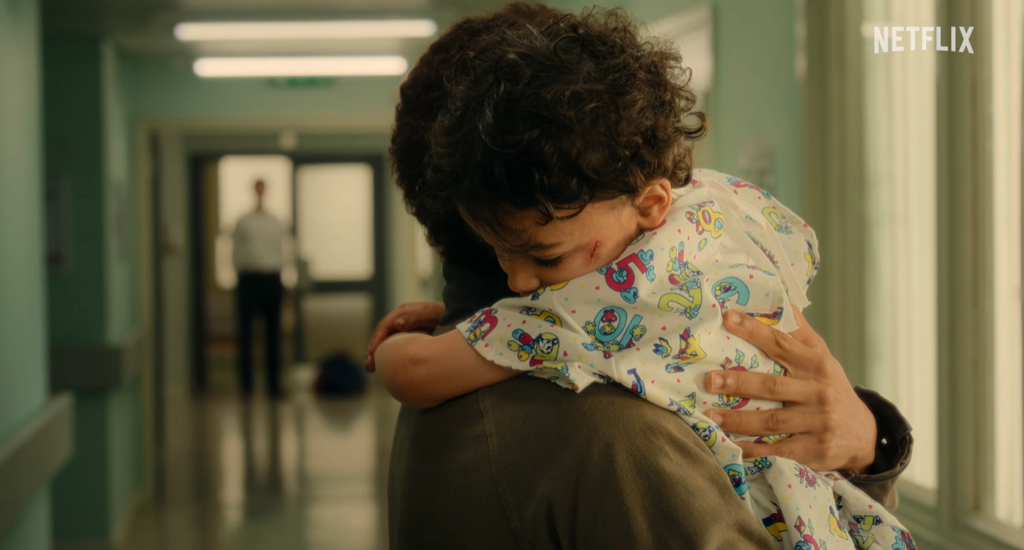
When a passerby eventually discovered the horrific scene, the image etched into the collective public consciousness was one of unimaginable, haunting heartbreak. Two-year-old Alex was found clinging desperately to his mother’s blood-soaked body. The child was heard repeatedly pleading, “Wake up, Mummy,” while tenderly placing a small piece of paper on her forehead in a futile, childlike attempt to bandage her fatal wounds. As an adult, Alex would later recall this precise moment as the exact second he comprehended the permanence of death, noting that watching her soul leave her body fundamentally altered the trajectory of his existence.

The public and institutional reaction to this crime was visceral, immediate, and utterly overwhelming. The sheer viciousness of a daylight attack in a supposedly secure public park, witnessed only by a preschooler, triggered a massive wave of national panic and media hysteria. The killer had vanished almost like a phantom, leaving behind no viable DNA or fingerprint evidence at the immediate scene, thereby making young Alex the sole, highly unreliable witness to the crime. This horrific tragedy provides the foundational trauma from which The Witness builds its narrative, consciously avoiding gratuitous, exploitative depictions of the murder in favor of exploring the psychological fallout that consumed the survivors for decades.

The Witness Ending Explained

Part 2: The Shocking Netflix Cast & Character Psychology

The artistic and emotional success of The Witness hinges entirely on a powerhouse ensemble cast capable of communicating profound, unspeakable trauma, institutional panic, and devastating psychological manipulation. The series required actors who could embody the complex, often contradictory emotional states of real people whose private lives were dissected by tabloids for over a decade. The casting decisions highlight a deliberate effort to capture the psychological essence of the individuals involved, rather than settling for mere physical approximations.

Principal Cast and Psychological Breakdown

ActorCharacterNarrative Role & Psychological Profile
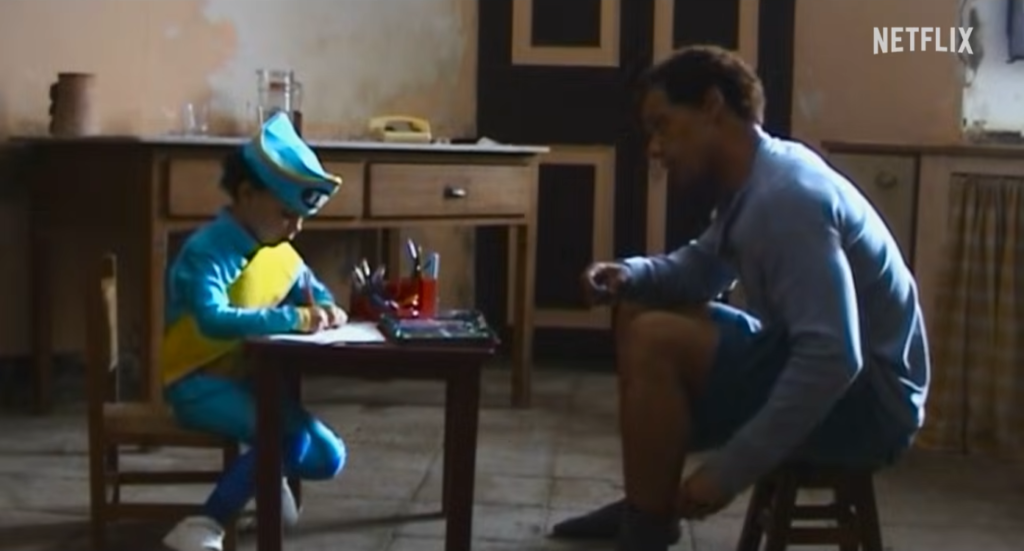
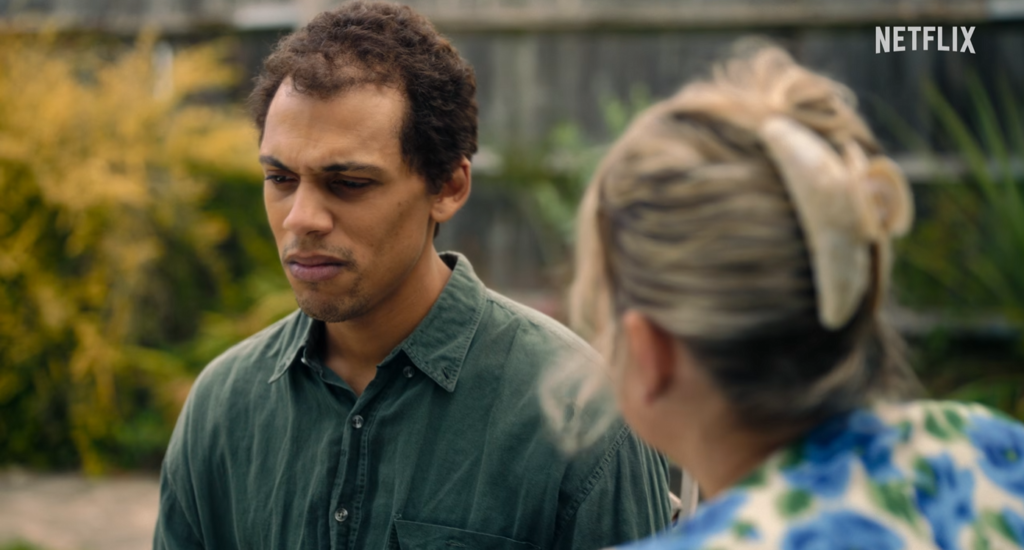
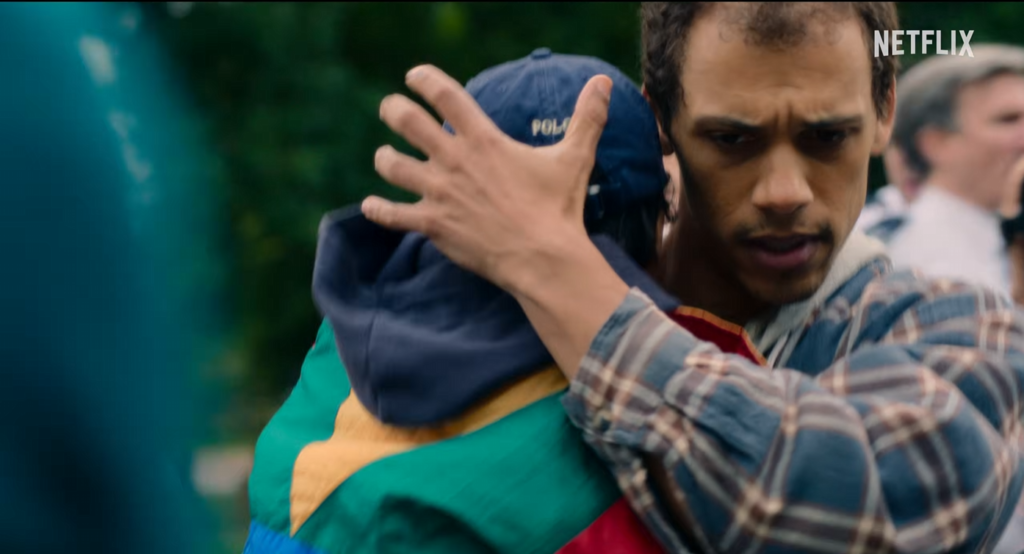
Jordan BolgerAndré HanscombeRachel’s devastated partner who is violently thrust into the role of a single father overnight. Bolger carries the immense emotional weight of the entire series. He portrays André not as an idealized hero, but as a deeply stressed, perpetually anxious man trapped between his own suffocating grief and the desperate need to protect his traumatized son from aggressive police questioning and a predatory media.
Jahsaiah Williams / Max FinchamAlex HanscombePlayed by Williams as a toddler and Fincham as a teenager, Alex is the titular “Witness.” His character arc is a profound exploration of the conflict between remembering and forgetting. The toddler struggles to articulate the horror locked in his mind, while the teenager actively rebels against the heavy, suffocating legacy of his mother’s highly publicized death.
Eleanor WilliamsRachel NickellSeen primarily in flashbacks, home videos, and emotional memories, Rachel’s presence haunts the narrative periphery. She represents the stolen future of the Hanscombe family, embodying the warmth, love, and potential that was violently erased from their lives in a matter of seconds.
Neil MaskellDI Keith PedderThe lead detective operating under unimaginable, crushing pressure from both his superiors and the British public to solve the high-profile case. Maskell portrays Pedder as a flawed but intensely dedicated professional whose desperation to quell public panic ultimately drives him to authorize a catastrophic and highly unethical undercover operation.
Steve StampRobert NapperThe true killer. Stamp delivers a chilling, deeply unsettling performance in the final act. Departing drastically from his comedic roots, Stamp portrays Napper not merely as a two-dimensional monster, but as a deeply disturbed individual masking a history of severe childhood abuse, paranoid schizophrenia, and an obsessive hatred of women.
Jamie BispingColin StaggThe innocent local man wrongfully targeted by the police. Bisping brilliantly captures the vulnerability of an eccentric, deeply lonely outsider who perfectly fits a flawed psychological profile but entirely lacks the capacity for the extreme physical violence attributed to him.
Paul ChahidiProf. Paul BrittonThe prominent forensic psychologist hired by the police. He operates with clinical detachment, devising the highly controversial psychological profile of the killer and helping orchestrate the disastrous “honeytrap” sting operation that destroyed Colin Stagg’s life.

The casting of Jordan Bolger as André Hanscombe is particularly noteworthy for its intense physical and emotional demands. Bolger is tasked with maintaining a constant, simmering state of tension, reflecting the horrifying reality of a man who packed a “go-bag” by his front door, ready to flee the country with his son at a moment’s notice. He wears his character’s mixture of sadness, boiling frustration, and fierce protective instinct entirely on his face. The organic, deeply resonant chemistry between Bolger and the young actors playing Alex forms the emotional bedrock of the series. They navigate a treacherous psychological terrain where paternal love must constantly compete with the overwhelming, external pressure of a high-stakes murder investigation.

Furthermore, Steve Stamp’s portrayal of Robert Napper in the later stages of the series is a masterclass in restrained menace. Stamp strips away the caricatures often associated with cinematic serial killers, opting instead for a performance that highlights Napper’s pathetic, broken humanity, making his capacity for extreme violence all the more terrifying to behold.

The Witness Ending Explained

Part 3: Episode-by-Episode Thematic Breakdown and Analysis

The Witness divides its sprawling narrative across three grueling, hour-long episodes. By seamlessly weaving past and present timelines, the series vividly illustrates how unhealed trauma reverberates through decades, shaping the identities of those forced to carry it. The structure of the miniseries is deliberately paced to reflect the slow, agonizing crawl of the justice system and the enduring nature of grief.

Episode 1: The Weight of Memory and The Media Siege

The premiere episode immediately immerses the audience in the chaotic, disorienting aftermath of the July 1992 attack. The narrative focal point is strictly localized to the impossible situation thrust upon André Hanscombe. Overnight, he must navigate the labyrinthine logistics of profound grief—identifying the body, dealing with relatives, arranging a funeral—while simultaneously shielding his severely traumatized son from the outside world.

The core narrative tension of the first episode revolves around the police investigation’s desperate reliance on a preschooler. DI Keith Pedder and an array of child psychologists aggressively push to extract whatever fragments of memory are locked inside two-year-old Alex’s developing brain. André is forced into a series of agonizing, impossible decisions: does he allow the police to question his son, potentially re-traumatizing the boy and forcing him to relive his mother’s slaughter, or does he refuse to cooperate, thereby increasing the likelihood that his partner’s killer will remain free to strike again?.

The episode bravely showcases André as an unvarnished, authentic human being rather than a stoic, unflappable hero. In moments of extreme, understandable stress, he exhibits profound frustration. This is powerfully demonstrated when he grows visibly irritated as young Alex misbehaves in a child psychologist’s office, a deeply human reaction to an inhuman situation. A particularly heart-wrenching, unforgettable scene involves André insisting on taking the toddler to view Rachel’s body at the morgue. However, Alex simply remains on the floor playing with his toys, seemingly possessing an innate, pure understanding that viewing his deceased mother will bring no comfort or closure.

Concurrently, the episode introduces the secondary, overarching antagonist of the series: the British tabloid press. The media frenzy is depicted as a suffocating, “pitiless” force of nature. Journalists and paparazzi relentlessly camp outside André’s home, the crime scene, and even his mother’s house. They treat the family’s profound tragedy as a lucrative public commodity, dramatically exacerbating the family’s living hell.

Episode 2: Exile, Tunnel Vision, and The Honeytrap

The second episode tracks two parallel, devastating descents into chaos: André’s desperate attempt to escape the toxic, predatory environment of the United Kingdom, and the Metropolitan Police department’s descent into highly unethical, desperate investigative practices.

Unable to endure the relentless harassment from journalists—who are depicted crossing every conceivable ethical boundary by stealing the family’s mail, rummaging through their trash, and, in one grotesque, unforgivable incident, using a racist monkey chant in a car park simply to provoke André into a highly photographable physical altercation—the father and son make the agonizing decision to flee. They escape to France, and eventually settle in Spain. The narrative poignantly illustrates the tragic, bitter reality that the innocent victims were forced to live like fugitives on the run, constantly looking over their shoulders, while the actual perpetrator remained hidden in plain sight back in London.

Simultaneously, the police investigation stalls completely. Without usable DNA or clear eyewitness testimony, DI Pedder relies exclusively on a psychological profile crafted by Professor Paul Britton. This highly specific profile points directly toward Colin Stagg, a lonely, eccentric local man who regularly walked his dog on the common and possessed a passing interest in the occult. Despite a total, glaring lack of forensic evidence connecting Stagg to the murder, the police develop extreme tunnel vision, prioritizing the management of public perception and the desperate need for a scapegoat over the objective pursuit of truth.

The episode dramatically recreates the infamous Operation Edzell, a highly controversial undercover “honeytrap” sting. A female officer (operating under the alias “Lizzie James”) contacts Stagg through a lonely hearts column. She feigns intense romantic interest and actively shares violent, depraved sexual fantasies in a calculated attempt to manipulate him into confessing to Rachel’s murder. The episode masterfully builds a suffocating sense of impending dread, highlighting the catastrophic failure of law enforcement as they actively try to construct a murderer out of a lonely innocent man.

Episode 3: The Cold Case, The Interrogation, and The Path to Peace

The finale heavily features a significant time jump, thrusting the audience into the early 2000s and presenting Alex as a rebellious teenager fiercely clashing with his father. Their interpersonal conflict perfectly mirrors their divergent coping mechanisms. Alex wishes to ignore the past entirely, desperate to forge a normal identity devoid of the “murder victim” label, while André, weathered by years of hyper-vigilance, understands that suppressing trauma is ultimately an unsustainable strategy.

The investigative plotline concurrently shifts to a massive cold-case review. Monumental advancements in DNA technology, spearheaded by Britain’s top forensic lab at CSI Oxford, finally break the case wide open. The true killer is definitively identified via biological evidence as Robert Napper, a man who had already been incarcerated at the Broadmoor high-security psychiatric hospital for other unspeakable crimes committed shortly after Rachel’s death.

The absolute climax of the series involves the psychological interrogation of Napper (Steve Stamp) by detectives and a Broadmoor clinical psychologist. Initially, Napper completely denies the murder, chillingly using the plural pronoun to distance himself: “We didn’t do that,” he tells the detectives who have him cornered with DNA evidence. However, the interrogation successfully pierces his heavily guarded defenses by directly addressing his own severe childhood trauma. The psychologist leans in and asks, “And what about the little boy inside you, Bob? He’s still there, isn’t he? What does he deserve?”. This profound moment forces Napper into a corner of self-reflection, and it clarifies the overarching thesis of the entire miniseries: the cyclical, highly destructive nature of unhealed, intergenerational trauma.

Ultimately, the ending of The Witness is not centered on the hollow legal victory of Napper’s eventual conviction. Instead, the emotional climax belongs entirely to the victory of André and Alex. The final scenes provide a deeply earned, tear-jerking sense of redemption as the father and son find a way to honor Rachel’s memory without being entirely consumed by the gravitational pull of her death.

The Witness Ending Explained

Part 4: The Darkest Hidden Facts — Entrapment, Media Complicity, and Institutional Failure

To fully grasp the themes that The Witness seeks to communicate, it is absolutely imperative to thoroughly analyze the real-world investigative failures that the series addresses. The true, sweeping tragedy of the Rachel Nickell case extends far beyond the initial, horrific murder; it is a sprawling saga of how institutional arrogance, media complicity, and pseudoscientific profiling compounded a localized tragedy and directly led to further loss of innocent life.

The Persecution of Colin Stagg and Operation Edzell

The relentless pursuit of Colin Stagg remains one of the darkest, most embarrassing chapters in the long history of the Metropolitan Police. Stagg became the primary target not because of physical evidence, but simply because he perfectly fit a theoretical profile of a “loner” drawn up by forensic psychologist Paul Britton. Because the police lacked a crime scene connection, they attempted to create one through psychological warfare.

The undercover operation utilizing the fictitious “Lizzie James” (later revealed as an officer known as Sadie Byrne) was an unprecedented psychological siege. Over a grueling five-month period, the undercover officer engaged Stagg in highly explicit letters, phone calls, and meetings in Hyde Park. She attempted to coerce an admission of guilt by stating she could only love a man capable of extreme violence. Stagg, deeply desperate for human connection and genuine romance, foolishly played along with the violent fantasies to maintain her interest, but he repeatedly and categorically maintained his innocence regarding Nickell’s actual murder.

When the case finally reached the Old Bailey in September 1994, Stagg had already spent 13 harrowing months in prison awaiting trial. However, the trial collapsed spectacularly before a jury could even deliberate. Justice Harry Ognall categorically excluded the entirety of the undercover evidence under the Police and Criminal Evidence Act. He denounced the police’s tactics in open court as “wholly reprehensible” and explicitly described the operation as “deceptive conduct of the grossest kind”.

The Trial by Tabloid and The Deceit Comparison

Despite his absolute legal acquittal, the damage to Colin Stagg’s life was irrevocable. The British media, acting in concert with leaked police suspicions, subjected Stagg to a relentless, merciless “trial by tabloid.” Newspapers like the News of the World and the Sun published sensationalist headlines, turning him into a national pariah and a monstrous caricature for over a decade. Stagg was rendered entirely unemployable and was forced to live as a recluse. It wasn’t until 2008, following the definitive conviction of Robert Napper, that the Home Office formally apologized to Stagg, awarding him £700,000 in compensation for the immense psychological and reputational annihilation he suffered at the hands of the state.

The sheer magnitude of this police failure was previously explored in the 2021 Channel 4 miniseries Deceit, starring Niamh Algar as the undercover officer Sadie Byrne/Lizzie James, and Sion Daniel Young as Colin Stagg, with Eddie Marsan playing Paul Britton. While Deceit focused intensely on the ethics of the entrapment operation from the perspective of the police and the wrongfully accused, The Witness effectively shifts the lens back to the actual victims, using the Stagg fiasco as a backdrop to highlight how the police’s obsession completely abandoned the Hanscombe family’s need for genuine closure.

The Fatal Cost of Tunnel Vision: The Bisset Murders

The most horrifying hidden fact of the entire investigation is the direct, bloody cost of the police’s myopic obsession with Colin Stagg. While detectives poured vast resources, manpower, and media capital into Operation Edzell, the real killer, Robert Napper, remained completely free to roam the streets.

Napper had been actively operating in the South London area and had a heavily documented history of severe mental illness and sexual violence. During the initial Nickell investigation, eyewitnesses described the fleeing killer as roughly 5’7″, leading police to systematically exclude anyone over six feet tall. Because Napper was taller—despite the fact that he often walked with a pronounced stoop—he slipped right through the investigative net. Furthermore, police critically failed to rigorously check his alibis, despite him being known to law enforcement.

The consequences of this tunnel vision were horrific and entirely preventable. On November 3, 1993, sixteen months after Rachel Nickell’s death and while police were entirely focused on Stagg, Robert Napper broke into a home in Plumstead. He brutally murdered twenty-seven-year-old Samantha Bisset and her four-year-old daughter, Jazmine, displaying Samantha’s disemboweled body in a highly ritualistic, grotesque manner.

Years later, a highly critical report by the Independent Police Complaints Commission (IPCC) explicitly outlined “eight missed opportunities” to catch Napper. The IPCC concluded that if the police had not been entirely blinded by their pursuit of Colin Stagg, Robert Napper could have been apprehended long before he slaughtered the Bissets. In an infuriating conclusion, the IPCC stated no police officer would face disciplinary action because the key figures had either retired or died, and Scotland Yard categorically ruled out launching a fresh inquiry into their own investigative errors in 2008.

Part 5: The Psychology of the True Monster — Robert Napper

While The Witness deliberately restricts the screen time of the killer to emphasize the journey of the victims, understanding the complex, terrifying psychology of Robert Napper is crucial to analyzing the overarching narrative.

Known in the press interchangeably as “The Green Chain Rapist” and “The Plumstead Ripper,” Napper is described by criminal psychologists as a man consumed by a profound, obsessive hatred of women, specifically targeting young mothers with infants. Drawing academic comparisons to the infamous Jack the Ripper, analysts note that Napper’s crimes were not opportunistic attacks of passion; they were highly targeted, carefully planned expressions of deep-seated rage. A later Freedom of Information request revealed that during a 1993 search of Napper’s house, police discovered A to Z map books containing meticulous markings of locations across London, potentially linking him to vast networks of other unsolved crimes.

Napper was formally diagnosed with paranoid schizophrenia and Asperger syndrome (now classified under the autism spectrum disorder umbrella), which heavily complicated his legal culpability and his interactions with the world. The roots of Napper’s extreme violence are traced back to his own highly traumatic upbringing. His father was a notoriously violent abuser who abandoned the family when Napper was young. To cope, Napper retreated entirely into elaborate, psychotic delusions, creating fantasies that his abusive father had actually won a Nobel Prize. Psychologists applying Freudian psychoanalytical frameworks suggest that Napper’s actions were driven by a severe, violent conflict between the sex and death instincts, manifesting as extreme sadism directed toward women who represented maternal figures.

The stark contrast between the two horrific crime scenes highlights Napper’s specific, highly erratic pathology: while he inexplicably spared the life of two-year-old Alex Hanscombe during the attack on Rachel Nickell, he specifically targeted and murdered four-year-old Jazmine Bisset a year later. This entirely arbitrary application of extreme violence haunted André Hanscombe, the investigators, and the British public for decades.

Following his eventual confession, Napper was ordered to be detained indefinitely at Broadmoor Hospital, a high-security psychiatric facility in Berkshire. His life inside the facility has been heavily documented; despite facing severe death threats from other inmates—and Colin Stagg himself publicly stating he favored the death penalty for Napper—he is reportedly considered a “model inmate,” spending his days exercising in the facility gym and playing board games like Scrabble. The chilling reality that a man capable of such profound destruction now lives a highly regimented, peaceful life stands in stark contrast to the chaos he inflicted on the Hanscombe and Bisset families.

The Witness Ending Explained

Part 6: The Witness Ending Explained: The Power of Letting Go

For viewers searching the internet for The Witness ending explained, the true resolution is found not in a courtroom gavel striking a wooden block, but in the profound psychological liberation of the protagonists. The series does not end with the slamming of a cell door, but with the opening of a metaphorical one for André and Alex.

The title of the series itself operates on a brilliant dual level. Literarily and legally, Alex is “the witness” to the terrible crime. However, thematically, André is “the witness” to his son’s enduring trauma, and the audience serves as “the witness” to the corrosive power of the tabloid press and institutional state negligence.

The philosophical ending of the series is heavily informed by Alex Hanscombe’s real-life 2017 memoir, appropriately titled Letting Go: A True Story of Murder, Loss and Survival. The narrative brilliantly concludes by emphasizing the thesis that maintaining a state of perpetual anger and hyper-vigilance is ultimately just as destructive to the soul as the original physical violence. By integrating elements of his memoir directly into the finale, the series portrays Alex’s incredible, hard-fought journey toward profound forgiveness.

As depicted in the show’s deeply emotional epilogue text—and mirrored perfectly in real life—Alex and André cultivated a remarkable, unbreakable bond that entirely transcended their shared tragedy. Alex refused to let his identity be solely defined by the fact that he was “the most famous child in the British Isles” for all the wrong reasons. Instead, he traveled extensively through Africa and Asia, trained as a mechanic, worked as a professional session musician, and immersed himself in the study of yoga in India. Furthermore, he became a qualified hypnotherapist and studied handwriting analysis.

The ending solidly cements the message that while severe trauma leaves an indelible mark—as Alex eloquently wrote, “when a seismic event changes the course of our lives, its impressions are marked upon us forever”—it does not have to dictate the entirety of a person’s future. Today, Alex and André divide their time between London, Spain, and India, and they are currently collaborating on a series of children’s books, turning a legacy of horror into one of creation and joy. The true ending of The Witness is a towering testament to the healing power of love, resilience, and the active, daily choice to let go of the darkness.

Part 7: Netflix’s Dual Release and Companion Media Strategy

A highly unique and effective aspect of Netflix’s distribution strategy for this property was the simultaneous release of a companion documentary titled The Murder of Rachel Nickell right alongside the dramatized miniseries.

Directed by BAFTA-nominated filmmaker Lucy Bowden, the gripping 96-minute documentary provides the clinical, strictly investigative details that the emotional drama intentionally omits. The documentary features exclusive, never-before-seen archival footage, detailed new interviews with forensic experts regarding the DNA breakthroughs, and highly emotional firsthand accounts from the wrongfully accused Colin Stagg, detailing exactly how the botched, arrogant police investigation completely ruined his life.

By splitting the narrative across two entirely distinct formats, Netflix allows The Witness to function purely as a devastating emotional drama without getting bogged down in forensic exposition or legal jargon. Meanwhile, the documentary satisfies the analytical, fact-finding curiosity of true-crime aficionados. Crucially, both Alex and André Hanscombe participated directly in the creation of both projects. They served as highly active consultants on the drama, and as primary interview subjects in the documentary, ensuring that their intensely personal story was told with an unprecedented level of authenticity, respect, and emotional truth.

Part 8: Exhaustive FAQ — Answering the Internet’s Biggest Questions

To ensure this analysis is completely exhaustive and covers every single facet of the story, here are the detailed, definitive answers to the most frequently asked questions surrounding The Witness and the tragic real-world events it portrays.

Is The Witness on Netflix based on a true story? Yes, entirely. The three-part miniseries is a highly accurate, deeply researched dramatization of the immediate aftermath of the July 1992 murder of twenty-three-year-old Rachel Nickell on Wimbledon Common in London. It is specifically adapted from the 2017 memoir Letting Go, written by her son, Alex Hanscombe, who was the sole eyewitness to the horrific crime at the age of two.

What exactly happened to Colin Stagg, the wrongfully accused man? Colin Stagg was the deeply unfortunate victim of a highly controversial police “honeytrap” operation (Operation Edzell) that sought to coerce a false confession from him using psychological manipulation. In 1994, after Stagg had spent 13 months in prison, Justice Ognall threw out the case, ruling the police tactics as illegal entrapment. Despite his absolute legal acquittal, Stagg faced over a decade of public vilification orchestrated by the tabloid media. Following the eventual capture of the real killer in 2008, the police formally apologized to Stagg, and he was awarded £700,000 in compensation by the Home Office for the immense psychological and reputational damage he suffered.

Who was the real killer, and how was he finally caught? The real killer was Robert Napper, a prolific serial rapist and murderer known as the “Green Chain Rapist”. Because police were singularly focused on destroying Colin Stagg, Napper evaded capture and went on to brutally murder Samantha Bisset and her four-year-old daughter in 1993. He was finally linked to Rachel Nickell’s murder in 2008 following a massive cold-case review and significant advancements in DNA profiling technology conducted by the forensic lab CSI Oxford.

Where is Robert Napper now? Robert Napper pleaded guilty to the manslaughter of Rachel Nickell on the highly specific grounds of diminished responsibility due to severe mental illness, having been officially diagnosed with paranoid schizophrenia and Asperger syndrome. He is currently detained indefinitely at Broadmoor Hospital, a high-security psychiatric facility in Berkshire, England. Reports indicate he spends his time exercising, playing sports, and engaging in board games like Scrabble, despite allegedly facing death threats from other inmates.

Did the real family approve of the Netflix series? Absolutely. Unlike many true-crime television projects that exploit real-world tragedies without victim consent or input, both André and Alex Hanscombe were directly involved in the production of The Witness as active consultants. André noted that while the series is a dramatization and “not a home video,” the production team worked exceptionally hard to ensure the script was entirely true to the spirit of their lived experience.

Why did the killer spare Alex Hanscombe’s life? The exact psychological reasoning behind Robert Napper’s decision to spare two-year-old Alex remains a subject of intense, ongoing debate among forensic psychologists. Napper exhibited a profound, deep-seated hatred specifically targeted at young mothers. However, his actions were highly erratic and wildly unpredictable; in a subsequent attack just sixteen months later, Napper did not spare the child, brutally murdering four-year-old Jazmine Bisset alongside her mother. The arbitrary nature of Alex’s survival is a primary theme explored in his memoir, Letting Go.

What is the connection between The Witness and the show Deceit? Both shows cover the fallout of the Rachel Nickell murder, but from entirely different perspectives. The 2021 Channel 4 miniseries Deceit, starring Niamh Algar and Eddie Marsan, focuses almost entirely on the undercover police operation, the ethics of the “honeytrap,” and the wrongful accusation of Colin Stagg. The Witness (2026), however, focuses specifically on the emotional journey of the victims’ family—André and Alex—treating the police failures simply as external pressures that compounded their personal grief.

Ultimately, The Witness stands as a monumental, deeply affecting achievement in the true-crime genre. By bravely turning the camera away from the sensationalism of the physical murder and focusing the lens entirely on the grueling, decades-long battle for emotional survival, the series successfully reclaims the narrative for the victims. It serves as a stark, unyielding indictment of a frantic justice system, a predatory media culture, and ultimately, a powerful, soaring testament to a father and son who point-blank refused to let a moment of profound darkness dictate the rest of their lives.

Widow’s Bay Ending Explained: Shocking Apple TV Cast, Hidden Secrets & Theories

You can explore the brilliant comedic audiobooks and original stories that inspire today’s biggest stand-up comedians. Start listening to thousands of hilarious, premium audiobooks for FREE today with an Audible Premium Plus trial.

Start your FREE Audible Trial and listen to the funniest stories right here.

(Disclosure: As an Amazon Associate, memoria.film may earn a commission from qualifying purchases or free trial sign-ups through this link, at no additional cost to you. This helps support our cinematic archive.)