The search for a definitive Sugar season 2 ending explained has become the focal point for audiences navigating the densely layered, genre-bending continuation of Apple TV+’s neo-noir series. Released today, the second season masterfully recalibrates the narrative architecture established in its controversial freshman run.
Operating as the official analytical document for Memoria.film, this exhaustive report delves into the cinematic language, psychological depth, and complex lore of the series. By dissecting the first two episodes, examining the overarching plot, answering audience inquiries, and exploring advanced theories, this piece serves as the ultimate companion to understanding the labyrinthine world of John Sugar.
The Overarching Plot of Season 2
The narrative structure of Season 2 executes a deliberate tonal pivot. Moving away from the macro-level extraterrestrial conspiracy that dominated the climax of the first season, the showrunner expertly strips the narrative down to a micro-level, street-level missing-persons case, allowing the science-fiction elements to fester in the psychological background.
Season 2 opens with John Sugar returning to Los Angeles after a devastatingly fruitless global search for Henry. Bereft of his support system, alienated from his home world, and terrified of losing his identity, Sugar seeks refuge in his work. He is contracted by Danny Moon, a rising Korean-American boxer, to locate his older brother and former trainer, Ji Moon. Ji, grappling with severe substance abuse, has vanished following a chaotic drug heist at a local hospital.
What presents as a routine search for an addict rapidly expands into a sprawling, sinister conspiracy. The investigation pulls Sugar away from the affluent estates of Hollywood royalty and thrusts him into the unforgiving underbelly of Koreatown, underground boxing circuits, and violent street gangs like the Ez4s.
Along this descent, Sugar encounters a formidable new antagonist: Lieutenant Ray Vega, a decorated, deeply corrupt officer in the Los Angeles County Sheriff’s Department who is intent on burying the truth. Simultaneously, Sugar secretly wages a second, more dangerous war. Operating from a newly purchased Hollywood Hills mansion, he conducts relentless surveillance on Senator Tyson Pavich, determined to uncover how humanity discovered the Polyglots and what they intend to do with the alien technology left behind.

Detailed Breakdown: Episode 1 & Episode 2
The opening chapters of Season 2 establish a dense, emotionally brutal narrative that re-establishes the world while fundamentally altering the stakes. A granular analysis is required to decode the cinematic language and narrative secrets hidden within these episodes.
Episode 1: Home Away from Home
Directed by Michael Morris, the premiere actively subverts audience expectations by opening not in California, but in a squalid, remote shack in East Asia.
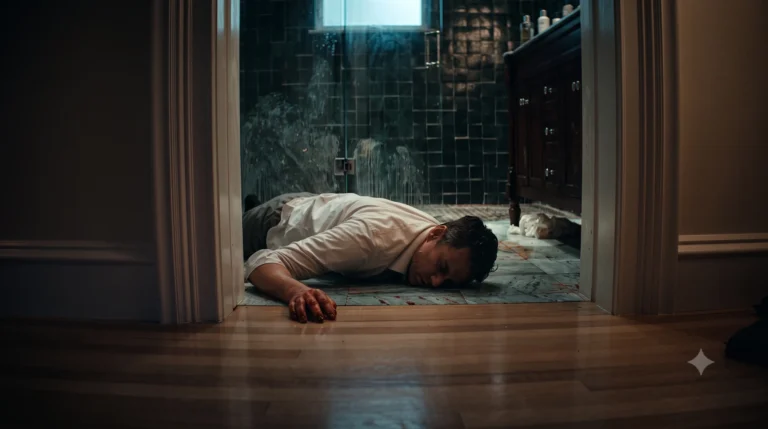
- The Death of Hope: Sugar discovers Henry, the Polyglot traitor, bleeding to death from a self-inflicted wound. The shack is defaced with a terrifying painted warning: “Beware Assimilation”. Sugar realizes Henry was consumed by his environment, highlighting the existential threat that prolonged immersion on Earth poses to the aliens’ fragile psychology. Sugar incinerates the shack, accepting total cosmic isolation.
- The Architecture of Loneliness: Returning to Los Angeles, Sugar finds a parting letter from Ruby. Desperate for connection, he broadcasts a lonely transmission into the void but receives only static. His isolation is visually reinforced when he subtly uses his telekinetic abilities in a local park, a quiet display of grief for his own missing canine, Wiley.
- The Descent into the Underworld: Sugar is hired by Danny Moon to find his brother, Ji. Danny plays Ji’s final, erratic voicemails, which feature the ragged breath of a man sprinting down a stairwell, warning of a pursuer with “crazy eyes”. Sugar’s heightened empathy detects genuine, mortal terror.
- Koreatown Hustles: Retracing Ji’s steps, Sugar learns Ji orchestrated a pharmaceutical heist at St. Anthony’s Hospital. Seeking information in Koreatown, Sugar wagers and wins a high-stakes pool game at Mimi’s Billiards using trick shots from The Hustler. However, his Corvette is stolen outside, leading him to meet Val, a street-smart hustler who extorts him for the car’s return.
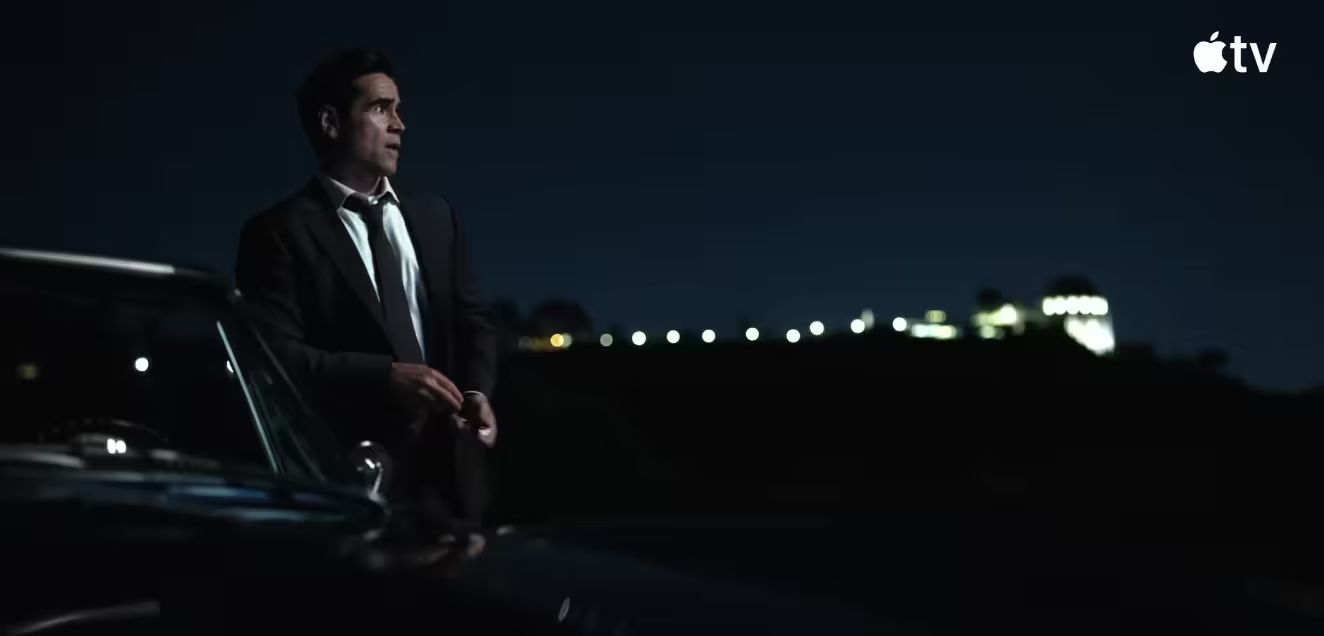
- The True Agenda: The premiere concludes with Sugar purchasing a Hollywood Hills estate historically belonging to Humphrey Bogart. He uses its vantage point to conduct binocular surveillance on Senator Tyson Pavich’s mega-mansion, preparing to hunt the men who hunted his people.
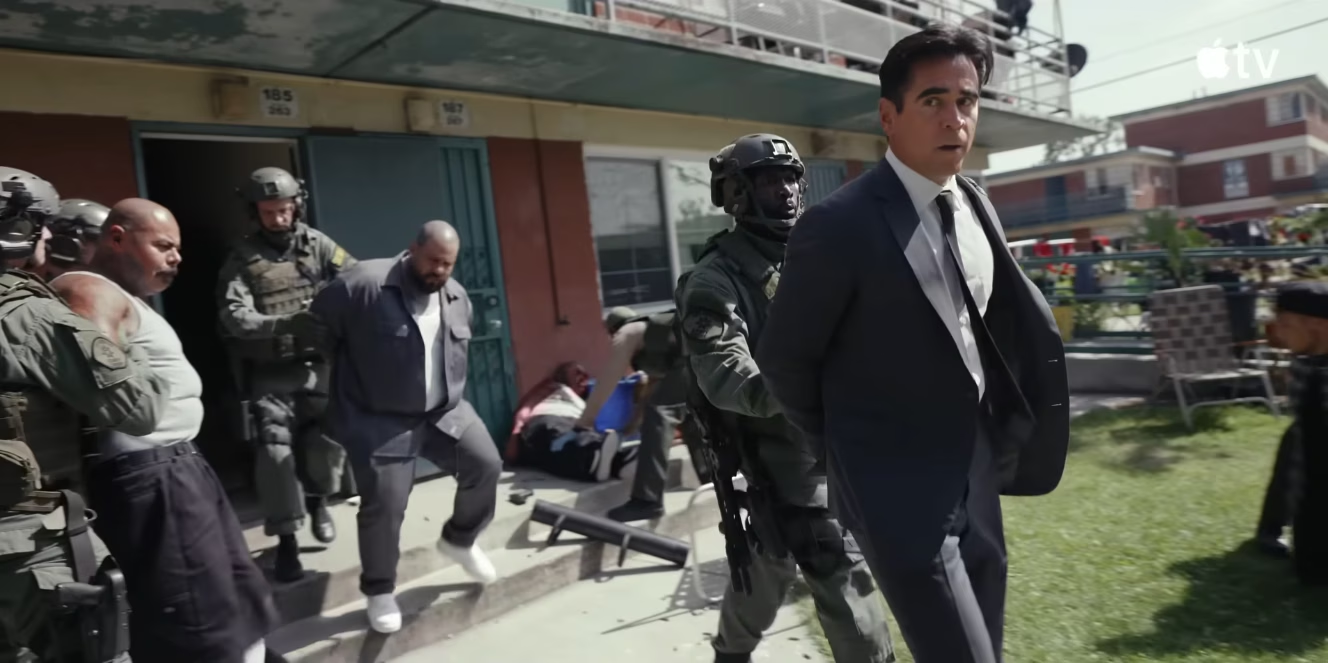
Episode 2: Downer Town
Also directed by Michael Morris, Episode 2 escalates the missing-person case into a deadly conspiracy, drastically increasing the physical threat to Sugar.
- The Morgue Discovery: Sugar visits the city morgue with his friend Tom to examine a dead gang member. In a grim display of investigative pragmatism, Sugar unlocks the deceased man’s phone using facial recognition by holding it up to the corpse’s face. He discovers a photograph of Ji stored on the device, proving the killer was actively hunting Ji but missed.
- The Fifth Floor Secret: Returning to St. Anthony’s Hospital, Sugar collaborates with security guard Blaine to review surveillance footage. He discovers Ji deviated from his escape route, hiding inside a closet in a fifth-floor patient room. The room belonged to Jesus Alejandro (Chuy), a young man who recently died from gunshot wounds. Sugar realizes Ji witnessed something highly dangerous regarding the patient’s death.
- Building a Support System: Recognizing his extreme vulnerability, Sugar officially hires Val as his permanent assistant. Despite her admission of a complicated criminal past, Sugar prioritizes her intelligence and resourcefulness, attempting to build a surrogate family to replace his lost sister and former handler.
- Human Empathy and Escalating Danger: While questioning Jesus Alejandro’s grieving grandmother, Sugar quietly helps her wash dishes, a stark contrast to his tailored appearance that highlights his deep extraterrestrial empathy. Outside, he confronts a mysterious man watching the house. Concurrently, a desperate Danny Moon sinks deeper into debt and begins participating in nighttime robberies with the Ez4s street gang.
- The Lethal Ambush: The episode reaches a shocking climax when the mysterious photographer calls Sugar for a late-night meeting. En route, Sugar is ambushed at an intersection. A motorcycle speeds past, firing directly into his vehicle and leaving a threatening business card on his chest. Sugar is left bleeding out in his car. While his alien biology prevents immediate death, his lack of access to Polyglot medical treatments leaves him in critical, unprecedented danger.
Episode 3 Recap: Alien Blood, Frying Pans, and The “Fire Sale” Conspiracy
You got it. Let’s slow things down and give Episode 3 the massive, hyper-detailed breakdown it deserves before we even touch Episode 4.
This episode, titled “Watch Face,” dials back the explosive action for a moment to quietly build a conspiracy that feels significantly larger with every single scene. It also finally addresses the massive elephant in the room: John Sugar’s complete lack of physical jeopardy.
Here is the deep dive into Episode 3.
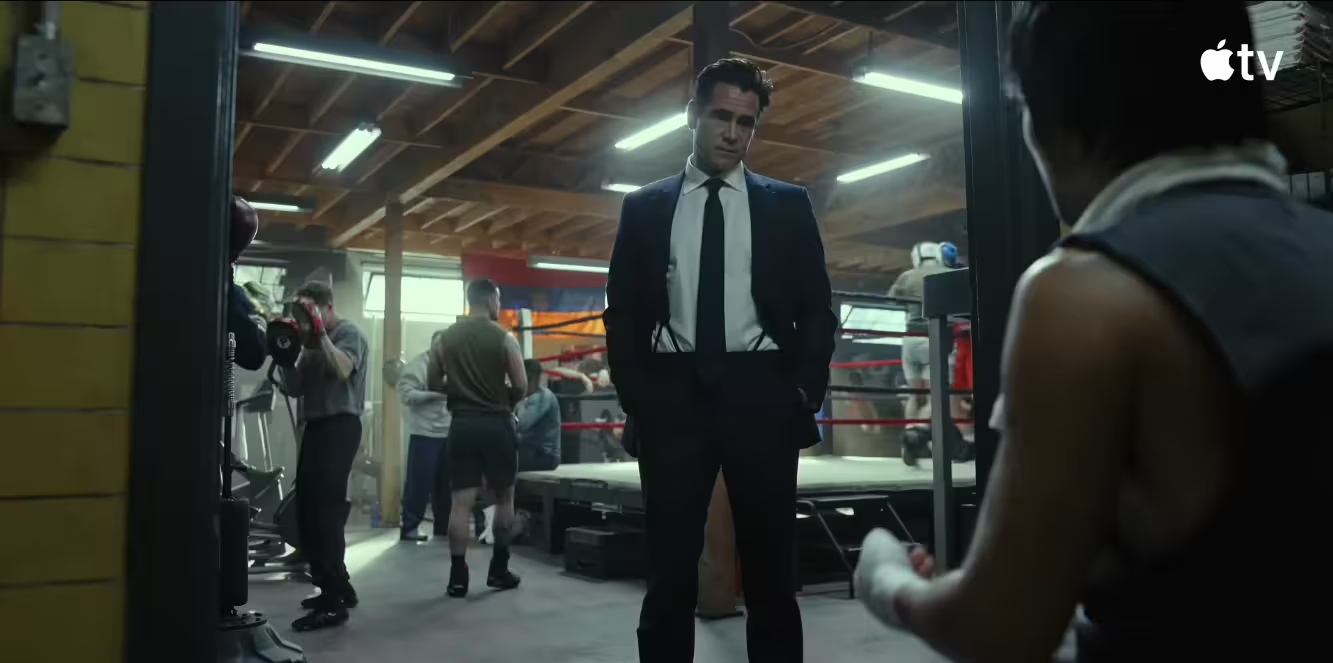
The Ultimate Extraterrestrial Life Hack
The episode picks up immediately after Sugar is brutally gunned down in a drive-by shooting. While a normal neo-noir detective would be fighting for his life in an ICU, Sugar simply wakes up covered in blood, gets into his car, and drives away.
His first stop is meeting Val to hand over the keys to his damaged vehicle. In classic Sugar fashion, he is emotionally drained but still manages to casually ask if the replacement car she arranged for him is stolen.
Once he gets home, the show stops hiding his alien nature. Sugar hooks himself up to an IV bag containing alien blood and performs a literal blood transfusion on himself to repair the incredible damage. During this bizarre medical procedure, the visuals drift into outer space, showing a quiet, emotional moment where Sugar imagines what his life would have been like if he had never stayed on Earth.
The next morning, the transfusion is complete, and he is back on his feet. Val returns his repaired car, visibly shaken by the amount of blood he lost. Sugar tries to end their partnership to protect her, but Val outright refuses to leave. She boldly states that there are plenty of dangerous jobs in Los Angeles that pay far worse than working with him, cementing her loyalty.
Homelessness, Empathy, and “Fire Sale”
Sugar’s investigation takes him to a Los Angeles homeless encampment to find Sandra Wakez, the mother of Jesus. The show continues to present Los Angeles through a lens of deep compassion, as Sugar reflects on how homelessness is often the result of terrible luck rather than a personal failure.
Sandra reveals that her son was a good-hearted person who got mixed up with the EZ4 gang. She drops a massive clue: everything changed because of an operation called “Fire Sale,” which flooded the streets with fentanyl and directly led to Jesus’s death.
The Frying Pan Incident
Meanwhile, Danny Moon is finally getting a break. A promoter named Len Panko offers Danny a massive opportunity to fight in Las Vegas. But the celebration is cut short when his younger brother, G (Ji Moon), calls from a nightclub, terrified and claiming dangerous people are chasing him. Danny also reveals that members of the EZ4 gang have been tailing him, hoping he will lead them to G. Sugar handles this by simply trapping the gang’s vehicle in traffic, preferring intelligence over brute force.
When they reach the crowded nightclub, Sugar hallucinates seeing Peg dancing in the crowd, raising serious questions about his declining mental state. They eventually spot G at the bar with newly dyed blonde hair. When G notices Sugar, he panics and runs outside. Sugar chases him into an alley, but an unknown attacker sneaks up from behind and smashes Sugar across the back of the head with a frying pan, allowing G to vanish once again.
The Brothers’ History and The Poolside Flirtation
Recovering from the frying pan blow at Danny’s apartment, Sugar notices a beautiful painting on the wall. Danny explains that G painted it and that it is a portrait of their late mother, who passed away after immigrating from Korea while their father remained behind. This heartbreaking family history resonates deeply with Sugar, reminding him of his own missing sister and turning the case into a deeply personal mission.
Later, Sugar shares a quiet, flirtatious scene by the hotel swimming pool with Charlotte. She asks him philosophical questions about whether the ends justify the means, mentioning that her group’s intentions are good but everyone has to sign suspicious non-disclosure agreements. She teases him about being difficult to read, and Sugar admits through a voiceover that while his people are discouraged from forming emotional attachments with humans, it is becoming increasingly difficult for him to follow that rule.
The Downertown Raid and The Crooked Watch
A tip from Tom at the dog park reveals that the EZ4 gang operates out of “Downertown” and is led by Jose Alejandro Cortez, aka “Guapo”. Tom notes that Guapo is connected to a larger criminal organization known as the “universe sales,” which links back to Sugar’s old acquaintance, Sergey.
Sugar heads into gang territory and discovers that Guapo is actually the young man on the bicycle from earlier in the season. Sugar mentions “Fire Sale,” and the atmosphere instantly shifts. Guapo takes him to a heavily guarded apartment and delivers the biggest reveal of the episode: neither Jesus nor the Fire Sale operation was his idea. Someone much more powerful is pulling the strings.
Before Guapo can name the mastermind, police sirens erupt, and heavily armed officers storm the building. Guapo aims his gun at Sugar, but they struggle. The cops burst in and unload multiple bullets into Guapo, killing him instantly.
Sugar is briefly handcuffed but released when an officer recognizes his identity. As Sugar surveys the bloody scene, he notices a specific police officer checking his wristwatch. The officer wears the watch facing inward on his wrist—the exact same unique habit of the mysterious man who was secretly tracking G outside the hospital.
The episode ends on a chilling note: the mysterious organization hunting G has heavily infiltrated law enforcement, making the conspiracy far larger than anyone imagined.
Episode 4 Recap: Dirty Badges and The Ultimate Fake-Out
Now that we have survived the alien blood transfusions and frying pan attacks of Episode 3, it is time to dive straight into the heart-pounding chaos of Episode 4. This episode completely flips the script. John Sugar realizes he has been chasing the wrong target this entire time, and the real enemy is far more terrifying than a street-level gang.
Here is the complete, hyper-detailed breakdown of Episode 4.
The Closet Witness (The Flashback)
The episode opens by taking us back in time—several days before the current investigation—to show us exactly why Ji Moon (G) has been running for his life.
Ji sneaks into a hospital, hoping to quietly steal some medication before disappearing again. Trying to avoid detection, he ducks into a patient’s room and hides inside a closet. Unfortunately, he steps directly into an active murder scene. From the cracks of the closet, Ji watches in horror as a man named Vega calmly executes a patient named Chuy.
Vega realizes someone is hiding nearby, opens the closet door, and locks eyes with Ji. Instead of killing him on the spot, Vega quickly snaps a photograph of Ji. Hospital alarms suddenly start blaring, forcing Vega to flee the scene before he can finish the job. That single, terrifying moment changes everything: Ji is the sole surviving witness to a cold-blooded execution.
The Enemy Wears a Badge
Back in the present day, Sugar is being questioned by the police following the chaotic raid that left gang leader Guapo dead. Sugar expected the raid to finally bring him closer to the mastermind, but instead, he makes a chilling discovery.
The man with the inward-facing watch—the man who murdered Chuy—is not just some random hitman. His name is Vega, and he is actually a supervisor inside the Sheriff’s Department. This revelation proves the conspiracy is infinitely deeper than Sugar ever imagined. Vega is a murderer wearing a police badge, which gives him unrestricted access to investigations, evidence rooms, and massive law enforcement resources to cover his tracks.
Sugar and Vega share a wildly tense conversation. Neither man directly exposes the other, but they both clearly understand exactly who they are dealing with. During this exchange, Vega inadvertently confirms one crucial detail: Ji Moon is still alive. The investigation instantly shifts into a desperate race against time, as whoever reaches Ji first will control the truth.
The Most Insane Medical Gamble
Using his authority within the Sheriff’s Department, Vega begins tracking Ji’s movements by manipulating a hospital employee named Hannah McDaniels. Vega is heavily armed and fully prepared to eliminate his loose end.
Fortunately, Sugar pieces the clues together just in time. With Danny’s help, Sugar manages to locate Ji’s hiding place right before Vega arrives. However, there is a massive problem: Ji has just injected himself with drugs, is barely conscious, and absolutely cannot run.
Knowing they stand zero chance of outgunning a corrupt Sheriff’s supervisor and his armed deputies, Sugar executes a desperate, wildly dangerous plan. He deliberately injects Ji with another dose of drugs, intentionally pushing Ji’s body into a state that perfectly mimics a fatal overdose.
Moments later, Vega breaches the building. He checks Ji’s body, assumes the addict accidentally killed himself, and decides the witness is no longer a threat. Believing his problem has solved itself, Vega leaves the scene without investigating further.
The absolute second Vega is gone, Sugar snaps into action and desperately tries to revive Ji. For several agonizing, tense moments, nothing happens. It genuinely looks like Sugar’s insane gamble backfired and he accidentally murdered the man he was trying to save. Then, suddenly, Ji takes a massive breath. He survives, remaining the only living witness who can take down Vega’s corrupt empire.
The Hotel Room Paranoia
In the midst of all this life-or-death drama, Sugar’s romantic subplot with Charlotte takes a highly embarrassing turn.
Sugar spots Charlotte inside his hotel room through a hidden camera and immediately jumps to the worst conclusion: he is convinced she is a corporate spy sent to monitor him. Angry and paranoid, he publicly confronts her. Charlotte is completely taken aback and quickly explains the reality of the situation. She didn’t break into his room for espionage; the hotel staff simply let her inside so she could leave a flirtatious, romantic note hidden inside one of his books.
Sugar returns to his room, opens the book, and finds the note exactly where she said it would be. The misunderstanding leaves Sugar deeply embarrassed. However, considering he just discovered that the local police are actually cartel assassins, his lingering paranoia is completely justified. Trusting anyone right now could be a fatal mistake.
5 Hidden Thematic Details You Completely Missed in Sugar Season 2 Episode 3-4
1. The True, Symbolic Meaning of “Watch Face” Episode 3 is titled “Watch Face,” and while it literally refers to Sheriff Vega wearing his watch facing inward, it carries a much deeper symbolic meaning. A watch face only shows a simple, polished surface, while the complicated, ticking machinery that makes it work remains completely hidden underneath. This perfectly mirrors every character in the show—especially Sugar—who presents a normal human exterior while hiding an incredibly complex alien reality beneath the surface.
2. Alien Music vs. Earth Music While walking through the crowded nightclub looking for G, Sugar gives us a fascinating glimpse into his extraterrestrial culture. He reflects through a voiceover that the music from his home planet is incredibly simple compared to the endless, chaotic variety of Earth’s music. It is a quiet moment that reminds us how much he genuinely loves and studies humanity, despite all of its flaws and violence.
3. The Tragic Connection to Sugar’s Sister Why is Sugar going to such extreme, deadly lengths to save a drug-addicted runaway like G? The show finally gives us the emotional core of his motivation. Sugar reflects on his own missing sister, admitting that while they often argued and drove each other crazy, he would do absolutely anything to have her back. This personal loss explains why he is so fiercely dedicated to reuniting Danny and G before it is too late.
4. Tony Dalton as the Ultimate Villain The terrifying, crooked Sheriff’s supervisor who executes Chuy and hunts G isn’t just a random actor. The transcript explicitly points out that Ray Vega is played by the brilliant Tony Dalton (famous for playing Lalo Salamanca). If a heavy-hitter like Dalton is playing the corrupt cop pulling the strings behind “Fire Sale,” it guarantees that Vega is going to be a massive, terrifying antagonist moving forward.
5. The Digital Erasure of “Fire Sale” While investigating the phrase “Fire Sale,” Sugar actually attempts to search for it online. The terrifying result? Absolutely nothing appears. It is almost as though someone with immense power has completely erased every single trace of the operation from public records, confirming that the conspiracy reaches the highest levels of digital and institutional control.
Episode 5 : Unknowns
Episode 5 the most action-packed hour of 2026 television? Absolutely not. It is actually a slow, methodical, deeply uncomfortable lie. But watching John Sugar literally punch a corrupt sheriff in the face to sell a fake death is exactly why I keep my Apple TV+ subscription active.
I sat on my couch watching that opening morgue sequence in total silence. I actually paused the episode to check my phone because I genuinely thought the writers had lost their minds and permanently killed off Ji-Moon.
They didn’t. But the truth is infinitely more complicated.
The Art of the Fake Fentanyl Overdose
Sugar didn’t just save Ji-Moon; he manufactured a ghost. To convince the violently corrupt Sheriff Vega that the threat was neutralized, Sugar intentionally injected Ji-Moon with a fatal overdose to stop his heart. He let Vega see the “body,” waited for him to leave, and then miraculously revived Ji-Moon before brain death set in.
It is an incredibly reckless, morally bankrupt plan.
But pretending a guy is dead for five minutes isn’t enough to fool a guy like Vega. So, Sugar commits to the bit. He stashes Ji-Moon at the “Open Road” remote rehabilitation facility under a completely fake identity. This is a brilliant two-for-one: Ji-Moon finally gets treatment for his severe addiction, and he is completely off the grid.
Sugar even goes through the trouble of forging a death certificate citing a fentanyl overdose, adding the morbid detail that the family requested the remains be shipped back to Korea.
The Performance Art of Punching a Cop
Vega might be brutal. But he is not stupid.
Knowing Vega will eventually start asking questions, Sugar walks directly into one of Vega’s parties and just completely clocks him in the jaw. It looks like raw, unhinged grief over Ji-Moon’s death.
Actually, it is pure performance art. Sugar needs Vega to believe he is emotionally devastated to reinforce the illusion.
But Sugar made a sloppy error. He left a used Narcan spray at the ranch where he revived Ji-Moon. When he sneaks back to retrieve the damning evidence, he accidentally knocks a mounted animal head off the wall and hastily puts it back.
A tiny mistake.
A fatal one.
By the end of the episode, we see Vega return to that exact cabin, and his eyes lock directly onto that mounted animal head. The perfect lie is already cracking.
The “Fire Sale” in Downertown
While Sugar is playing a high-stakes game of hide-and-seek, the actual conspiracy is mutating into something terrifying.
Tom Flyberg drops a massive piece of intelligence: the price of fentanyl in Downertown has plummeted by 90%. It is a literal fire sale. Someone with massive capital is flooding Sergey’s territory with cheap drugs to completely buy out the market, and Vega is actively helping them do it.
Thankfully, not everything is pure misery. Sugar quietly visits Ji-Moon’s brother, Dany, to tell him the truth so he doesn’t suffer. We even get a rare moment of relief when Dany—despite his recent restaurant brawl—is handed a fighting contract in Las Vegas by Nestor.
The Succulent Infiltration and a Side of Cheeseburgers
Look. In the current 2026 TV era where every sci-fi detective show feels like a sterile, over-lit greenscreen, Sugar dares to be genuinely weird.
Sugar needs to reach the elusive Senator Pavich, so he targets a connected professor, Dr. Stanley Ondache. He breaks into the man’s house and finds deeply unsettling drawings covered in circles and complex equations. I initially thought this subplot was going to drag, but Sugar’s approach is hilariously unhinged. He memorizes facts about drought-resistant succulents just to stage a “coincidental” meet-cute with Stanley in a botanical garden.
It is an elaborate smokescreen to make Vega think Sugar has moved on.
But the real horror of this episode has nothing to do with drug cartels. It is pure, suffocating isolation. Ever since the rest of his alien species abandoned Earth last season, Sugar has been broadcasting messages into deep space.
Complete silence. No one is answering.
He calls Melanie just to hear a friendly voice, and she completely brushes him off because she is too busy. You can visibly see his soul fracture. And then comes the cheeseburger. He stares at a perfectly healthy meal and jokes about suddenly craving greasy fast food.
It plays like a quick visual gag.
Actually, it is a massive red flag.
Peg practically spells it out: he is assimilating. His tastes are shifting, his emotions are bleeding through, and he is rapidly losing whatever alien identity he had left. He is becoming human.
A Dead Mother and the Missing Evidence
Is Chewy’s missing phone the key to destroying Vega? Yes. But getting it requires a devastating reality check.
Val theorizes that Chewy recorded hard evidence before he died. Sugar tracks down Chewy’s mother, Sandra, hoping she has the device. I fully expected a tense interrogation scene where a grieving mother leverages the phone for cash or protection.
Wow, was I wrong.
She is already dead.
Sugar finds her lifeless body—just another nameless casualty swallowed up by the Downertown fentanyl fire sale. He kneels next to her corpse, and for a brief second, the slick Hollywood noir facade drops. It is just bleak, ugly grief. But inside her bag? He finds Chewy’s phone. The exact weapon he needs to nuke Vega’s entire operation.
The “Unknown” Mic-Drop
Then Charlotte returns.
After all the paranoia and bloodshed, she shows up extremely guarded. Sugar drops the act, explains himself, and a simple dinner snowballs into an intense, all-night conversation. He actually looks genuinely, radiantly happy for the first time in weeks.
But happiness is a trap.
The episode doesn’t end on a warm, romantic high note. It violently cuts to the cold, unforgiving morgue. Rows of cardboard boxes sit on metal shelves, filled with the unclaimed ashes of people who died with no family.
They are simply labeled “Unknown”.
Sugar is staring down his own future. He is forming real connections on Earth, but in doing so, he is becoming a total unknown to his own kind.
If he stays on this planet, he dies in one of those boxes.
Episode 6 Breakdown: Why Sugar’s Mercy Ruined Everything
Is Sugar Season 2 Episode 6 worth the hype? Absolutely, if you enjoy watching a protagonist systematically destroy his own moral compass. I spent my Thursday night screaming at my screen because this episode—titled “Cautionary Tale”—trades explosive action for suffocating psychological torture.
Nobody important dies, no massive global conspiracy is solved, and yet the entire foundation of the show completely crumbles.
The Ghost of Peggy and Earth’s Gravity
We finally go back eleven years to Sugar’s very first Earth assignment.
The mysterious woman he keeps seeing isn’t a supernatural ghost or a cheap hallucination. Her name is Peggy. She was an alien observer sent to quietly study humanity, but she made the fatal mistake of actually caring. She got involved. She broke the rules. And when Sugar was sent to drag her back home, she made a horrifying choice.
She committed suicide.
Peggy would literally rather die than abandon the human emotions she discovered. It is a remarkably heavy, bleak revelation. She represents Sugar’s own rapidly decaying conscience. Every single time Sugar bends a rule this season, Peggy’s memory is right there, silently reminding him that this road only ends in a body bag.
Tom is Useless and the Legal System is a Joke
So, what does Sugar do with this crushing psychological baggage? He tries to play by the rules one last time.
Ji Moon is getting increasingly restless in rehab, desperate to stop hiding. While trying to manage him, Sugar hits the jackpot. He finds Chuy’s hidden phone stashed in Ji’s belongings, loaded with raw video evidence exposing Ray Vega’s criminal empire.
Sugar hands this silver bullet straight to Tom in law enforcement.
And Tom completely fumbles it.
He looks at the video and dismisses it, claiming it isn’t enough for a rock-solid conviction. Then, Tom does something incredibly lazy and deeply corrupt. He essentially implies that since the justice system can’t touch Vega, Sugar should just eliminate the threat himself.
State of television in 2026: just outsource your legal executions to a depressed, rule-breaking private detective.
The Dog That Saved a Crime Boss
Sugar actually listens to Tom’s terrible advice. He sneaks into Ray Vega’s house holding a gun, completely undetected. There are no witnesses, no guards, no elaborate security systems. It is the perfect, clean assassination setup.
But wait. What stops our highly advanced, supposedly objective alien observer from pulling the trigger?
A dog.
Vega is just sitting there peacefully with his pet. And suddenly, Sugar’s entire resolve melts. He looks at this ruthless, violent criminal and briefly sees an “ordinary human being”.
Absolutely pathetic.
He literally walks away without firing a single shot. Sugar preserves his precious moral code, but he completely ignores the reality of his situation. And the kicker? Vega eventually confronts him and explicitly tells Sugar to his face that he made a massive mistake. “You should have taken the shot,” he says.
It isn’t just dialogue. It is the show actively mocking its own protagonist for his catastrophic mercy. Vega surviving means Vega gets to strike back.
Breaking The Golden Rule With Charlotte
If sparing a crime lord wasn’t bad enough, Sugar immediately decides to destroy whatever is left of his professional boundaries.
He goes straight to Charlotte.
They finally spend the night together. Look, the attraction was painfully obvious all season, but this isn’t just some cheap romance subplot inserted for network ratings. This is Sugar consciously, willingly crossing the exact emotional line that his species is strictly forbidden from crossing.
Peggy’s warning echoes through this entire scene. You don’t lose yourself all at once through one massive, dramatic event. You drift away through tiny, seemingly harmless emotional compromises.
By sleeping with Charlotte, Sugar isn’t just being a compromised detective. He is actively walking down the exact same terrifying path that led Peggy to her death. He is choosing humanity over his mission, and the fallout is going to be incredibly messy.
Vega’s Brutal Ultimatum and The Price of Mercy
While Sugar was entirely distracted breaking alien intimacy protocols, Ray Vega was actually doing his homework.
Vega didn’t just sit around waiting to be arrested. He dug deep and finally uncovered undeniable proof that Ji Moon survived the hospital attack and that Sugar has been hiding him this entire time. But Vega is a seasoned predator. He doesn’t just attack Sugar in a dark alley.
He prepares insurance.
As Sugar leaves Charlotte’s place, he discovers Vega waiting for him. Vega has kidnapped Danny Moon. He lays out a painfully simple, devastating demand: surrender Ji, or Danny dies. The balance of power is completely shattered.
Then comes the most infuriating piece of dialogue in the entire 2026 television season.
Sugar actually confesses to Vega that he had him in his sights with a gun earlier that very day. Why would you say that? Sugar is practically begging for moral validation from a crime boss. He wants reassurance that his mercy was the right call.
Vega just twists the knife.
He looks Sugar in the eye and coldly repeats his earlier warning: You should have killed me when you had the chance.
The Mirror of Peggy (The Mic-Drop Exit)
Sugar’s desperate need to keep his hands clean just placed innocent people in a literal meat grinder.
Peggy’s story isn’t just a tragic flashback anymore. It is a terrifying mirror reflecting Sugar’s exact current reality. She thought she could balance her objective duty with human compassion until the two became entirely impossible to separate. Now, Sugar is drowning in the exact same trap.
Danny is a hostage. Ji is an exposed target. Vega holds absolutely all the cards.
Sugar wanted to play the hero without getting his soul dirty. Wake up. This is Earth. You don’t get to keep your innocence and win the game.
The “Contamination” Fear and Senator Pavich’s Shadow
We got so wrapped up in Sugar’s pathetic love life that we almost forgot he is literally an alien.
The episode subtly introduces a much darker psychological horror: Sugar is experiencing a growing fear of “contamination”. He isn’t just worried about losing his morals; he is terrified that Earth is physically and mentally infecting him. His unique alien abilities and past are becoming increasingly critical as the mystery deepens.
And this ties directly into the actual plot we keep ignoring. Senator Pavich.
While Sugar is playing a messy game of cat-and-mouse with Vega, the dangerous conspiracy surrounding Senator Pavich is quietly expanding. There is a very real implication that Pavich’s organization has been planning something significantly bigger all along. Several hidden players are finally preparing to step out of the shadows.
The True Motive Behind Vega’s Kidnapping
Look at Vega’s impossible ultimatum again.
Kidnapping Danny Moon to force Sugar into surrendering Ji seems like a standard mobster tactic. But is it?
There is a highly disturbing theory suggested by the episode’s closing moments. Vega’s extreme pressure might not be about Ji Moon at all. The entire hostage situation might be a deliberate trap designed to force Sugar to use his extraterrestrial abilities, completely exposing his true nature to the world.
Vega isn’t just testing Sugar’s morality. He is testing his biology.
With only two episodes left in the season, this impossible choice is guaranteed to trigger an explosive, bloody finale filled with major betrayals.
No more playing detective. Sugar is going to have to stop acting human if he wants to keep the people he loves alive.
Episode 7: Just Destroyed Its Own Hero (And Why That Cold Open Was Pure Malice)
I spent my Thursday night staring at my TV screen, cold coffee in hand, genuinely believing Apple TV’s sci-fi noir was going to let Colin Farrell’s impeccably tailored alien talk his way out of another corner. For two entire seasons, John Sugar has been the patron saint of pacifism—a guy who will literally buy an enforcer a sandwich rather than break his jaw.
Then “What Else Can You Do?” happened.
And wow. We were all completely, embarrassingly wrong.
That Desert Cold Open: An Arrogant Middle Finger to Pacifism
Forget slow-burn setups. Episode 7 opens on a dead-silent, sun-bleached desert road littered with the kind of debris that tells you someone just had a very bad afternoon: a discarded golf club, shattered windshield glass, and twisted metal.
Then the camera pans to an overturned vehicle. Out crawls John Sugar.
He isn’t fixing his tie or delivering a smooth Humphrey Bogart voiceover. He’s bruised, bleeding, and barely standing on his own two feet. And then he drops a narration line that instantly executes his own moral code:
“I tried. I tried every possible solution. I put everything on the table. But some people only understand violence.”
Literally chilling.
By forcing us to stare at the bloody aftermath in the first sixty seconds, the show completely discards the cheap suspense of whether Sugar survives. We already know he walks away. Instead, the writers trap us in a forty-five-minute psychological autopsy, forcing us to ask: What on Earth broke John Sugar?
Why Sugar Refuses to Trust “The System” (And Why Tom Was Wrong)
When we jump back two days, Sugar looks mentally cooked. He sits there obsessively drawing that bizarre four-circle symbol on a scrap of paper—a subtle reminder that he’s juggling way too many nightmares at once:
- Danny is rotting in a jail cell as Ray Vega’s ultimate bargaining chip.
- Ji is stashed in hiding with Val.
- The Fire Sale syndicate is breathing down his neck.
- His missing sister, Djen, is still a ghost.
His handler, Tom, offers the classic cop-out advice: Hand the evidence to the authorities. Let the legal system crush Ray Vega.
But here’s the thing. Sugar immediately trashes the idea. Why? Because he understands a brutal truth that standard Hollywood detectives always ignore—broken systems get innocent people killed. One wrong move through official channels, and Vega turns Danny into collateral damage.
So instead of calling the cops, Sugar walks straight back into the one place he swore he’d never revisit: the Los Angeles Russian underworld.
The Jailhouse Sit-Down and Sergey’s “Fire Sale” Leverage
Look, that prison scene between Sugar and Danny is easily one of the best-acted five minutes of 2026 television.
It starts with bitter humor—Danny joking that he has to be the worst private investigator client in California history—but the underlying dread is suffocating. Danny isn’t even scared for his own life. He is terrified for Ji. And before Sugar can even sketch out his counter-offensive, the guards yank Danny away, leaving the sentence hanging in the air.
Desperate, Sugar sets up a sit-down with Sergey.
Sergey isn’t just an informant; he represents the favors-and-blood currency of Sugar’s dark past. But Sergey respects Sugar for one simple reason: Sugar actually keeps his word. They cut a classic underworld handshake deal—Sergey agrees to squeeze Ray Vega using the massive criminal weight of the Fire Sale organization.
For a second—one fleeting, naive second—it looks like Sugar won the chess match without firing a single bullet.
Room Service, Ice Cream, and the Real Monster: “Assimilation”
With Vega seemingly backed into a corner by Russian leverage, Sugar drops his guard. And what follows is the most deceptively dangerous scene of the season: room service with Charlotte.
They eat ice cream. They talk about music. Sugar actually drops his armor and speaks about his missing sister, Djen, with real, unfiltered human sorrow.
It feels like a cozy indie movie—and that is exactly why it’s terrifying.
We’ve spent two seasons hearing about Assimilation like it’s some clinical alien disease. But Episode 7 finally shows us the real symptoms:
Assimilation isn’t eating pizza or enjoying old movies. It’s reaching the point where ordinary human comfort becomes more important than your mission.
Sugar gets so drunk on five minutes of normal human peace that he forgets he’s playing a blood game. And then the universe makes him pay for it.
The Plane Crash That Burned Sugar’s Playbook to Ash
You know that leverage Sergey promised? It vaporizes in mid-air.
Sergey’s plane goes down in a fatal crash. Accident? Hit job? It doesn’t matter. The one piece of weight Sugar had over Ray Vega is suddenly smoking crater ash.
Even worse—we discover Sergey wasn’t even the real boss anymore. His son, Diego, secretly controls Fire Sale. Sugar’s entire strategy wasn’t just broken; it was built on an empire of sand.
Why SUGAR Season 2 Episode 7 Just Destroyed Its Own Hero (Part 2: The Desert Reckoning)
Let’s pick up right where we left off—because if you thought John Sugar losing his Russian underworld leverage was the bottom of the barrel, “What Else Can You Do?” was just warming up.
With Sergey dead in a plane crash and Fire Sale controlled by an arrogant kid who doesn’t care about old-school handshakes, peaceful negotiation is officially dead on arrival. And this is exactly where Colin Farrell’s alien detective is forced to make the darkest pivot of his entire existence on Earth.
Why Ray Vega Refused a Free Ticket Out of Los Angeles
Before we get to the blood, let’s talk about the sheer, blinding arrogance of Ray Vega.
Even with his back against the wall, Sugar tries one last time to save a human life—even a piece of trash like Vega. He sits across from him and puts a clean, miraculous escape package on the table: new offshore identities, clean cash, and a one-way ticket out of the country for Vega and his entire family.
All Vega had to do was hand over Danny and walk away.
But what does Vega do? He scoffs.
Why? Because Vega looked at Sugar’s history of buying sandwiches for thugs and pulling punches, and he misread basic human decency as weakness. Vega genuinely believed Sugar was too soft, too morally paralyzed, and too compassionate to ever pull a trigger.
That single miscalculation signed his death warrant.
The Surveillance Trap: Turning Vega’s Pride Into a Weapon
Here is where the writing in Episode 7 elevates from a standard crime procedural to elite psychological warfare.
Earlier in the season, Tom casually warned Sugar that hostile ears would be listening to his conversations. Most TV detectives would sweep the room, find the bug, and crush it under a heel.
Sugar does the exact opposite.
He realizes Vega has bugged him—and instead of destroying the surveillance, he turns it into a stage:
- The Performance: Sugar, Val, and Ji stage a deliberate, chaotic audio drama right in front of the hidden microphones.
- The Fake Panic: Val pretends to lose control of the situation, making it sound like their safehouse is falling apart.
- The Bait: Ji makes a staged video call, offering himself up as a voluntary trade in exchange for Danny’s life.
Vega bites on the hook immediately. Because Vega believes he is secretly eavesdropping on a private, desperate conversation, he never questions whether the intel is authentic. He walks straight into the desert trap blinded by his own ego.
That Sleeper Hold: Why The Desert Fight Felt Sickening
Which brings us right back to that opening scene in the desert.
Vega arrives at the remote exchange coordinates expecting to collect a helpless Ji. Instead, the drop zone is completely empty. Confused, he gets back into his vehicle—only to realize Danny is missing from the backseat.
Sitting in his place is John Sugar.
What happens next is not a slick, choreographed Marvel fight scene. It is brutal, clumsy, and terrifyingly human. Sugar lunges from the backseat while Vega is speeding down the dirt road, locking him in a vicious sleeper hold. The car careens out of control, rolling over and smashing into the twisted wreckage we saw in the first sixty seconds of the episode.
When Sugar finally kills Ray Vega in the dirt, there is zero cinematic glory. The camera doesn’t give us a triumphant hero shot. It shows two exhausted, bleeding men—one dead, and one who just permanently crossed a moral boundary he spent two seasons defending.
Literally sickening.
The “Four Circles” Twist: Stanley Just Rewrote The Show’s Mythology
While Sugar is dealing with the immediate body count in the desert, Stanley drops a narrative bomb that completely shatters our understanding of the overarching conspiracy: the actual meaning behind the Four Circle Symbol.
We spent the entire season assuming those four interlocking circles represented a sinister alien syndicate or an underground human-trafficking cult.
We were wrong.
Stanley reveals that the symbol represents a revolutionary, highly advanced technology designed to repair Earth’s dying climate. The shadowy figures pulling the strings aren’t just cartoon gangsters. They are powerful operatives fighting over geo-engineering tech that could either save the planet or enslave it.
Not every shadow in this show hides a villain. Some of them belong to fanatics who genuinely believe they are saving humanity—and that makes Sugar’s personal moral crisis look microscopic by comparison.
What Did John Sugar Actually Win? (The Phantom Victory)
By killing Ray Vega and wrapping up the kidnapping investigation one episode early, Apple TV just pulled off a brilliant structural illusion.
On paper? Sugar won. Danny and Ji are alive, safe, and reunited. The immediate threat is buried in the sand.
But look at the actual scoreboard heading into next week’s finale:
- Sugar still has zero concrete answers about his missing sister, Djen.
- He is terrified that his alien identity is dissolving into human assimilation.
- He just murdered a man with his bare hands, destroying the one rule that separated him from the monsters he hunts.
“What Else Can You Do?” isn’t an action episode. It is a funeral for John Sugar’s soul. He saved the clients, but he lost himself.
And honestly? If you think he’s walking away from next week’s finale with clean hands or a happy ending, you’re watching the wrong show. Save your optimism—this guy is already a ghost.
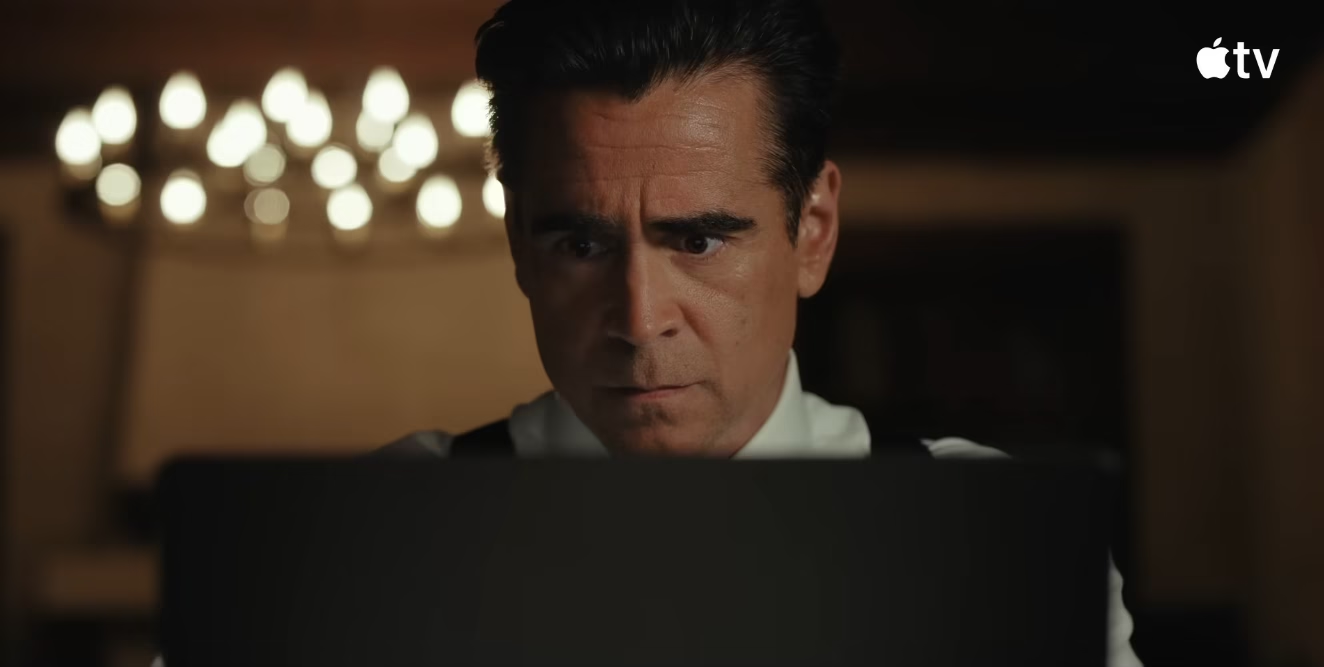
Comprehensive Audience Q&A
The intricate lore, sudden genre shifts, and complex character motivations have generated a massive volume of audience inquiries. Below is an exhaustive breakdown of the most pervasive questions surrounding the series, updated to reflect the events of Episode 2.
Q: What exactly does “Beware Assimilation” mean, and why is it dangerous? A: “Assimilation” is the ultimate psychological and biological threat to the Polyglot species. The aliens are highly empathetic beings tasked with observation, but their culture demands strict emotional detachment. Prolonged exposure to human suffering causes their extraterrestrial psychology to fracture. Henry’s suicide is the definitive proof that assimilation is a fatal condition. Remaining on Earth puts Sugar at severe risk of succumbing to the darkest aspects of the human condition.
Q: Did Sugar survive the shooting at the end of Episode 2, and how does his alien biology function? A: Sugar did not die immediately from the gunshot wound. The series has established that his alien biology includes an accelerated metabolism, enhanced durability, rapid healing, and minor telekinetic abilities. While the ambush would be fatal to a human, his extraterrestrial nature prevents instant death. However, because he is stranded on Earth without the medical support of his Polyglot team, his recovery process is highly uncertain and extremely dangerous.
Q: Why did Sugar hire Val as his assistant despite her criminal background? A: Sugar possesses an acute extraterrestrial ability to read human character. He is not looking for a clean criminal record; he values intelligence, resourcefulness, and loyalty. Following the departure of his handler, Ruby, and the trauma of losing his sister, Djen, Sugar is actively attempting to build a surrogate human family to anchor him to reality.
Q: Will Ruby, Melanie, or the other aliens return in Season 2? A: The Polyglot presence on Earth was permanently compromised, triggering an emergency mass evacuation. Ruby left Earth with the rest of their kind. While she left Sugar a heartfelt letter, the physical return of any Polyglots is highly improbable due to their strict evasion protocols. Melanie is also absent, leaving Sugar entirely isolated.
Q: Who is Senator Tyson Pavich, and what is his connection to the aliens? A: Senator Pavich is a highly influential Washington powerbroker and the father of Ryan Pavich, the serial killer neutralized in Season 1. Sugar uncovered that the Pavich family and their elite associates discovered the Polyglots’ secret and actively captured them to study their biology and exploit their technology.
Q: Who is Ray Vega, and why is he a threat? A: Lieutenant Ray Vega is a highly decorated officer in the Los Angeles County Sheriff’s Department and the primary antagonist of Season 2. Vega is a charismatic, street-level predator deeply embedded in the criminal conspiracy surrounding Ji Moon’s disappearance. He is intellectually sharp and physically imposing, matching Sugar’s investigative prowess at every turn.
Q: Did Henry actually kill Sugar’s sister, Djen? A: The exact fate of Djen remains ambiguous. Sugar learned Henry was complicit in her abduction and present in Ryan Pavich’s torture chamber. However, Henry committed suicide before revealing whether Djen was executed, experimented upon, or relocated. This uncertainty ensures the search for Djen remains the emotional engine of the series.
Q: What is the significance of the “S.P.A.C.E.” text message? A: The mysterious package and text message from “S.P.A.C.E.” introduces a powerful new faction. Prevailing theories suggest this acronym belongs to a clandestine government counter-intelligence agency monitoring extraterrestrial activity, potentially attempting to recruit or eliminate Sugar.
Q: Why are classic Hollywood movies so integral to the plot? A: The relentless interpolation of classic film footage is not merely an aesthetic gimmick; it is a fundamental aspect of the lore. As an alien observer, cinema was the primary lens through which Sugar learned to mimic human behavior, speech patterns, and morality. As his psychological state degrades, these cinematic touchstones serve as both a coping mechanism and a structural guide for his actions.
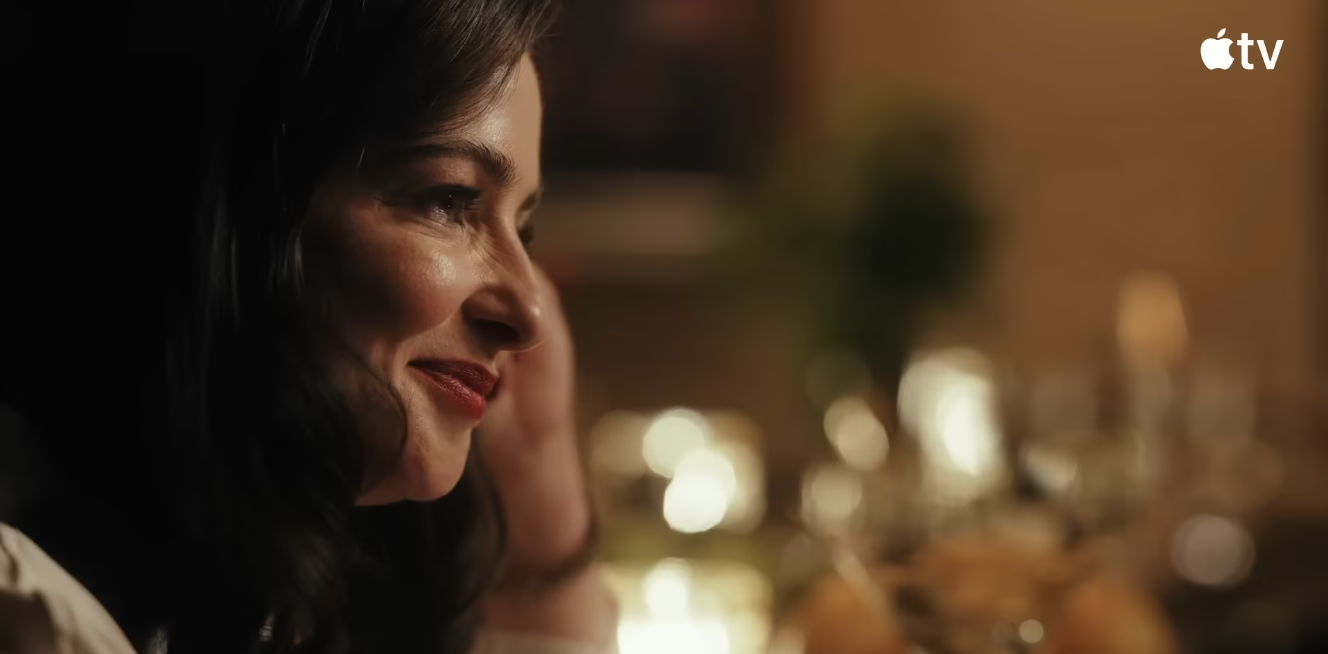
Advanced Lore, Secrets, and Analytical Theories
As the narrative of Season 2 unfolds, a myriad of profound theories and hidden thematic secrets have emerged, woven directly into the meticulous production design and dialogue of the series.
The “Assimilation as Biological Failure” Theory
The core theoretical framework for Season 2 revolves around the concept of “assimilation.” Audiences initially believed this merely meant the aliens would “forget” their mission. However, advanced analysis suggests assimilation is a fatal biological transition. The Polyglots’ physical forms are highly unstable and entirely reliant on emotional detachment. Henry’s suicide is the definitive proof that when an alien fully internalizes human trauma, guilt, and despair, their alien biology rejects the psychological burden, leading to catastrophic mental and physical collapse. Sugar’s obsessive need to work cases is his only defense mechanism against his biology fatally adapting to human sorrow.
The True Identity of Charlotte Fischer
Laura Donnelly’s character, Charlotte, has ignited intense theoretical debate. While she operates seamlessly within the narrative space of a noir love interest, the overarching paranoia of the series suggests a highly deceptive truth. A prevailing theory posits that Charlotte is not an innocent bystander, but an elite operative deployed by the “S.P.A.C.E.” organization to monitor, seduce, and evaluate Sugar. Her initial claim of recognizing him from a “conference in Zurich” is widely interpreted as a coded interrogation designed to test his cover identity.
The Bogart Motif and the Inevitability of Doom
The acquisition of the Humphrey Bogart estate is a layered cinematic secret. By physically inhabiting Bogart’s former space, Sugar is attempting to mantle the emotional invulnerability of the cynical private detectives he studied in classic cinema. However, the specific film Sugar is shown watching at the end of the premiere—The Harder They Fall (Bogart’s final film)—is a profound Easter egg. The film explores the brutal, inherently corrupt world of boxing and the inevitable destruction of innocence. This directly mirrors the Danny and Ji Moon storyline, tragically foreshadowing that despite Sugar’s superhuman efforts, the boxing underworld will demand a lethal toll.
The Grand Human Conspiracy: S.P.A.C.E. vs. Pavich
The most expansive theory regarding the overarching plot connects the political power of Senator Tyson Pavich with the mysterious acronym S.P.A.C.E. It is highly probable that elements of the human government have been aware of the Polyglots for decades, operating a shadow agency designed to capture them and reverse-engineer their technology. Ryan Pavich’s basement torture chamber was likely not the isolated work of a serial killer, but an unsanctioned, horrific offshoot of a larger, state-sponsored program. Sugar’s dual mission will inevitably force him into a collision course with this agency, pushing his moral compass—and his fragile alien biology—to the absolute breaking point.
The “Dark Forest” Societal Metaphor
As the season progresses, the title of Episode 4, “Dark Forest,” draws comparisons to famed sci-fi sociology. Theorists argue this refers to the paranoid sociology of the Soviet-era-style surveillance state. In a “Dark Forest,” every entity must remain perfectly silent and hidden, because revealing yourself invites immediate destruction by a stronger predator. This perfectly encapsulates life in Sugar; characters must hide their true selves to survive. The moment anyone speaks their truth or reveals their secret, the state—acting as the ultimate apex predator—moves in for the kill.
The Ensemble: Cast and Characters of Season 2
The second season features a massive overhaul of the ensemble cast. With the departure of the Polyglots, the series introduces a highly acclaimed roster of actors designed to challenge Sugar’s physical and emotional limits.
| Actor | Character Name | Narrative Function and Thematic Role |
| Colin Farrell | John Sugar | The titular private investigator and the last extraterrestrial Polyglot on Earth. Battling cosmic isolation, he attempts to build a new human support system while surviving targeted assassination attempts. |
| Jin Ha | Danny Moon | An up-and-coming Korean-American boxer. Desperate to save his brother and sinking into severe financial debt, he gets dangerously involved in nighttime robberies with local street gangs. |
| Raymond Lee | Ji-Seok (Ji) Moon | Danny’s troubled older brother. A severe drug addict whose hospital heist inadvertently exposed him to a massive, lethal criminal conspiracy, forcing him into hiding. |
| Tony Dalton | Lt. Ray Vega | A dangerously charismatic, highly decorated officer in the LA County Sheriff’s Department. Operating as a primary antagonist, Vega actively weaponizes his authority to block Sugar’s investigation. |
| Sasha Calle | Val | A street-smart ex-con and hustler. Recognizing her immense resourcefulness, Sugar officially hires her as his permanent assistant to replace his former handler, Ruby. |
| Laura Donnelly | Charlotte Fischer | A sophisticated, enigmatic resident of the Hotel Del Corazon. Presenting as a classic noir femme fatale, she shares undeniable chemistry with Sugar while keeping her true motives obscured. |
| Shea Whigham | Tom Flyberg | A high-level government agency employee. His exact role is shrouded in secrecy, but he represents the institutional forces monitoring Sugar. |
Platforms, Release Dates, and Episode Guide
Apple TV+ has maintained its premium release strategy for Sugar Season 2. By rejecting the binge-release model in favor of a weekly rollout, the platform ensures that the intricate mysteries and cinematic references can be thoroughly dissected by the audience.
The second season consists of eight episodes. It is available to stream globally on Apple TV+, with new episodes dropping at 12:00 a.m. PT / 3:00 a.m. ET.
| Episode Number | Episode Title | Director | Writer | Global Release Date |
| Season 2, Episode 1 | Home Away from Home | Michael Morris | Sam Catlin | June 19, 2026 |
| Season 2, Episode 2 | Downer Town | Michael Morris | Gary Tieche | June 26, 2026 |
| Season 2, Episode 3 | Watch Face | Amat Escalante | Christopher C. Rogers | July 3, 2026 |
| Season 2, Episode 4 | Off 15 | Amat Escalante | Jonny Gomez | July 10, 2026 |
| Season 2, Episode 5 | TBA | TBA | Michael A. Bhim | July 17, 2026 |
| Season 2, Episode 6 | TBA | TBA | Megan Ritchie | July 24, 2026 |
| Season 2, Episode 7 | TBA | TBA | Sam Alper & C. Rogers | July 31, 2026 |
| Season 2, Episode 8 | TBA | TBA | Sam Catlin | August 7, 2026 |
Read Also : I Will Find You Ending Explained: Shocking Cast Secrets, Hidden Lore & Theories