I’ll admit, when I heard SBS and Netflix were teaming up to adapt the legendary Manager Kim webtoon into a 10-episode live-action series, I was skeptical. Translating that insane, anime-level action into a grounded political thriller is incredibly risky. But directors Yi Seung-young and Lee So-eun pulled it off. They delivered a bloody, emotionally exhausting masterpiece that completely dominated my weekends this summer.
Let’s cut the fluff and get straight into the breakdown of what makes this show tick, answering the biggest questions fans have been asking.
What is the Foundational Premise of the Show?
At its core, Agent Kim Reactivated (or Chief Kim for the purists) is a revenge thriller. It adapts the wildly popular Naver Webtoon from the PTJ Universe.
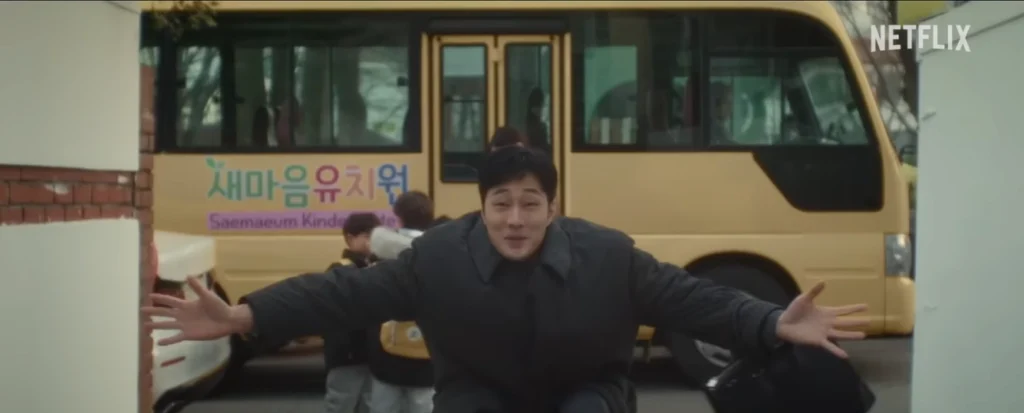
The story follows Kim Do-hyeon. He is a retired, highly lethal North Korean covert operative who defected to the South. Now? He’s just a tired, submissive logistics bank employee desperately trying to raise his teenage daughter, Min-ji, and honor his late wife’s wish for a peaceful life.
The inciting incident is simple but devastating. Min-ji gets brutally beaten and kidnapped following a dispute with a wealthy conglomerate’s daughter. When Kim finds his apartment trashed and his daughter missing, the mild-mannered banker persona dies instantly. He unearths his old tactical gear and goes to war against local gangs, South Korean intelligence, and North Korean assassins. Yes, critics are constantly comparing it to Taken, but honestly? Liam Neeson wishes he had the brutal, wire-choking combat skills of Manager Kim.
Who Makes Up the Primary Cast and the Legendary “Dad Squad”?
If there is one reason you absolutely must watch this show, it’s the casting. The series is anchored by some fantastic veteran actors, but the absolute heart and soul of the narrative belong to a trio of middle-aged, bespectacled men that the internet has lovingly dubbed the “father-trio.”
- Manager Kim Do-hyeon / Agent 66 (So Ji-sub): The man of the hour. So Ji-sub completely disappears into this role. He plays a North Korean defector and former black-ops assassin who was forced into working for South Korea’s Special Missions Directorate (SMD). Now, he is just a grieving widower trying to lay low. When he gets pushed over the edge, he drops the nice-guy act and goes back to his roots: extreme close-quarters combat and his terrifying signature weapon, the eun-sa—a wire as thin as a human hair that slices through enemies without leaving a trace.
- Seong Han-soo (Choi Dae-hoon): Easily my favorite supporting character. On the surface, he’s just a neighborhood martial arts instructor. In reality? He is a former Olympic Taekwondo gold medalist and elite operative. Dae-hoon’s physical acting is insane here, throwing his body into gravity-defying rescue operations while maintaining this gentle, fatherly exterior.
- Park Jin-cheol (Yoon Kyung-ho): The muscle. Universally known as the “God of War,” this former military special forces operative spends his retirement directing local traffic and hiding from his terrifying wife (who happens to be a former Marine Brigadier General). But when Kim activates him, Jin-cheol is the guy who brings the heavy explosives, tactical genius, and raw, unparalleled firepower.
Who Are the Antagonists, State Agencies, and Supporting Players?
The genius of this show is that Kim isn’t just fighting one bad guy; he is navigating a messy, three-way war between corporate thugs, corrupt politicians, and vengeful assassins.
- Ju Gang-chan (Joo Sang-wook): The main domestic villain and an absolute scumbag. He’s the chairman of Juhak Construction—a former street thug who bought his way into high society. He relies on a private army of mercenaries and extreme political corruption to crush anyone in his way.
- Kang Guk-cheol / “Mole Cricket” (Won Hyun-jun): The incredibly shady director of South Korea’s SMD. You never really know whose side he is on. He constantly blurs the line between ally and enemy, trying to exploit Kim’s violent return for his own state espionage goals.
- Ri Eung-ryeong (Lee Jae-yong): The corrupt North Korean Intelligence Director. He is the ghost from Kim’s past responsible for betraying Kim’s old unit.
- Park Gang-seong (Kim Sung-kyu): A lethal North Korean assassin sent across the border to hunt Kim down. He is actually the younger brother of the original “Agent 66” and is driven by completely misguided vengeance.
- Jung-dae / “Gold Teeth” (Jo Bok-rae): Gang-chan’s most violent subordinate. He literally got his nickname after Gang-chan smashed all his real teeth out and replaced them with gold.
The supporting cast does a lot of heavy lifting to keep the plot moving. We get Son Na-eun playing Jung Sang-a (an undercover SMD agent posing as Kim’s bank coworker), Yu Ji-ahn as Ju Hye-ri (the spoiled brat whose bullying starts this entire bloodbath), and Seo Su-min delivering a surprisingly gripping performance as Kim’s kidnapped daughter, Min-ji.
How Do the Early Episodes Set Up the Carnage? (Episodes 1-3)
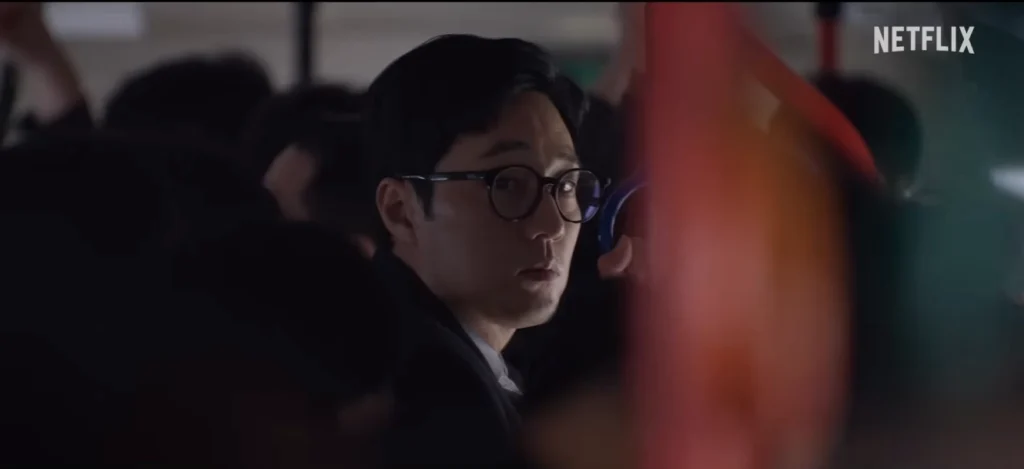
The directors intentionally kick off the series with this jarring, uncomfortable contrast. One minute, you are watching a depressing workplace comedy about a beaten-down banker; the next, you are plunged into visceral, unrelenting violence.
The catalyst is infuriatingly mundane. During a petty dispute, Ju Hye-ri viciously hits Min-ji over the head with a brick. Assuming she just committed murder, the spoiled teenager panics and calls in her father’s attack dog, Gold Teeth, to dispose of the body. When Kim discovers his ransacked apartment, a switch flips. He ruthlessly dismantles the local thugs and organ traffickers to extract answers.
While the present-day bloodbath unfolds, the show weaves in flashbacks to 2008 to contextualize Kim’s lethal skillset. We finally learn the origin of his “Agent 66” codename. Kim actually took the number to honor his best friend, Park Yeong-gwang, who died after being betrayed by their corrupt North Korean director, Ri Eung-ryeong. It adds a heavy layer of grief to a guy who is just trying to survive.
How Does a Simple Kidnapping Escalate Into a Geopolitical Crisis? (Episodes 4-7)
Things spiral completely out of control in the mid-season. Min-ji actually survives the brick attack, waking up in a freezing harbor warehouse. She manages a desperate escape, only to get intercepted by South Korean intelligence. The SMD Director, “Mole Cricket,” makes the incredibly stupid decision to interrogate a traumatized teenager about her father’s classified black-ops history.
Realizing he’s now fighting the state, a corporate mercenary army, and North Korean hitmen, Kim calls in his favors. Episode 6 delivers the absolute best action set piece of the year. The “father-trio” finally unites for a flawlessly coordinated warehouse raid. Han-soo drops in through the ventilation shafts, Jin-cheol secures the armory and escape routes, and Kim just walks straight through the front door to obliterate whoever is left. They manage to rescue Min-ji, but the SMD instantly corners them, dragging everyone into a politically explosive final act.
How Does the Finale Resolve the Chaos? (Episodes 8-10)
To secure permanent freedom for his daughter, Kim makes a desperate, dangerous bargain with the SMD in Episode 8. He agrees to protect his old enemy, the defecting North Korean director Ri Eung-ryeong, during a high-stakes peace summit. Naturally, a corrupt South Korean official leaks the location to Ju Gang-chan, turning the summit into an absolute bloodbath.
Realizing the SMD plans to throw him under the bus to avoid a diplomatic disaster, Kim goes completely rogue. The climax is a pure adrenaline rush. A desperate Ju Gang-chan crosses the ultimate line: he kidnaps the children of Han-soo and Jin-cheol, trapping the three fathers inside a massive steel fighting cage inside an industrial warehouse. Gang-chan orders Han-soo and Jin-cheol to beat Kim to death, or their kids die.
Instead, relying on non-verbal communication honed over decades of black-ops synergy, the trio fakes a brutal fight to the death. They synchronize a massive physical strike against the cage wall, collapsing the heavy steel fence directly onto a gloating Gang-chan.
What Happens to the Characters in the End?
The wrap-up is deeply satisfying and surprisingly grounded. The governments officially register “Agent 66” as dead, closing the international manhunt. Kim and Min-ji are issued brand new identities and finally move into a quiet home to live in peace.
Karma catches up to Ju Gang-chan in the most brutal way imaginable. While he is being transferred under police custody at a hospital, his own abused subordinate, Gold Teeth, corners him and stabs him repeatedly. His daughter, Hye-ri, faces the absolute ruin of her privileged life and is exiled abroad in disgrace.
But the absolute best part is the cliffhanger. Kim walks into the “Baekho Employment Agency” and meets its eccentric director, Lee Do-kyu (Tom Lee). Kim accepts a job handling high-profile mercenary work to secure a permanent legal shield for Min-ji. It is the ultimate setup for Season 2, directly bridging the television drama to its webtoon origins, and honestly, I am already counting down the days.
How Does the Show Connect to the Massive PTJ Webtoon Universe?
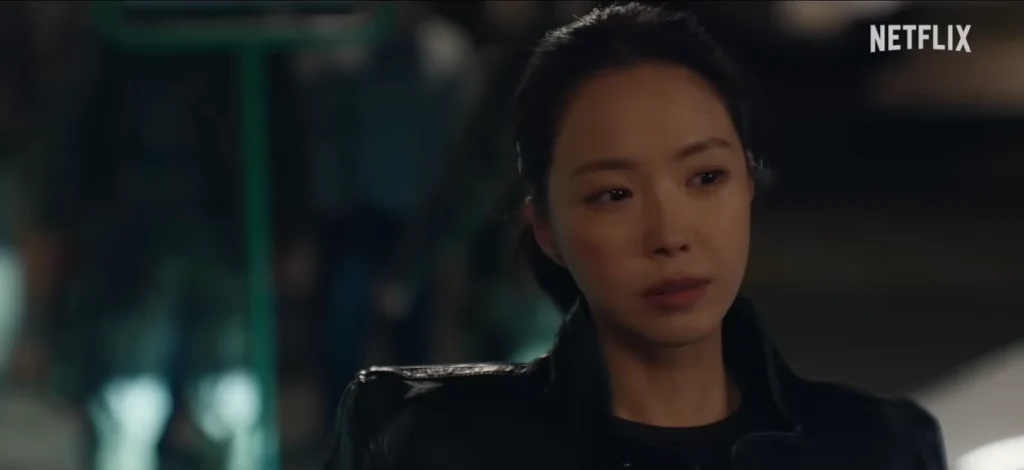
If you went into this show blind, you probably just saw a great revenge thriller. But for the hardcore readers, this series is a massive live-action cornerstone of the “PTJ Universe”—a sprawling, interconnected webtoon ecosystem created by author Park Tae-jun.
Before getting their own standalone series, the “Dad Squad” actually debuted as terrifying, mythical background characters in other globally massive webtoons.
- Lookism Connections: Manager Kim originally showed up here as an elite corporate fighter who takes a younger character, Warren Chae, under his wing to teach him CQC. When Kim walks into the Baekho Agency in the finale and meets Tom Lee, the live-action universe officially locked itself into the Lookism continuity. I genuinely cheered when that happened.
- Viral Hit (How to Fight): Seong Han-soo wasn’t just invented for this show. He was originally introduced as the insanely intimidating father of Seong Tae-hoon.
- The Ghost Platoon: The lore goes incredibly deep, establishing Kim, Han-soo, and Jin-cheol as part of the legendary military “Ghost Platoon,” bridging them to other mythical PTJ characters like Samdak.
Did the Live-Action Adaptation “Nerf” the Characters?
This was easily the most vicious debate on Reddit and fan forums. In the webtoons, these guys are practically superhuman apex predators. Translating anime-level physics into a gritty, live-action political thriller was always going to ruffle some feathers.
A lot of fans complained about the power scaling. In early Lookism chapters, Manager Kim’s destructive power is wildly inconsistent compared to his standalone series, and the live-action choreography had to find a middle ground so he didn’t just look like a Marvel superhero.
But the biggest controversy was over Seong Han-soo’s “Personality Patch.” In the comic lore, Han-soo has a psychological limiter. As his “personality percentage” drops, his lethality skyrockets to the point where a single kick can send heavy opponents flying across a room. Fans heavily debated whether the stunt choreography actually honored this abstract scaling mechanism, with a vocal chunk of the audience claiming the live-action heavily “nerfed” Han-soo’s peak capabilities just to keep the fights looking realistic.
What is the Deal with the AI-Generated Stunt Controversy?
We have to talk about the elephant in the room. Agent Kim Reactivated made international television history, and for a lot of people, it was the worst kind of history.
In Episodes 1 and 2, there is a three-minute, story-critical flashback to a 2008 North Korean assassination mission. It features a massive building explosion, a high-speed car chase, a car sinking into a freezing river, and intense underwater recovery shots.
Here is the kicker: Not a single frame of that sequence was filmed with real cameras or real actors. It was generated entirely by Artificial Intelligence.
Studio S outsourced this to Morpheus Studio, who used their proprietary AICRON platform. They fed text prompts to generate over 2,000 video clips and stitched 289 of them together to create the broadcast sequence. Astonishingly, they didn’t even use 3D scans of So Ji-sub; they just manually forced the AI to match his likeness.
The studio bragged that it cut the sequence’s budget by 60% and saved their aging lead actor from doing dangerous stunt work. But the audience backlash was swift and brutal. Reddit tore the sequence apart. Eagle-eyed viewers pointed out that the scene was heavily color-graded and incredibly dark specifically to hide the generative AI artifacts. More importantly, it triggered massive ethical concerns. Fans called it “pathetic” and mourned the loss of real stunt performers, set designers, and the raw, tangible energy of a physical film set. Even the director admitted that while the AI gave them flawless images, it completely lacked the human grit, dust, and tension of a real shoot.
What Did Fans Love—and What Were the Hilarious Plot Holes?
The consensus across Reddit and drama forums was overwhelmingly positive, but nobody gave the show a completely free pass.
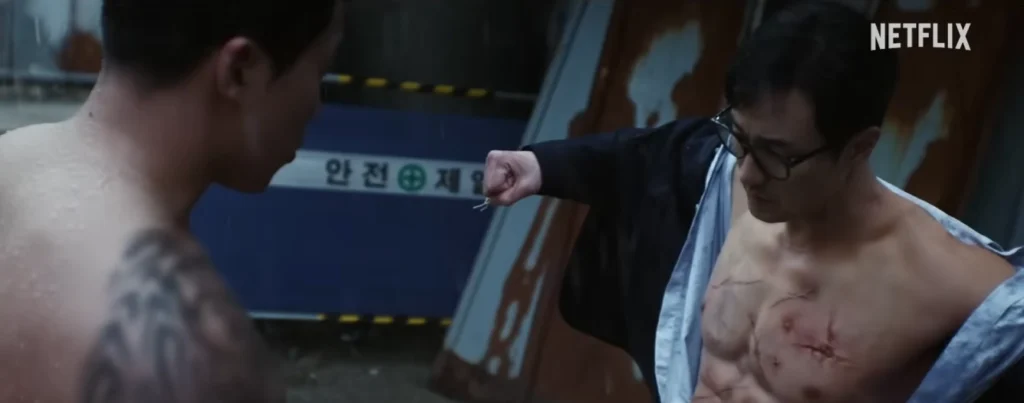
On the praise side, So Ji-sub’s performance was nothing short of a revelation. Viewers constantly marveled at his ability to switch from a submissive, mild-mannered “puppy” banker to a blood-thirsty “Cujo” in the blink of an eye. The banter between the three aging dads provided the perfect comedic relief, and the choreography in set pieces like the pitch-black elevator brawl and the Episode 9 night-vision POV shootout set a new gold standard for television action.
That said, the internet had an absolute field day tearing apart the writing’s looser logic:
- Defying Medical Reality: Characters routinely took blunt-force trauma to the skull and point-blank bullet wounds, only to walk them off by the next scene. Min-ji taking a direct brick to the skull, being dumped in a sub-zero freezer for days without food or water, and walking away without so much as a minor concussion felt closer to fantasy than grounded fiction.
- Selective Morality & Villain Plot Armor: Viewers were rightfully annoyed that Kim would effortlessly slaughter dozens of low-level henchmen with his lethal wire, yet repeatedly pause, hesitate, and let primary orchestrators like Ju Gang-chan escape.
- Mole Cricket’s Free Pass: Director Kang Guk-cheol (Mole Cricket) kidnapped and interrogated a teenage girl, covered up state corruption, and tried to hand Kim over to assassins. His punishment? Absolutely nothing. He casually hands Min-ji a parting gift in the finale and walks away completely unscathed, which infuriated a lot of viewers.
- Shameless Product Placement (PPL): The mid-season dragged with endless, repetitive car-driving sequences, but the corporate sponsorships were laughably blatant. Pausing high-stakes espionage tension to focus on characters sucking down Kopiko candies, visiting a specific gold merchant, or having a prolonged conversation about the tenderness of freshwater eel at a sushi restaurant was pure comedic distraction.
- Wardrobe Budget Issues: Fans couldn’t help but notice that poor Seong Han-soo seemed stuck wearing his white Taekwondo dobok for virtually the entire ten-episode run, regardless of the mission.
How Big of a Monster Hit Was It on TV and Streaming?
Despite the narrative nitpicks, the commercial numbers were jaw-dropping. Domestically, the media dubbed the phenomenon the nationwide “Chief Kim Syndrome.”
Starting with a solid 9.5% premiere rating on SBS, the broadcast exploded, crossing the 20% mark by Episode 4. The finale peaked at an astonishing 27.1% nationwide viewership (averaging 23.0%), making it the second-highest rated Friday-Saturday drama in SBS history. Over 25 million people tuned in across live and repeat broadcasts—meaning more than half the country engaged with the series.
Globally, the show dominated Netflix metrics. It held the #1 spot on the Global Top 10 Non-English TV chart for three consecutive weeks, racking up 46.7 million views across six weeks and ranking first in 22 countries. It wasn’t just a hit; it was an international cultural event.
Which Tracks Make Up the Adrenaline-Fueled Soundtrack?
The official soundtrack, produced by Genie Music and Studio S, was curated specifically to match the rapid-fire wire stunts and high-stakes tension:
- “GO! GO!” by ALPHA DRIVE ONE: The central action anthem. Clocking in at a blisteringly fast 125 BPM, this high-energy rock track played over Kim’s most intense wire-fu choreography and spawned viral lyric videos across YouTube.
- “Your Anchor” by Seo Young Joo (Nerd Connection): The emotional heart of the score, reserved for the quiet, bittersweet moments between Kim and his daughter.
- “Revenant” by Blasé: A gritty bilingual hip-hop track that signaled the cold reactivation of Agent 66.
- Instrumental Themes by Kim Seong Yul and Yoo Jong Hyun: The sweeping orchestral cues like “Red Command,” which lent genuine cinematic weight to the North Korean standoff.
Are We Getting a Season 2? (The Final Verdict)
Leaving Kim’s story at the doorstep of the Baekho Employment Agency wasn’t just fan service; it was an explicit promise. Studio S representatives have already confirmed that discussions for a second season are actively underway.
Pivoting the narrative from a desperate rescue mission into the professional, corporate mercenary operations of the Baekho Agency opens up limitless possibilities—not to mention direct crossover potential with characters from Lookism.
Agent Kim Reactivated certainly has its flaws. It suffers from ridiculous plot armor, clumsy product placement, and a controversial AI stunt sequence that will be debated in film schools for years. But when it works—when So Ji-sub drops the banker facade, his comrades back him into a corner, and that deadly wire comes out—it delivers some of the most visceral, entertaining television of the decade. If Season 2 tightens the script and leaves the AI generation at the door, we are in for something truly legendary.
Check Out What’s New : The End of Oak Street Ending Explained: Did Greg Actually Die?