If you are hunting for a definitive Hokum ending explained, you have just stepped into one of the most intricately woven psychological traps in modern horror history. Damian McCarthy’s 2026 cinematic nightmare completely shakes up the thriller genre. By taking the terrifying framework of ancient Irish folklore and fusing it with a profound, suffocating exploration of human trauma, McCarthy has crafted a film that is overflowing with ambient dread.
Released theatrically in the United States by Neon on May 1, 2026, after a highly acclaimed premiere at the South by Southwest (SXSW) Film & TV Festival, Hokum is an exercise in escalating psychological warfare. Moving away from the sheer physical violence of conventional slashers—or the jump-scare heavy factory films of the post-Conjuring era—this movie leans heavily into internal horrors. The weaponization of guilt, the agonizing weight of childhood trauma, and the sheer cruelty of selfish men are the real monsters hiding in the dark.
Here at memoria.film, we are obsessed with unraveling complex psychological mysteries. Just as our deep-dive reviews dissect the hidden architecture of cinema, we are applying that same rigorous analytical lens to the fog of paranoia surrounding the Bilberry Woods Hotel. In this massive, exhaustive breakdown, we have divided our analysis into dedicated parts to cover every single detail you need to know. We will dissect the elite cast, explore the fascinating production secrets, unearth the darkest hidden folklore, provide a meticulous plot analysis, explain the shocking ending, and feature a dedicated FAQ to answer the internet’s burning questions.

PART 1: The Setup and The Shocking Cast of Hokum
To fully grasp the nightmare unfolding in rural Ireland, we first have to look at the deeply flawed human beings at the center of the story. This is not a simple tale of an innocent man being terrorized by a monster; the protagonist is riddled with dark secrets, moral ambiguity, and deep-seated guilt. The success of this ambient dread relies on an absolute powerhouse cast that anchors the supernatural elements in raw, emotional reality.
The film operates largely as a locked-room, claustrophobic experience, heavily reliant on the performances of a tight-knit ensemble. Below is a comprehensive breakdown of the cast and the psychological profiles of the characters they inhabit.
| Actor | Character | Narrative Role & Psychological Profile |
|---|---|---|
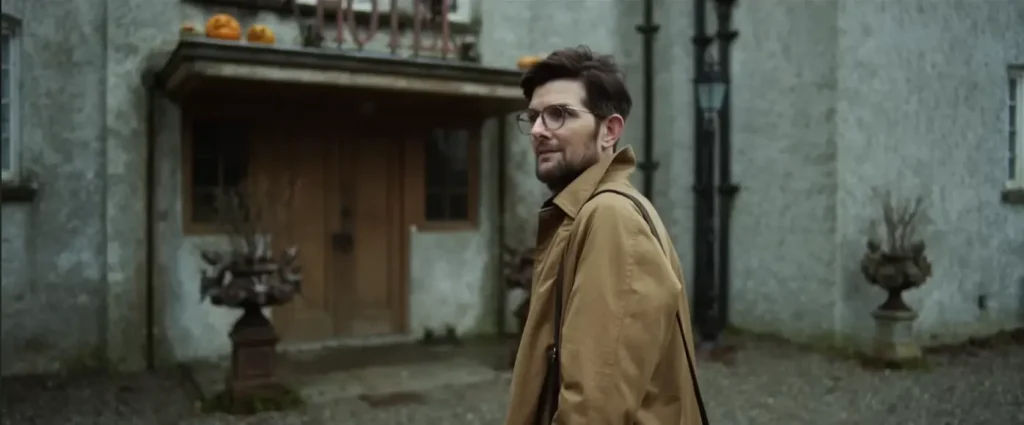
| Adam Scott | Ohm Bauman | A celebrated but deeply cynical horror novelist known for bleak endings. He is emotionally stunted, alcoholic, and abrasive, masking a lifetime of trauma after accidentally shooting his mother as a child. Scott delivers a career-defining performance as a man whose primary defense mechanism is unrelenting hostility. |
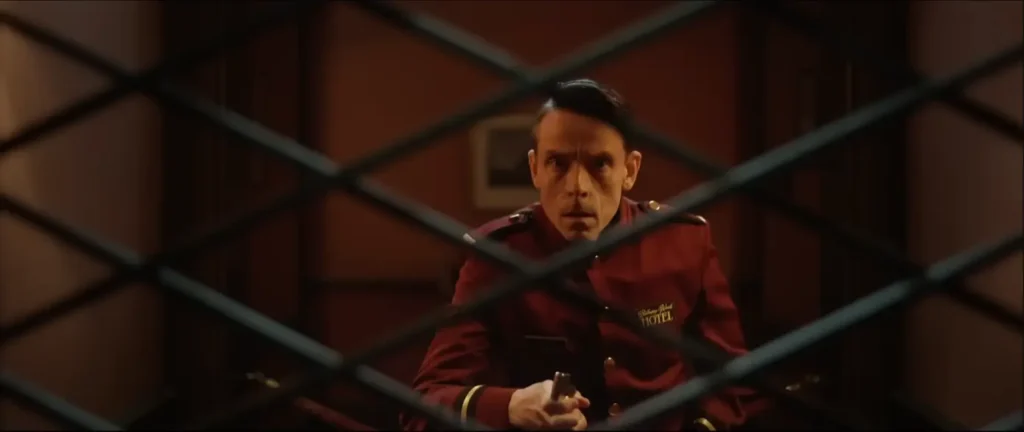
| Peter Coonan | Mal | The hotel’s desk clerk and the owner’s son-in-law. On the surface, he is an awkward, subservient manager, but underneath lies the true villain of the film—a man defined by a chilling lack of guilt who murders his pregnant mistress to protect his reputation and marriage. |
| Florence Ordesh | Fiona | The empathetic hotel bartender. She represents warmth and genuine human connection. Her intuition initially saves Ohm’s life, but her secret affair with Mal leads to her tragic demise inside the haunted honeymoon suite. |
| David Wilmot | Jerry | A vagabond living in a van in the woods who consumes goat’s milk laced with psychedelic mushrooms. Despite his eccentricities, he is a tragic figure who euthanized his terminally ill wife out of mercy, possessing a deep understanding of the supernatural realm. |
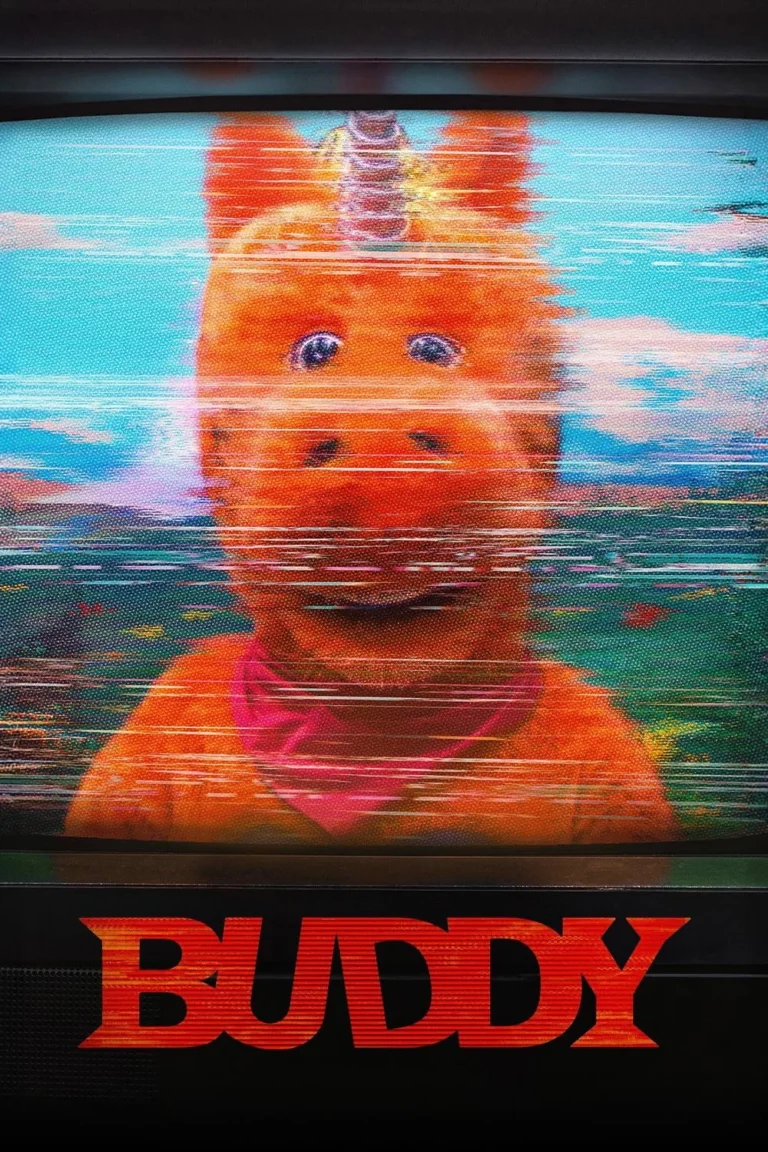
| Will O’Connell | Alby / Jack the Jackass | The aspiring writer and bellhop whom Ohm cruelly humiliates. O’Connell also terrifyingly portrays Jack the Jackass, the eerie donkey-headed television host from Ohm’s childhood trauma manifestations. |
| Michael Patric | Fergal | The practical and aggressive groundskeeper who shoots goats with a crossbow. He represents the hotel’s perimeter, knowing enough to be wary of its secrets but remaining largely detached from the cosmic justice at play. |
| Brendan Conroy | Cob | The wheelchair-bound owner of the hotel and Mal’s formidable father-in-law. He is the film’s chief storyteller, the keeper of the old knowledge who understands the folklore of the witch in the basement. |
| Austin Amelio | The Conquistador | The fictional protagonist of Ohm’s novel. He serves as an allegorical mirror for Ohm’s own psychological state, struggling with survival, alcoholism, and the ultimate burden of the innocent. |
| Mallory Adams | Delia Bauman | Ohm’s mother. Her tragic, accidental death defined Ohm’s entire existence. Her spirit haunts him throughout the film, transitioning from a terrifying figure of guilt to a profound agent of forgiveness. |
| Sioux Carroll | The Witch (Cailleach) | The supernatural entity trapped beneath the hotel. Rather than a conventional villain, she acts as a cosmic mechanism for punishment, dragging the truly wicked into the underworld. |
Adam Scott’s casting is a stroke of genius by McCarthy. Scott, known for his masterful ability to balance deadpan comedy with deep existential dread in shows like Severance, is tasked with carrying the emotional weight of a man who is actively trying to push the audience away. Ohm Bauman is arrogant, mocking, and deeply unpleasant. He sneers at folklore, belittles the hotel staff, and weaponizes his intellectual superiority. It is a dangerous character to build a horror film around, but Scott’s layered performance ensures that the audience can feel the bleeding wound underneath his prickly exterior. By the time he is sobbing on the floor of a haunted basement, the emotional payoff is devastatingly earned.

PART 2: The Mastermind — Damian McCarthy & Production Secrets
Damian McCarthy has quietly been building a reputation as one of the most visionary horror filmmakers working today. Following his micro-budget debut Caveat (2020) and his critically acclaimed sophomore feature Oddity (2024), Hokum represents McCarthy’s evolution into mid-budget, studio-backed horror. With a production budget of $5 million, the film went on to gross an impressive $24 million at the global box office, proving that audiences are hungry for atmospheric, character-driven terror rather than cheap thrills.
The Architecture of the Bilberry Woods Hotel
While the Bilberry Woods Hotel is fictional, the dread it inspires is rooted in its incredibly detailed production design. Finding the perfect location proved difficult; actual hotels in West Cork, Ireland, were either too small to film in practically or lacked the specific gothic rot McCarthy envisioned. As a result, the production utilized a composite approach: a rented private historical residence served as the grand, eerie lobby, while specific nightmare locations—such as the locked honeymoon suite and the terrifying dumbwaiter shaft—were built entirely from scratch on a soundstage. For the labyrinthine basement where the climax occurs, the crew ventured into an actual, damp West Cork castle, providing an authentic, claustrophobic chill that cannot be replicated in a studio.
Handcrafted Nightmares and Soundscapes
McCarthy re-teamed with model maker and designer Paul McDonald, who previously worked on Oddity. McDonald’s handcrafted contributions are essential to the film’s unease. The bizarre, off-kilter knickknacks, the terrifying dioramas, and the mechanical “golf boy” cuckoo clock are all McDonald’s creations. These physical props give the horror a tactile, grounded feeling.
Furthermore, the film’s auditory landscape is a weapon unto itself. Composer Joseph Bishara—a legend in the horror space known for his work on The Conjuring and Insidious—crafted a score that vibrates with low-frequency dread. The sound design frequently utilizes silence, punctuated by the heavy, metallic clanking of the Witch’s shackles or the agonizing creak of the dumbwaiter. Most notably, McCarthy incorporated real “fox screams” into the sound mix to mimic the terrifying wail of a banshee, tapping into a primal, ancient fear of the dark.
PART 3: The Mythology & Irish Folklore Behind Hokum
To understand the Hokum ending explained, one must understand the ancient folklore that courses through its veins. The title “Hokum” is defined by Merriam-Webster as “pretentious nonsense” or “bunkum,” originally deriving from a blend of hocus-pocus and bunkum. Ohm Bauman uses this word to dismiss the local legends, an arrogant shield to protect his hyper-rational, cynical worldview. However, the film meticulously proves that this ancient knowledge is not nonsense; it is a survival guide.
The Cailleach and The Banshee
The primary supernatural entity in the film is rooted in the Gaelic mythology of the Cailleach, which translates to “old woman” or “hag”. In Celtic lore, the Cailleach is often associated with winter, creation, and ancient power. In Hokum, this entity has been warped into a karmic predator. According to the hotel owner, Cob, the witch prays on lost travelers, placing them under a spell, shackling them in heavy iron chains, and dragging them into the underworld where lost souls tear pieces of flesh from their bodies.
McCarthy also draws heavily from the myth of the Banshee (bean sídhe, meaning “woman of the fairy mound”). In Irish tradition, the Banshee is a female spirit whose horrifying wail serves as an omen of imminent death. The film utilizes disturbing vocalizations—specifically fox screams—to replicate this paralyzing, inevitable dread, creating a soundscape where the characters feel they have drifted into an ancient, unknowable realm.
The Rabbit Motif and Chalk Circles
Rabbits and hares have long been associated with witchcraft and the Otherworld in Celtic folklore, with legends suggesting that witches could shapeshift into hares to travel unseen at night. McCarthy has a well-documented obsession with this motif; a creepy drumming rabbit was the centerpiece of his debut, Caveat. In Hokum, the rabbit imagery is pervasive: Fiona is murdered while wearing a macabre rabbit Halloween costume, and Ohm is haunted by “Jack the Jackass,” a terrifying donkey/rabbit hybrid entity heavily inspired by the uncanny valley of 1950s children’s television.
Furthermore, the film employs the ancient occult practice of drawing chalk or salt circles for protection. In European witchcraft mythology, these circles create a sacred boundary that evil spirits cannot cross. Fiona’s folklore book teaches Ohm this survival tactic, transforming the chalk from a superstitious artifact into the only thing standing between Ohm and the abyss.

PART 4: Exhaustive Plot Analysis — The Descent into Bilberry Woods
Hokum is structured as a slow, inevitable descent. It begins in the sterile, cynical reality of a modern writer and ends in the literal subterranean bowels of purgatory. Let us break down the narrative beats that set the stage for the explosive finale.
Act I: The Conquistador’s Burden and The Arrival
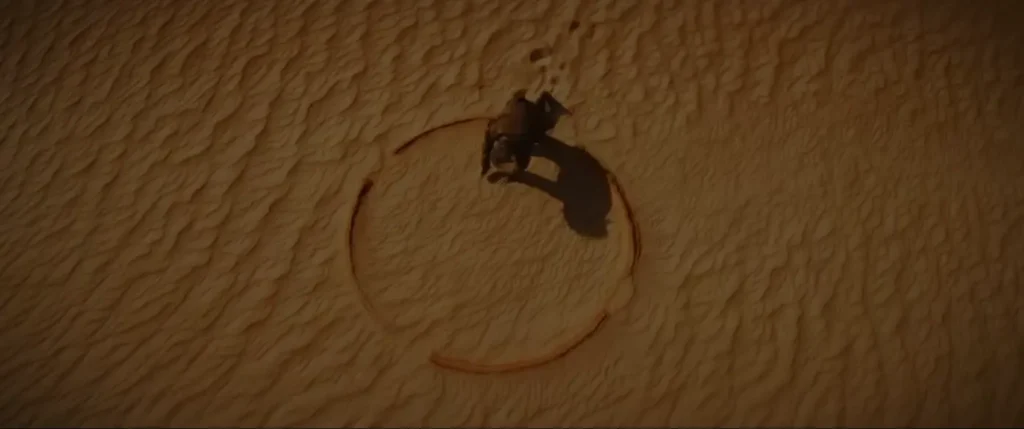
The film opens audaciously not in Ireland, but within the pages of the novel Ohm is currently writing—the epilogue of his best-selling “Conquistador Trilogy”. A Spanish Conquistador (Austin Amelio) and a young boy stagger through a sun-scorched desert, dying of thirst. They find a red circle in the sand, and the Conquistador realizes his map to salvation is trapped inside an unbreakable glass bottle. Desperate and out of options, the Conquistador raises the heavy bottle, contemplating smashing it over the young boy’s skull.
Before the fatal blow lands, we snap back to reality. Ohm Bauman is sitting at his desk, drinking heavily, struggling to write this bleak ending. The camera brilliantly matches the red circle in the desert sand to the condensation ring beneath Ohm’s whiskey glass, instantly linking the fictional desert to Ohm’s alcoholism. Suddenly, a blurred silhouette appears behind him—the ghost of his mother. Ohm discovers a postcard from the Bilberry Woods Hotel where his parents honeymooned, alongside a small, locked box containing a revolver.
Ohm travels to rural Ireland to scatter his parents’ ashes, seeking closure. Upon arrival, the environment greets him with hostility. The groundskeeper, Fergal, has just executed a goat with a crossbow because the animals keep jumping on the guests’ cars. Inside, the wheelchair-bound owner, Cob, is terrifying children with the legend of the Cailleach witch in the basement.
Ohm immediately establishes himself as an insufferable misanthrope. He rudely dismisses the folklore, refuses to sign an autograph for the desk clerk Mal, and heads to the woods. Finding a massive redwood tree from a photograph, Ohm lovingly scatters his mother’s ashes at the roots, but aggressively and carelessly tosses his father’s ashes away—a visual shorthand for his fractured, traumatic upbringing.
In the woods, he meets Jerry, a gentle vagabond who lives off the grid, subsisting on goat’s milk infused with psychedelic mushrooms. Jerry serves as a philosophical counterpoint to Ohm, suggesting that the supernatural is real, but “people with closed minds can’t see them”.
Act II: The Cruelty of Ohm Bauman and The Halloween Disappearance
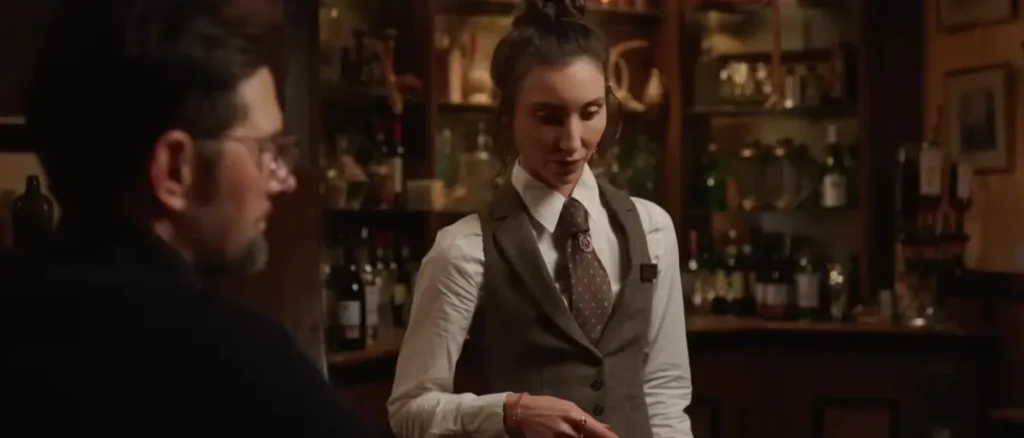
At the hotel bar, Ohm connects with the bartender, Fiona. He pitches her the bleak ending of his Conquistador novel, which she rejects as excessively cruel. Ohm reveals the source of his worldview: when he was a child, his mother was shot in the face. He claims the killer was caught but was “too young to do any time,” leaving his father to drink himself to death in grief.
Fiona informs Ohm that the hotel’s honeymoon suite has been permanently locked by Cob, who claims the witch is trapped inside. She shows Ohm her book of folklore, explaining the protective power of a chalk circle. The conversation is interrupted by Alby, an aspiring writer and bellhop. Alby eagerly asks Ohm for advice on his manuscript. In a moment of shocking, casual cruelty, Ohm heats a metal spoon in a candle flame and presses it into Alby’s hand, telling the boy he needs “thicker skin” to survive as an author.
Later that night, Fiona, driven by a deep intuition that something is wrong, ignores the “Do Not Disturb” sign on Ohm’s door and forces Alby to open it. They discover Ohm hanging from the ceiling in a suicide attempt. Fiona cuts him down, saving his life. Ohm experiences a terrifying near-death vision in a hospital elevator, where his dead mother appears beside him.
Ohm awakens in a hospital weeks later. Haunted by his survival and indebted to Fiona, he returns to the hotel—now closed for the winter season—to collect his belongings and thank her. However, Mal informs him that Fiona has been missing since the hotel’s Halloween party. The police suspect Jerry, as Jerry’s own wife vanished under mysterious circumstances a decade prior.
Act III: The Honeymoon Suite and The Dumbwaiter of Death
Refusing to leave, Ohm investigates and tracks down Jerry. Jerry makes a stunning confession: he did kill his wife, but it was an act of compassionate euthanasia because she was suffering from a terminal, agonizing illness. Jerry also claims he broke into the hotel recently, heard the honeymoon suite’s service bell ringing, and saw Fiona’s ghost pointing toward the locked room.
Despite his skepticism, Ohm agrees to help Jerry break into the closed hotel that night. The plan falls apart immediately when Fergal ambushes Jerry in the parking lot, knocking him out and taking him to the police. Ohm, left alone in the dark, hears the honeymoon suite bell ring. Using a key Jerry had stolen, Ohm enters the decaying, locked suite.
Falling asleep on the dusty bed, Ohm experiences a hallucination that shatters the film’s central mystery. He dreams of his childhood. He is playing with his father’s revolver. The gun accidentally discharges. His mother walks into the room with a bullet hole in her face, kneeling to hug him as she bleeds to death. The boy Ohm watches a 1950s television show hosted by “Jack the Jackass,” a grotesque donkey-man who reads a letter from Ohm begging for help. Jack looks directly into the camera and coldly tells the boy that it is his fault, that his father hates him, and that he should be terrified because no help is coming.
Ohm is awakened by Mal, who has come to secure the room. In the corner, Ohm spots a rusted dumbwaiter. Ignoring Mal’s panicked demands to leave, Ohm presses the recall button. The mechanical lift slowly groans to the surface. Inside sits the decomposing corpse of Fiona, still dressed in her rabbit Halloween costume.
Terrified of exposure, Mal slams the heavy suite door shut, locking Ohm inside with the corpse. Ohm retrieves his voice recorder from Fiona’s body and listens to her final, agonizing messages. The truth of the film is laid bare: Fiona was pregnant with Mal’s child. Mal, desperate to protect his marriage and his standing with his father-in-law, drugged Fiona’s tea at the Halloween party. He dragged her unconscious body to the honeymoon suite, stuffed her into the dumbwaiter, and sent her down into the pitch-black basement to starve to death or be consumed by the witch.
Act IV: The Basement and The Cuckoo Clock Puzzle
Trapped in the suite with no escape, the film briefly transforms into a claustrophobic survival horror experience akin to the video game Resident Evil. Ohm realizes the only way out is through the basement, but Fiona’s recordings reveal that the dumbwaiter has no recall button at the bottom; if he goes down, he cannot come back up.
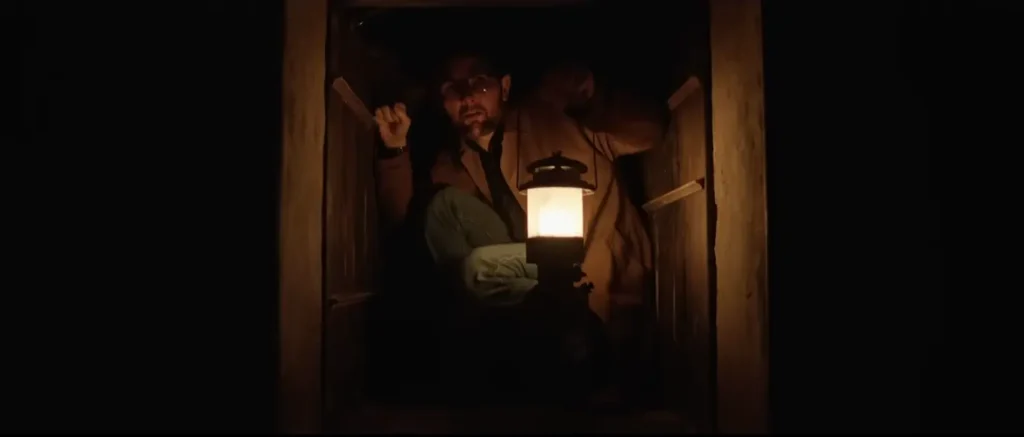
Displaying desperate ingenuity, Ohm positions an antique mechanical cuckoo clock—featuring a motorized boy swinging a golf club—next to the dumbwaiter panel. He synchronizes his wristwatch so that the golf club will strike the recall button in exactly 15 minutes. He respectfully moves Fiona’s body to a chair, climbs into the cramped shaft, and descends into the abyss.
In the basement, Ohm navigates a terrifying catacomb adorned with hanging trinkets collected from the Witch’s victims. He finds a solid dead-end and a piece of chalk. Suddenly, the darkness comes alive. He hears the heavy, metallic dragging of iron chains. The Cailleach is coming for him. Ohm races back to the dumbwaiter just as the golf club strikes the button above, pulling him to safety by a hairsbreadth. Peering down the shaft, he sees the horrifying visage of the Witch rapidly crawling up the vertical walls toward him.
Ohm scrambles to the bed, furiously drawing a chalk circle around it just as Fiona’s folklore book instructed. The Witch breaches the room, her skeletal features and dead eyes paralyzing Ohm with fear, but she is physically repelled by the chalk boundary, forced to merely taunt him from the edge of the circle until dawn.

PART 5: Hokum Ending Explained in Detail
The climax of Hokum is where the physical horror and the psychological trauma collide in a breathtaking crescendo. By morning, Jerry has managed to escape Fergal’s van and returns to the hotel, determined to save Ohm.
The Arrival of Mal and the Fire
Mal returns to the hotel to cover his tracks. Finding Jerry trying to access the honeymoon suite, Mal lies, claiming he found Ohm drunk and put him in a taxi to the airport. However, Ohm hears them arguing outside and pulls the suite’s service bell cord, alerting Jerry. Jerry demands the key from Mal, but as Jerry turns to the elevator, Mal ruthlessly shoots him in the back of the head with Fergal’s crossbow.
With the body count rising, Mal realizes he is past the point of no return. He systematically sets the ground floor of the hotel on fire to burn the building to the ground and destroy all evidence of his crimes. However, Mal realizes he cannot escape the service corridors without a specific gate key.
Ohm, meanwhile, has managed to force his way out of the suite and retrieves the gate key from Jerry’s body. Seeing the flames rising, Ohm has no choice but to take the dumbwaiter back down into the basement. Mal, desperate for the key, is forced to pursue Ohm into the very lair he condemned Fiona to.
The Cosmic Scales of Justice
Down in the dark, Ohm hears the Witch approaching. He desperately attempts to draw another chalk circle on the concrete floor, but before he can close the loop, the Cailleach seizes him, clamping heavy iron shackles onto his wrists.
Mal descends into the basement moments later, searching for Ohm in the shadows. Instead, he walks directly into the grasp of the Witch, who immediately shackles him as well. It is here that the film’s moral architecture is revealed. The Witch is not a mindless killing machine; she is a karmic predator who feeds on the corrupted and the damned.
Mal represents pure, unadulterated evil. He feels absolutely no guilt for his actions; he murdered his pregnant lover and an innocent bystander strictly out of selfish self-preservation. The Witch drags Mal toward a glowing, terrifying doorway—the gateway to the underworld. Demonic, grasping hands reach out from the void, tearing at Mal as he screams, pulling him entirely out of the mortal realm.
The Mother’s Forgiveness and The Escape
Ohm sits on the floor, shackled and awaiting his turn to be dragged into hell. Throughout the film, Ohm has been carrying the soul-crushing weight of his mother’s accidental death. He believed her ghost was haunting him, waiting to deliver the punishment he felt he deserved.
Instead, his mother’s spirit materializes beside him inside the broken chalk circle. She does not look at him with vengeance, but with profound, maternal warmth. Ohm breaks down weeping, crying out, “It was an accident! I’m sorry!”. His mother gently places her hand on his chest, replying, “I know. You can’t stay here”.
This is the emotional core of the film. Ohm’s mother has not been hunting him; she has been waiting for him to forgive himself. Her absolution gives Ohm the strength to live. When she vanishes, Ohm reaches into the pocket she touched and pulls out a small metal file/saw he had acquired earlier. With furious desperation, he saws through the iron chains, breaking free just before the Witch can return for him.
Ohm scrambles back up to the main floor, which is now a raging inferno. He collapses from smoke inhalation, but the groundskeeper, Fergal—having returned to the hotel and heard the ghostly voice of Ohm’s mother calling out—drags Ohm to safety.
The Epilogue: A New Ending and The Ram’s Skull
Ohm awakens in a brightly lit hospital room, fundamentally transformed. Alby, the bellhop, visits him, bringing news that the police found the remains of Fiona and Jerry in the ashes, but Mal is completely missing.
Alby then makes a startling confession: angry over Ohm burning his hand with the spoon, Alby had spiked Ohm’s whiskey flask with Jerry’s psychedelic mushroom powder on the night of the Halloween party. This revelation introduces the possibility that Ohm hallucinated the entire ordeal. However, Ohm looks down at his wrists and sees the deep, brutal purple bruising left by the heavy iron shackles. The terror was absolutely real; the mushrooms merely opened his mind to see the forces that govern the dark.
A humbled, softened Ohm accepts Alby’s manuscript, promising to read it—a stark contrast to his earlier cruelty. He then opens his laptop to rewrite the ending of his Conquistador novel. We return to the desert.
The Conquistador stands over the young boy with the heavy bottle. But instead of committing violence, the Conquistador falls to his knees, handing the bottle to the boy. He offers his own skull to be smashed, an act of total self-sacrifice. The boy, recognizing the profound love in this surrender, refuses. He throws the bottle away, and the two embrace in the sand, choosing human connection over the destructive pursuit of the treasure.
As the camera pulls back, we see where the discarded bottle landed: right next to the half-buried skull of a ram. As director Damian McCarthy explicitly stated, the skull is a symbol of hope. It is a tool they can now use to break the glass without shedding blood. Ohm has finally found his hope.

PART 6: Hidden Secrets, Easter Eggs, and Plot Theories
Apple TV and Neon’s release of Hokum is a dense, layered text that invites multiple viewings. By analyzing the visual grammar and thematic dialogue, several massive theories emerge regarding the true nature of the Bilberry Woods Hotel.
Theory 1: The Hallucination vs. Reality Debate (The Glasses Reflection Theory)
The revelation that Ohm was dosed with psilocybin mushrooms leads many viewers to question if the supernatural elements were merely a drug-induced fever dream. However, cinematographer Colm Hogan planted a brilliant visual tell throughout the film.
If you watch closely, you can distinguish between Ohm’s internal psychological hallucinations and the external physical threats by looking at the reflections in Ohm’s eyeglasses. When Ohm is confronted by “Jack the Jackass” on the television, the reflection in his glasses shows only TV static. The Donkey Man is a manifestation of his own mind punishing him. However, during the climax, the Cailleach (Witch) is clearly reflected in the lenses of Ohm’s glasses. Combined with the physical bruising on his wrists, this confirms that the Witch is a terrifying, physical reality.
Theory 2: A Feminist Horror Subtext (The Scales of Male Guilt)
A deeper analytical reading of Hokum reveals it to be a profound commentary on male guilt and how patriarchal violence affects women. The film presents three distinct portraits of male culpability:
- Ohm’s Guilt: He accidentally killed his mother. He copes by punishing himself and becoming an emotionally abusive alcoholic.
- Jerry’s Guilt: He intentionally killed his wife, but did so out of immense compassion to spare her from the agonizing pain of a terminal illness. He copes by living off the grid and using psychedelics to feel close to her spirit.
- Mal’s Guilt: He murdered his pregnant lover in cold blood to protect his marriage and social status. He feels absolutely no remorse and attempts to murder two more men to cover it up.
The Witch acts as the ultimate cosmic judge of this guilt. She does not punish Jerry (mercy) or Ohm (an accident followed by profound remorse). She only drags Mal—the man who committed an act of supreme, selfish, patriarchal violence—into hell.
Theory 3: The Conquistador Allegory
The “Conquistador Trilogy” is not just a framing device; it is a direct allegorical mirror of Ohm’s soul. The unbreakable bottle represents the disease of alcoholism. In Ohm’s original, bleak draft, the father attempts to bludgeon the son to access the bottle, symbolizing how Ohm’s father became a “monstrous drunk” after the mother’s death, emotionally destroying his child. Because Ohm has never forgiven himself for the accident, his worldview dictates that trauma inevitably results in violence, isolation, and death.
When Ohm is finally absolved by his mother’s ghost in the basement, he breaks the cycle. He rewrites his own internal narrative. The Conquistador’s willingness to sacrifice himself, and the boy’s refusal to commit violence, represents the breaking of generational curses.
Theory 4: The Shared McCarthy-Verse
Damian McCarthy loves to weave his films into a loosely connected universe. Sharp-eyed viewers will spot the creepy, drumming mechanical rabbit from his 2020 film Caveat sitting on a shelf in the honeymoon suite. The thematic obsession with ringing bells and cursed locked rooms is a direct continuation of the lore established in his 2024 hit Oddity. Furthermore, Fiona’s Halloween costume—a disturbing rabbit mask—serves as a visual callback to the Celtic mythology prevalent in McCarthy’s universe, where hares are the familiars of shape-shifting witches.
PART 7: Where to Watch Hokum (Streaming & Physical Media)
For those looking to experience the ambient dread of the Bilberry Woods Hotel, Hokum is widely available across multiple platforms following its theatrical run.
| Platform / Format | Availability | Price | Notes |
|---|---|---|---|
| Apple TV Store | Digital Purchase / Rental | Buy: $24.99 / Rent: $19.99 | Available in 4K UHD. |
| Amazon Prime Video | Digital Purchase / Rental | Buy: $24.99 / Rent: $19.99 | Available in 4K UHD. |
| Fandango at Home (Vudu) | Digital Purchase / Rental | Varies | Standard and High Definition available. |
| Roku / Plex | Streaming / Rental | Varies | Accessible via native apps. |
| Physical Media (Blu-ray / 4K UHD) | Retail / Online | Varies | Released August 11, 2026. Includes the short film “Jack the Donkey, A Family Favorite”, director’s commentary, and a making-of documentary. |

PART 8: Hokum FAQ — Answering the Internet’s Biggest Questions
To ensure your ultimate understanding of Hokum is complete, here are the direct answers to the web’s most pressing search queries regarding the film.
What does the title “Hokum” mean? “Hokum” is a term meaning pretentious nonsense, bunkum, or a cheap theatrical trick. Ohm frequently uses this word to arrogantly dismiss the local Irish folklore. The title is deeply ironic, as the “nonsense” Ohm dismisses turns out to be horrifyingly real, forcing him to abandon his cynicism to survive.
Who killed Fiona in Hokum? Mal, the hotel desk clerk and son-in-law of the owner, killed Fiona. Fiona was pregnant with Mal’s child. Fearing that his wife and formidable father-in-law would discover the affair, Mal drugged Fiona’s tea at the Halloween party, locked her in the dumbwaiter, and sent her into the haunted basement to die.
Was the Witch real or a hallucination? Both elements exist simultaneously. Alby spiked Ohm’s whiskey with psilocybin mushrooms, which explains Ohm’s surreal, internal visions (like Jack the Jackass on the television). However, the Cailleach (Witch) was entirely real. Jerry explains that the mushrooms merely opened Ohm’s mind to perceive the supernatural entity. The deep, physical bruises left on his wrists by the heavy iron shackles confirm that the physical attack in the basement actually happened.
Why did Ohm burn the bellboy’s hand? Ohm burns Alby’s hand with a heated spoon out of sheer, misdirected cruelty. As a man consumed by self-loathing and grief, Ohm’s primary defense mechanism is to push people away by being as abrasive and hostile as possible. When Alby enthusiastically asks Ohm for writing advice, Ohm punishes the boy’s vulnerability and hope, telling him he needs “thicker skin”.
Is Hokum based on a video game? No, Hokum is an original screenplay by Damian McCarthy. However, the film’s second half heavily mirrors the mechanics of survival horror video games like Resident Evil. Ohm is trapped in an isolated location, forced to solve mechanical puzzles (like rigging the golf boy clock to hit the elevator button), and must navigate a subterranean environment filled with monsters.
What happens in the deleted alternate ending of Hokum? In the original script, Damian McCarthy wrote an ending where Ohm does not survive the basement and is dragged into hell alongside Mal. However, McCarthy ultimately changed it, stating that the original ending felt “too bleak” and punishing, leaving the audience with a sense of emptiness rather than catharsis.
A Final Thought: The Catharsis of Survival
Hokum is a towering achievement in modern horror. It expertly lures the audience in with the familiar, gothic tropes of a haunted hotel and a locked-room mystery, only to pull the rug out and reveal a devastatingly emotional core. The film posits that the supernatural is rarely as terrifying as the cruelty human beings inflict upon one another, or the punishing, inescapable prisons we build within our own minds. By the time the credits roll over the image of a discarded bottle and a ram’s skull, Hokum proves that even the most broken among us are capable of finding the light. It is a terrifying, claustrophobic journey into the dark, but more importantly, it is a brilliant roadmap on how to finally come back out.