Hokum Ending Explained and Spoiler Alert
Bowman is a miserable wretch of a human being. Damian McCarthy’s new horror film drops us straight into the mind of a cynical, alcoholic author who travels to the remote Bilbury Woods Hotel in rural Ireland specifically to scatter his parents’ ashes and then hang himself. It is a brutal, suffocating setup. M, as he’s called, carries the literal weight of his trauma in two urns: one for the mother he accidentally shot in the face as a 10-year-old playing with his father’s gun, and one for the father who drank himself to an early grave because of it.
He treats the ashes just like his memories. He carefully scatters his mother’s remains around a beautiful redwood tree, but carelessly dumps his father’s ashes on the dirt.
McCarthy doesn’t bother making M likable… wait, that’s a massive understatement. M is actively repulsive. He mocks Albi, an aspiring writer working as a bellboy, even going so far as to press a hot spoon into the kid’s hand just to shut him up. He dismisses the hotel owner Cobb’s terrifying folklore about a witch—a crone locked in the honeymoon suite who shackles doomed souls and drags them to the underworld—as pure, unadulterated hokum. But that abrasive exterior is clearly just a pathetic defense mechanism for a man drowning in guilt.
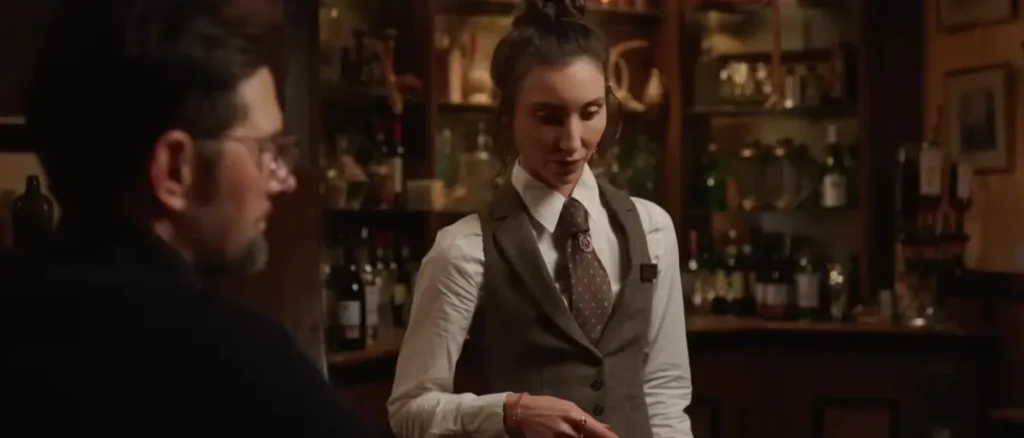
The Bilbury Woods Hotel is dripping with a classic, isolated gothic atmosphere that practically begs for terrible things to happen. M connects with exactly one person: Fiona, the bartender. She senses something is wrong with him, forces the staff to open his door, and saves his life after he attempts suicide.
When he wakes up in the hospital weeks later and returns to the closed-for-the-season hotel to gather his things, he is hit with a sickening reality. Fiona is missing.
Mal, the hotel manager, acts like a concerned boss, pointing the finger of blame directly at Jerry, a homeless local who drinks goat’s milk laced with magic mushrooms. Everyone assumes Jerry killed Fiona because his own wife died under mysterious circumstances a decade ago. But Jerry isn’t a killer. He euthanized his terminally ill wife to end her suffering, a heavy moral choice that contrasts sharply with M’s accidental childhood trauma. Jerry insists he saw Fiona’s ghost pointing toward the locked honeymoon suite.
This is where the film violently shifts gears from a depressing character study into a claustrophobic murder mystery.
Hokum Movie Explained: What is the Actual Meaning?
What is the actual meaning behind Hokum? It is not just a standard psychological thriller. The movie is a highly cynical commentary on modern isolation and digital paranoia in 2026. The protagonist isn’t actually being hunted by a supernatural force; they are completely losing their grip on reality due to profound grief. The entire narrative is a heavily distorted projection of their own fractured subconscious, making the ending a tragedy rather than a victory.
The Dumbwaiter and Mal’s Vile Secret
M and Jerry attempt to sneak into the hotel at night, but Fergle ambushes them, knocking Jerry out and dragging him away to the police. This leaves M to unlock the elevator alone and ascend to the dreaded honeymoon suite.
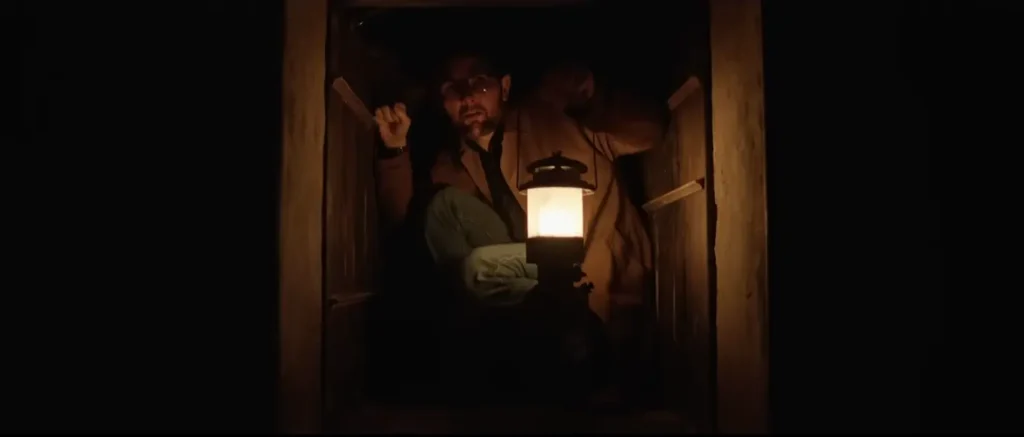
Mal eventually catches him up there and completely panics. When M ignores his warnings and presses the button for the old dumbwaiter, the lift groans upward, revealing Fiona’s decaying body still dressed in her Halloween costume. Mal instantly bolts, locking the heavy iron doors and trapping M inside the suite with the corpse.
It turns out the true monster of this story isn’t supernatural at all. M finds his missing tape recorder on Fiona’s body, and her final, desperate messages expose a sickening reality. She was pregnant with Mal’s child. Terrified that his wife and his intimidating father-in-law, Cobb, would discover the affair and ruin his comfortable life, Mal drugged Fiona’s tea during the party, stuffed her unconscious body into the dumbwaiter, and sent her down to the basement. He left her there to starve in the dark, or worse, to be hunted by whatever lurked below.
It is a chilling display of human cowardice. Mal didn’t just make a mistake; he calculated the brutal murder of his pregnant partner just to save his own miserable reputation.
Jack the Jackass and the Descent into Hell
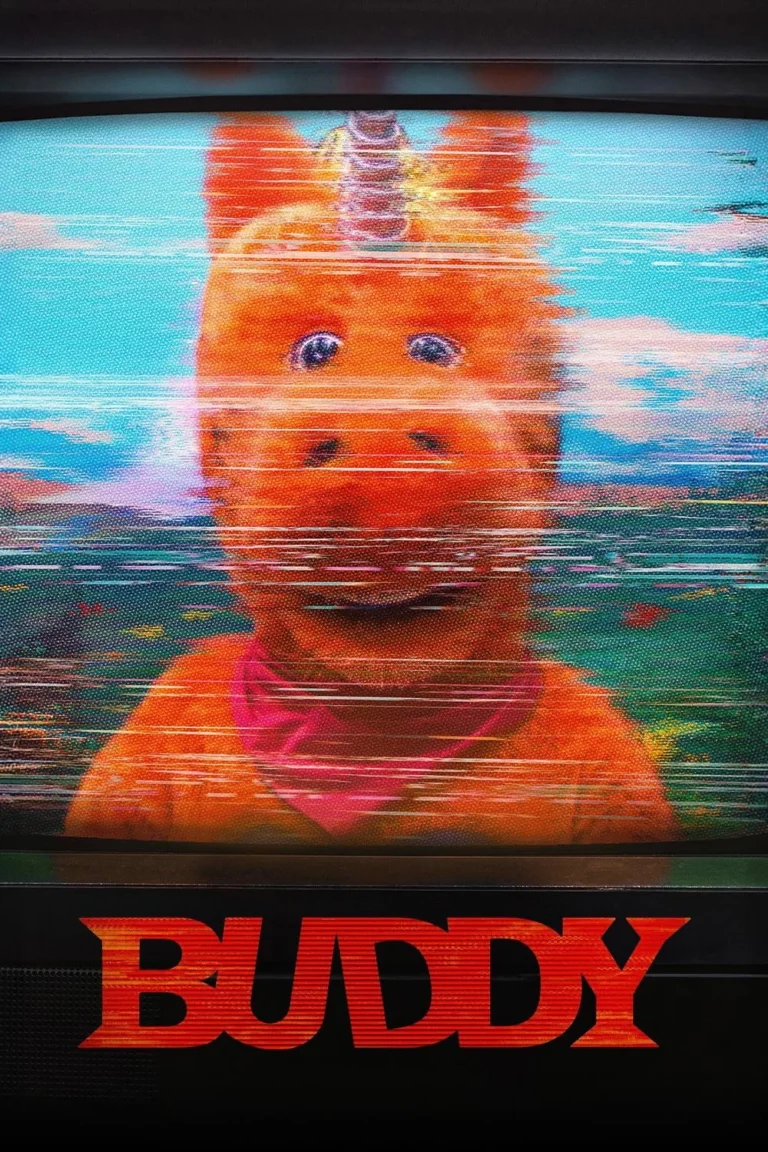
Trapped in the suite with no exit, M’s psychological defenses completely shatter. The lights violently flicker out, the television statics to life, and he is confronted by Jack the Jackass, a disturbing donkey-headed host from a childhood television show.
The twisted character reads a letter from a 10-year-old M begging for help after accidentally shooting his mother. Instead of offering comfort, the donkey viciously mocks him, telling him his father is right to hate him, it is entirely his fault, and no help is coming.
Is it the cursed room torturing him, or is it the mushroom powder Albi secretly slipped into his whiskey flask? Actually, the source of the hallucination doesn’t matter; the guilt crushing him is completely real.
With the fire escape map pointing downward, M removes Fiona’s body, respectfully placing her in a chair, and rigs the room’s mechanical clock to hit the dumbwaiter button, giving himself exactly one hour to explore the basement before the lift is pulled back up.
The descent into the darkness is agonizingly tense. The basement is a freezing stone corridor lined with hanging trinkets, including the lighter Albi lost during his own encounter. A dead end awaits him. Then he hears it: the rattling of heavy iron shackles and a horrific wailing echoing through the dark. The folklore isn’t just a story to scare kids. The witch is real.
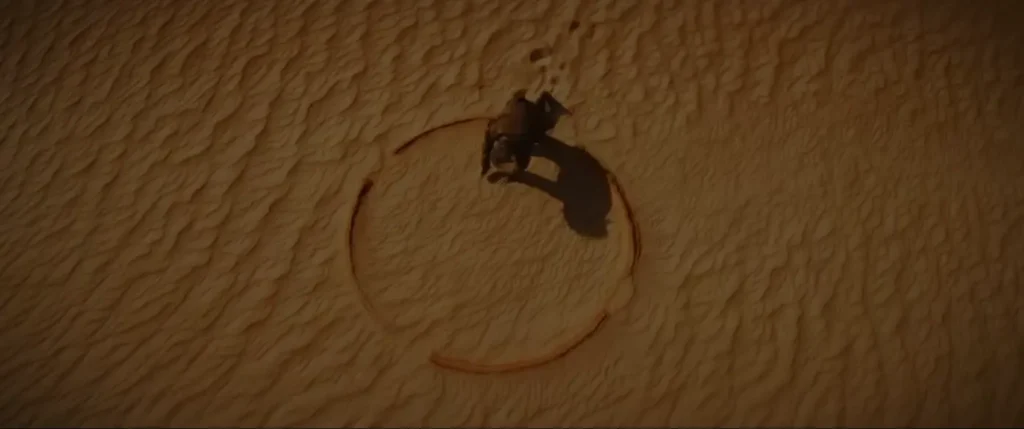
M barely escapes back up the shaft, but the crone furiously climbs the walls right behind him. Remembering Fiona’s advice from the book, M frantically scribbles a circle of chalk around the bed and jumps inside just as the witch bursts through the door. It works. The crone paces around the bed, gnashing her teeth and laughing, but she cannot cross the simple chalk barrier.
A Crossbow, A Fire, and the Underworld
The next morning brings chaos. Jerry, having escaped the police, returns to the hotel desperate to find Fiona. Mal lies to him, claiming he already put M in a taxi to the airport, but Jerry’s intuition screams that something is horribly wrong. M manages to ring the honeymoon suite’s call bell from upstairs, exposing Mal’s lie.
Jerry forces his way upstairs with an axe, breaking the lock to free M. “Are you okay?” Jerry asks. “I’ll live,” M replies… just as a crossbow bolt violently pierces Jerry’s skull. Mal stands in the doorway, completely devoid of empathy, having just murdered his second innocent victim without a shred of hesitation.
Mal then does the unthinkable: he sets the hotel on fire to burn the evidence and walks away, accidentally leaving the suite’s key behind.
With the flames rising, M grabs the key from Jerry’s body and takes the dumbwaiter back down to the basement, leaving Mal trapped upstairs surrounded by fire. If Mal wants to survive, he has to follow M into the dark.
The climax is a brilliant, terrifying mechanism of cosmic justice.
Down in the stone corridor, M frantically tries to draw a new chalk circle, but the witch appears before he can finish. She locks her heavy iron shackles onto M’s wrists. Mal stumbles down looking for the key, and the witch immediately spots him. She shackles Mal as well.
Then, the true nature of the witch is revealed. She isn’t just a monster; she is a karmic predator dragging those burdened by guilt and sin straight to hell. The massive double doors at the end of the hallway burst open, revealing a hellish void swarming with glowing-eyed demons.
M sits in the dirt crying, waiting to die. Suddenly, the spirit of his mother kneels beside him. He breaks down, sobbing, “It was an accident. I’m sorry.” She gently places her hand on his chest, saying, “I know. You can’t stay here”.
When she vanishes, M reaches into his jacket where she touched him and finds the small saw Fiona had used to cut his noose earlier. He aggressively saws through his chains and breaks free.
Mal, however, isn’t so lucky. Unburdened by any genuine guilt or remorse for his horrific crimes, he is relentlessly dragged through the doors into the underworld, screaming as the demons tear him apart.
The Concistador’s True Ending
M barely makes it back to the elevator as the hotel burns. He notices Fiona’s eyes are now peacefully closed; she finally has her justice. He collapses from smoke inhalation but is dragged to safety by Fergle.
In the hospital, Albi makes a shocking confession: he spiked M’s whiskey flask with Jerry’s magic mushroom powder for acting like a jerk. This creates a massive, lingering question: was the witch real, or was it all a drug-induced hallucination?
M looks down at the deep, physical bruises on his wrists left by the heavy iron shackles. He remembers Jerry’s words: “These things do exist. It’s just people with closed minds can’t see them”. The magic mushrooms didn’t invent the witch; they just opened his eyes wide enough to see the spiritual warfare happening around him.
The movie closes with M rewriting the bleak ending to his novel.
Instead of the concistador murdering the boy to break the bottle, he hands the boy the bottle and offers his own skull as a sacrifice. But the boy refuses to strike him. He throws the bottle away, and the two embrace in the sand, crying together.
This fictional moment is everything. The concistador represents the angry, destructive adult M, while the boy represents his traumatized inner child. By rewriting the ending, M finally stops punishing himself for an accident he couldn’t control. He forgives his inner child.
Hokum isn’t just a haunted house movie about a creepy witch. It is a grueling, brilliant exploration of how guilt will rot you from the inside out until you finally learn how to forgive yourself.
Hidden Easter Eggs & The Glasses Secret You Completely Missed
If you thought Hokum was just a straightforward ghost story, you completely missed the absolute genius hiding in the background. Director Damian McCarthy practically laced this film with secrets, but there is one visual trick that fundamentally changes how you watch the movie.
The Reflection Rule (How to Tell What’s Real)
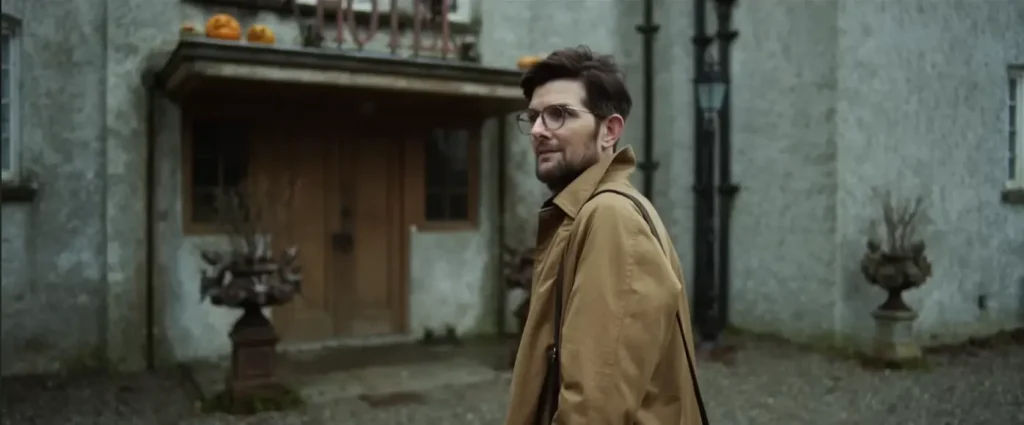
Remember what Jerry said about the goats? They eat the magic mushrooms and climb onto the cars specifically because they are entranced by their own reflections in the paint. That wasn’t just a quirky detail; it was a massive clue. M wears glasses throughout the film, and his lenses act exactly like the car paint.
When M is hallucinating, you cannot see the entity reflected in his glasses. For example, when he looks at the television and sees Jack the Jackass mocking him, the reflection in his glasses only shows pure TV static. Jack is entirely a product of M’s drug-induced guilt. However, when M goes down to the basement and the witch attacks him… her terrifying face is explicitly reflected in his glasses. The witch is not a hallucination. She is 100% real.
Men’s Crimes Against Women
There is a brilliant, unspoken feminist undertone woven through the entire narrative. Every single tragedy in this film revolves around the guilt (or lack thereof) of men committing violence against women. M accidentally killed his mother; Jerry euthanized his suffering wife; and Mal coldly murdered his pregnant lover, Fiona. The witch isn’t just a random monster attacking hotel guests; she is a karmic force of nature specifically preying on men who have shed the blood of women.
The McCarthy Shared Universe
McCarthy loves to connect his films, creating a deeply unsettling shared universe. The call bell in the honeymoon suite? That is the exact same cursed bell from his 2024 film Oddity. The creepy rabbit figure haunting M’s drugged mind is a direct callback to the drumming rabbit in Caveat. There’s even a popular theory that Jerry, the mushroom-drinking vagabond, is actually a survivor who escaped the mental institution shown in Oddity.
The Real-Life Deleted Ending
The way M rewrites his novel’s ending to be more hopeful isn’t just a metaphor for his mental health; it’s a reflection of the actual movie’s production. McCarthy admitted in interviews that the original script for Hokum ended with M failing to escape the basement and dying in the dark. But McCarthy felt it was “too bleak,” mirroring Fiona’s exact criticism of M’s novel. He changed the script to allow M to survive, proving that sometimes, forgiving yourself is the only way to rewrite your own miserable ending.
Hokum FAQ — Answering the Internet’s Biggest Questions
To ensure your ultimate understanding of Hokum is complete, here are the direct answers to the web’s most pressing search queries regarding the film.
What does the title “Hokum” mean? “Hokum” is a term meaning pretentious nonsense, bunkum, or a cheap theatrical trick. Ohm frequently uses this word to arrogantly dismiss the local Irish folklore. The title is deeply ironic, as the “nonsense” Ohm dismisses turns out to be horrifyingly real, forcing him to abandon his cynicism to survive.
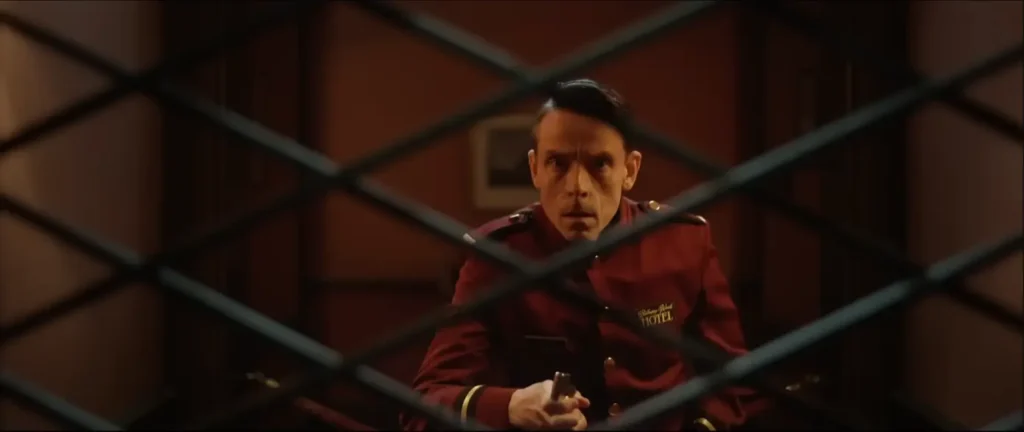
Who killed Fiona in Hokum? Mal, the hotel desk clerk and son-in-law of the owner, killed Fiona. Fiona was pregnant with Mal’s child. Fearing that his wife and formidable father-in-law would discover the affair, Mal drugged Fiona’s tea at the Halloween party, locked her in the dumbwaiter, and sent her into the haunted basement to die.
Was the Witch real or a hallucination? Both elements exist simultaneously. Alby spiked Ohm’s whiskey with psilocybin mushrooms, which explains Ohm’s surreal, internal visions (like Jack the Jackass on the television). However, the Cailleach (Witch) was entirely real. Jerry explains that the mushrooms merely opened Ohm’s mind to perceive the supernatural entity. The deep, physical bruises left on his wrists by the heavy iron shackles confirm that the physical attack in the basement actually happened.
Why did Ohm burn the bellboy’s hand? Ohm burns Alby’s hand with a heated spoon out of sheer, misdirected cruelty. As a man consumed by self-loathing and grief, Ohm’s primary defense mechanism is to push people away by being as abrasive and hostile as possible. When Alby enthusiastically asks Ohm for writing advice, Ohm punishes the boy’s vulnerability and hope, telling him he needs “thicker skin”.
Is Hokum based on a video game? No, Hokum is an original screenplay by Damian McCarthy. However, the film’s second half heavily mirrors the mechanics of survival horror video games like Resident Evil. Ohm is trapped in an isolated location, forced to solve mechanical puzzles (like rigging the golf boy clock to hit the elevator button), and must navigate a subterranean environment filled with monsters.
What happens in the deleted alternate ending of Hokum? In the original script, Damian McCarthy wrote an ending where Ohm does not survive the basement and is dragged into hell alongside Mal. However, McCarthy ultimately changed it, stating that the original ending felt “too bleak” and punishing, leaving the audience with a sense of emptiness rather than catharsis.
A Final Thought: The Catharsis of Survival
Hokum is a towering achievement in modern horror. It expertly lures the audience in with the familiar, gothic tropes of a haunted hotel and a locked-room mystery, only to pull the rug out and reveal a devastatingly emotional core. The film posits that the supernatural is rarely as terrifying as the cruelty human beings inflict upon one another, or the punishing, inescapable prisons we build within our own minds. By the time the credits roll over the image of a discarded bottle and a ram’s skull, Hokum proves that even the most broken among us are capable of finding the light. It is a terrifying, claustrophobic journey into the dark, but more importantly, it is a brilliant roadmap on how to finally come back out.