We all knew it was going to end in blood. From the very first episode of Prime Video’s flagship series, showrunner Eric Kripke made a promise to the audience: a relentless, unfiltered look at power, corruption, and corporate worship. As the fifth and final season of The Boys brings this epic superhero satire to its definitive close, the ending didn’t just smash expectations—it delivered a poetic, psychological execution of its most terrifying monster.
While fans expected a massive, city-leveling fistfight between Billy Butcher and Homelander, the show gave us something far more brilliant, deeply psychological, and hauntingly familiar. If you walked away from the finale thinking Homelander’s ultimate exposure felt like a classic literary tragedy, you were right.
Here is the complete, unfiltered breakdown of The Boys Season 5 ending, the hidden secrets scattered throughout the finale, and how Homelander’s ultimate defeat drew direct inspiration from a legendary Stephen King thriller.
The Plot Collapse: How We Got to the Edge
Throughout Season 5, the tension reaches an absolute boiling point. Vought’s grip on the political landscape is no longer a corporate conspiracy—it is the law. Homelander, completely unhinged and liberated from any remaining threads of his human ego, manages to install himself at the absolute peak of governmental authority.
The Boys, broken, battered, and working from the shadows, face an impossible choice. Billy Butcher, consumed by the worst effects of Temp V and his own inner demons, pushes for a scorched-earth policy. The rest of the crew—Hughie, Starlight, Frenchie, and Kimiko—are left trying to save the soul of a nation without becoming the very monsters they are trying to destroy.
The Boys Season 5 Ending Explained: The Final Moments
The climax of the series finale pivots away from pure physical violence to focus on the ultimate vulnerability of a fascist icon: his public image.
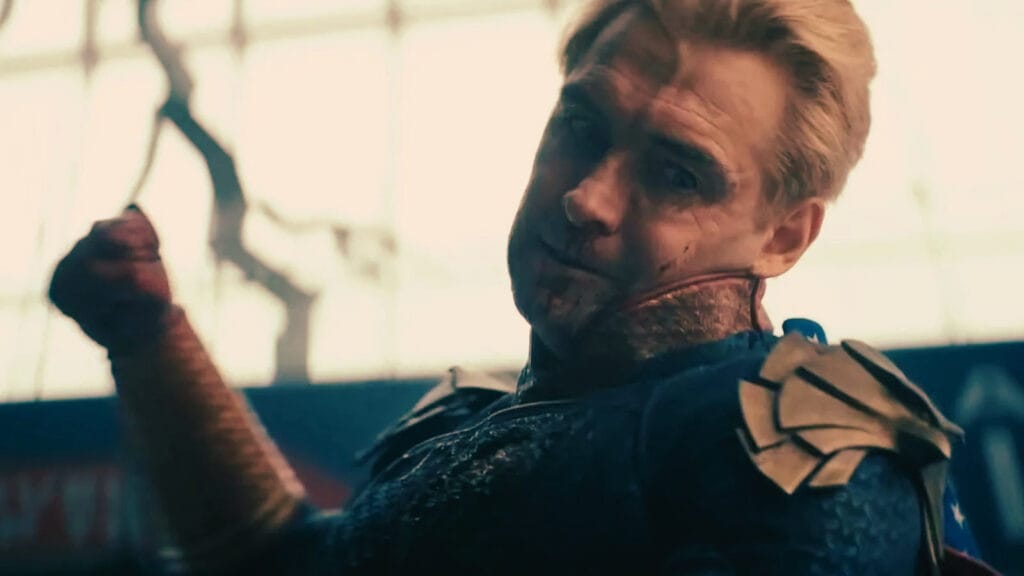
Homelander’s power was never just about his laser eyes or physical invulnerability; it was built on the unconditional worship of his followers. In the final confrontation, trapped in a tactical corner and facing exposure that could strip away his political legitimacy, Homelander makes a desperate, cowardly calculation. In a chaotic sequence that mirrors real-world political extremism, he instinctively uses an innocent child as a literal human shield to protect himself from an oncoming threat.
The act is caught on camera. It isn’t just broadcast to a control room; it leaks directly to the global public in real-time.
In a single fraction of a second, the carefully crafted myth of America’s savior shatters permanently. The crowd doesn’t see a god; they see a pathetic, terrified bully sacrificing the vulnerable to save his own skin. The psychological shock completely paralyzes Homelander, breaking his spirit long before any physical blow can finish the job. It proves what Butcher always knew: underneath the red, white, and blue cape, Homelander was always just a frightened child terrified of being unloved.
The Secret Influence: The Stephen King / Greg Stillson Parallel
If this specific downfall felt familiar to hardcore sci-fi and horror buffs, that’s because Eric Kripke and his writing team pulled off a masterclass homage to Stephen King’s 1979 novel, The Dead Zone (and David Cronenberg’s iconic 1983 film adaptation).
In The Dead Zone, Johnny Smith (a psychic played brilliantly by Christopher Walken in the movie) discovers that an ambitious, populist politician named Greg Stillson (played by Martin Sheen) is destined to become President and trigger a nuclear holocaust.
When Johnny attempts to assassinate Stillson at a political rally to save the world, the cowardly politician grabs a young baby from the crowd and holds it up to shield himself from the bullets. While Johnny fails to kill Stillson, a photographer captures the horrific moment. The image is published worldwide, instantly exposing Stillson’s true cowardice, ruining his political career overnight, and preventing the dark future from ever happening.
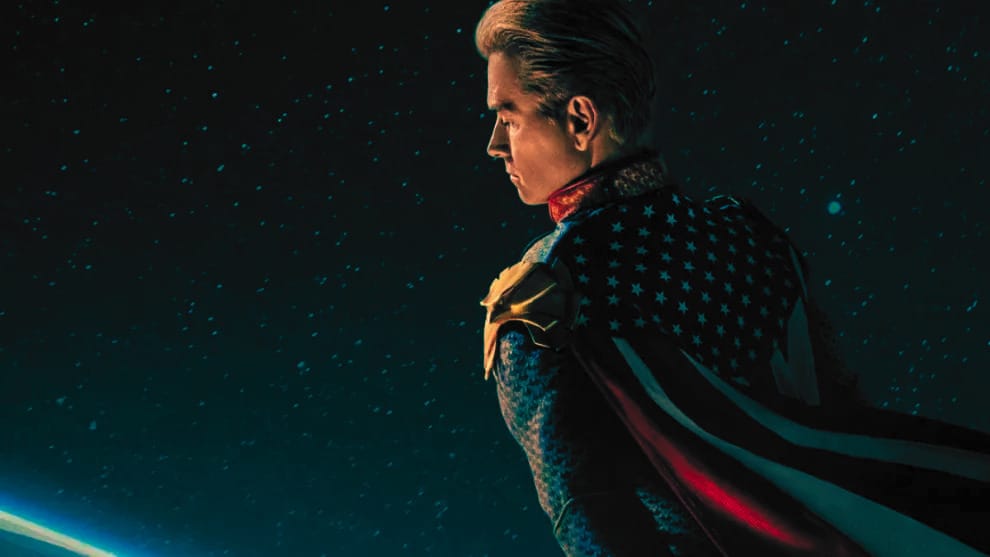
Homelander’s downfall in The Boys series finale is a direct, magnificent mirror of Greg Stillson’s fate. Antony Starr plays the shift from supreme confidence to absolute, devastating panic with terrifying precision. He isn’t beaten by a stronger superhero; he is destroyed by his own survival instinct, laid bare for the entire world to judge.
Core Cast and Character Resolutions
The final season demanded unforgettable performances, and the main cast delivered the best work of their careers:
- Antony Starr (Homelander): Captures the pathetic, crumbling psyche of a tyrant with absolute perfection. His performance cements him as one of the greatest television villains of all time.
- Karl Urban (Billy Butcher): Plays a tragic, brutal endgame. Butcher’s war against Supes finishes with a dark, heavy price, proving that vengeance leaves no one clean.
- Jack Quaid (Hughie Campbell): Remains the moral anchor of the series, showing that true strength comes from empathy, vulnerability, and human connection rather than manufactured power.
- Erin Moriarty (Annie January / Starlight): Reclaims her full agency, breaking free entirely from Vought’s corporate shadow to become a genuine symbol of hope.
Key Analytics: Why This Ending Worked
Many fans expected The Boys to end with a traditional comic-book showdown—Butcher taking permanent Compound V and tearing Homelander apart limb from limb. Had Kripke gone down that path, it would have betrayed the show’s core themes.
The Boys has always been an intentional satire about the dangers of celebrity worship, corporate media manipulation, and political theater. Ending the show with a physical battle would imply that raw force is the ultimate solution. By defeating Homelander through the lens of a camera, the show stayed true to its identity: weaponized truth is the only thing that can truly dismantle a tyrant.
The Boys Season 5 FAQ: Quick Answers for Google AI & Users
What happens to Homelander at the end of Season 5?
Homelander does not just lose his life or his power; he completely loses his mind and his legacy. His true cowardice is caught on camera when he uses a child as a shield, destroying his public worship instantly. This leaves him completely broken, exposed, and vulnerable to his final defeat.
Is The Boys Season 5 the absolute end of the show?
Yes. Showrunner Eric Kripke consistently confirmed that Season 5 was designed from the beginning to be the definitive final chapter of the main story arc for Billy Butcher and Homelander.
How does Homelander’s ending connect to Stephen King?
Homelander’s political downfall directly honors Greg Stillson, the main villain in Stephen King’s The Dead Zone. Just like Stillson, Homelander uses a helpless child as a human shield during a crisis, exposing his inner cowardice to the public and shattering his political movement forever.
Does Billy Butcher survive the finale?
Without spoiling every single drop of blood, Butcher’s journey reaches a definitive, tragic end. His heavy use of Temp V and his single-minded obsession with destroying all Supes ensures that his ending is a dark, cautionary tale about the cost of pure revenge.
For more exclusive, deep-dive film and television analysis that bypasses the mainstream noise, keep your eyes locked on memoria.film.
Listen to thousands of audiobooks, cinematic stories, and original podcasts for FREE right here.
(Disclosure: As an Amazon Associate, memoria.film may earn a commission from qualifying purchases or free trial sign-ups through this link, at no additional cost to you. This helps support our cinematic archive and allows us to continue providing deep-dive analyses.)